
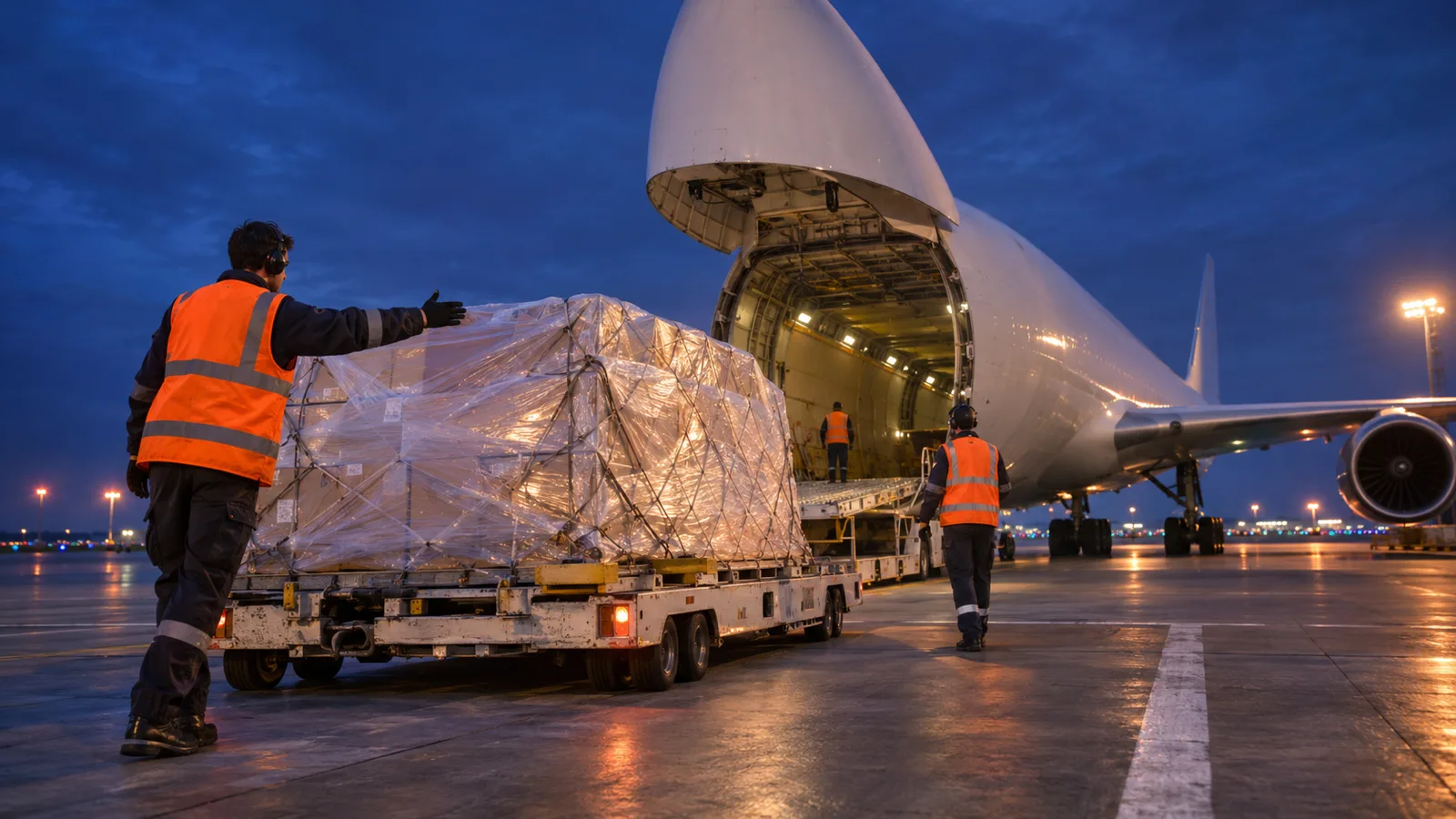
A specialty food equipment manufacturer in Malton has just closed its first sale to a distributor in Europe. The customer wants the machine quickly, and ocean freight would take weeks. Air cargo makes sense, and the manufacturer is only a few minutes from Toronto Pearson International Airport. But nobody on the team has exported by air before. What kind of crate does the machine need? Who screens it? What paperwork goes to the airline, and what goes to Canadian customs? And how late can it leave the factory and still make the flight?
Being next door to Canada's largest airport is a real advantage for Mississauga exporters, but air cargo has rules and deadlines that differ from road freight. Shipments that are not packed, documented and screened properly can miss flights, get rejected at the cargo terminal, or face delays at destination.
This article follows an export air shipment from the factory floor to the aircraft, step by step, highlighting what Mississauga businesses need to get right at each stage.
Step 1: Decide Whether Air Is the Right Mode
Air freight is fast, but it usually costs much more than ocean or ground freight. It tends to make sense when:
- The goods are high in value relative to their weight, such as electronics, precision parts, pharmaceuticals or luxury goods.
- The customer needs them quickly, for example to keep a production line running or fill an urgent order.
- The goods are perishable or time-sensitive, such as fresh food, flowers or samples for a trade show.
- The shipment is small enough that consolidated ocean freight would be slow and complicated.
Air carriers price based on chargeable weight, which is the greater of actual weight and volumetric weight. Bulky, lightweight goods can therefore be expensive to fly. Reducing packaging volume can make a meaningful difference. Our guide on how package dimensions affect shipping prices explains the principle.
Step 2: Choose Between Courier, Consolidated and Direct Air Freight
There are three broad ways to ship by air:
- Express courier services handle smaller shipments door to door, including customs clearance at destination in many cases. They are simplest for parcels and small cartons.
- Consolidated air freight through a freight forwarder combines your cargo with other shippers' goods under one master air waybill, which can lower costs for mid-sized shipments.
- Direct or charter air freight is used for very large, urgent or specialized cargo.
For a single machine on a pallet, a freight forwarder offering consolidated or direct service is usually the right path. The forwarder books space with an airline, issues the air waybill and coordinates delivery to the cargo terminal.
Step 3: Pack for the Air Environment
Air cargo is handled differently from truck freight. Pallets and crates are loaded onto unit load devices or into aircraft holds, and shipments may be transferred between flights. Packaging should account for:
- Handling by forklift and loaders. Use sturdy skids or crates with fork access on appropriate sides.
- Pressure and temperature changes. Cargo holds are pressurized, but temperature can vary, particularly on the ground during transfers. Sensitive products may need insulated or temperature-controlled packaging.
- Height and size limits. Aircraft holds have contour limits, and passenger aircraft bellies are much smaller than main-deck freighters. Check dimensions with your forwarder before building a crate.
- Wood packaging rules. Solid wood pallets and crates must generally be heat treated and stamped under ISPM 15 for many international destinations.
- Stackability. Mark non-stackable items clearly and expect to pay for the space they consume.
For fragile or high-value items, custom foam, bracing and shock indicators help protect the goods and provide evidence if damage occurs. Our article on choosing a courier for fragile items covers related considerations.
Step 4: Check for Dangerous Goods
Many everyday products are restricted on aircraft. Lithium batteries, aerosols, perfumes, flammable liquids, some adhesives, magnets, dry ice and many chemicals are regulated as dangerous goods under international air rules. Some are allowed only on cargo aircraft; some are forbidden entirely.
Shipping dangerous goods by air requires correct classification, approved packaging, specific marks and labels, and a shipper's declaration completed by a trained person. Failing to declare dangerous goods is a serious safety and legal issue. If your product contains a battery or any chemical, check before booking. A machine shipped with a lubricant reservoir or a backup battery may need special handling.
Step 5: Security Screening
All air cargo loaded onto aircraft in Canada must be screened or come from a secure supply chain. Transport Canada's air cargo security framework allows cargo to be screened by approved entities at different points in the chain, including at the cargo terminal, by a regulated freight forwarder or, in some cases, by a secured shipper that has been approved under the program.
For most occasional exporters, screening happens at the forwarder's facility or the airline terminal. Screening methods can include X-ray, explosives trace detection or physical inspection. Practical points:
- Large or dense items may not fit through X-ray equipment and may need alternative screening, which can take longer.
- Crates may be opened for inspection, so design them to be reopened and resealed.
- Build screening time into your cut-off planning.
Step 6: Prepare the Export Paperwork
Air exports need two sets of documents: those that move with the cargo, and those reported to Canadian authorities.
Commercial documents
- Commercial invoice with full descriptions, values, currency, Incoterms, country of origin and harmonized codes.
- Packing list showing contents, weights and dimensions of each package.
- Certificates of origin, if the buyer needs them to claim preferential duty under a trade agreement.
- Product-specific certificates, such as health or phytosanitary certificates for food and agricultural goods.
Transport documents
The air waybill is the contract of carriage between the shipper and the airline. Unlike an ocean bill of lading, it is not a document of title. Your forwarder will typically issue a house air waybill, with the airline's master air waybill covering the consolidated shipment. See our explainer on master versus house bills for the general concept.
Canadian export reporting
Exports from Canada generally must be reported to the CBSA, usually electronically through the Canadian Export Reporting System, unless an exemption applies. Exemptions commonly cover many commercial goods going to the United States and lower-value shipments to other countries, but controlled, regulated or prohibited goods must be reported regardless of value or destination. Some goods also need export permits, for example items on Canada's Export Control List. Confirm requirements with your forwarder or broker before shipping.
Step 7: Meet the Cut-Off at Pearson
Airlines set cargo acceptance cut-off times before each flight, and screened, documented cargo must be tendered by that time. Missing it usually means waiting for the next flight, which may be the next day or later for some destinations.
Mississauga exporters have an advantage here, but only if they plan for local traffic. Cargo facilities on the Pearson lands are reached via Airport Road, Dixie Road, Derry Road and the surrounding highways, including the 401, 409, 410 and 427. Afternoon rush hour on these routes can be heavy, and winter weather can make it worse. Leave margin, and consider earlier flights for critical shipments.
Step 8: Tracking and Destination Clearance
Once the cargo departs, track it through the forwarder and share updates with the customer. At destination, the importer or their broker handles customs clearance. Delays often stem from missing or inconsistent documents, which is why accurate invoices and packing lists matter so much. Agree in advance who pays destination duties and taxes, using clear Incoterms such as DAP or DDP.
Temperature-Sensitive Air Exports
Food, pharmaceutical and life sciences exporters in Mississauga often turn to air freight precisely because their products cannot tolerate long transit times. That brings an extra layer of planning. Shipments may sit on the ramp at Pearson in summer heat or winter cold, wait at a transfer airport, or be held at destination for inspection. Insulated shippers with gel packs or phase-change materials, active temperature-controlled containers, and data loggers that record conditions throughout the trip are all options, depending on the product and route. If dry ice is used as a refrigerant, it is regulated for air transport and must be declared and labelled correctly. Agree with your customer on acceptable temperature ranges and what happens if a logger shows an excursion. Our guide on shipping temperature-sensitive products covers packaging approaches in more depth.
A Pre-Flight Checklist for Mississauga Exporters
- Confirm air is the right mode and get a quote based on chargeable weight.
- Check dimensions and weight against aircraft limits with your forwarder.
- Screen the product for dangerous goods content.
- Pack using ISPM 15-compliant wood and secure internal bracing.
- Prepare a detailed commercial invoice and packing list.
- Determine whether export reporting or permits are required.
- Book the flight and confirm the cut-off time.
- Plan pickup with a buffer for traffic and screening.
- Share tracking and documents with your customer.
Getting Help With Air Exports
Exporters do not need to master every rule themselves. A logistics partner can help pack, prepare documents, book carriers and coordinate delivery to the cargo terminal. ShipCarte supports Mississauga businesses with cross-border and international shipping, value-added packing services and carrier management across modes. Manufacturers can learn more on our manufacturing industry page.
Ready to Ship Overseas?
If you are preparing your first air export or want a more reliable process for regular international orders, talk to ShipCarte. Request a quote with your product, dimensions and destination, and we will help you plan the shipment from your door in Mississauga to your customer's.