
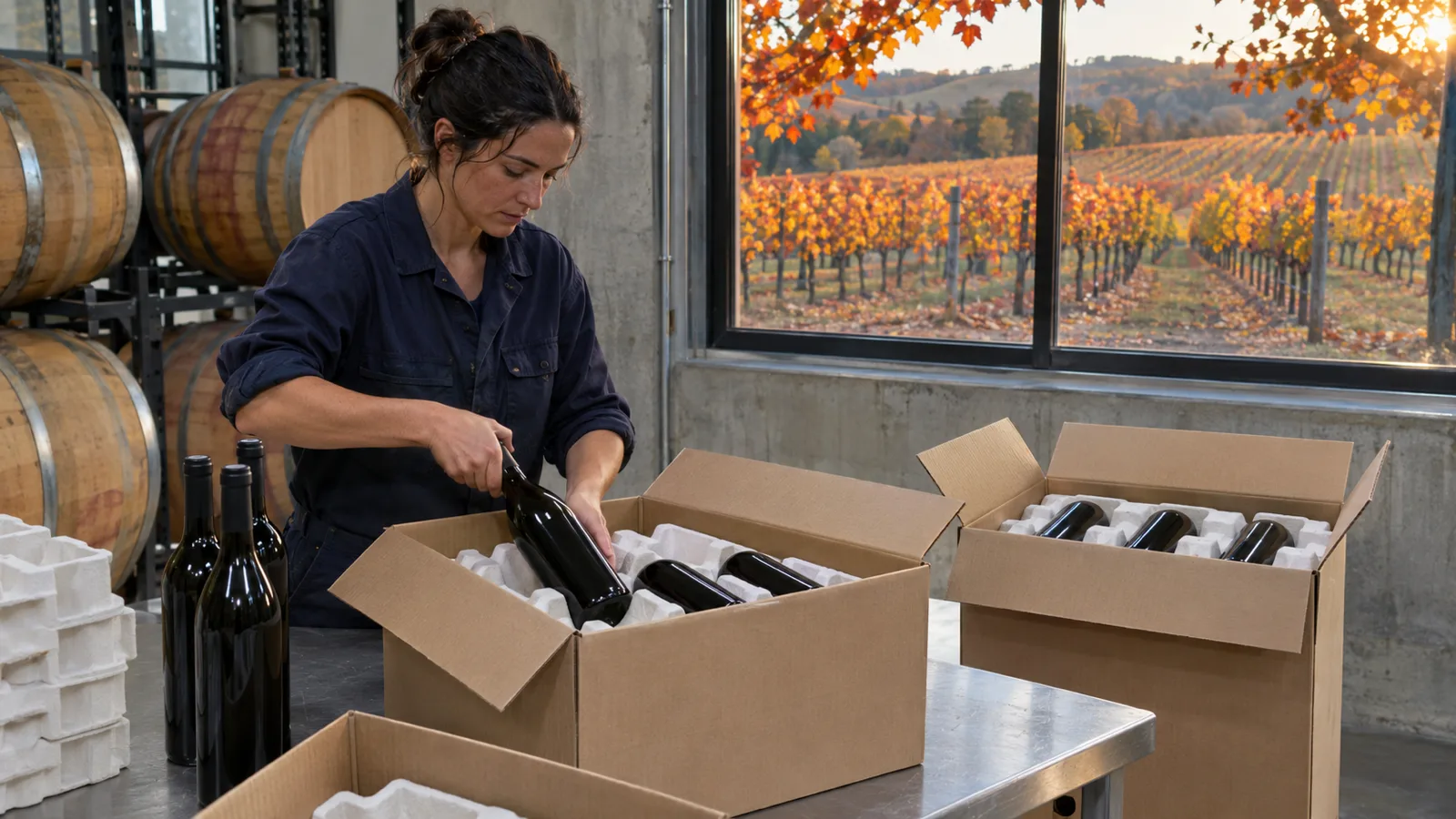
Over the past year, a lot of Canadian wineries, craft breweries, cideries and distilleries learned to sell online almost overnight. With tasting rooms closed or limited and restaurant orders falling away during the pandemic, direct-to-consumer sales went from a nice extra to a lifeline. Many producers now have customers who want to keep ordering, including people in other provinces who discovered them on a trip or through a friend.
That is where things get complicated. Shipping a case of wine across town in your own province may be perfectly routine. Shipping the same case to a customer two provinces away may be allowed, restricted, or allowed only through the provincial liquor authority, depending on where the customer lives. Unlike most ecommerce products, alcohol in Canada is governed by a patchwork of provincial rules, and those rules decide who can ship what to whom.
This article walks through the questions producers most often ask about direct-to-consumer (DTC) alcohol shipping in Canada: what the federal and provincial roles are, how the landscape generally breaks down, and what an alcohol DTC operation needs on the logistics side. It is not legal advice. Rules change, and several provinces have adjusted them in the past year, so always confirm with the regulator in each province you plan to ship to.
Who Actually Makes the Rules?
For most of Canada's history, the federal Importation of Intoxicating Liquors Act restricted moving alcohol across provincial borders except through provincial liquor boards. Over the past decade, the federal government amended that law in stages, first to allow individuals to bring wine across provincial lines for personal use, then beer and spirits, and most recently in 2019 to remove the federal restriction on interprovincial trade in alcohol altogether.
Removing the federal barrier did not create free trade in alcohol. It left the question entirely in provincial hands. Each province and territory decides whether residents can receive alcohol shipped directly from producers in other provinces, in what quantities, and under what conditions. Provinces also regulate sales by their own producers to their own residents. That is why a producer can have very different options in different parts of the country.
Temporary measures are not permanent rules
During the pandemic, several provinces introduced temporary flexibility for licensed businesses, such as allowing restaurants to include alcohol with takeout and delivery orders or easing some delivery conditions for producers. Some of these measures have since been extended or made permanent, and others have an end date. If your DTC model depends on a measure introduced in the past year, find out whether it is temporary before you invest heavily around it.
The Three Situations You Will Encounter
1. Shipping within your own province
This is usually the simplest case. Many provinces allow licensed producers to sell and ship their own products directly to consumers in the same province, sometimes under a specific retail or manufacturer's licence, sometimes with limits on product types or quantities. A winery in British Columbia shipping to customers in Vancouver, or a craft brewery in Ontario delivering within Ontario, will generally find a clear path, provided their licence permits it.
Check whether your licence covers remote sales and delivery, what records you need to keep, whether you must use specific delivery methods, and how provincial markups or fees apply to DTC sales.
2. Shipping to a province that allows interprovincial DTC
Some provinces have opened up to direct shipments of Canadian alcohol from producers in other provinces for the personal use of their residents. British Columbia and Manitoba are among the provinces that have taken steps in this direction, generally with conditions about the product, the quantity or the type of producer. Where it is permitted, you may still need to register, collect and remit certain taxes or fees, or follow specific delivery rules.
3. Shipping to a province that channels sales through the liquor board
Other provinces continue to require out-of-province alcohol to be sold through their liquor board or a licensed agent. Ontario and Quebec, for example, have historically required most out-of-province products to reach consumers through the LCBO or the SAQ, or through agents and private ordering programs connected to those boards. In these provinces, direct shipping from a producer elsewhere to a consumer may not be permitted, and you may need to work through a listing, a consignment program or a licensed agent instead.
Because these rules vary and shift, many producers keep a simple internal table listing each province and territory, what is allowed, the conditions and the date they last confirmed it.
Age Verification Is Not Optional
Every province sets a legal drinking age, which is 18 in Alberta, Manitoba and Quebec and 19 in the other provinces and the territories. DTC sellers need two layers of protection:
- At checkout: an age confirmation step and terms of sale that require the buyer to be of legal age in the delivery province.
- At delivery: a delivery service that checks identification and refuses to hand the package to anyone underage or visibly intoxicated, and does not leave alcohol unattended.
The second layer is the one many producers overlook. A parcel left on a porch is not compliant age verification. Choose carrier services that include signature and proof of age at the door, and make sure your packaging and labels tell the carrier that adult signature is required.
Carriers and Alcohol
Not every carrier will accept alcohol, and those that do usually have conditions. Some require a specific agreement or account approval before you can ship alcohol at all. Others accept it only from licensed shippers, only within certain provinces, or only with proof-of-age delivery services. Canada Post offers delivery options that include age verification, and some couriers and regional delivery companies have built alcohol programs for producers.
Before you launch, confirm in writing with each carrier:
- Whether they accept alcohol from your business and to which provinces.
- Which services include age verification at the door.
- What happens to a parcel that cannot be delivered because no adult is present.
- Their packaging requirements and liability for breakage.
- Any volume limits per parcel.
Shipping alcohol outside Canada is a different matter again. The United States, for example, has its own federal and state-level rules, and most consumer-direct shipments to the US are not practical for Canadian producers.
Taxes, Markups and Deposits
Alcohol pricing in Canada carries several layers that DTC sellers have to get right:
- Federal excise duty on wine, beer and spirits, which producers already account for in their production costs.
- Provincial markups or fees, which in some provinces apply to DTC sales just as they do to sales through the liquor board.
- GST/HST and provincial sales taxes, based on the delivery province.
- Container deposits and environmental fees, which differ between provinces.
Your ecommerce platform needs to calculate these correctly by destination. Our guide to duties and taxes in ecommerce covers the general principles of destination-based tax.
Packaging Bottles for the Journey
Bottles are heavy, breakable and in some cases sensitive to temperature. A good DTC packaging setup includes:
- Purpose-made bottle shippers with molded pulp or foam inserts that keep bottles from touching each other or the box walls.
- Box sizes matched to common order quantities (one, two, three, six and twelve bottles) to avoid void space and reduce dimensional weight charges.
- Clear outer markings showing that the parcel contains alcohol and requires adult signature, as your carrier requires.
- A seasonal plan for heat and cold. Wine can be damaged by summer heat in a delivery vehicle, and beverages can freeze and crack in winter. Many producers pause or limit shipping to colder regions in the deepest part of winter. Our guide to cold-weather freight protection explains the risks.
For general tips, see our article on packing fragile items.
Operational Checklist for Alcohol DTC
- Confirm your licence covers online sales and delivery in your home province
- Build a province-by-province table of what is permitted and how
- Restrict checkout to provinces where you can legally ship
- Add age confirmation at checkout and proof-of-age delivery services
- Set up correct tax, markup and deposit calculations by destination
- Get carrier approvals in writing
- Choose protective, right-sized bottle packaging
- Plan for seasonal temperature risks
- Keep records of sales and deliveries for regulators
Should You Outsource Fulfillment?
Many small producers start by packing orders at the winery or brewery. As volume grows, especially around the holidays, it can make sense to work with a logistics partner. Before outsourcing, check whether your provincial licence allows product to be stored at and shipped from a third-party facility, and on what terms. Some provinces have specific rules about where alcohol can be held and who can ship it.
Talk to ShipCarte About Beverage Logistics
ShipCarte supports beverage and specialty food producers across Canada with food and beverage logistics, small parcel shipping through carriers that offer the right services, and subscription box fulfillment for wine and beer clubs, where your licensing permits. We can also move cases and pallets to retail and liquor board warehouses with LTL freight.
If you are building or scaling a direct-to-consumer channel, schedule a consultation and tell us where your customers are.