
A beauty subscription box lives or dies on a single moment each month: the subscriber opening the lid. If the products feel considered, the box arrives when they expected it, and nothing has leaked or frozen on the way, they stay. If the box is late, a serum has cracked, or they get the same lip colour two months in a row, the cancel button starts to look appealing.
Behind that moment is a surprisingly complex operation. Each cycle involves sourcing samples and full-size products from multiple brands, receiving them on time, assembling hundreds or thousands of identical or personalised boxes, and shipping them in a tight window to subscribers spread across a country as large as Canada. Add cosmetic labelling rules, liquids that are sensitive to temperature, and the odd aerosol or nail polish that counts as a dangerous good, and you can see why many subscription founders eventually decide to stop packing boxes in their living room.
Canadian interest in self-care products and subscription services remains strong, and competition for subscribers is just as strong. This guide breaks the monthly cycle of a beauty box into its stages and explains what it takes to get kitting, timing and retention right in Canada.
Step 1: Curate Products That Are Legal to Sell in Canada
Before a product goes into your box, make sure it can be sold here. Cosmetics in Canada are regulated by Health Canada under the Food and Drugs Act and the Cosmetic Regulations. A few rules matter most for subscription businesses:
- Cosmetic notification. The manufacturer or importer of a cosmetic sold in Canada must notify Health Canada, generally within ten days after first sale. If you import products directly from a foreign brand that has never sold here, confirm who is filing that notification.
- Ingredient labelling. Cosmetics must list ingredients, typically using the International Nomenclature of Cosmetic Ingredients (INCI) names. Very small samples may have alternative labelling options, such as an accompanying leaflet, but the information still has to be provided.
- The Cosmetic Ingredient Hotlist. Health Canada maintains a list of ingredients that are prohibited or restricted in cosmetics. Products formulated for other markets can occasionally contain something on it.
- Drug and natural health product claims. Products like sunscreens, anti-dandruff shampoos, acne treatments and some anti-perspirants are regulated as drugs or natural health products, and need a Drug Identification Number (DIN) or Natural Product Number (NPN). A US sunscreen without Canadian authorisation is not a cosmetic you can simply drop into a box.
- Bilingual labels. Mandatory label information on consumer products generally needs to appear in English and French.
Ask brand partners for confirmation that their products meet Canadian requirements, and keep that documentation on file. If you receive non-compliant stock, it is far better to discover it at the receiving dock than after it has been shipped to five thousand subscribers.
Step 2: Build a Realistic Production Calendar
Subscription fulfillment runs on deadlines that depend on each other. Work backwards from the date you promise subscribers their box will ship.
- Ship window. For example, boxes ship between the 10th and 15th of the month.
- Kitting window. Assembly usually needs to start several days before the first ship date, depending on volume and box complexity.
- Inbound deadline. All products must be received, counted and inspected before kitting begins. Allow a buffer for late or short deliveries from brand partners.
- Billing and order cut-off. New sign-ups and changes after the cut-off roll into the next cycle. This fixes your box count for kitting.
- Curation lock. The final product list and quantities, including substitutes, should be decided early enough for brand partners to ship.
The single most common cause of late boxes is a product that arrives late or short. Always have a pre-approved substitute for each slot in the box, and agree in advance what happens if a supplier misses the inbound deadline.
Step 3: Receive and Inspect Every Component
Beauty products arrive from many sources, in many forms: cartons of full-size products, bags of foil samples, display trays of mini lipsticks. Receiving needs to be thorough:
- Count against the purchase order, not just the packing list.
- Record lot numbers and expiry or period-after-opening information where relevant.
- Inspect a sample for damage, leaks and correct shades or variants.
- Check that labels look compliant, with bilingual information and ingredient lists.
- Store liquids and creams away from dock doors where they could freeze in winter or overheat in summer.
Temperature deserves special mention in Canada. Liquids, emulsions and some cosmetics can separate or crack their containers if they freeze, which can easily happen in an unheated trailer crossing the Prairies in January. In summer, balms and lipsticks can soften or melt. Both the warehouse and your transportation choices need to account for this.
Step 4: Kit With Accuracy and Speed
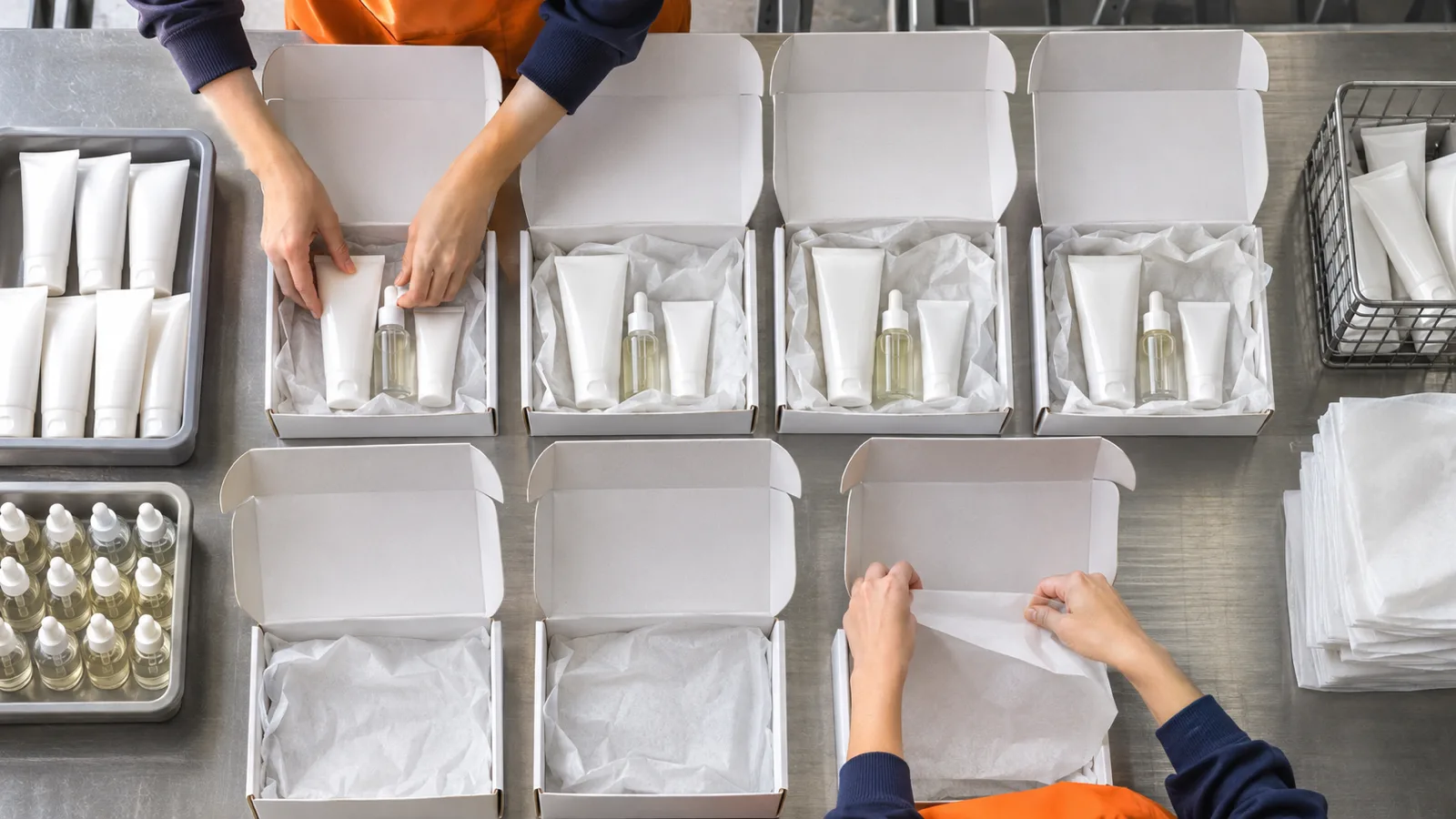
Kitting is where your box physically comes together. A good kitting and assembly operation for beauty boxes typically works like this:
- A pilot box is built and approved by your team, often with photos, before production starts. This becomes the standard every packer follows.
- Assembly is set up as a line or cell, with each station adding specific items in a fixed order so nothing is missed.
- Fragile glass items are protected and positioned so they cannot knock against each other.
- Inserts, product cards and promotional materials are added consistently.
- Boxes are spot-checked by weight or visual inspection at set intervals.
Personalised boxes
Many beauty boxes now personalise contents based on a profile quiz: skin type, hair type, shade range or preferences. That turns kitting into a mix of standard and variant boxes. Rather than building every box individually, it is common to define a limited number of box variants and assign subscribers to them, then kit each variant in batches. Your order management system needs to produce clear variant assignments, and the warehouse must label each completed box so it ships to the right subscriber. Our article on fulfilling orders for subscription box businesses describes how variants and batching work in more detail.
Avoiding repeats
A subscriber who receives the same product they got two months ago feels the box is not curated for them. If you allow variants, track which products each subscriber has already received and factor that into assignment. This is a data problem as much as a warehouse one, but your fulfillment partner should be able to import variant assignments without manual work.
Step 5: Ship in Planned Waves
Once boxes are kitted, shipping thousands of parcels on the same day can overwhelm carrier pickups and lead to delays at the first sort. Many subscription businesses ship in planned waves over several days, often prioritising the most distant regions first so that subscribers in British Columbia, the Prairies and Atlantic Canada receive their boxes around the same time as subscribers in Ontario and Quebec.
Consider these shipping points:
- Box size and dimensional weight. A slightly smaller box can reduce cost across thousands of shipments. Our guide to package dimensions and shipping costs explains the maths.
- Carrier mix. Comparing carriers by region can lower average cost and improve delivery times. Small parcel shipping with rate shopping makes that comparison automatic.
- Dangerous goods. Nail polish, some perfumes and aerosol products like dry shampoo can be classed as dangerous goods for transport, often shippable by ground under limited quantity provisions with proper packaging and marking. They generally cannot go by air without full compliance. Check carrier policies before you include them, and see our guide on how to ship perfume safely.
- Tracking notifications. Sending tracking information as soon as each box ships reduces "where is my box?" emails dramatically.
Step 6: Design for Retention, Not Just Acquisition
Subscription businesses tend to spend heavily on acquiring subscribers, and then lose too many in the first few months. Logistics plays a bigger part in retention than many founders realise.
Consistent delivery timing
Subscribers build a habit around when the box arrives. If it lands on the 12th one month and the 24th the next, that habit breaks, and customer service volume spikes. Predictable ship dates matter more than fast ones.
Arrival condition
Leaks, crushed boxes and broken compacts are retention killers. Use leak-proof bagging for liquids, secure closures and appropriate void fill. Track damage reports by product and packaging type and fix the root cause.
Easy changes
Subscribers who can skip a month, update their address, or change preferences easily are less likely to cancel outright. That requires your subscription platform and your warehouse to share data in time for each cycle's cut-off. Solid integrations between your store and your fulfillment provider prevent boxes going to old addresses.
Add-ons and the shop
Many beauty boxes let subscribers buy full-size versions of products they loved. Those orders ship as ordinary ecommerce parcels, so your warehouse needs to handle both the monthly kitting rush and steady day-to-day orders from the same inventory.
Signs It Is Time to Outsource Fulfillment
Founders often hold onto fulfillment too long. Common signs that it is time to move to a fulfillment partner include:
- Kitting each cycle takes over your team's whole week.
- Your home or office is running out of space for inbound products.
- Error rates or damage complaints are rising as volume grows.
- You are spending time negotiating with carriers instead of brands.
- You want to add personalised variants or an add-on shop but cannot handle the complexity.
Make Every Box Worth Keeping
A successful beauty subscription box in Canada combines compliant products, a disciplined production calendar, accurate kitting and predictable delivery. Get those right, and the unboxing does the retention work for you.
ShipCarte offers subscription box fulfillment, kitting and multi-carrier shipping for brands across Canada, along with support for health and wellness products. If you are ready to move your beauty box to a partner that can scale with each cycle, request a quote and tell us about your subscriber base.