
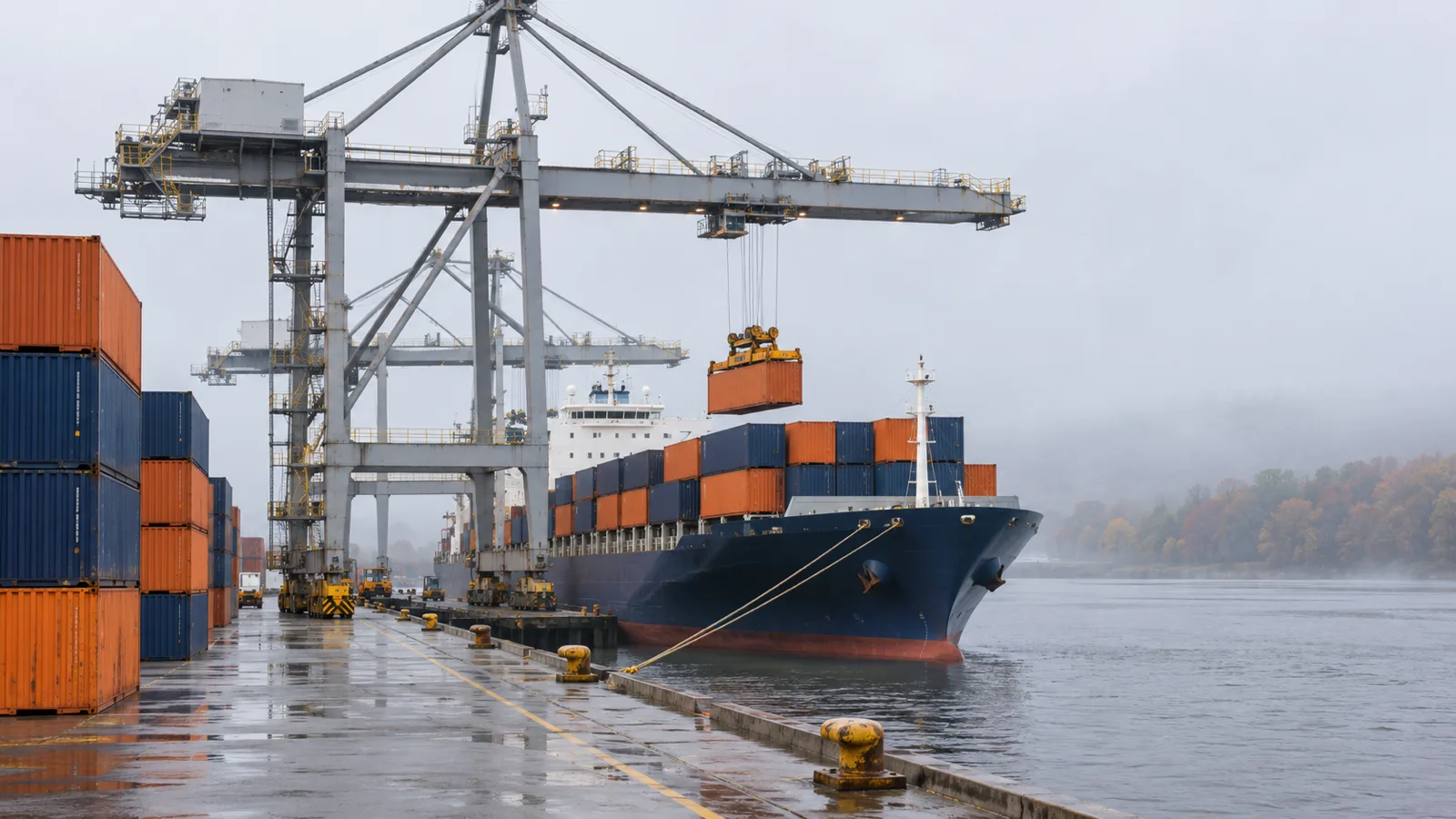
A maple products company in Quebec lands its first distributor in Germany. A machine shop in southern Ontario gets a purchase order from a buyer in the Netherlands. A seafood processor in Nova Scotia is asked by a French importer whether its shipments qualify for zero duty. In each case the conversation eventually comes back to one agreement: the Canada-European Union Comprehensive Economic and Trade Agreement, better known as CETA.
CETA has been provisionally applied since September 2017, and for most industrial goods it removed EU tariffs on Canadian products outright. But "duty-free" is not automatic. The European buyer only gets the preferential rate if the goods genuinely originate in Canada under the agreement's rules, if the right statement appears on the commercial paperwork, and if the shipment travels in a way that keeps that claim intact. Miss any one of those and your customer pays the full EU duty, then asks you why.
This guide walks Canadian exporters through the three pieces that matter most: proving origin, preparing documents on both sides of the Atlantic, and organising the physical shipment from a Canadian port or airport to an EU door.
What CETA Actually Changes for a Canadian Exporter
Before CETA, many Canadian goods entering the EU paid the EU's standard "most favoured nation" tariff. Those rates are modest on some products and significant on others, particularly certain processed foods, seafood, textiles and some industrial items. Under CETA, the large majority of EU tariff lines on Canadian goods dropped to zero on day one, with some agricultural products phased down over several years or managed through tariff-rate quotas.
Three practical consequences follow for anyone shipping from Canada:
- Your price becomes more competitive on landed cost. A European importer comparing your quote against a supplier from outside the EU may now see a duty difference worth several percentage points of the invoice value.
- The burden of proof shifts toward you. CETA relies on self-declaration by the exporter rather than a government-stamped certificate. That is simpler, but it means you are responsible for the accuracy of what you declare.
- Your customer will ask questions. Experienced EU importers know they can be reassessed if a preference claim is later found to be invalid. Expect requests for supplier information, bills of materials, or a written confirmation of origin.
It is also worth being clear about what CETA does not change. EU value-added tax is still charged at import in the destination member state. Product rules, such as CE marking for certain equipment, EU food safety standards and labelling requirements, still apply in full. And because the United Kingdom left the EU's customs union and single market at the end of 2020, CETA no longer covers shipments to Great Britain. Canada and the UK signed a trade continuity agreement in late 2020 designed to carry CETA's terms forward, but exporters selling into Britain should confirm its status and the applicable origin wording separately rather than assume an EU shipment and a UK shipment are handled the same way.
Step One: Determine Whether Your Product Originates in Canada
"Made in Canada" on a label is a marketing statement. "Originating" under CETA is a legal test, and the two do not always line up. The agreement sets product-specific rules of origin, organised by the Harmonized System (HS) tariff classification of the finished good. Your first task is therefore to classify the product correctly, because the rule you must meet depends entirely on that number.
Wholly obtained goods
Some goods qualify simply because they come entirely from Canada: wild-caught fish landed by Canadian vessels, minerals extracted in Canada, crops grown and harvested here, animals born and raised here. If there is no non-originating input at all, the analysis is short.
Goods made with imported inputs
Most manufactured products contain at least some materials from outside Canada and the EU. For these, you look up the product-specific rule for your HS heading in the CETA origin protocol. The rules usually take one of a few forms:
- A change in tariff classification. The non-originating materials must be classified under a different chapter, heading or subheading than the finished product. Turning imported steel coil into machined brackets, for example, typically involves such a shift.
- A maximum value of non-originating materials. Some rules cap the value of non-originating inputs as a percentage of the product's ex-works price.
- A specific process. Certain rules, especially for textiles, chemicals and food, require that a particular manufacturing operation take place in Canada or the EU.
CETA also contains helpful flexibilities. Materials originating in the EU count as originating when used in Canadian production, which is known as bilateral cumulation. A tolerance provision lets a small share of non-qualifying materials be disregarded in many cases. And certain minimal operations, such as simple repacking, labelling or mixing, are explicitly not enough to confer origin, no matter what the tariff shift looks like.
Build a file, not just an answer
Whatever the outcome, document how you reached it. A practical origin file for each exported product usually includes the HS classification of the finished good, a bill of materials with the classification and origin of each input, supplier declarations for key components, the applicable rule and how the product meets it, and the date of the analysis. If a supplier changes or a component is re-sourced from Asia instead of Ontario, revisit the file. CETA requires exporters to keep supporting records for a number of years, and an EU customs authority can ask the CBSA to verify a claim long after the goods have been sold.
Step Two: Write the Origin Declaration Correctly
Under CETA there is no separate certificate of origin form. Instead, the exporter writes an origin declaration on the commercial invoice or another commercial document that describes the goods in enough detail to identify them. The wording is prescribed in the agreement's origin protocol and is available in English, French and the other official EU languages. The text states that the exporter declares the products to be of Canadian (or EU) preferential origin, and it ends with the place, date and the exporter's name.
A few points trip up first-time exporters:
- Use the exact prescribed text. Paraphrasing, shortening or translating it informally can give EU customs a reason to deny the preference. Copy it from the agreement or from Global Affairs Canada's CETA guidance.
- Include your Business Number. Canadian exporters identify themselves in the declaration using their CRA-issued Business Number. EU exporters use their own registration number, which is why your European suppliers may ask for different details than your customers do.
- Make the goods identifiable. If an invoice covers both originating and non-originating items, the declaration must make clear which lines it applies to.
- Keep the declaration consistent with your origin file. If you are not sure a product qualifies, leave it off. A clean invoice paying full duty is a far smaller problem than a reassessment across a year of shipments.
Your EU customer, or their customs broker, will then claim the preferential rate when they file the import declaration. They will also need an EORI number, the EU's customs identifier for traders. If you are shipping on delivered terms and acting as importer of record yourself, you will need to arrange an EORI as well. Our explainer on what an EORI number is covers how that registration works.
Step Three: Handle the Canadian Side of the Paperwork
Exporters sometimes focus so heavily on the EU entry that they forget Canada has its own requirements at departure. For commercial shipments to the EU, the main ones are:
Export reporting to the CBSA
Commercial goods leaving Canada for an overseas destination generally must be reported to the Canada Border Services Agency when their value is CAD 2,000 or more, and in all cases where the goods are controlled, regulated or require a permit. Reporting is done electronically, and the resulting proof-of-report number is passed to the carrier before loading. Ocean shipments in particular have advance reporting timeframes. Our separate guide to export reporting in Canada goes into the details.
Export permits and controls
Most consumer and industrial goods ship to the EU without a Canadian export permit, but items on the Export Control List, including certain dual-use technology, some chemicals and specific strategic goods, require a permit from Global Affairs Canada regardless of destination. Check this before you quote, not after the container is booked.
Sector certificates
Food, animal and plant products usually need export certification. For meat, seafood, dairy and plant products destined for the EU, that often means a CFIA-issued certificate confirming the goods meet EU sanitary or phytosanitary requirements, and in some cases that the producing establishment is approved for export to the EU. Seafood exporters in Atlantic Canada and meat processors on the Prairies should confirm certificate requirements with the CFIA well ahead of the first shipment.
Step Four: Choose How the Goods Physically Travel
CETA does not dictate a shipping route, but it does contain a non-alteration rule: originating goods can pass through a third country, for example being transshipped through a hub, as long as they are not further processed there beyond what is needed to keep them in good condition or move them along. That gives Canadian exporters flexibility in routing.
Ocean freight via eastern Canadian ports
For most volume shipments to Europe, ocean freight from the Port of Montreal, the Port of Halifax or the Port of Saint John is the natural choice. Montreal offers frequent direct services to northern European ports such as Antwerp, Rotterdam and Hamburg, and reaches deep into the Ontario and Quebec manufacturing base by road and rail. Halifax and Saint John sit closer to Europe on the great-circle route and serve Atlantic Canada directly, with rail connections inland. Exporters in the West sometimes route by rail to an eastern port rather than going through Vancouver and the Panama Canal.
Small exporters often start with less-than-container-load (LCL) shipments consolidated at a container freight station near the port or inland in the Greater Toronto Area or Montreal, before graduating to full containers. If you are deciding between those options, the trade-offs are similar to the ones importers face, which we cover in FCL vs LCL for importers in Canada.
Air freight and courier
Samples, spare parts, high-value electronics and time-critical orders often fly from Toronto Pearson, Montreal or Vancouver. CETA applies equally to air shipments, and the origin declaration can go on the commercial invoice in the courier pouch. Remember, though, that a courier's standard customs clearance may not claim the CETA preference unless the paperwork is complete and the declaration is in the expected format.
Incoterms and who clears what
Agree early on which Incoterms 2020 rule applies. Under FCA or FOB, your obligations end in Canada and your EU buyer handles import clearance and VAT. Under DAP, you deliver to their door but they still clear customs. Under DDP, you are the importer of record in the EU, responsible for duty (zero, if CETA applies) and import VAT, which can create registration and recovery obligations in that member state. Many Canadian exporters find DAP a sensible middle ground until they have a clear picture of EU VAT. Our explainers on DAP and DDP outline the risks of each.
Preparing the Shipment at Origin
The physical preparation of an EU export shipment deserves the same attention as the paperwork. European consignees and their warehouses often expect specific pallet formats, and wood packaging must meet ISPM 15 heat-treatment and marking rules, as it must for most international destinations. Cartons should carry clear consignee, product and handling marks, and if the goods are destined for retail shelves, product labelling must meet the destination country's language and content rules, which differ from the bilingual English and French requirements Canadian brands are used to at home.
For exporters who sell to several EU customers from inventory held in Canada, it often makes sense to consolidate orders at a single warehouse, palletise and label them there, and send a weekly or monthly container rather than many small air shipments. A provider offering value-added warehouse services such as relabelling, kitting and export palletising can handle that preparation, while cross-border and international shipping support keeps the documents aligned with the freight.
Common Mistakes That Cost CETA Exporters
- Assuming Canadian assembly equals Canadian origin. Simple assembly of imported components may not satisfy the product-specific rule.
- Using an outdated HS code. Classification drives the rule; an incorrect code can mean you are testing the product against the wrong requirement.
- Altering the origin declaration wording. Small deviations can lead to the preference being refused at the EU border.
- Not keeping records. Verification requests can arrive years later. Without supplier declarations and costing data, a correct claim can still fail.
- Forgetting the UK is now separate. Goods sold into Great Britain from January 2021 are no longer covered by CETA, and an EU distributor re-exporting to the UK will face separate rules.
- Treating VAT as optional. Zero duty does not mean zero tax. Factor import VAT into delivered pricing, especially on DDP terms.
A Simple Pre-Shipment Checklist
- Confirm the HS classification of each product you will export.
- Check the CETA product-specific rule and document how each product meets it.
- Collect supplier declarations for significant imported or Canadian inputs.
- Add the prescribed origin declaration, with your Business Number, to the commercial invoice.
- Confirm whether an export permit or CFIA certificate is needed.
- File the CBSA export report where required and give the proof-of-report number to the carrier.
- Agree Incoterms and confirm your buyer's EORI and customs broker.
- Prepare ISPM 15 compliant packaging and destination-appropriate labelling.
- Book freight through a Canadian port or airport with enough lead time for reporting deadlines.
Talk to ShipCarte About Your EU Shipments
CETA gives Canadian businesses a genuine edge in European markets, but the advantage only shows up when origin, paperwork and freight are handled together. ShipCarte works with businesses across Canada to store, prepare and ship export orders, coordinate ocean and air freight, and keep documentation consistent from the warehouse floor to the EU consignee. If you are planning your first European shipments or tidying up an existing export program, schedule a consultation with our team or request a quote for your next consignment.