
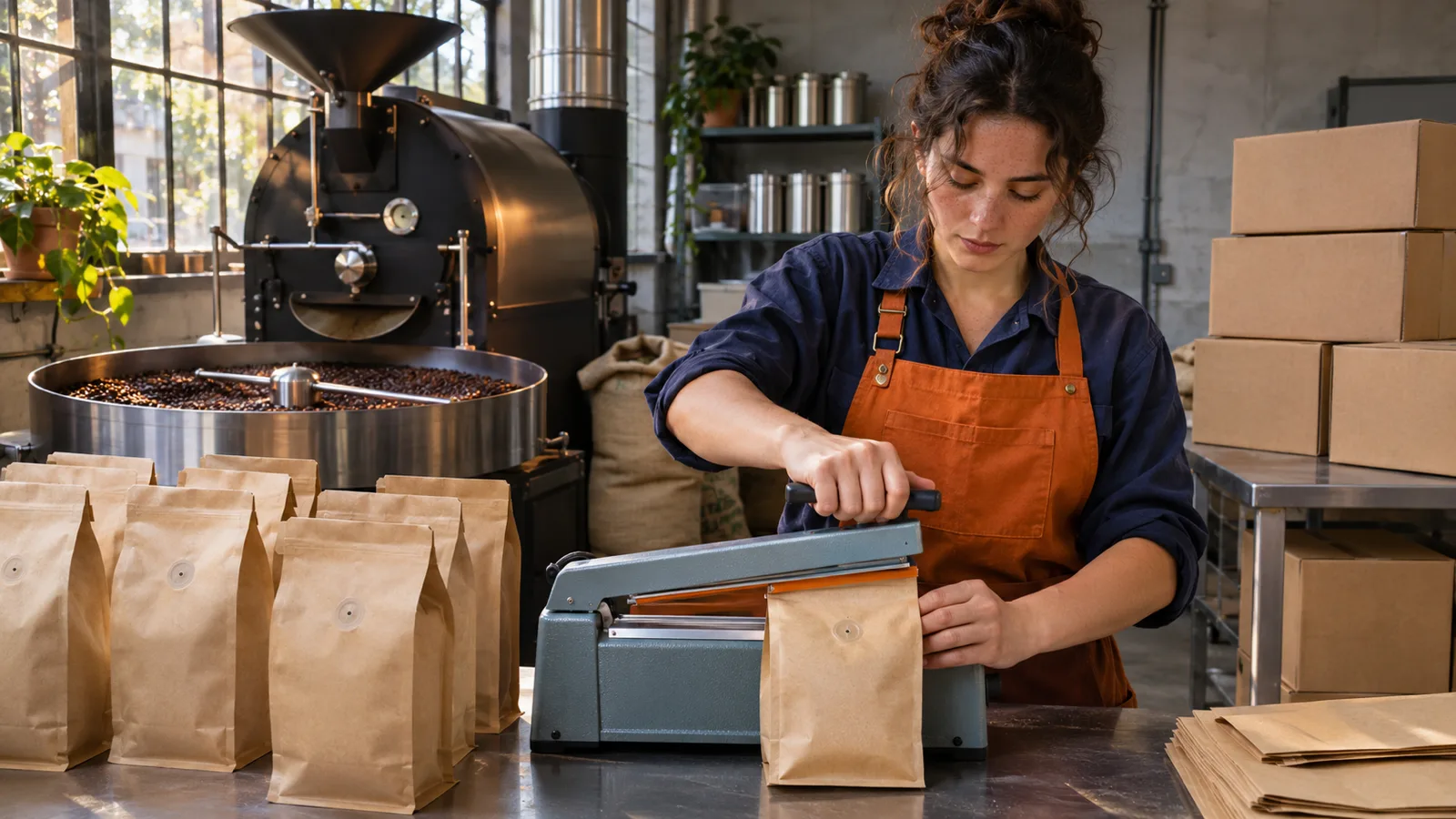
Most specialty coffee roasters in Canada started with a roaster in a small space and customers who could walk in and buy a bag. Then came the website, a handful of cafés buying wholesale, and a subscription program that went from a dozen subscribers to several hundred. This year, with many cafés operating at reduced capacity and more people brewing at home, plenty of roasters have seen their online orders climb while wholesale became less predictable.
Shipping coffee looks simple: a light, durable product in a bag. In practice, roasters juggle freshness windows measured in days and weeks, subscription cycles that bunch orders into the same few days each month, wholesale accounts that want cases delivered on schedule, and shipping costs that can easily outweigh the margin on a single 340-gram bag.
This guide breaks coffee shipping into the three channels most roasters sell through and looks at what matters in each, followed by the operational habits that tie them together.
Freshness: the roaster's real deadline
Freshly roasted coffee releases carbon dioxide for days after roasting, which is why bags have one-way degassing valves. Most roasters and coffee drinkers agree that whole beans taste best within a window of a few days to a few weeks after roasting, with flavour gradually fading after that. Ground coffee loses aroma much faster.
That window shapes the whole shipping operation:
- Roast schedules should be built around shipping days, not the other way around. Roasting on Monday and shipping Tuesday and Wednesday keeps beans fresh and avoids weekend delays.
- Print the roast date clearly on every bag. Customers increasingly look for it, and it is the simplest way to show freshness.
- Avoid holding roasted stock for long periods. If coffee is stored at a third-party warehouse, set a maximum age and rotate strictly first-in, first-out.
- Choose shipping services that match your freshness promise. A customer in Halifax buying from a roaster in Vancouver should know that ground service across the country takes days.
Channel one: one-off online orders
One-off web orders are usually one to three bags. The coffee is light, so actual weight is low, but the box choice can make a big difference to cost. Some practical points:
Packaging
Flat-bottom and gusseted bags travel well in small, rigid mailers or boxes. Bags with valves should not be crushed, which can push the valve or burst seams. For single bags, slim mailers may qualify for lower-cost postal options in Canada, so it is worth checking whether a slightly thinner package changes the rate you pay. Measure your packed parcels carefully and compare options; our article on how package dimensions affect shipping prices explains why a few centimetres can matter.
Carrier choice
Postal services generally reach every address in Canada, including rural and remote communities, which makes them a common default for coffee. Couriers may be faster in some urban corridors. Rather than using a single carrier for everything, a multi-carrier shipping platform lets you compare services by destination and choose the best balance of price and speed for each order.
Free shipping thresholds
Free shipping is a powerful conversion tool, but shipping a single bag for free across the country can erase its margin. Many roasters set a threshold that encourages two or more bags per order, which also spreads the shipping cost across more product.
Channel two: subscriptions
Subscriptions are valuable because they bring recurring revenue and loyal customers. They also create a very particular operational pattern: hundreds of orders falling on the same day or week, each needing coffee from a specific roast batch.
- Know your volumes before you roast. Subscription platforms can export upcoming renewals. Use that data to plan roast quantities for each coffee, rather than estimating.
- Stagger billing where you can. Spreading renewal dates over the month, or offering a choice of shipping weeks, prevents a single huge packing day.
- Batch packing. Subscription orders are often identical or near-identical. Packing them in batches is faster and reduces errors.
- Handle skips and changes cleanly. Subscribers skip months, change grind sizes and move house. Lock order changes a few days before roasting so you are not repacking at the last minute.
- Communicate. Send shipping confirmations with tracking and roast dates, and let subscribers know about delays early.
If subscription volumes grow beyond what your team can pack alongside roasting, subscription fulfillment through a 3PL lets you roast, deliver bagged coffee to the warehouse, and have it packed and shipped on a schedule. The key is short lead times between roast and dispatch, so coffee is not sitting in a warehouse for weeks. Our post on fulfilling orders for subscription businesses covers the wider operational picture.
Channel three: wholesale
Wholesale customers such as cafés, restaurants, offices and grocery stores buy larger quantities, often in 2.27-kilogram (five-pound) bags or retail cases, on regular schedules. Their expectations are different from consumers':
- Reliability over speed: a café needs its coffee before it runs out, on the same day every week or two.
- Case and pallet shipping: larger orders may ship as multi-box parcels or on pallets via LTL freight, especially for grocery chains and distributors.
- Retail requirements: grocery and retail chains often require specific case labels, barcodes, pallet configurations and delivery appointments.
- Invoicing and terms: wholesale orders usually run on account, so order management and invoicing need to tie into your shipping process.
Wholesale has been unpredictable this year as cafés and offices adjusted to the pandemic. Roasters who could shift coffee from wholesale to online channels, or from large food-service bags to retail-size bags, have had more flexibility. Keeping packaging supplies for both formats on hand helps you respond when demand shifts.
Labelling and compliance basics
Coffee sold to consumers in Canada is a prepackaged food, so federal labelling rules apply. In general, packages need the common name, net quantity in metric units, and the name and principal place of business of the dealer, with mandatory information in both English and French. Roasters selling across provincial borders should also be aware of licensing and traceability requirements under the Safe Food for Canadians Regulations, which may apply depending on the activities involved. The CFIA's guidance is the best reference for your specific situation.
On the import side, green coffee arrives from producing countries through ports such as Vancouver and Montreal, usually in jute or grain-pro bags on pallets or in containers, and is cleared by the CBSA. Many smaller roasters buy through Canadian importers who handle that process, but larger roasters importing directly need a customs broker and a plan for moving containers or pallets from the port to the roastery.
Reaching customers across Canada
Canada's size affects coffee more than many products because of freshness. A roaster in Toronto can reach customers in Ontario and Quebec in one or two days by ground, but the Prairies, British Columbia and Atlantic Canada take longer, and the North can take much longer. Options to consider:
- Offer faster shipping options at checkout for distant regions, and be clear about delivery estimates.
- Ship subscriptions to distant regions first in each cycle, so they arrive within the freshness window.
- For larger roasters, consider whether a second roasting site or a co-packing partner in another region makes sense as volume grows.
Working out the real cost of a coffee order
Many roasters know their cost per kilogram of green coffee to the cent but have only a rough idea of what it costs to get a bag to a customer. Shipping is only part of it. A realistic per-order cost includes:
- Packaging: the valve bag, label, outer mailer or box, tape and any inserts or samples.
- Labour: the minutes spent picking, packing, labelling and handing parcels to carriers, which add up quickly during subscription weeks.
- Postage or courier charges: which vary by zone, weight, dimensions and service level, plus fuel and residential surcharges where they apply. Our overview of common shipping surcharges lists the usual suspects.
- Payment and platform fees: card processing and subscription app fees that scale with every order.
- Failures: replacements for lost or damaged parcels and refunds for late ones, averaged across all orders.
Once you have those numbers, decisions become clearer. You might find that a two-bag minimum for free shipping makes sense, that shipping to the farthest provinces needs a modest surcharge, or that moving subscription packing to a fulfillment partner costs less than the roasting time it frees up.
Sustainability expectations
Specialty coffee customers often care about packaging waste. Recyclable or compostable bags, paper-based mailers and minimal void fill are increasingly expected. Check that sustainable materials still protect the valve and seal, and be honest on your site about which parts of the package can actually be recycled in most Canadian municipal programs, since acceptance varies from one city to the next.
Habits that make coffee shipping run smoothly
- Plan roasts from order data, not guesswork, and align roasting days with shipping days.
- Standardise packaging for each order size so packing is fast and rates are predictable.
- Keep accurate inventory of roasted coffee, green coffee and packaging supplies; running out of valve bags stops everything. Tools for inventory management help even small roasters.
- Track shipping cost per order and per channel monthly so you know whether thresholds and pricing still work.
- Review damaged, lost and late shipments by carrier and region to adjust your carrier rules.
Spend more time roasting
ShipCarte helps small businesses across Canada with ecommerce fulfillment, subscription packing, wholesale distribution and multi-carrier shipping, so roasters can focus on sourcing and roasting great coffee. Request a quote and tell us about your channels and volumes.