
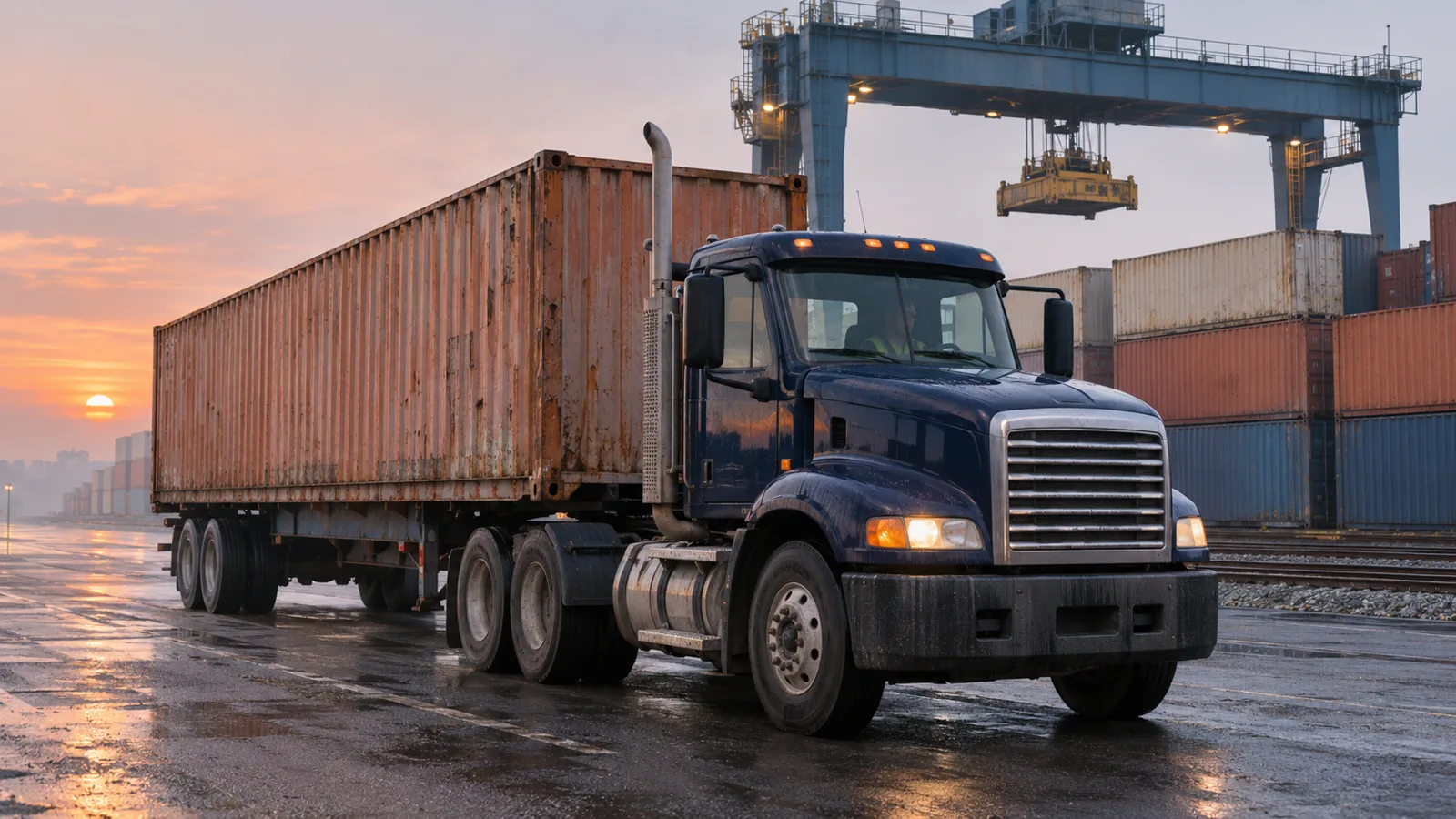
An importer of kitchen appliances in Mississauga places an order with a factory in Asia. The goods are loaded into a 40-foot container, cross the Pacific, and are discharged at a Canadian West Coast port. From there the container rides a train for several days across the Prairies and into the Greater Toronto Area. The ocean freight invoice says the shipment has "arrived," yet the container is still sitting on a rail terminal in the next city over, and the importer's warehouse in Meadowvale is waiting for stock it promised to retailers next week.
That final stretch, from the rail ramp or port terminal to the importer's dock, is called drayage. It is short in distance and easy to overlook when planning an import, but it is where a surprising number of delays and unexpected fees happen. Containers have limited free time at terminals, equipment must be returned on schedule, and warehouses need to be ready to receive when the truck shows up.
This article walks through the drayage leg step by step, using the typical journey of a container bound for Mississauga, and highlights the decisions and deadlines that importers should manage closely. If you are new to the term, our explainer on what drayage is covers the basics.
How Ocean Containers Reach Mississauga
Mississauga does not have a seaport, so ocean containers reach the city in one of two ways.
- Inland by rail: containers discharged at West Coast ports or at the Port of Montreal or Halifax are often moved by rail to intermodal terminals in the Greater Toronto Area. Canada's major railways operate large intermodal facilities in the region, including terminals in Brampton and Vaughan, a short drive from Mississauga via Highways 407, 410 and 427.
- By truck from an East Coast or US port: some containers are trucked directly from Montreal or from US East Coast ports, which can make sense for urgent shipments or when rail capacity is constrained.
For most importers here, the rail route is the norm. The ocean bill of lading may list the inland rail terminal as the final destination, in which case the ocean carrier's responsibility extends to the ramp. From that point, someone has to pick the container up, which is where drayage begins.
The Drayage Leg, Step by Step
Step 1: Customs clearance before arrival
Before a container can leave the terminal, it must be released by the Canada Border Services Agency. Importers or their customs brokers transmit the required data, and CBSA's release processes run through its systems, including the CBSA Assessment and Revenue Management (CARM) platform for accounting and payment. The goal is to have the container released before it reaches the rail terminal, not after. A container that arrives without release cannot be picked up, and the free-time clock may still be running.
Step 2: Arrival notice and availability
The ocean carrier or rail operator issues notices as the container approaches. The key moment is when the container is grounded and available for pickup at the terminal. Availability depends on the train arriving, the container being unloaded, customs release being in place, and any carrier holds being cleared, such as unpaid freight charges.
Step 3: Booking the pickup
The drayage carrier books a pickup with the terminal. Many terminals use appointment systems, so slots must be reserved in advance. During busy periods, available appointments can be limited, which is one reason it pays to arrange drayage before the container arrives rather than after.
Step 4: Chassis
A container cannot be pulled on a regular trailer. It sits on a chassis, which may be supplied by the railway, the ocean carrier, a chassis pool or the drayage company. Chassis availability can become a bottleneck during congested periods, and chassis use may be billed by the day.
Step 5: The drive
From the rail terminals north of Mississauga, the drive to most industrial areas in the city is relatively short via Highways 407, 410 and 427. Traffic on the 401 corridor around Pearson can still affect timing, especially in rush hours, so experienced drayage carriers plan pickups and deliveries around peak congestion where they can.
Step 6: Delivery and unloading
At the warehouse, the container is either unloaded while the driver waits (a live unload) or left on its chassis for the warehouse to unload later (a drop). We will come back to that choice, because it has a big effect on cost.
Step 7: Returning the empty
Once unloaded, the empty container must be returned to wherever the ocean carrier specifies. That might be the same rail terminal, a container depot elsewhere in the GTA, or occasionally somewhere less convenient. The clock on equipment charges keeps running until the empty is returned.
Free Time, Demurrage and Detention
The fees associated with drayage are often where importers get surprised. Terminology varies by carrier and terminal, but the concepts are consistent.
- Free time: a set number of days the container can sit at the terminal, or be out with the importer, before charges begin. The amount is set by the carrier or terminal and can differ by contract.
- Demurrage or storage: charges for leaving a loaded container at the terminal beyond its free time.
- Detention or per diem: charges for keeping the carrier's container, and sometimes the chassis, beyond the free period after it has left the terminal, until the empty is returned.
These charges are usually daily and can add up quickly. They are also often avoidable. The most common causes are late customs release, no drayage capacity booked in advance, a warehouse that cannot take the container on arrival, and slow unloading or empty return.
Importers should know their free time for every shipment and have a plan to move the container well within it. If your sales contract or ocean contract allows, negotiating additional free time with the carrier is worth exploring, especially for shipments arriving in busy seasons.
Live Unload or Drop: Choosing the Right Model
Live unload
The driver arrives, backs into a dock and waits while the container is unloaded. Carriers typically allow a window of free time for this, after which waiting time is billed. Live unloads work well when the warehouse has a scheduled dock, enough labour on hand and freight that can be unloaded quickly, such as palletized goods a forklift can pull out in a short time.
Drop and pick
The driver drops the container on its chassis in the yard and leaves. The warehouse unloads it when convenient, and the carrier comes back later to collect the empty. Drops make more sense for floor-loaded containers, where cartons are stacked loose from floor to ceiling and unloading can take hours. The trade-off is that drops can involve chassis charges and a second trip.
Floor-loaded containers are common for consumer goods imported from Asia, because they maximize the number of cartons in the box. Unloading them by hand is labour-intensive and often involves sorting cartons by SKU, palletizing them and labelling the pallets. A warehouse that offers container destuffing as part of its distribution warehousing service can handle this as a routine task rather than an emergency.
Pre-Pulls and Yard Storage
Sometimes the warehouse cannot receive a container right away. The dock is booked, the receiving team is busy, or the importer simply wants to stagger arrivals. Rather than leaving the container at the rail terminal and risking storage charges, a drayage carrier can pre-pull it to its own yard, then deliver it to the warehouse when a slot opens. Pre-pulls cost money, but they can be cheaper than terminal storage, and they protect against free time expiring during a weekend or holiday.
What Happens After the Container Is Unloaded
Drayage gets the goods to your door, but the import is not complete until the stock is available to sell. For many Mississauga importers, the warehouse step includes:
- Counting and checking cartons against the packing list, and noting any damage or shortages.
- Palletizing floor-loaded cartons and labelling pallets for storage.
- Receiving inventory into a warehouse management system so it is visible for orders.
- Cross-docking urgent stock straight to outbound trucks for retail customers.
- Repacking, labelling or kitting goods before they are shipped onward.
The faster this happens, the faster inventory starts generating revenue. Linking drayage scheduling with receiving capacity is one of the simplest ways to shorten the time between "container arrived" and "stock available."
A Drayage Planning Checklist for Importers
- Confirm the final destination on the ocean bill of lading, whether port or inland rail terminal.
- Have your customs broker file early so release is in place before the container is grounded.
- Know your free time and the date charges begin, for both terminal storage and equipment.
- Book drayage capacity before the container arrives, especially in busy seasons.
- Decide on live unload or drop based on how the container is loaded.
- Coordinate a dock appointment and labour with the receiving warehouse.
- Track the empty return and confirm the return location in advance.
- Review invoices for demurrage and detention, and dispute charges caused by terminal or carrier delays where your contract allows.
Why Mississauga Is a Practical Destination for Containers
For all the complexity, Mississauga is a good place to receive ocean freight. Intermodal terminals are a short drive away, the city's industrial areas are built around trucking access, and onward distribution to Toronto, Hamilton, Ottawa, Montreal and the US is straightforward from the 401, 403 and QEW corridors. For importers who distribute across Ontario and Quebec, landing containers in Mississauga and then shipping by LTL or full truckload is a common pattern. Our article on types of shipping containers is also useful when planning what equipment to book.
Bring Your Containers Home Smoothly
Drayage is a short leg with outsized consequences. When customs, terminals, trucks and warehouses are coordinated, containers move from rail ramp to shelf in a matter of days without extra fees. When they are not, costs pile up quickly. If you import into Mississauga and want help coordinating that final mile along with receiving and storage, request a quote from ShipCarte.