
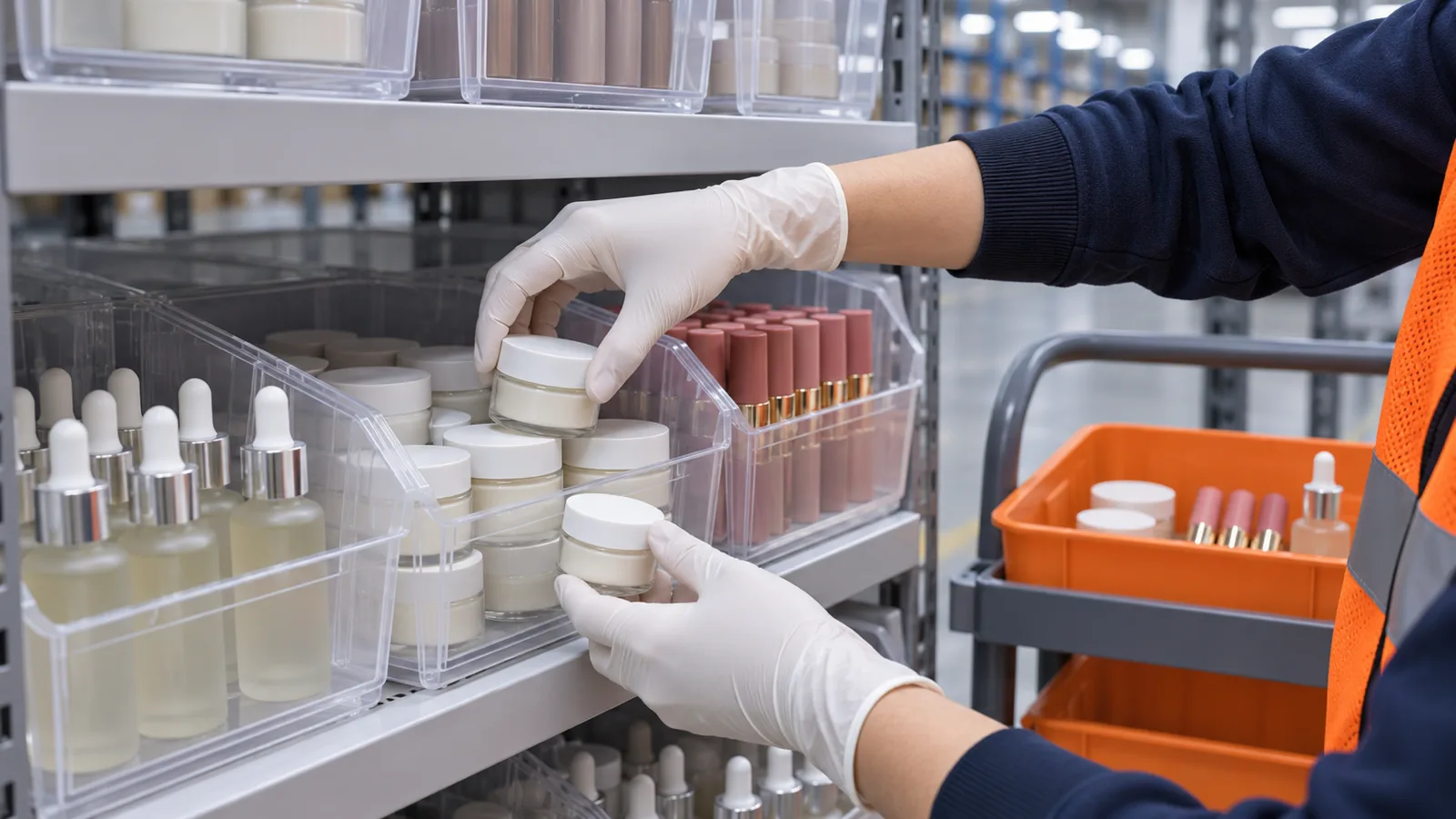
A founder of an indie foundation brand in Port Credit started by packing orders on her dining table. Twenty-two shades, two finishes and a matching concealer line meant more than sixty SKUs, many of which looked almost identical in a bin. The first time a customer received "Warm Sand" instead of "Warm Beige", it was a funny story. The fifth time, it was a pattern, and the one-star reviews started mentioning it by name.
Beauty products are deceptively hard to fulfill. They are small, high in value per cubic foot and often sold in huge shade ranges. Many contain ingredients that degrade over time, some are regulated as drugs or natural health products, and a few are classed as dangerous goods for transport. Customers notice every detail, from the colour of the lipstick to the condition of the outer box, and they share their unboxing experiences publicly.
This article looks at the three areas where cosmetics fulfillment most often goes wrong, shades, batches and expiry dates, and explains how brands working with a warehouse in Mississauga can build processes that keep orders accurate, compliant and good-looking on arrival.
Shades: Preventing the Wrong-Colour Order
Shade errors are the most visible mistake in beauty fulfillment. The products are usually the same size and shape, the packaging differs only by a small sticker or printed name, and pickers are moving quickly. Three practices make the biggest difference.
Barcode every unit and scan every pick
Visual picking does not work reliably for shade ranges. Each shade needs its own UPC or internal barcode, and every unit should be scanned at pick and again at pack. A scan mismatch stops the order before it leaves the building. If you are unsure how SKUs and UPCs relate, our explainer on the difference between SKU and UPC numbers is a good starting point.
Separate look-alike shades physically
Putting "Warm Sand" and "Warm Beige" in adjacent bins invites errors. Good slotting places similar shades apart, or at least in clearly separated bin locations, so a picker reaching into the wrong bin is caught by both the location scan and the product scan.
Use clear product images in the pick interface
A handheld or pick screen that shows a photo of the correct product, including the shade swatch or label, gives pickers a second visual check. This is particularly helpful for new staff during peak season.
Batches: Why Lot Tracking Matters for Beauty Brands
Every production run of a cosmetic has a lot or batch number. Two lots of the same shade can vary slightly in colour, scent or texture, and if there is ever a quality issue, the lot number is how you find the affected units. Lot tracking is not glamorous, but it protects your brand in several ways.
- Targeted recalls. If one batch of a serum is contaminated, you can identify exactly which customers received it and quarantine remaining stock without pulling everything. Our recall management service is built around this kind of traceability.
- Customer complaints. When a customer says a product smells different, you can check whether they received a new lot and compare it against retained samples.
- Retailer requirements. Retail and marketplace partners increasingly ask for lot information on inbound shipments.
- Supplier accountability. If a contract manufacturer delivers a batch with defects, lot data helps you document the problem and recover costs.
To make lot tracking work, the warehouse must capture lot numbers at receiving, store different lots in separate locations or at least as separate inventory records, and record which lot was shipped on each order. That requires a warehouse management system with real lot control, not just a spreadsheet. ShipCarte's WMS records lot and expiry data from receiving through to the shipped order.
Expiry Dates: Selling Fresh Product Every Time
Not every cosmetic in Canada is required to carry a printed expiry date, but many beauty products have one anyway, and some categories must. Products regulated as drugs or natural health products, such as many sunscreens, anti-dandruff shampoos and certain acne treatments, generally require an expiry date. Even where an expiry date is not mandatory, brands often print one, along with a period-after-opening symbol, because customers expect it and retailers ask for it.
Once products have dates, the warehouse should pick them in first-expired, first-out order. FEFO ensures the oldest stock ships first, reducing write-offs. It differs subtly from first-in, first-out, because a newer delivery might occasionally have an earlier expiry date. Our explainer on what FIFO means covers the basics of both approaches.
Several rules are worth setting with your 3PL:
- Minimum remaining shelf life for shipping. Decide how much life must remain on a product before it can be sent to a customer. Many brands choose a threshold based on how long a typical customer takes to use the product.
- Separate thresholds for wholesale. Retailers often require more remaining shelf life on inbound shipments than you would require for a direct-to-consumer order.
- Alerts for approaching expiry. Reports that flag stock nearing your threshold give you time to run a promotion, bundle products or donate them before they become unsellable.
- Quarantine for expired stock. Expired items should be moved to a non-pickable location automatically and disposed of according to your instructions.
Packing Beauty Orders So They Arrive Looking Right
Cosmetics are often small and light, but they are surprisingly fragile. Glass foundation bottles crack, compacts shatter, pumps leak and creams can separate in heat. Customers also care about how the order looks when they open it.
Good practices include sealing liquids in individual bags, using inserts or crinkle paper that keep items from rattling, protecting powder compacts against impact and choosing box sizes that leave little empty space. For gift sets and promotional bundles, kitting and assembly lets you pre-build sets ahead of a launch so peak orders ship quickly.
Temperature is another consideration. Lipsticks, balms and some creams soften in summer heat, and water-based products can freeze in a Mississauga winter. Ask your 3PL how stock is stored and whether insulated packaging is available for sensitive SKUs during the hottest and coldest months.
Compliance Points for Cosmetics Sold in Canada
Fulfillment partners do not take on a brand's regulatory responsibilities, but the warehouse is often where compliance problems become visible. Keep these Canadian requirements in mind.
- Cosmetic Notification. Health Canada requires manufacturers and importers to notify it about cosmetics sold in Canada, generally within a short period after first sale. Make sure every product you ship has been notified.
- Bilingual labelling. Consumer product labels generally need key information in both English and French. Imported products sometimes arrive with English-only labels, which may require relabelling before sale. A warehouse with value-added services can apply compliant labels.
- Ingredient lists. Cosmetics sold in Canada must list ingredients, typically using INCI names.
- Dangerous goods. Perfumes, nail polish, nail polish remover and aerosols often contain flammable ingredients and are regulated for transport under Transportation of Dangerous Goods rules. They may ship as limited quantities by ground, with restrictions on air transport. Our guide on how to ship perfume safely covers this in more detail.
Handling Returns of Beauty Products
Returns in beauty are different from returns in apparel. Once a lipstick, cream or mascara has been opened, it generally cannot be resold for hygiene reasons, and even unopened items need careful inspection for broken seals, dented boxes or signs of tampering. Brands should set clear grading rules with their warehouse before the first return arrives.
A practical approach sorts returns into three groups: sealed and undamaged items that can go back to sellable stock, sealed items with cosmetic packaging damage that may be sold as seconds or used for samples, and opened or questionable items that are disposed of. Record the lot number of every return. If complaints about a particular lot start to cluster, that is an early warning worth investigating.
Why Mississauga Suits Beauty Brands
Mississauga's location is a natural fit for beauty and personal care brands. A large share of Canada's population lives within a day's ground transit, which keeps shipping costs and delivery times reasonable for direct-to-consumer orders. Retail distribution centres for major Canadian beauty and drugstore chains are located across the Greater Toronto Area, which simplifies replenishment. Toronto Pearson is close at hand for imported inventory and urgent shipments, and the city has a well-established community of contract manufacturers and packaging suppliers in the surrounding region.
For brands that sell both online and through retailers, having one inventory pool in Mississauga serving both channels avoids the cost of splitting stock across locations. Our health and wellness team works with brands that need that kind of omnichannel set-up.
Questions to Ask a Cosmetics 3PL
- Do you scan every unit at pick and pack, and how are shade mismatches handled?
- Does your WMS track lot numbers and expiry dates at the unit level, and can I see which lot went to which customer?
- Can you enforce FEFO and minimum shelf-life rules by channel?
- How do you store products that are sensitive to heat or freezing?
- Can you handle limited-quantity dangerous goods such as nail polish and fragrance?
- Do you offer relabelling, kitting and branded packaging?
- How will you report on near-expiry stock, damages and inventory accuracy?
Beauty Fulfillment That Protects Your Reputation
In beauty, the product and the brand are inseparable. A wrong shade, an expired serum or a leaking bottle undermines everything your marketing has built. Scanning every pick, tracking every lot, picking by expiry and packing with care turn fulfillment from a risk into a strength.
If you are looking for a fulfillment partner in Mississauga that understands shade ranges, batch control and shelf life, ShipCarte would be glad to talk. Explore our e-commerce fulfillment services, then request a quote or schedule a consultation.