
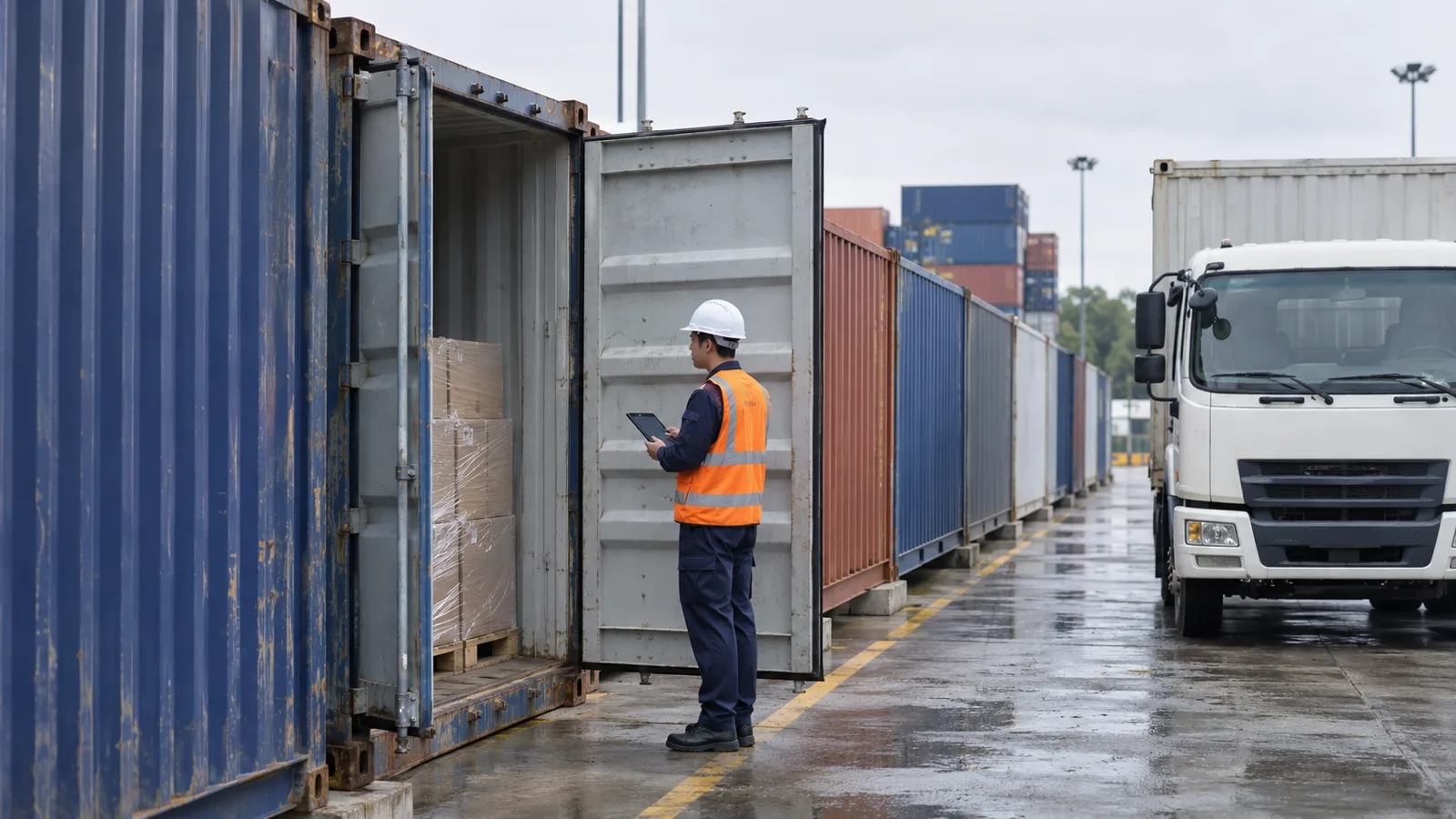
A housewares importer in the Gateway industrial area has a container of kitchen goods sitting at a rail terminal north of the city. The goods were supposed to be in the warehouse on Monday. It is now Thursday, the container is accruing storage and demurrage charges, and the retailer expecting the shipment is calling daily. The broker says CBSA has questions about the commercial invoice. Nobody is quite sure what went wrong.
Scenes like this play out regularly across Mississauga. The city is one of Canada's largest import hubs. Containers arrive from the ports of Vancouver, Montreal and Halifax by rail to terminals in the GTA, trucks cross from the US at the Peace Bridge, Lewiston-Queenston and Ambassador Bridge and travel up the QEW and 401, and air cargo lands daily at Pearson. With that much volume, even a small error rate adds up to a lot of held shipments.
The good news is that most customs delays have identifiable, fixable causes. This article walks through the most common ones, what to do about each, and how to respond when a shipment is already stuck.
How customs release works in brief
Before goods can be released into Canada, the carrier reports the shipment and the importer, usually through a licensed customs broker, submits release information to the Canada Border Services Agency. CBSA assesses the data, may refer the shipment for examination by its own officers or another government department, and then releases the goods. Duties and taxes, including GST and any provincial portion of HST where applicable, are accounted for either at release or afterwards through the importer's accounting obligations.
Since CARM, the CBSA Assessment and Revenue Management system, became the system of record in 2024, importers manage their accounts, financial security and accounting declarations through the CARM Client Portal. Delays can enter at any stage of that process.
Cause 1: Incomplete or vague commercial invoices
What happens: The invoice describes goods as "household items," "parts" or "samples," leaves out quantities or unit prices, or lists a value that doesn't match the purchase order. CBSA can't classify or value the goods with confidence, so the shipment is questioned.
The fix: Require suppliers to provide invoices with a specific description of each item (what it is, what it is made of, what it is used for), quantities, unit values, total value, currency, country of origin and the terms of sale. Send your broker a sample invoice template and ask them to reject anything that falls short before the goods ship. Our article on avoiding international shipping mistakes covers invoice basics in more detail.
Cause 2: Wrong or inconsistent tariff classification
What happens: The same product is classified differently on different shipments, or under a code that doesn't match the description. That can trigger questions at release or, later, an audit with reassessed duties and penalties.
The fix: Build and maintain a classification database for your products, reviewed by your broker or a trade consultant, and use it consistently. If a product's classification is genuinely uncertain, CBSA offers advance rulings that give you certainty before you import. Keep classification records with product specs, photos and supplier details.
Cause 3: CARM account and financial security issues
What happens: The importer's CARM Client Portal account isn't fully set up, the broker hasn't been delegated access, or there is no financial security on file to allow release before payment. Shipments can be delayed while those gaps are sorted out, or the importer may need to pay before goods can be released.
The fix: Confirm your business number and import-export program account are active, your CARM account is registered, your broker has the right delegation, and your financial security is in place and sized appropriately for your import volume. Revisit this whenever your import volume grows, because security that was adequate last year may not be now. If the setup feels confusing, ask your broker to walk through it with you.
Cause 4: Other government department requirements
What happens: CBSA enforces rules on behalf of many other departments. Food may need to meet Canadian Food Inspection Agency requirements, health products are subject to Health Canada rules, certain electronics and radio equipment face Innovation, Science and Economic Development Canada requirements, vehicles and some consumer products fall under Transport Canada or other regimes. If the required permits, licences or data aren't provided, the shipment is held until they are.
The fix: Know which departments regulate each product line before you import it. Check CFIA's automated import reference system for food, plant and animal products. Make sure licence numbers and permits are shared with your broker in advance. For health products specifically, our guide to Health Canada requirements for Mississauga distributors explains the main licensing frameworks.
Cause 5: Wood packaging and pests
What happens: Pallets, crates or dunnage made of solid wood that hasn't been treated and marked according to international standards can be refused or ordered treated or removed. Signs of pests trigger the same response.
The fix: Require suppliers to use compliant, properly marked wood packaging or switch to alternatives such as plastic pallets or engineered wood. Put the requirement into your purchase terms so it isn't left to chance.
Cause 6: Origin claims without support
What happens: An importer claims preferential tariff treatment under CUSMA, CETA, CPTPP or another agreement, but doesn't have a valid certification of origin, or the goods don't actually qualify. The claim may be denied, with duties applied, and future shipments may be looked at more closely.
The fix: Only claim preferential treatment when you have proper origin documentation on file and you are confident the goods meet the rules of origin. Remember that goods shipped from the US are not automatically US-origin. A product made overseas and warehoused in New York is still overseas-origin for tariff purposes.
Cause 7: Random and targeted examinations
What happens: Sometimes shipments are examined even when the paperwork is perfect. CBSA uses risk-based targeting and random selection. A container examination involves moving the box to an examination facility, unloading it and reloading it, which adds time and costs that the importer usually pays.
The fix: You can't eliminate examinations, but you can reduce their frequency and impact. Consistent, accurate data over time builds a compliance history. Programs such as Partners in Protection and trusted trader arrangements may be worth exploring for regular importers. Build buffer time into supply plans for critical shipments so one examination doesn't derail a launch.
Cause 8: Carrier and paperwork mismatches
What happens: The carrier's report and the importer's release data don't match: different piece counts, different weights, different consignee names. The system flags the discrepancy and release stalls until someone reconciles it.
The fix: Make sure the bill of lading or air waybill, the commercial invoice, the packing list and the customs data all tell the same story. When there is a forwarder involved, ask for copies of the house and master documents. Our explainer on master versus house bills of lading is useful background.
What to do when a shipment is already held
If you are reading this because something is stuck right now, here is a practical sequence:
- Find out exactly why. Ask your broker for the specific reason for the hold: a document request, an examination, another department's review, or a payment issue. "It's with customs" is not enough information to act on.
- Provide what is missing, fast. Corrected invoices, permits, licence numbers or product details should go to the broker the same day.
- Watch the free time. Terminals and rail ramps allow a limited number of free days before storage charges begin, and shipping lines charge for containers held too long. Know your deadlines.
- Line up the next leg. As soon as release is likely, book the drayage or truck so the shipment moves the moment it is cleared. Our guide to drayage explains this step.
- Tell your customers. If downstream orders depend on the shipment, communicate early rather than late.
- Record the root cause. After release, note what went wrong and change the process so it doesn't repeat.
Building a customs-ready import process
Delays rarely come from a single mistake. They come from processes that rely on someone remembering to check. A few structural changes make a big difference for Mississauga importers:
- A standard supplier onboarding pack with invoice, packaging and labelling requirements.
- A product master file with classification, origin and regulatory notes for every SKU.
- Pre-shipment document review by your broker for new suppliers or new products.
- A shared import calendar with expected arrival, free time and delivery appointment dates.
- A warehouse partner ready to receive promptly, so cleared freight doesn't sit at a terminal.
That last point is often overlooked. Release is only useful if the goods can be picked up and received quickly. ShipCarte's distribution warehousing in Mississauga receives inbound containers and freight, records inventory accurately through our warehouse management system, and gets stock ready to sell or ship onward without long dwell times.
When the problem crosses the border both ways
Many Mississauga importers also export, particularly to the US. Delays on the export side, such as missing export declarations for certain goods or US customs holds, can tie up inventory you are counting on. Our cross-border shipping services help businesses keep goods moving in both directions with the documentation and carrier coordination each crossing needs.
Keep your imports moving
Customs delays cost time, money and customer trust, but they are rarely random. With clean data, the right registrations, and a team ready to act when a hold happens, most can be prevented or shortened. If your imports keep getting stuck, schedule a consultation with ShipCarte. We can look at where shipments are stalling and how warehousing, freight and documentation support in Mississauga can help you get goods to your customers on time.