
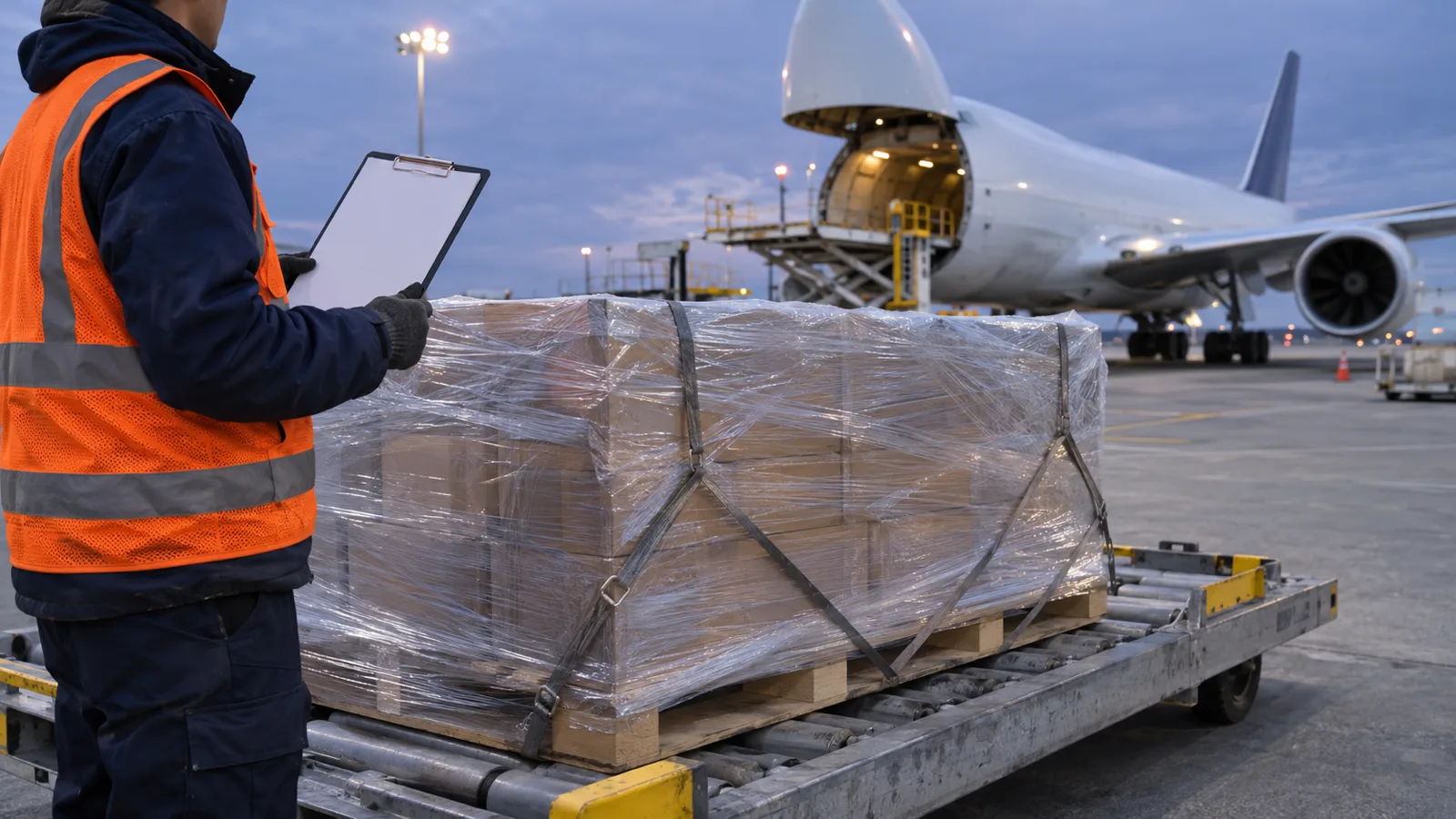
A home-fitness brand in Meadowvale ships a set of adjustable dumbbells to a customer in Ohio. The order looks perfect until the courier arrives at the customer's door and asks for payment of duties, taxes and a brokerage fee before handing it over. The customer refuses, the parcel goes back to Canada, the brand pays return shipping, and a one-star review appears that weekend. Nothing was wrong with the product. The problem was the shipping terms.
That scenario is exactly what Delivered Duty Paid (DDP) shipping is designed to prevent. Under DDP, the seller takes responsibility for getting the goods all the way to the buyer, including import duties, taxes and customs clearance in the destination country. For the customer, the price they paid at checkout is the price they pay, full stop.
For Mississauga exporters, DDP has become more relevant as international duty rules have tightened and as online shoppers expect a domestic-style experience no matter where the seller is based. This guide explains how DDP works in practice, how it compares with other terms, and what you need in place to offer it reliably.
DDP in plain language
DDP is one of the Incoterms rules published by the International Chamber of Commerce. Under DDP, the seller:
- Arranges and pays for transport to the named destination.
- Handles export clearance in Canada.
- Handles import clearance in the destination country.
- Pays import duties, taxes such as VAT or sales tax collected at import, and related fees.
- Bears the risk of loss or damage until the goods are delivered.
The buyer's only job is to receive the goods. If you want the formal definition and background, ShipCarte's explainer what does DDP mean covers the Incoterm itself, and how delivered duty paid shipping works goes into the mechanics.
DDP versus DAP: which should you offer?
The main alternative for e-commerce is Delivered at Place (DAP), sometimes called Delivered Duty Unpaid (DDU) in older usage. Under DAP, the seller pays for transport, but the buyer pays any duties and taxes on arrival.
When DDP makes sense
- You sell direct to consumers who do not expect to deal with customs.
- Your average order value is high enough that a surprise duty bill would cause refusals.
- You want predictable conversion rates and fewer abandoned deliveries in a market.
- Competitors in your category already advertise duty-free or duties-included delivery.
When DAP may be acceptable
- Your buyers are businesses with their own customs brokers and import accounts.
- Order values are low and the destination country's thresholds mean duties rarely apply (though those thresholds are shrinking in several markets).
- You ship rarely to a particular country and the set-up effort for DDP is not yet justified.
For a deeper side-by-side, see what DAP means. Many Mississauga brands end up offering DDP to consumers in their main export markets and DAP to wholesale buyers.
What it takes to ship DDP: a step-by-step view
Step 1: Classify your products
Every product needs a Harmonized System (HS) code. The first six digits are shared internationally; destination countries add more digits for their own tariff schedules. Getting classification right determines the duty rate you will pay. A customs broker or experienced logistics partner can help you classify each SKU once and store the codes in your product data.
Step 2: Determine origin
Country of origin is where the goods were made or substantially transformed, not where they ship from. A product designed in Mississauga but manufactured in Vietnam is Vietnamese-origin for customs. Origin affects duty rates and whether trade agreements apply. For goods that qualify as originating under CUSMA, preferential treatment may be available when entering the United States or Mexico, but you need supporting origin information to claim it.
Step 3: Understand the destination's rules
Each market collects duties and taxes differently, and several have changed in recent years:
- United States. US rules for low-value shipments changed significantly in 2025, when duty-free de minimis treatment for many low-value imports was suspended. Tariff measures affecting Canadian goods have also shifted. Confirm current treatment for your products before setting prices, and see ShipCarte's earlier note on Section 321 for historical context.
- United Kingdom. For many consignments up to a set value, the seller or marketplace is expected to charge and account for UK VAT at the point of sale, which typically requires VAT registration.
- European Union. The Import One-Stop Shop (IOSS) lets sellers collect VAT at checkout for low-value consignments and declare it through a single registration, often via an intermediary.
- Australia. GST on many low-value imported goods is collected by registered overseas vendors at the point of sale.
Thresholds and procedures can change, so treat these as starting points for a conversation with your broker or carrier rather than final rules.
Step 4: Calculate landed cost at checkout
To charge customers correctly, your store needs to estimate duties and taxes for each order. Many platforms and cross-border tools calculate landed cost based on HS code, origin, value and destination, then show the total at checkout. The aim is a single all-in price, with duties and taxes either itemized or built into the product price.
Step 5: Choose the right carrier or program
Most major international couriers offer a duties-and-taxes-paid option where they bill the shipper's account for import charges. Some cross-border programs consolidate parcels from Canada, clear them in bulk in the destination country, and then hand them to domestic carriers. Each approach has trade-offs in cost, speed and tracking.
From Mississauga, you have strong options for both. Toronto Pearson International Airport is Canada's busiest airport and a major air cargo hub, and many courier gateways and freight forwarders operate in the Airport Corporate Centre, Malton and along Airport Road. For trucking to the US, Highways 401, 403 and the QEW connect to the Lewiston-Queenston and Peace Bridge crossings in roughly 90 minutes under normal traffic, and the Ambassador Bridge in Windsor is reachable within a day's drive.
Step 6: Prepare accurate documentation
Commercial invoices must include a clear description, HS code, origin, quantity, value and currency. Vague descriptions like "gift" or "parts" are a common cause of delays. Export declarations through the CBSA's systems may be required depending on value and destination. When the shipment is DDP, the documentation should name your business as responsible for duties, so the carrier bills you rather than the customer.
Step 7: Reconcile duty invoices
Carriers will invoice you for duties, taxes and any disbursement or brokerage fees, sometimes weeks after delivery. Match these against what you collected at checkout. Over time, this reconciliation tells you whether your landed cost estimates are accurate and which products or markets are costing more than expected.
The real costs of DDP
DDP shifts costs from your customer to you, so it is worth knowing where they come from:
- Duties based on HS code, origin and value.
- Import taxes such as VAT or sales tax, depending on destination.
- Brokerage or disbursement fees charged by the carrier or broker for clearing goods and advancing duties.
- Registration and compliance costs for schemes like UK VAT or EU IOSS.
- Software costs for landed cost calculation, if not built into your platform.
These vary widely by product, market and volume. Rather than guessing, run a sample of real orders through your carrier or broker and compare the total cost to what you would lose through refused deliveries and abandoned carts under DAP.
Common DDP mistakes
- Undervaluing shipments. Declaring a lower value to reduce duties is customs fraud and can lead to penalties and seized goods. ShipCarte's article on what happens if customs seizes your merchandise explains the consequences.
- Using one HS code for everything. Different products carry different rates; a catch-all code causes over- or under-payment.
- Forgetting returns. If an international customer returns a DDP purchase, recovering duties already paid can be complex. Plan your return policy for each market.
- Ignoring rule changes. Duty and tax rules in major markets have changed repeatedly in the last few years. Build a habit of checking with your broker each quarter.
- Not testing the customer experience. Place a test order to each market and confirm the customer is never asked for payment on delivery.
Telling customers you ship duty-paid
DDP only helps conversion if shoppers know about it. Many international buyers have been burned by surprise charges before and hesitate at checkout with a foreign retailer. A few simple touches make the benefit visible:
- State "duties and taxes included" on product pages and in the cart for eligible countries, not only in a shipping policy page.
- Show prices in the customer's local currency where your platform supports it.
- Give an honest delivery estimate that includes customs clearance time.
- Explain in your FAQ what happens if a customer is ever asked to pay on delivery, and how you will make it right.
That last point matters. Even with good systems, an occasional parcel can be misrouted into a collect-on-delivery process. A clear promise to refund or cover any unexpected charge protects trust while your team sorts it out with the carrier.
How a Mississauga 3PL supports DDP
DDP touches product data, checkout, carriers, customs and accounting. A logistics partner can pull these together. ShipCarte's cross-border shipping service helps exporters set up documentation and carrier options for duty-paid delivery, while its shipping platform generates international labels and commercial invoices from your order data. When inventory sits in a fulfillment centre that already ships internationally every day, DDP becomes a routine workflow rather than a special case.
For brands selling to the US in volume, it can also make sense to look at LTL freight to move stock in bulk and fulfill closer to American customers, a model that changes where and how duties are paid.
Deliver a better international experience
International customers judge your brand by the moment the parcel arrives. If that moment involves an unexpected bill, the sale is at risk. Offering DDP from Mississauga takes some upfront work on classification, registrations and carrier set-up, but it removes one of the biggest sources of friction in cross-border e-commerce. To review your export markets and design a duty-paid shipping workflow, request a quote from ShipCarte with details of your products and destinations.