
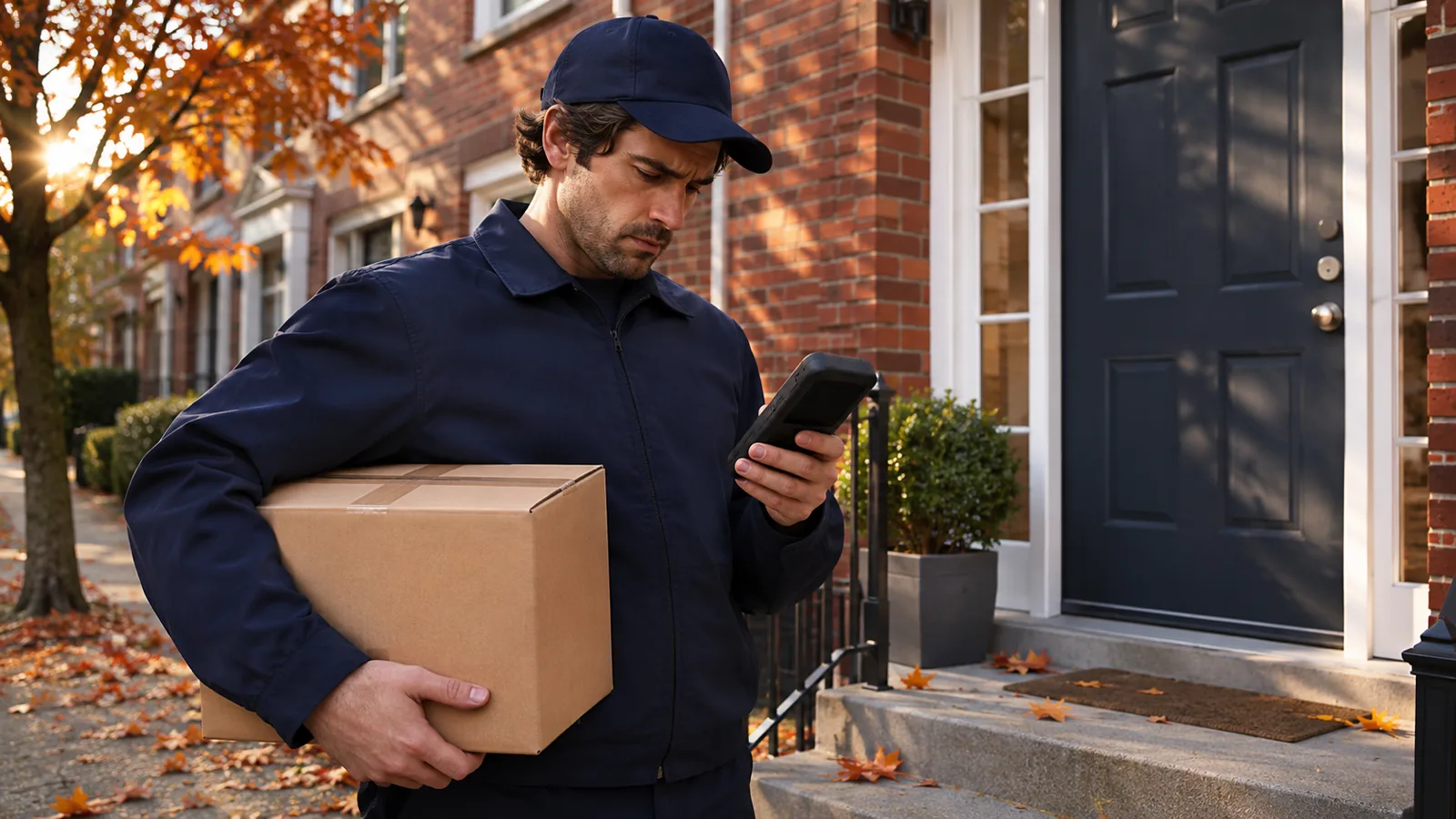
It is a Tuesday afternoon and the customer service inbox at a small online tea company in Streetsville is filling up. One customer in a Square One condo says the courier left a notice but never buzzed. Another, in a basement apartment off Erin Mills Parkway, says the tracking shows "address incomplete" even though she has lived there for three years. A café in the Gateway industrial area received nothing because the driver arrived after the unit had closed for the day. None of these are lost parcels yet. All of them are costing the business time, money and goodwill.
Delivery exceptions are the gap between "out for delivery" and "delivered". They are rarely dramatic, but they add up: re-delivery fees, address correction charges, returned-to-sender shipments, reshipped orders and customers who quietly stop buying. For e-commerce brands and B2B shippers sending parcels across Mississauga, a city that mixes high-rise towers, older semi-detached streets, secondary suites, new subdivisions and sprawling industrial parks, exceptions are a normal part of the job.
The good news is that most exceptions are predictable, and many are preventable. This article walks through the most common exception types in Mississauga, explains what causes them and lays out a practical playbook for handling them when they happen.
What Counts as a Delivery Exception
Carriers use the term "exception" for any event that interrupts the normal delivery process. Some exceptions are informational, such as weather delays. Others need action from the shipper or recipient. The scan wording differs by carrier, but the underlying causes fall into a handful of groups:
- Address problems: incomplete, incorrect or unrecognised addresses.
- Access problems: locked buildings, gated communities, closed businesses or no safe place to leave a parcel.
- Recipient problems: nobody available to sign, refused delivery, or a recipient who has moved.
- Package problems: damaged packaging, unreadable labels or items that need special handling.
- Network problems: weather, vehicle breakdowns, sorting errors or capacity overflows during peak season.
Only the last group is truly outside the shipper's control. The first four can be reduced with better data, clearer packaging and smarter delivery options.
Walking Through Common Mississauga Scenarios
Scenario 1: The condo tower without a buzzer code
Mississauga's City Centre around Square One has grown into a dense cluster of residential towers, and similar buildings line Hurontario Street and parts of Port Credit. Many have concierge desks with set receiving hours, parcel rooms, or buzzer systems that use codes rather than unit numbers. If the courier cannot get inside and the concierge is not accepting parcels, the driver may leave a notice and move on.
Prevention: Add an optional "delivery instructions" field to your checkout, and prompt customers in condo buildings to include buzzer codes or concierge information. Pass that field through to the shipping label or carrier data, not just to your order notes. Our guide on first-mile and last-mile delivery explains why the final hand-off is where so many problems surface.
Scenario 2: The basement apartment
Secondary suites are common in neighbourhoods like Malton, Meadowvale and Churchill Meadows. They often share a street address with the main house, with the unit indicated only by "lower" or "basement" or a separate side entrance. Customers frequently leave the unit designation off, or type it into the wrong field, so the label shows only the house number. The driver delivers to the main door, and the parcel ends up with the landlord, or it is flagged as an address problem.
Prevention: Use address validation at checkout that flags multi-unit addresses and asks the customer to confirm a unit. Make sure "Address line 2" is printed prominently on the label.
Scenario 3: The new subdivision
Recently built streets, particularly on the western edge of the city and in nearby Milton and Brampton, may not yet appear in every carrier's routing database or in drivers' mapping apps. Postal codes may also be new. The parcel scans "address not found" even though the customer has typed everything correctly.
Prevention: There is not much a shipper can do at checkout here, but customer service can respond quickly by confirming the address with the customer and contacting the carrier with landmarks or a nearby cross street.
Scenario 4: The industrial unit that closes at 3:30
Business-to-business parcels going to the industrial areas around Pearson, Gateway or Meadowvale Business Park often hit locked doors. Many small businesses operate shortened receiving hours, share a building with several tenants, or are open only when a staff member is on site. A driver who arrives at 4:15 p.m. finds the door locked and returns the parcel to the depot.
Prevention: Capture receiving hours for regular B2B customers and choose services or delivery windows that fit them. For larger B2B shipments, appointment-based LTL delivery may be more reliable than courier service.
Scenario 5: Signature required, nobody home
High-value orders often require a signature, or at least for the driver to confirm the recipient in person where carriers are using contactless procedures. If no one is home, the parcel goes to a depot or a retail pickup point. In Mississauga, that might mean a carrier location several kilometres away near the airport, which is inconvenient for customers without a car.
Prevention: Only require signatures where the order value or risk justifies it, and let customers choose a pickup point or alternate address at checkout.
Why Address Data Is the Root of Most Problems
Many exceptions trace back to bad data entered at checkout. Customers type quickly on phones, autofill inserts outdated addresses, and some checkouts truncate long street names or merge unit numbers into the wrong line. Each small error becomes a big problem once a label is printed.
Practical safeguards include:
- Real-time address validation against Canada Post's address data or another reliable source, with suggested corrections the customer can accept.
- Flags in your order management system for orders that fail validation, so they are reviewed before picking rather than after a failed delivery.
- Rules that check postal code format, catch missing unit numbers on known multi-unit buildings and spot PO boxes that some services cannot deliver to.
- Saving corrected addresses to the customer record so the same mistake does not repeat on the next order.
Carriers also apply address correction fees when they have to fix an address in transit. Those charges can appear on invoices weeks later, so it is worth auditing invoices for them. Our article on types of shipping surcharges explains how these fees work.
A Playbook for Handling Exceptions When They Happen
Even with good prevention, some exceptions will occur. The difference between a minor hiccup and a lost customer is how quickly and clearly you respond.
Monitor proactively
Do not wait for the customer to complain. Set up alerts for exception scans so your team sees problems the same day. A centralised shipping platform that pulls tracking events from several carriers into one dashboard makes this far easier than checking each carrier's site separately.
Contact the customer first
When an exception appears, reach out with a short, specific message: what happened, what you need from them and what happens next. "The courier could not access your building. Can you send us the buzzer code or confirm the concierge accepts parcels?" works much better than a generic "there was a problem with your delivery".
Update the carrier quickly
Most carriers allow shippers to update delivery instructions, request re-delivery or redirect a parcel to a pickup point while it is still in the network. The window is usually short, so speed matters. If the parcel is already being returned, decide quickly whether to intercept it or reship.
Decide when to reship
For low-value items, reshipping immediately can be cheaper than waiting for a returned parcel. For high-value items, wait until you have confirmed the address and know where the original package is. Set clear rules so customer service does not have to escalate every case.
Record the cause
Tag every exception by cause: address, access, recipient, package or network. Over time, the data shows where to invest. If most exceptions come from condo buildings, improve delivery instructions. If they come from one carrier on one route, raise it with that carrier or shift volume.
Choosing Services That Reduce Exceptions
Carrier choice affects exception rates. Some carriers handle dense urban deliveries better, some have more pickup points, and some offer evening or weekend delivery. Within the Greater Toronto Area, local courier services can be a good fit for same-day or next-day delivery to businesses with restricted hours.
A multi-carrier approach lets you route each order to the service best suited to its destination. For example, residential orders to high-rise buildings might go to a carrier with strong pickup-point coverage, while B2B orders to industrial parks might go to one with reliable business-hours delivery. ShipCarte's small parcel shipping and carrier management services are built around this kind of routing.
When Exceptions Become Returns
Some parcels cannot be delivered at all and end up back at the warehouse. These return-to-sender parcels should be processed differently from customer-initiated returns. The product is usually new and unopened, so it can often go straight back to stock after inspection. But the order still needs resolution: a refund, a reship or a conversation with the customer. A structured returns management process stops these parcels from sitting unprocessed in a corner of the warehouse.
Measuring Progress
Track a few simple numbers each month: the share of shipments with an exception, the share that end up returned to sender, average days to resolve an exception and the cost of reships and correction fees. Break them down by carrier, service and destination type. Even small improvements are worth having, because each avoided exception saves both direct cost and customer frustration.
Fewer Exceptions, Happier Customers
Delivery exceptions are an everyday reality for anyone shipping in a city as varied as Mississauga. Condo towers, basement suites, new streets and industrial units each create their own challenges. Businesses that validate addresses, capture delivery instructions, monitor tracking proactively and respond quickly turn most exceptions into minor delays rather than lost orders.
If exceptions are eating into your margins or your customer service team's time, ShipCarte can help with address validation, multi-carrier routing and exception monitoring. Request a quote or schedule a consultation to review your delivery data with our team. Customers can also check shipments anytime on our tracking page.