
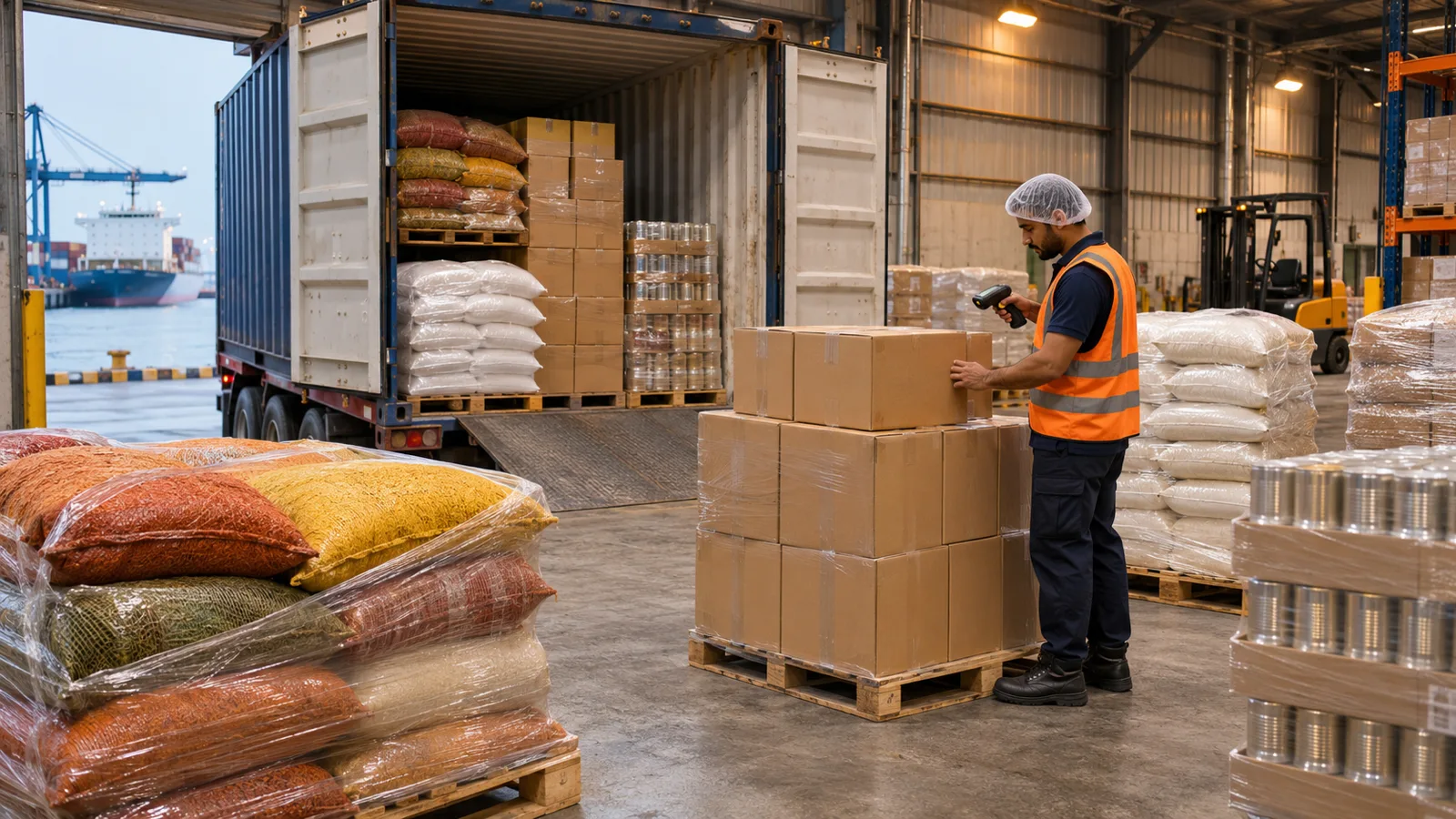
Walk through a grocery plaza on Hurontario Street, in Malton or along Dundas Street and you will find shelves stacked with basmati rice from India and Pakistan, spices from Sri Lanka, olive oil from Lebanon, instant noodles from Korea, plantain chips from Ghana and dried fruit from Turkey. Mississauga is one of the most diverse cities in Canada, and its grocery stores reflect that. Behind every one of those products is an importer, often a family business, that has worked out how to get food from another continent onto a shelf in Peel Region legally, safely and at a price customers will pay.
It is not easy. Food is one of the most regulated categories of imports in Canada. A container of spices might be held because the labels are not bilingual, a shipment of sweets might be refused because an ingredient is not permitted, and a pallet of frozen samosas might spoil while waiting for paperwork. For importers, the logistics and the compliance are inseparable.
This guide walks through the journey of a specialty food import into Mississauga, stage by stage, and highlights where things commonly go wrong.
Stage 1: Getting Licensed Before You Import
Before the first container is booked, most businesses that import food into Canada need a Safe Food for Canadians (SFC) licence from the Canadian Food Inspection Agency (CFIA). The Safe Food for Canadians Regulations also require importers to have preventive controls in place, which means understanding the food safety risks of what you bring in and making sure your foreign suppliers produce food to standards that meet Canadian requirements. Importers also need to keep traceability records so products can be tracked one step back and one step forward, which becomes essential if there is ever a recall.
The specific requirements depend on the type of food. Meat, fish, dairy, eggs, fresh fruit and vegetables and some processed products have additional, commodity-specific rules. CFIA's Automated Import Reference System (AIRS) is the official tool for checking the requirements that apply to a particular product from a particular country. Check it for every new product, not just every new supplier.
Stage 2: Getting the Product Right at Origin
Many compliance problems are cheaper to fix at the factory than in a warehouse in Mississauga. Work with suppliers well before the first shipment on:
- Bilingual labelling. Most prepackaged food sold in Canada must be labelled in English and French, including the common name, net quantity, ingredient list, allergens and the name and address of the Canadian dealer or importer where required. Labels in only the language of the origin country are a common reason for holds.
- Nutrition facts and ingredients. Canadian formats and rules differ from those in many other countries. An ingredient that is permitted in the origin country may not be permitted, or may be limited, in Canada.
- Allergens. Priority allergens must be clearly declared. Undeclared allergens are a frequent cause of food recalls.
- Date marking. Understand when best-before dates are required and how they should be formatted.
- Packaging for the journey. Ocean containers can experience heat, humidity and condensation. Bags of rice and flour, tins and glass jars all need packaging and palletizing that survives weeks at sea and rail transfers.
If products will arrive without compliant labels, some importers arrange for Canadian labels to be applied after arrival. That must happen in an appropriate setting before the food is sold, and it adds handling cost. A warehouse that offers value-added services like relabelling can do this work, but it is usually more efficient to get the labels right at origin.
Stage 3: The Journey to Mississauga
Most specialty food arrives by ocean container. Shipments from South Asia, the Middle East, Africa and Europe often land at Canadian east coast ports such as Halifax or Montreal, or sometimes at US East Coast ports, while shipments from East and Southeast Asia frequently arrive at Vancouver or Prince Rupert. From there, containers usually travel by rail to intermodal terminals in the GTA, including the facilities in Brampton and Vaughan, before being drayed by truck to a warehouse in Mississauga. Smaller, urgent or high-value shipments sometimes arrive by air through Toronto Pearson International Airport, which is right on Mississauga's doorstep.
Each handoff takes time. Ocean transit, port dwell, rail and drayage can add up to several weeks, and delays at any step ripple down the line. Importers who sell fast-moving staples learn to order with plenty of buffer stock, particularly ahead of major cultural festivals and holidays, when demand for particular products rises sharply. Ramadan, Diwali, Lunar New Year, Christmas and Eid all shift what Mississauga shoppers are buying, and missing the window because a container was late can mean a whole season of lost sales. For more on how containers and drayage work, see our explainers on types of shipping containers and what drayage is.
Stage 4: Customs Clearance and Food Inspection
When food arrives in Canada, it has to clear both the Canada Border Services Agency (CBSA) and, where applicable, CFIA requirements. In practice, a customs broker usually handles the entry. Key elements include:
- Accurate tariff classification of each product, which determines duty rates
- Country of origin and any preferential tariff treatment available under Canada's trade agreements, with the documentation to support it
- Commercial invoices with clear product descriptions, quantities and values
- CFIA import information, such as the SFC licence number and any required certificates or permits for the commodity
- GST, and duties where applicable, accounted for under the importer's business number and import/export account with the CBSA, usually through the customs broker
Shipments can be selected for inspection or held if documentation is missing or inconsistent. A product description that says "food items" on the invoice is an invitation for questions. Precise descriptions, consistent paperwork and a responsive broker reduce the chance of delays. If a shipment is refused entry, the importer may need to re-export or destroy it, which is costly. Our article on understanding duties and taxes covers the tax side in more detail.
Stage 5: Receiving and Storage in a Food-Grade Warehouse
Once cleared, the container reaches the warehouse. For food, the warehouse itself becomes part of your compliance picture. Look for:
- Food-grade practices: clean, pest-controlled storage, separation from chemicals and non-food items, and documented sanitation routines
- Temperature options: ambient storage for dry goods, and access to cold storage for chilled and frozen products such as dairy, meats, frozen snacks and some sauces
- Lot and expiry tracking: the ability to record lot numbers and best-before dates at receiving and to pick by first-expired, first-out (FEFO) so older stock ships first
- Allergen awareness: sensible storage practices to avoid damage that could lead to cross-contact, such as leaking bags of nut flours above other products
- Recall readiness: systems that can quickly tell you where every lot went
Containers of imported food are often floor-loaded, meaning cartons and bags are stacked directly on the container floor rather than on pallets, to maximise capacity. Unloading, sorting and palletizing a floor-loaded container takes labour and time, so confirm in advance how your warehouse handles and charges for it.
Stage 6: Distribution to Stores, Restaurants and Online Customers
From the warehouse, specialty food importers typically sell through several channels at once: independent grocery stores, larger supermarket chains with international aisles, restaurants and caterers, and increasingly, online stores shipping directly to consumers across Canada.
Each channel needs something different. Independent grocers across Mississauga, Brampton and Toronto often want frequent, mixed-SKU deliveries of a few pallets or less. Chain retailers may require EDI, strict delivery appointments and labelling to their specifications. Restaurants need reliability above all. Online orders need parcel packing, often with insulated packaging for perishables. A warehouse in Mississauga with good distribution services can serve all of these from one inventory pool, using LTL for store deliveries and parcel for online orders.
Planning for the Possibility of a Recall
No importer wants to think about recalls, but specialty food importers should plan for one before they need it. Recalls can be triggered by an undeclared allergen, a contamination finding in the origin country, or a labelling problem discovered after products are on shelves. When it happens, CFIA will expect the importer to identify quickly which lots are affected and which customers received them. Keep supplier contacts, lot records and customer shipment records organised and accessible, and run a mock recall once in a while to test how long it takes to trace a single lot. A warehouse with structured recall management processes can quarantine affected stock and pull shipment histories in a fraction of the time a manual search would take.
Common Pitfalls for Specialty Food Importers
- Assuming a product sold elsewhere is fine in Canada. Ingredients, additives and labelling rules differ. Check each product.
- Underestimating transit time. Ocean and rail delays are common. Holiday demand does not wait.
- Ignoring shelf life. Weeks in transit and storage eat into best-before dates, leaving less time to sell. Buy quantities you can sell well within shelf life.
- Weak traceability. If you cannot quickly identify which customers received a particular lot, a recall becomes much harder and more expensive.
- Choosing a warehouse that does not specialise in food. General warehouses may lack the sanitation, temperature control and lot tracking food requires.
Bring Your Imports In With ShipCarte
ShipCarte supports food and beverage businesses in Mississauga with warehousing, temperature-controlled storage, lot tracking and distribution to retailers and online customers. We also coordinate food and beverage logistics from port or rail terminal to your customers. If you are importing specialty foods or planning your first container, schedule a consultation and we will help you map out the journey from origin to shelf.