
An office furniture supplier in Ottawa wins a contract to furnish a new school in a fly-in community in northwestern Ontario. The order is straightforward on paper: desks, chairs, shelving and a few hundred cartons. Then the questions start. Which courier delivers there? Will the furniture survive the trip? Who signs for it at the other end? Does the community pay HST? And why does the education authority keep asking whether it can arrive "on the road"?
Suppliers across Ontario face versions of this situation every year. Remote First Nations communities in the far north buy everything from groceries and medical supplies to construction materials, vehicles, school equipment and household goods. Many of those orders come from businesses in southern Ontario that have never shipped beyond the reach of a highway. The logistics are manageable, but they work differently, and getting them wrong is expensive for the supplier and frustrating for the customer.
We have organized this guide around the questions suppliers ask most often, with practical answers you can use when quoting, packing and shipping.
Which communities are we talking about?
Ontario has more than thirty First Nations communities with no year-round road access, most of them in the far north within the Treaty 9 and Treaty 5 areas. Communities such as Sandy Lake, Big Trout Lake (Kitchenuhmaykoosib Inninuwug), Pikangikum, Webequie, Fort Severn and Attawapiskat rely on aircraft for most of the year, with seasonal winter roads or summer barges for heavy freight. Others, such as communities along Highway 11, Highway 17 or the roads north of Red Lake and Pickle Lake, have year-round road access but are still far from the nearest major warehouse.
The first step for any order is to establish which category the destination falls into. "Northern Ontario" covers everything from Sudbury, with full courier coverage, to Fort Severn on Hudson Bay, which is reached by air or a short winter road season.
How does freight actually get there?
There are four main routes, and most remote communities use several of them over the course of a year.
- Air cargo from hubs such as Thunder Bay, Sioux Lookout, Red Lake, Timmins and Moosonee. Available year-round, fast, and expensive, with weight and size limits set by the aircraft.
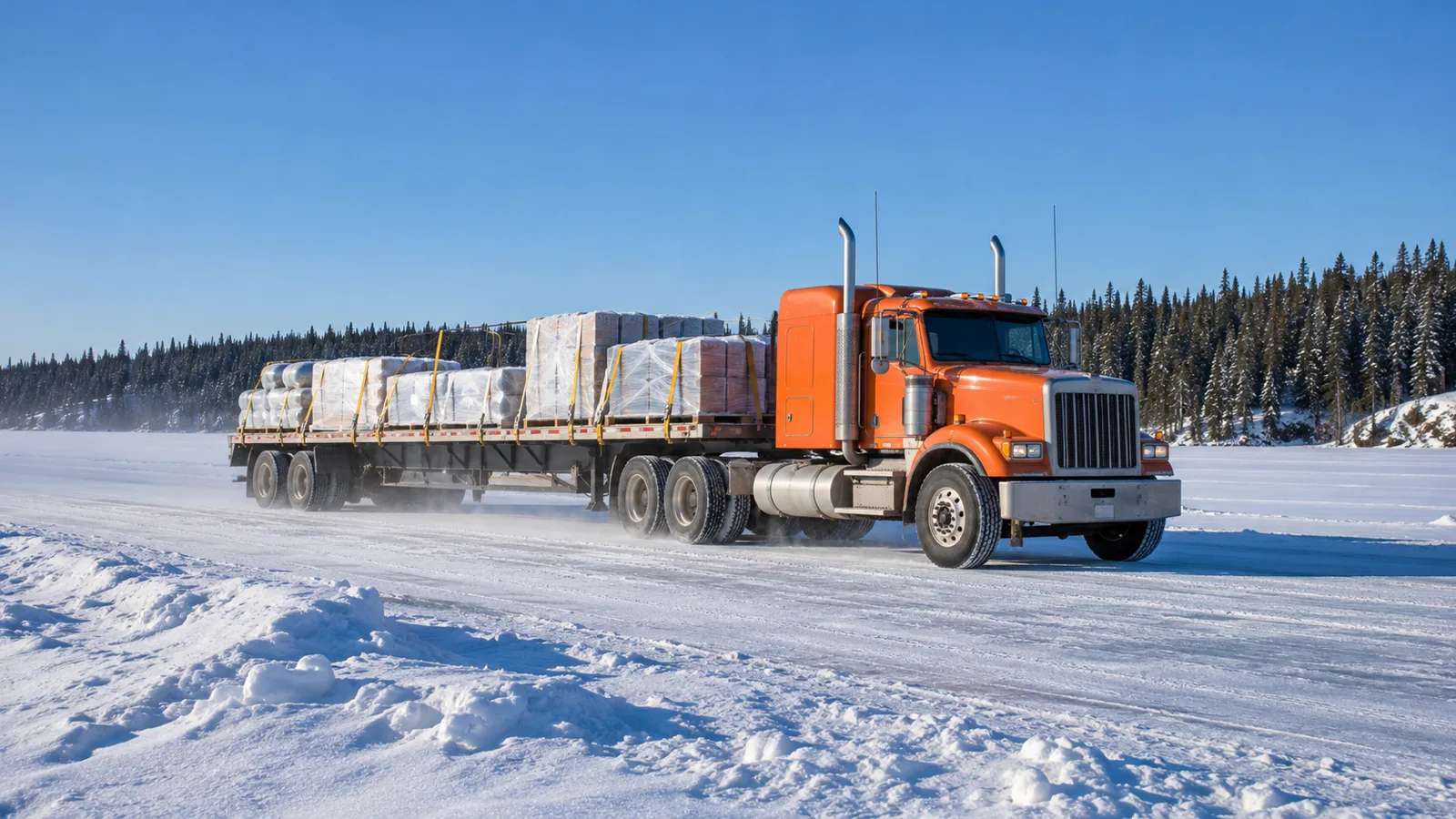
- Winter roads, usually open for several weeks between late January and March, carrying heavy and bulky goods by truck.
- Rail and barge to the James Bay coast, with rail to Moosonee year-round and barges up the coast in summer.
- Mail and parcel services, with Canada Post serving remote communities through its air contracts. Many courier companies do not deliver directly to fly-in communities and instead hand off to Canada Post or a regional carrier.
For a closer look at the seasonal calendar, see our companion article on remote rail and winter road freight in far northern Ontario.
Can I just ship by courier like any other order?
For small parcels, often yes, but check first. Enter the community's postal code into your carrier's system and see what it returns. Some couriers will accept the shipment and pass it to a partner, adding days and sometimes a remote area surcharge. Others will reject it outright. Canada Post tends to have the broadest reach for small parcels to fly-in communities.
For anything larger than a few cartons, a courier is usually the wrong tool. Palletized freight is better consolidated and sent to an air cargo hub or winter road staging warehouse, then moved north as freight. Our small parcel shipping service and carrier management team can compare options for a given postal code so you do not discover the limitation after the label is printed.
Why does timing matter so much?
Because the cost difference between modes is enormous. Flying a pallet of building materials into a remote community can cost many times what it costs to move the same pallet over a winter road. A community or contractor ordering heavy goods will plan the whole year around the winter road season. If your order misses the window, your customer either pays air rates or waits until the following winter.
When quoting, always ask the customer:
- When do you need the goods in the community?
- Are you planning to bring this in over the winter road, by barge, or by air?
- Where do you want it delivered in the south for staging, if anywhere?
- Is there a freight forwarder or carrier the community already uses?
Many communities and organizations have established relationships with specific carriers and expeditors. Delivering to their chosen staging point in Thunder Bay, Sioux Lookout or Timmins on time is often the most valuable thing a supplier can do.
How should I pack for the trip?
Assume the freight will be handled several times, by different people, in cold or wet conditions, and possibly on rough ground. Shipments to remote communities often go from your dock to a southern truck, to a northern warehouse, to an aircraft or winter road truck, and finally to a pickup truck or loader in the community.
- Use strong double-wall cartons and avoid reusing worn boxes.
- Palletize where possible, with straps or bands plus stretch wrap.
- Keep individual pieces within what one or two people can lift if they will be hand-unloaded from a small aircraft.
- Protect anything that can freeze, including liquids, paints, batteries and some electronics. Consider whether the product should travel outside winter.
- Mark every piece with the consignee name, community, contact phone number and piece count (for example, 3 of 12).
- Include a packing list inside and outside the shipment.
For aircraft, compact packaging matters even more. Air cargo is priced on the greater of actual or dimensional weight, and small aircraft have tight door sizes. Breaking down furniture or using flat-pack versions can make the difference between a shipment that fits and one that does not.
Who receives the shipment?
In a southern city you can assume a loading dock, a receiver with a scanner, and a signature on delivery. In a remote community, the reality is different. Freight might arrive at a small airstrip, be held at a community warehouse, or be picked up by the end user. Before shipping, confirm:
- The name and phone number of a person who will receive the freight.
- Whether delivery is to the airstrip, a band office, a school, a health centre, a store or a private residence.
- Whether equipment such as a forklift or loader is available at the destination.
- Whether the receiver needs notice before arrival so someone can meet the aircraft or truck.
Communication goes a long way. A phone call to the band office or the project contact before dispatch, and another once the freight leaves the south, prevents most delivery problems.
How does sales tax work for these orders?
This is an area where suppliers often get it wrong. Under the Canada Revenue Agency's administrative policy, goods purchased by status First Nations individuals or by bands and band-empowered entities may be relieved from GST/HST when they are delivered to a reserve by the vendor or the vendor's agent. Proper documentation, such as the purchaser's registration number or band certification, is required, and the delivery arrangements matter. Because the rules depend on who is buying, what is being bought, and how it is delivered, check the current CRA guidance or ask your accountant before invoicing, and keep proof of delivery to the reserve with your records. A carrier arranged by you, as the vendor, generally supports the relief where it applies, while a customer pickup in the south may not.
What about perishable and medical goods?
Food and medical supplies are some of the most important freight into remote Ontario. Perishables move mostly by air because of the speed required, and timing is everything: a load of produce that sits on a tarmac in Sioux Lookout because of weather loses value quickly. The federal Nutrition North Canada program subsidizes certain perishable foods for eligible isolated communities through registered retailers and suppliers, and some Ontario communities are covered.
Medical supplies and pharmaceuticals need temperature control and chain-of-custody records. A shipment of vaccines bound for a nursing station has very little tolerance for error. Suppliers handling these goods should use validated insulated packaging and plan routes around weather delays. ShipCarte's temperature-sensitive products service supports this kind of freight from southern Ontario to the northern hubs.
How much will it cost?
More than you might expect, and the cost varies with mode, season, weight and community. Air freight to fly-in communities is priced per kilogram with minimum charges. Winter road freight is usually priced per load or per pallet. Remote area surcharges and fuel surcharges add up. The best way to control costs is to:
- Ask about the delivery mode at the quoting stage and build freight into your price accordingly.
- Consolidate orders rather than sending many small shipments.
- Reduce packaging weight and cube for air shipments.
- Coordinate with the community's existing logistics arrangements rather than duplicating them.
Are there cultural or relationship considerations?
Yes. Remote First Nations are self-governing communities with their own leadership, priorities and timelines. Treat the relationship like any important customer account, with added patience for the logistical realities. Respond promptly. Do not overpromise delivery dates you cannot control. Be clear about what happens if weather delays a flight or the winter road closes early. Suppliers who are reliable and honest about constraints tend to earn repeat business, because communities remember who delivered when it counted.
A short checklist before you ship
- Confirm road, winter road, barge or fly-in access.
- Agree the delivery mode, staging point and target arrival date with the customer.
- Confirm a named receiver and phone number.
- Check carrier coverage for parcels.
- Pack for multiple handlings, cold and small aircraft.
- Confirm tax treatment and paperwork.
- Track the shipment and update the customer at each handoff.
Get help planning northern deliveries
ShipCarte helps suppliers across Ontario consolidate, pack and route freight to northern staging points and remote communities, with tracking at each step and shipment tracking your customers can check. Whether you are filling one school order or supplying a community through the winter road season, request a quote and we will help you plan the route.