
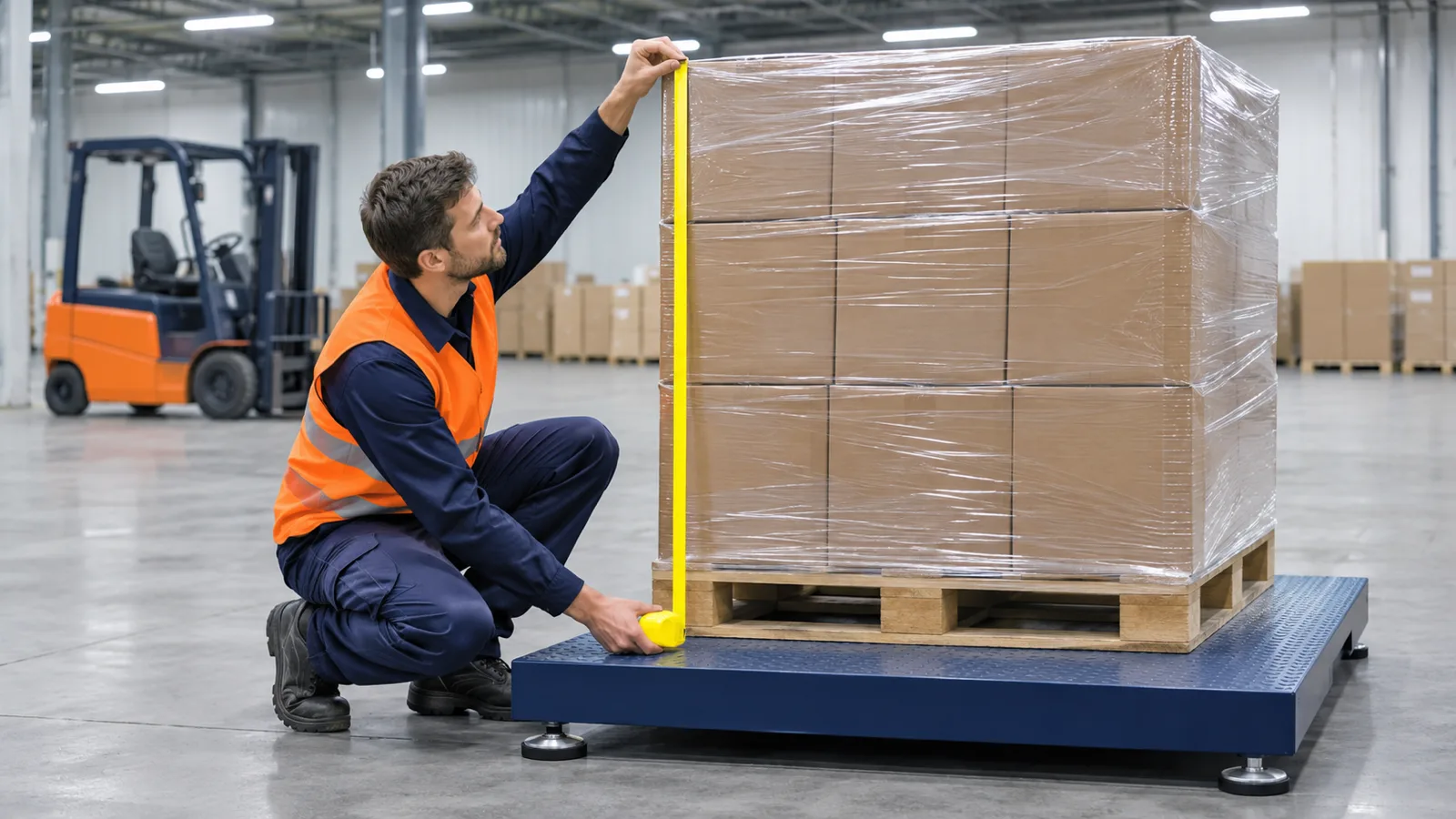
A furniture components maker in Meadowvale ships a few pallets a week to customers in Ohio and Michigan. The quotes always look reasonable. The invoices often do not. Every few weeks, an LTL bill arrives with a line that reads "reclass" or "inspection correction", and the cost of a shipment jumps well beyond what was quoted. The shipping coordinator has started dreading the mail, and nobody in the office can quite explain what freight class the products are supposed to be.
Freight class is one of the most misunderstood parts of LTL shipping, especially for Canadian businesses. Many shippers in Mississauga move freight both within Canada and across the border into the United States, and the two markets do not price LTL in quite the same way. If you ship to US destinations, your carriers will almost certainly ask for a freight class. If you get it wrong, they will correct it for you, and you will pay for the correction.
This guide explains what freight class is, how density drives it, where the NMFC fits in, why reclasses happen and what you can do to keep your quotes and invoices aligned.
What Is Freight Class?
Freight class is a standardised category that tells an LTL carrier how easy or difficult a shipment is to transport. It comes from the National Motor Freight Classification, or NMFC, a system published by the National Motor Freight Traffic Association in the United States. Classes range from 50, for dense, sturdy, easy-to-handle goods, up to 500, for very light, bulky or fragile items. There are eighteen classes in between, and lower classes generally mean lower rates per hundredweight.
The NMFC considers four characteristics when assigning class:
- Density: how much space the freight takes up relative to its weight.
- Stowability: how easily it can be loaded alongside other freight, considering shape, hazards and regulatory restrictions.
- Handling: whether it needs special care because it is fragile, awkward or hazardous.
- Liability: the likelihood of theft or damage and the value of the goods per pound.
In practice, density has become the dominant factor for most commodities, and NMFC updates over the years have moved many items onto density-based classification. That makes accurate measurement more important than ever.
Does Freight Class Apply in Canada?
This is the question most Mississauga shippers ask first. The short answer: it depends on where your freight is going and which carrier you use.
Many Canadian LTL carriers price domestic shipments without NMFC classes, using weight, density, pallet count, linear feet of trailer space or their own tariffs instead. For a shipment from Mississauga to Montreal or Calgary, you may never be asked for a freight class. Some carriers still use class-based pricing on certain lanes, though, and cross-border shipments to the US are generally rated using NMFC classes because they move into US carrier networks and tariffs.
So if you ship freight across the Ambassador Bridge, the Blue Water Bridge, the Peace Bridge or Lewiston-Queenston, you need to understand freight class. If you ship only within Canada, you should still understand density, because Canadian carriers often apply minimum density rules or cube-based charges that work in similar ways.
How to Calculate Density
Density is measured in pounds per cubic foot. Because US carriers work in imperial units, it helps to measure in inches and pounds even if your warehouse normally uses metric.
- Measure the length, width and height of the shipment in inches, including the pallet. Measure at the widest and tallest points, including any overhang.
- Multiply length by width by height to get cubic inches.
- Divide cubic inches by 1,728 to convert to cubic feet.
- Weigh the shipment, including the pallet and packaging, in pounds.
- Divide the weight by the cubic feet to get pounds per cubic foot.
A worked example
Suppose the Meadowvale manufacturer ships a pallet measuring 48 by 40 by 50 inches, weighing 600 pounds including the pallet.
- 48 × 40 × 50 = 96,000 cubic inches.
- 96,000 ÷ 1,728 = about 55.6 cubic feet.
- 600 ÷ 55.6 = about 10.8 pounds per cubic foot.
Now imagine the same products are stacked a little less efficiently and the pallet stands 60 inches tall. The cube rises to about 66.7 cubic feet, and density drops to roughly 9 pounds per cubic foot. That small change in height can push the shipment into a higher class on a density scale, and a higher class means a higher rate. The products did not change. Only the way they were built onto the pallet did.
Look up the density that applies to your commodity in the current NMFC, or ask your carrier or logistics provider to confirm it, rather than relying on old charts found online. The density scale has changed over time, and an outdated chart is a common source of errors.
What Is an NMFC Code?
Each commodity in the classification has an NMFC item number, sometimes with sub-numbers that split it into density ranges or packaging types. The item number identifies what the product is; the sub-number, together with density, determines the class. For example, a single NMFC item might cover a general category of furniture parts, with sub-provisions for different density ranges.
Carriers increasingly expect the correct NMFC item number on the bill of lading, not just a class. Including it reduces disputes, because it shows you have classified the freight deliberately. Our guide to the bill of lading explains why accurate descriptions on that document matter.
Why Reclasses Happen
A reclass, also called a reclassification or inspection correction, happens when a carrier decides the class or description on your bill of lading does not match the freight. Most LTL carriers use dimensioning equipment at their terminals that measures pallets automatically as they move through the dock. If the measured dimensions produce a lower density than you declared, the carrier will apply the correct class and bill accordingly, often with an inspection fee on top.
The most common causes include:
- Estimated dimensions. Shippers type in standard pallet dimensions instead of measuring the actual load.
- Overhang. Cartons extending beyond the pallet edge increase the measured footprint.
- Uneven stacking. A single tall carton on top of a pallet raises the measured height of the whole unit.
- Wrong commodity description. A product described generically may fall under a different NMFC item than it should.
- Weight errors. Forgetting to include the pallet or packaging weight.
- Old classifications. Using a class that was correct years ago but has since changed.
How to Prevent Reclasses
Preventing reclasses is mostly about discipline at the dock. These practices make the biggest difference:
- Measure every shipment. Use a tape measure at minimum, or a dimensioner if volume justifies it, and record actual dimensions rather than defaults.
- Weigh every shipment. A floor scale at the shipping dock pays for itself in avoided corrections.
- Build tight, square pallets. No overhang, flat tops and consistent heights. Our article on dunnage covers how to fill gaps and stabilise loads properly.
- Photograph pallets before pickup. Photos showing dimensions and condition give you evidence to dispute an incorrect reclass.
- Keep a classification library. Record the NMFC item, sub-number and typical density for each product family you ship, and review it when the NMFC is updated.
- Audit invoices. Compare billed class and dimensions with what you shipped, and dispute errors promptly. Carriers set time limits for disputes.
How Packaging Choices Affect Class
Because density drives class for so many commodities, packaging decisions have a direct impact on cost. Oversized cartons, excessive void fill and pallets that are stacked short or uneven all lower density. Sometimes a small redesign, such as a smaller master carton, a different pallet pattern or stacking two short pallets into one where safe, can improve density significantly.
Consider also whether some products should ship as parcels rather than LTL. Light, bulky items that would carry a high freight class may be cheaper to ship as individual cartons. Our comparison of freight versus small package shipping covers when each makes sense. A warehouse with cartonization capabilities can help choose box sizes that keep both parcel and LTL costs down.
Freight Class and Your Quotes
An LTL quote is only as accurate as the information it is based on. If you quote with estimated dimensions and a guessed class, the invoice will reflect what the carrier measured, not what you entered. For Mississauga businesses quoting shipping costs to customers, that gap comes straight out of margin.
Using a shipping platform that stores accurate product dimensions and classifications means quotes reflect reality. Over time, comparing quoted versus invoiced amounts by product family shows where your data needs improvement.
Questions to Ask Your Carrier or 3PL
- Do you rate my domestic Canadian freight by class, density, linear feet or another method?
- Which classification do you apply to my cross-border shipments, and do you require NMFC item numbers?
- Do your terminals use dimensioners, and can I receive the measurement data if a reclass occurs?
- What is your process and time limit for disputing a reclass?
- Do you offer density-based or FAK (freight all kinds) pricing that might simplify my rates?
Putting It All Together
Freight class can seem like an obscure US pricing system, but for any shipper in Mississauga sending LTL freight across the border, it directly affects what you pay. Measuring and weighing accurately, building clean pallets, using the correct NMFC item and auditing invoices will eliminate most reclasses and make your shipping costs predictable.
If reclass charges keep appearing on your invoices, or you want help classifying your products for cross-border shipping, ShipCarte can review your freight. Learn more about our LTL freight services, then request a quote or schedule a consultation.