
An operations manager at a machine-parts distributor in Meadowvale requests a quote to ship four pallets to a customer in Winnipeg. She enters "4 pallets, about 2,000 lbs" into a carrier's online form and books the lowest rate. Two weeks later, the invoice arrives at nearly double the quoted amount. The carrier reweighed the shipment, found it heavier than declared, reclassified it, and added a liftgate charge because the customer's site had no loading dock. Every one of those adjustments was legitimate. None of them would have happened if the original quote request had included the right details.
Freight pricing is not mysterious, but it is precise. Carriers price shipments based on specific information, and when that information is missing or wrong, they correct it after the fact, usually with fees attached. For shippers in Mississauga, where freight moves daily out of industrial parks in Gateway, Malton, Meadowvale and along the Highway 401 and 407 corridors, getting quotes right is one of the simplest ways to control transportation spend.
This guide works as a checklist. Gather each item below before you request a quote, and the number you are given will be much closer to the number you actually pay.
Detail 1: Origin and Destination, Down to the Site Type
Postal codes are the starting point, but carriers also need to know what kind of location they are picking up from and delivering to. Pricing differs between:
- Commercial locations with a dock: the standard, lowest-cost scenario.
- Commercial locations without a dock: may require a liftgate truck.
- Residential addresses: typically carry a residential delivery charge and often need a liftgate.
- Limited-access sites: construction sites, schools, farms, military bases, storage units, churches and some retail locations in malls may incur extra charges.
If you are shipping from a Mississauga warehouse with dock-level doors, say so. If the consignee is a small shop on a busy street in downtown Toronto with no loading area, say that too. Our post on the difference between consignee, shipper and carrier explains who is responsible for what in a shipment.
Detail 2: Accurate Weight, Including the Pallet
Declare the total shipment weight including pallets, packaging and stretch wrap. A standard wooden pallet alone can weigh a meaningful amount, and it adds up fast across a multi-pallet shipment. If you can, weigh each pallet on a scale rather than estimating from product spec sheets. Many LTL carriers reweigh shipments at their terminals, and if your declared weight is low, you will be billed the corrected weight plus, in some cases, an inspection or correction fee.
Detail 3: Dimensions of Every Handling Unit
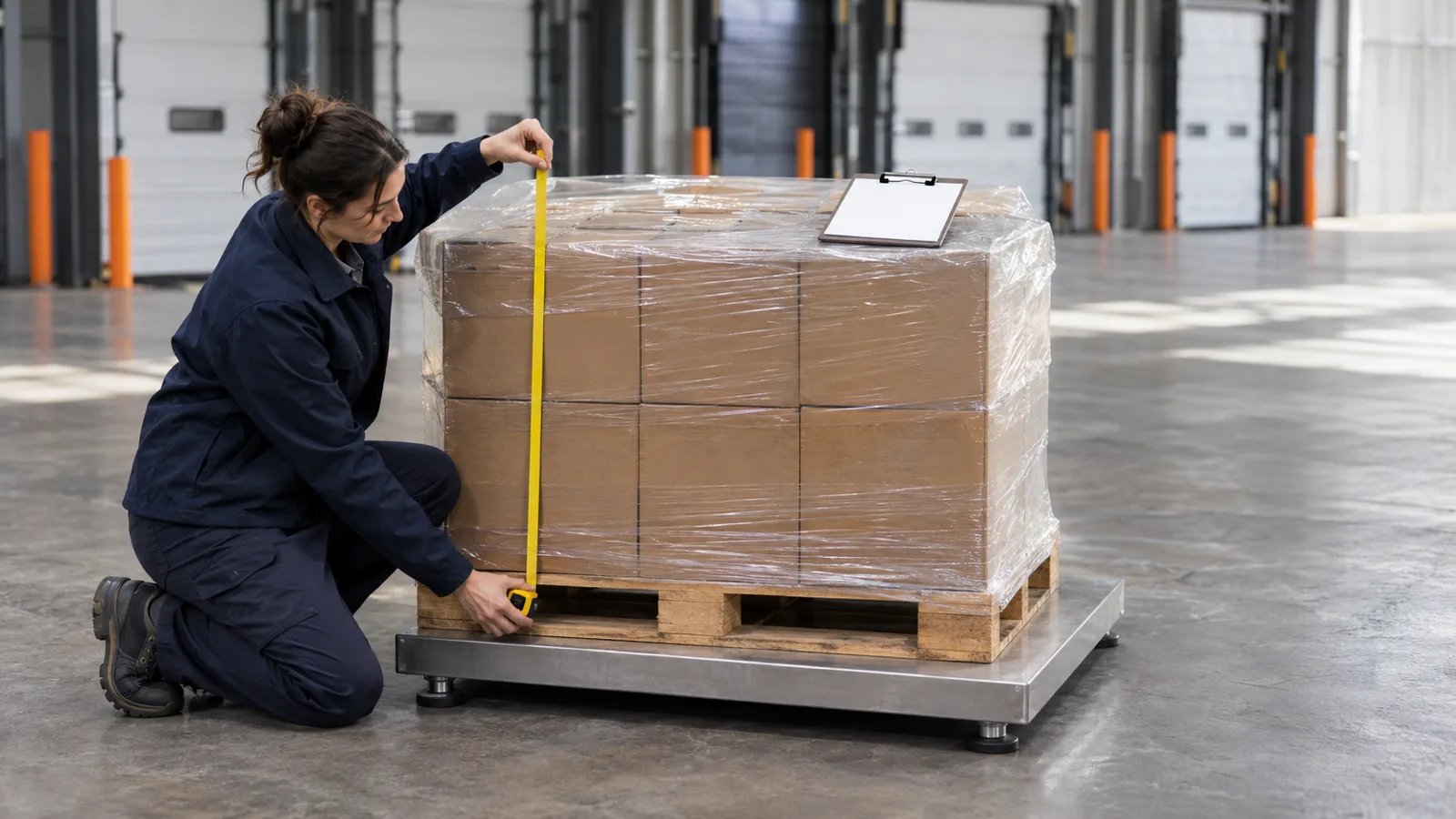
Length, width and height matter as much as weight. Carriers increasingly price LTL on density or cubic space, so a light but tall pallet can cost more than a heavy compact one. Measure each pallet or crate at its longest and widest points, including any overhang, and measure height from the floor to the highest point of the load.
Also note whether pallets can be stacked. If your freight is fragile or the top surface is uneven, mark it as non-stackable. Carriers price non-stackable freight differently because it uses trailer space that could otherwise carry another pallet on top. For a closer look at how size affects cost, see our article on how package dimensions impact shipping costs.
Detail 4: Freight Class or Density
In cross-border shipments to the US, many carriers use the National Motor Freight Classification (NMFC) system, which assigns freight to a class based on density, stowability, handling and liability. Within Canada, many carriers price using density, weight breaks or their own tariffs rather than formal classes, but they still need accurate dimensions to calculate density.
If your shipment is going to the US, check the correct NMFC item for your product, or ask your logistics provider to help. Choosing a class that is too low may produce an attractive quote, but reclassification after inspection will raise the bill.
Detail 5: Number and Type of Handling Units
Tell the carrier exactly what they will be picking up: four standard pallets, two crates, one oversize skid, a mix of loose cartons. Loose cartons are generally more expensive to handle and more likely to go missing or be damaged, so consolidating onto pallets usually helps. Note any non-standard pallet sizes as well.
Detail 6: Commodity Description
"General merchandise" is not a helpful description. Carriers want to know what is actually in the shipment, because it affects handling, liability and whether special rules apply. "Steel machine parts in wooden crates" or "boxed household cleaning products, non-hazardous" tells the carrier what they are dealing with.
Dangerous goods
If anything in the shipment is regulated as dangerous goods under Canada's Transportation of Dangerous Goods (TDG) Regulations, such as certain chemicals, aerosols, flammable liquids or lithium batteries, you must declare it. Dangerous goods require proper classification, documentation, labelling and, in many cases, trained personnel and specific carriers. Not declaring them is a safety and legal issue, not just a pricing one. If batteries are part of your freight, our guide to lithium battery shipping in Mississauga covers the essentials.
Detail 7: Accessorial Services
Accessorials are services beyond standard dock-to-dock pickup and delivery. They are the most common source of invoice surprises. List any that apply when you request the quote:
- Liftgate at pickup or delivery
- Residential pickup or delivery
- Inside delivery (beyond the threshold or loading area)
- Delivery appointment or call-ahead notification
- Limited access location
- Protect from freeze or temperature control
- Sort and segregate at delivery
- Pallet jack required
Our article on types of shipping surcharges explains many of these in more depth. A delivery appointment is particularly common for retail and grocery distribution centres; see what a delivery appointment is in freight.
Detail 8: Timing and Service Level
When is the freight ready, and when must it arrive? Standard LTL transit times vary by lane. A shipment from Mississauga to Montreal moves very differently from one to Vancouver. If you need guaranteed or expedited service, ask for it at quote time, as it is priced separately. If you have flexibility, say so, because it may open up lower-cost options.
Also mention pickup windows. Many industrial sites in Mississauga have receiving and shipping hours, and a carrier needs to know if they can only collect between, say, 8 a.m. and 2 p.m.
Detail 9: Value and Insurance
Carrier liability for lost or damaged freight is limited and often calculated by weight rather than value. For high-value goods, that limit may be far below the actual worth of the shipment. Declare the value and ask about additional freight insurance if needed. Our explainer on freight insurance covers how coverage typically works.
Detail 10: Cross-Border Information
If the shipment is heading to the US, you also need to provide customs information: commercial invoice details, the Harmonized System (HS) code for the goods, country of origin, whether the goods qualify under CUSMA, and who the customs broker is on the US side. Mississauga shippers usually cross at the Peace Bridge, the Lewiston-Queenston Bridge or the Ambassador Bridge, and border delays caused by incomplete paperwork add cost and time. Our cross-border shipping team helps prepare these details.
LTL or Full Truckload?
Part of getting an accurate quote is asking for the right mode. As a rough guide, small shipments of one to several pallets usually move as LTL freight. When shipments fill a large share of a trailer, or when the freight is high value, fragile or time-critical, a full truckload or partial truckload may make more sense. Between those extremes, volume LTL or partial truckload quotes are worth requesting. If you are unsure, ask for both and compare.
A Quick Pre-Quote Checklist
Before you submit your next freight quote request, confirm you have:
- Full addresses and site types for pickup and delivery
- Weighed total weight including pallets
- Measured dimensions for each handling unit
- Stackability noted
- NMFC class (for US shipments) or density
- Specific commodity description and any dangerous goods declared
- All accessorials listed
- Ready date, required delivery date and pickup hours
- Declared value and insurance needs
- Customs documents for cross-border freight
What Happens When Details Change After Booking
Even with a careful quote, things shift. A customer adds two cartons to the order, a pallet has to be rebuilt taller, or the consignee suddenly asks for an afternoon appointment. Treat any change as a reason to update the booking rather than hoping the carrier will not notice. Updating before pickup usually means a revised rate you can approve. Leaving it for the terminal to discover usually means a correction fee on top of the revised rate, and sometimes a delay while the shipment is re-inspected.
It also helps to keep a simple photo record. A quick picture of each wrapped pallet beside a tape measure, plus the scale reading, takes a minute at the dock and gives you evidence if you need to dispute a reweigh or reclassification later.
Why Accurate Quotes Matter Beyond One Shipment
Freight invoices that regularly differ from quotes make budgeting difficult, eat into margins and strain relationships with carriers. Carriers notice shippers who consistently provide accurate information, and those shippers are often easier to serve and easier to price. Over time, clean data also lets you compare carriers fairly, because you are comparing like with like.
Tools help too. ShipCarte's shipping platform lets you compare LTL and truckload quotes from multiple carriers in one place, with fields for dimensions, accessorials and cross-border details so nothing is forgotten.
Get a Freight Quote You Can Trust
Whether you ship a single pallet a month or a dozen trucks a week from Mississauga, accurate quoting starts with accurate information. ShipCarte works with Canadian and cross-border carriers to find the right rate and service for each load. Request a freight quote with the details above, and our team will help fill any gaps before your freight moves.