
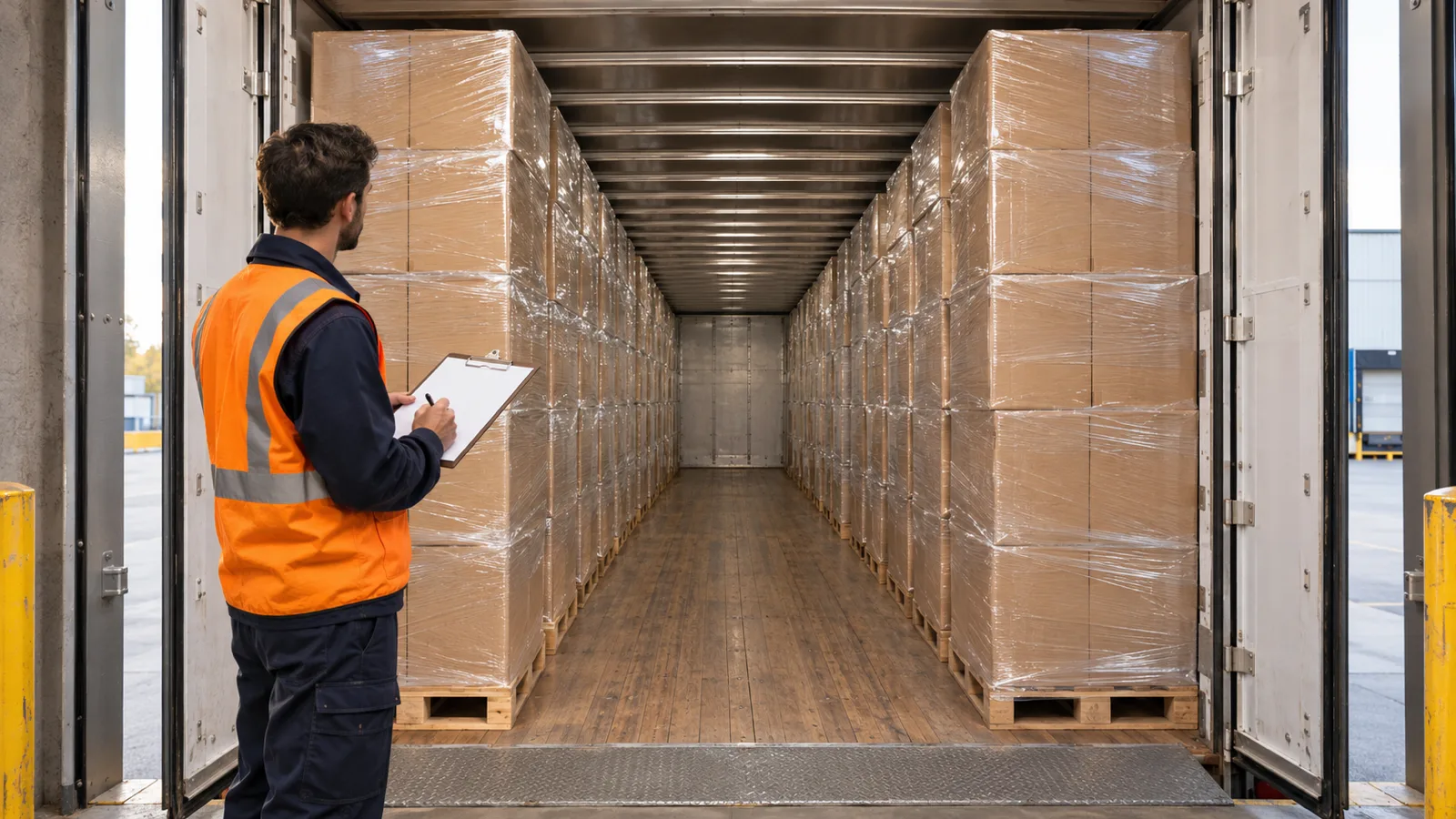
A beverage distributor in the Gateway business area ships twelve pallets every week to a grocery wholesaler in Montreal. For years the shipment has moved by LTL: picked up on Monday, cross-docked at the carrier's terminal, loaded onto a linehaul trailer with other customers' freight, cross-docked again in Quebec, and delivered on Thursday or Friday. Every few months a pallet arrives with crushed cases from being handled at two terminals. One day the operations manager asks a simple question: what would it cost to just put the twelve pallets on their own truck?
The answer surprises many shippers. Once a shipment reaches a certain size, a dedicated trailer, known as full truckload or FTL, can be competitive on cost while being faster and gentler on the freight. The tipping point is not a fixed number. It depends on lane, freight type, timing and market conditions. But knowing the signs helps you spot when you have crossed it.
This guide is for shippers in Mississauga who move palletized freight regularly and want to know when full truckload is the better choice, what drives the price, and how to get the most out of a trailer once you book it.
Full Truckload in Plain Terms
With full truckload, you hire an entire trailer, and it goes directly from your pickup location to your delivery location with only your freight on board. There are no terminal transfers and no stops for other shippers' freight unless you arrange them. You are paying for the whole trailer whether you fill it or not.
The most common equipment in Canada is the 53-foot dry van, which typically fits around 26 standard pallets on the floor when they are not stacked. Other equipment includes refrigerated trailers (reefers) for temperature-sensitive freight, flatbeds and step-decks for oversized goods, and shorter trailers for tight urban deliveries. How much weight a trailer can carry depends on the truck configuration and on provincial and state weight regulations along the route, so heavy freight can reach the weight limit before it fills the floor.
FTL Versus LTL: Where Each Wins
Less-than-truckload (LTL) shipping pools freight from many shippers onto shared trailers, and you pay for the space and weight your freight uses. It is efficient for smaller shipments. Full truckload trades that sharing for directness. Here is how they compare in practice:
- Transit time: FTL usually wins, because the trailer goes direct. LTL freight moves through terminals and follows the carrier's linehaul schedule.
- Handling and damage risk: FTL usually wins. Freight is loaded once and unloaded once. LTL freight can be moved on and off trailers several times.
- Cost for small shipments: LTL wins clearly. Paying for a whole trailer to move two pallets rarely makes sense unless speed or special handling demands it.
- Cost for large shipments: it depends. As shipments grow, LTL pricing climbs while the FTL price for the lane stays the same, so at some point FTL becomes cheaper or close enough that its other advantages tip the balance.
- Scheduling flexibility: FTL wins. You can often book specific pickup and delivery appointments, which is valuable when the receiver has strict dock schedules.
For a deeper comparison of the main freight modes, see our guide to how freight differs from small package shipping.
Six Signs You Should Be Shipping Full Truckload
1. Your shipments regularly fill a large part of a trailer
There is no universal cut-off, but many shippers find that once they are consistently moving a substantial portion of a trailer's floor, often somewhere in the range of ten or more pallets depending on the lane, it is worth getting FTL quotes alongside LTL. Some carriers also offer volume LTL or partial truckload options for shipments in between.
2. Your freight is fragile or easily damaged
Glass, electronics, furniture, appliances and food in cases all suffer from repeated handling. If damage claims on LTL shipments are eating into your margin or your customer relationships, a direct trailer can reduce the problem.
3. Delivery timing is critical
Retail distribution centres often require deliveries within strict appointment windows and may charge for late arrivals. A dedicated trailer can be scheduled precisely, which makes meeting those windows much easier.
4. Your freight is heavy and dense
Heavy freight can be expensive by LTL because pricing reflects weight and freight class. A full trailer of heavy product can be economical, though you need to watch weight limits closely.
5. You need temperature control
Refrigerated LTL exists but options are more limited. For food, beverage and pharmaceutical freight that needs a consistent temperature, a dedicated reefer avoids the risk of a trailer door opening repeatedly at other stops. See our food and beverage logistics services if that applies to you.
6. You ship the same lane repeatedly
Consistent lanes, such as Mississauga to Montreal every week, are attractive to carriers who can plan their networks around them. That can lead to more stable pricing and capacity than one-off loads.
What Drives the Price of a Full Truckload
FTL pricing is quoted for the trailer on a particular lane, not per pallet, and it moves with the market. The main factors include:
- Distance and lane. Longer trips cost more, but the direction matters too. Lanes where carriers can easily find a return load are often priced more competitively than lanes into areas with little outbound freight.
- Equipment type. Reefers and flatbeds generally cost more than dry vans.
- Market conditions. Truckload rates rise and fall with capacity, fuel prices and seasonal demand. Peak retail season and produce season can tighten capacity.
- Timing and lead time. Booking same-day or for a specific tight window usually costs more than booking in advance with flexible pickup.
- Accessorial charges. Driver waiting time (detention), extra stops, tarping, liftgates and appointment requirements can add to the base rate. Our list of common shipping surcharges explains many of these.
- Border crossings. Cross-border loads involve customs documentation and carriers set up for both countries, which affects pricing.
Why Mississauga Is a Strong FTL Origin
Mississauga's location makes it one of the busiest truckload origins in Canada. Highway 401 connects directly to Montreal in the east and to Windsor and the Ambassador Bridge in the west. The QEW and Highway 403 lead toward Hamilton, Niagara and the Peace Bridge and Lewiston-Queenston crossings into New York State. Highways 407, 410 and 427 tie it to Brampton, Vaughan and the rest of the GTA. Toronto Pearson International Airport and the nearby rail intermodal terminals add even more freight to the area.
For shippers, all that activity means a deep pool of carriers and equipment. Capacity is generally easier to find here than in smaller markets, and lanes out of Mississauga to major destinations such as Montreal, Ottawa, Detroit, Chicago and the US Northeast are well served.
Getting the Most Out of a Dedicated Trailer
Once you are paying for the whole trailer, using it well matters:
- Load to the floor plan. Plan pallet sizes and orientation to make full use of floor space. Shipping pallets that overhang or are oddly sized wastes positions.
- Stack where safe. If your freight can be double-stacked without damage, you may fit much more in the trailer. Make sure packaging can handle it.
- Consolidate. Combine shipments to the same region into one trailer, possibly with a second stop, rather than sending several partial loads.
- Be ready on time. Have freight staged and paperwork prepared when the truck arrives. Long waits lead to detention charges and annoyed carriers.
- Secure the load. Use load bars, straps and dunnage so freight does not shift. A full trailer can still have damage if pallets slide.
- Document everything. A clear bill of lading, seal numbers and photos of the loaded trailer protect you if a claim is needed.
Questions to Ask Before You Book
Whether you book through a carrier directly or through a logistics partner, a few questions help avoid surprises on the day:
- What equipment will be sent, and does it suit the freight (dry van, reefer with a set temperature, flatbed)?
- How much free time is included for loading and unloading before detention charges begin?
- Are pickup and delivery appointments confirmed, and who is responsible for booking them with the receiver?
- How will you receive tracking updates while the load is in transit?
- What is the process and timeline if a claim for damage or shortage is needed?
Asking these up front, especially for a first load on a new lane, saves a lot of phone calls once the trailer is moving.
Cross-Border Full Truckload From Mississauga
Many Mississauga shippers send full truckloads to the United States. These loads need a commercial invoice, the correct customs data submitted in advance, and a carrier authorised to operate in both countries. Goods that qualify under CUSMA may move with reduced or no duties when proper origin documentation is in place. Inbound, Canadian importers should have their CBSA CARM account set up so goods can be released without delay. A cross-border shipping partner can coordinate brokers and carriers so the paperwork is ready before the truck reaches the bridge.
Book Your Next Load With ShipCarte
ShipCarte arranges full truckload shipping from Mississauga across Canada and into the United States, alongside LTL and parcel options, so we can help you decide which mode fits each shipment. Through our carrier management service we match your freight to suitable equipment and carriers on your lanes. Request a quote with your lane, pallet count and timing, and we will tell you honestly whether a dedicated trailer pays off.