
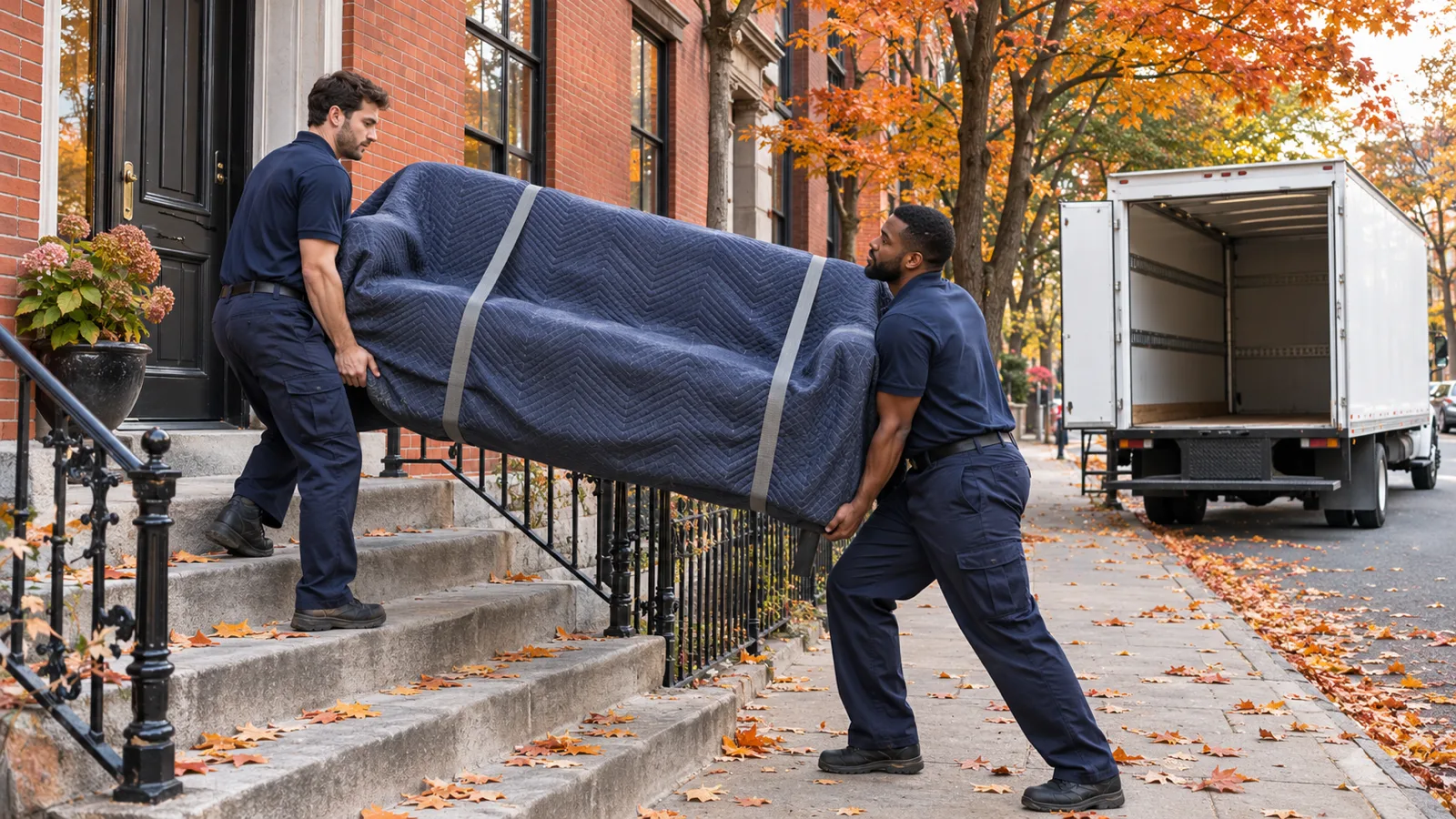
A customer in Halifax orders a solid wood dining table from your website on a Sunday night. The table ships from a warehouse in Ontario, crosses three provinces on a linehaul trailer, sits on a dock in Moncton overnight, and is finally carried up a narrow staircase by a two-person crew. If the corner of the tabletop gets crushed anywhere along that route, you will hear about it within minutes of the box being opened, and the cost of fixing the problem will likely wipe out the margin on the sale.
That is the reality of furniture ecommerce in Canada. Online furniture sales have been growing steadily for years, and the shift toward home offices and home improvement that began in 2020 pushed even more shoppers to buy sofas, desks and bed frames without ever sitting on them in a showroom. The opportunity is real. So is the logistics challenge: large, heavy, oddly shaped items travelling long distances across a country with harsh winters and a lot of rural addresses.
This guide walks through how Canadian furniture sellers can choose the right delivery mode for each product, package for the abuse of freight handling, and set up a delivery experience that keeps damage, returns and angry reviews to a minimum.
Why Furniture Is Harder to Ship Than Almost Anything Else
Most ecommerce logistics advice assumes small, light parcels that fit on a conveyor belt. Furniture breaks those assumptions in several ways at once.
- Size and weight. Many pieces exceed the length, girth or weight limits that parcel carriers accept, or they fall into oversize and additional-handling surcharge tiers that can make parcel shipping uneconomical.
- Fragile surfaces. Veneers, lacquered finishes, glass tops and upholstered fabric scratch, dent and stain easily. Damage is often cosmetic, but customers rightly refuse a dented headboard.
- Multiple handoffs. A sofa going from Vancouver to Saskatoon might be loaded, unloaded and cross-docked several times. Every touch is a chance for a forklift tine or a dropped corner.
- Distance and climate. Long transit across the Prairies or through northern Ontario in January exposes wood and adhesives to cold and moisture swings, which can cause cracking or warping in poorly packed goods.
- The final 30 metres. Getting a piece from the curb into a condo tower in downtown Toronto, a walk-up in Montreal's Plateau or a farmhouse outside Brandon requires different skills, equipment and appointment windows.
Because of these factors, there is no single "furniture shipping method." Successful sellers mix methods based on each product's dimensions, value and fragility.
Matching Products to Delivery Modes
The first decision is which network each SKU travels through. Here is how the main options compare for a Canadian furniture brand.
Parcel for flat-pack and small pieces
Ready-to-assemble items such as side tables, bookshelves, office chairs and nightstands can often ride in the parcel network if the carton stays within carrier limits. Parcel is usually the fastest and cheapest per unit for these products, offers full tracking and reaches virtually every postal code. The trade-offs are rougher automated sortation and dimensional weight pricing, which charges for the space a box takes up rather than its actual weight. Our guide to how package dimensions impact shipping costs explains why trimming even a few centimetres from a carton can matter. For flat-pack lines, ShipCarte's small parcel shipping lets you compare carrier rates per shipment rather than defaulting to one carrier for everything.
LTL freight for heavy and fully assembled items
Sofas, sectionals, dressers, dining sets and anything palletized generally move by less-than-truckload freight. Shipments share trailer space with other freight, which keeps costs reasonable for single orders, and they are handled with forklifts and pallet jacks rather than conveyor belts. LTL is a strong fit for long-haul lanes such as Ontario to Alberta or Quebec to Atlantic Canada. You can learn more in our overview of LTL freight services. Keep in mind that standard LTL is typically curbside or dock delivery, so residential, liftgate and inside delivery are accessorial services that should be quoted up front.
White glove and two-person delivery for premium pieces
For high-value items, or anything that needs to be carried inside, unpacked, assembled and the packaging removed, two-person "white glove" delivery is the standard customers expect. It is the most expensive option per shipment, but it dramatically reduces the chance that a customer tries to manhandle a 90-kilogram dresser up their stairs and then blames the product when it cracks. Many sellers offer white glove as a paid upgrade at checkout, or include it automatically above a certain order value.
Dedicated or pooled truckload for showroom and retail replenishment
If you also sell through retail partners or your own showrooms, full or partial truckloads move inventory between your warehouse and those locations far more efficiently than piecemeal LTL. ShipCarte's full truckload service is designed for that kind of planned, high-volume movement.
Packaging That Survives Canadian Freight Lanes
Most furniture damage traces back to packaging that was designed for a showroom stockroom rather than a multi-day freight journey. Before you scale online sales, test your packaging against these points.
- Protect corners and edges first. Corners take the hardest impacts. Moulded pulp, foam or heavy corrugated corner protectors on every piece of case goods are inexpensive insurance.
- Use double-wall or triple-wall cartons for heavy items. Single-wall boxes that look fine in a warehouse collapse when another pallet is stacked on top in a trailer.
- Wrap finished surfaces before boxing. A layer of foam sheeting or non-abrasive wrap stops vibration rub, which is a common cause of scuffs on long trips across the Prairies.
- Immobilize hardware and loose parts. Bag and tape hardware packs to a fixed panel. Loose legs or bolts rattling inside a box will gouge surfaces.
- Palletize and stretch-wrap when shipping LTL. A properly sized, banded pallet is far less likely to be damaged than a loose carton sitting on a dock floor.
- Add moisture protection for winter. Poly bags or wraps help keep condensation and road slush away from wood and fabric during the months when trailers sit in freezing yards.
- Mark orientation clearly. Arrows and "do not lay flat" markings for items like mirrors and glass-front cabinets help freight handlers make better decisions.
For more general principles, our article on how to properly pack fragile items is a useful companion. If your manufacturer packs goods poorly, a fulfillment partner can repack or reinforce cartons on receipt through value-added services before the item ever ships to a customer.
Where to Store Inventory for National Reach
Canada's population is concentrated in a few corridors, but those corridors are thousands of kilometres apart. A single warehouse in the Greater Toronto Area can reach much of Ontario and Quebec quickly by road along Highway 401 and Autoroute 20, but a sofa heading to Vancouver or Victoria will spend days on a truck or a rail intermodal container.
Many growing furniture sellers start with one central location and later add a western node, often in the Calgary, Edmonton or Lower Mainland area, to shorten delivery times and reduce long-haul handling for customers in British Columbia, Alberta and Saskatchewan. Fewer kilometres generally means fewer touches and less damage. When deciding whether a second location makes sense, look at where your orders are actually coming from, how much you spend on long-haul freight per order and how often damage occurs on long lanes versus short ones.
Bulky goods also need the right kind of warehouse space. Furniture takes up floor positions and tall racking rather than shelving bins, and it requires staff experienced with pallet handling. A distribution warehousing setup that is built around pallet-in and pallet-out movement is typically a better fit than a pick-and-pack operation designed for small parcels.
Setting Delivery Expectations Customers Will Accept
Furniture buyers are usually more patient than shoppers buying a phone case, but they want honesty. Transparent expectations prevent most complaints.
- Show realistic lead times by region. A shopper in Winnipeg and one in St. John's should not see the same promised delivery window. Use regional estimates rather than a single national number.
- Explain the delivery level clearly. Spell out whether the price includes curbside, threshold, room-of-choice or full assembly. Many disputes come from a customer expecting inside delivery when they paid for curbside.
- Book appointments in advance. Freight carriers call to schedule a delivery window, and missed appointments can add redelivery charges. Our explainer on delivery appointments in freight covers how this works.
- Collect access details at checkout. Ask about stairs, elevators, building booking requirements and narrow doorways. Condo buildings in Toronto, Vancouver and Montreal often require elevator reservations and certificates of insurance from movers.
- Give tracking on freight, not just parcels. Customers waiting on a sofa want to know where it is. A shared tracking page such as ShipCarte's shipment tracking reduces "where is my order" calls.
Reducing Damage Claims and Handling Returns
Even with good packaging, some damage will happen. What separates profitable sellers is how quickly they detect and resolve it.
Train customers to inspect on delivery
Ask customers to inspect the packaging before signing and to note any visible damage on the delivery receipt. A clean signature on a freight delivery receipt makes later carrier claims much harder to win. Include a simple card in the box and mention it in the delivery confirmation email.
Document outbound condition
Photographs of each pallet or carton at the warehouse dock give you evidence of condition at handoff. If you work with a fulfillment provider, ask whether outbound photos are part of the process.
Plan for partial fixes
Many furniture "returns" do not need to be full returns at all. A damaged leg, drawer front or cushion cover can often be replaced with a spare part shipped by parcel, at a fraction of the cost of bringing back a whole sofa. Keep a small stock of common replacement components on hand.
Route full returns sensibly
When a full return is unavoidable, the cost of freighting a large item back across the country can be significant. Some sellers inspect returns locally, refurbish them and sell them as open-box at a discount in the same region. A structured returns management process with grading rules keeps those decisions consistent.
Rural, Remote and Northern Addresses
Canada has a large share of customers outside major metros, and furniture sellers sometimes find out the hard way that "free shipping across Canada" does not hold up for a dresser going to a community in northern Manitoba or the Yukon. Freight carriers may only serve some locations through partners or on certain days of the week, and some remote communities rely on seasonal roads, barge service or air cargo.
Practical options include setting region-based shipping rates, offering terminal pickup at a carrier depot for a reduced rate, or extending lead times for remote postal codes. Being upfront about these differences at checkout is far better than absorbing a freight bill several times larger than you planned.
Costs to Watch
Furniture shipping costs vary widely by product, lane and service level, so it is important to understand the drivers rather than rely on a flat estimate. The main ones are:
- Freight class or density, which is heavily influenced by how much air is in your packaging
- Distance and lane, with longer and less-travelled lanes costing more
- Accessorials such as residential delivery, liftgate, inside delivery and appointment fees
- Fuel surcharges, which change regularly
- Additional handling and oversize charges on parcel shipments
- Storage costs for bulky items that occupy pallet positions for months
Our list of common shipping surcharges is worth reviewing before you set your customer-facing rates. Reducing carton size, consolidating multi-piece orders and negotiating accessorials upfront are often the quickest ways to bring the average cost per order down.
Bringing It Together
Selling furniture online in Canada can be very profitable, but only if logistics is treated as part of the product rather than an afterthought. Match each SKU to the right delivery mode, invest in packaging that survives a cross-country freight journey, store inventory close to where demand is, and set clear expectations about delivery levels and timelines. When damage does happen, quick inspection, good documentation and spare-part fixes will save you far more than they cost.
Talk to ShipCarte About Bulky Ecommerce Logistics
ShipCarte works with ecommerce brands across Canada on ecommerce fulfillment, parcel and freight shipping and warehousing for large items. If you want help comparing delivery options for your furniture line or reducing damage on long-haul lanes, request a quote and our team will review your products and shipping profile.