
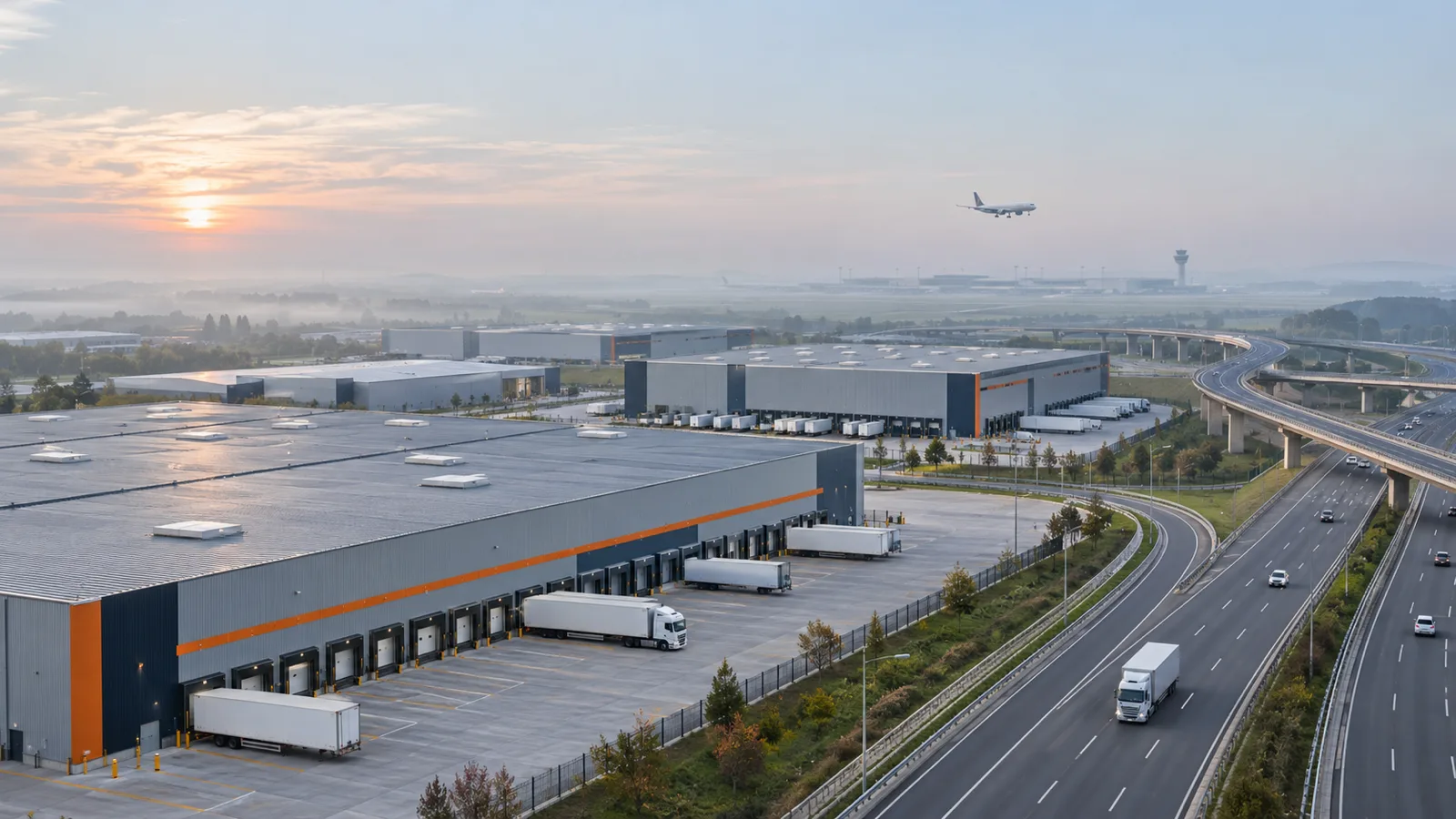
Drive north on Hurontario Street from Square One, cross under Highway 401, and the landscape changes quickly. Condo towers and shopping plazas give way to long, low industrial buildings, rows of dock doors and trailers parked nose to tail. This is part of the area Mississauga's planners describe as the Gateway employment district, one of several large business zones that make the city a centre of Canadian distribution.
For a brand looking for warehouse space or a fulfillment partner, the name on the map matters less than what the location makes possible. And what Gateway offers, in short, is reach: fast access to the highways that connect the GTA to the rest of Ontario, Quebec and the US border, with Toronto Pearson International Airport just to the east.
This article looks at why businesses choose to warehouse in and around Gateway, who benefits most, the trade-offs worth knowing about and what to ask before you commit your inventory to a building there.
Where Gateway Is and Why It Matters
Boundaries on planning maps shift over time, but the Gateway area broadly covers the employment lands north of Highway 401 in the centre-east of the city, roughly around Hurontario Street, Kennedy Road and Britannia Road, extending toward the Highway 410 and 403 interchange. To the east lies the Northeast Employment Area surrounding Pearson. To the north sits Brampton.
That location puts warehouses within a short drive of several of the busiest freight corridors in the country:
- Highway 401 for east-west traffic toward Toronto, Montreal and southwestern Ontario.
- Highways 410 and 403 linking Brampton, central Mississauga and the route toward Hamilton and Niagara.
- Highway 407 ETR as a toll bypass across the top of the GTA.
- Highway 427 connecting to Etobicoke, Vaughan and the Gardiner.
- The QEW toward the Niagara crossings at the Peace Bridge and Lewiston-Queenston.
Add Pearson's air cargo operations nearby and the parcel and LTL terminals clustered around the airport, and a warehouse in this part of Mississauga can reach a large share of Ontario's population within a day by truck.
Who Benefits Most From Warehousing Here
E-commerce brands serving the GTA and beyond
For online sellers, the value is in late carrier pickups and short first-mile distances. Orders packed in the afternoon can often reach parcel hubs the same day. Customers in Toronto, Brampton, Oakville and Hamilton can receive next-day deliveries on many services, with the rest of Ontario and Quebec typically a few days out. E-commerce fulfillment from this area pairs national reach with fast local service.
CPG and retail suppliers
Suppliers who ship to big-box retailers deal with strict appointment windows at retail distribution centres, many of which are located in Peel, Halton and York regions. Being close reduces the risk of missing an appointment because of traffic and makes it easier to rebook when something changes. Brands in consumer packaged goods often value this as much as raw cost.
Importers
Ocean containers arriving via Canadian ports usually reach the GTA by rail before being drayed to a warehouse. The rail intermodal terminals in Brampton and Vaughan are a short drive from Gateway, which keeps drayage time and cost manageable. Air freight landing at Pearson can be at the warehouse within hours of clearing customs.
Cross-border shippers
With the 401 leading to the Ambassador Bridge at Windsor and the QEW leading to the Niagara crossings, US-bound freight can be on its way quickly. That suits Canadian brands selling into the US and US brands holding Canadian stock to serve customers here.
The Trade-Offs to Weigh
No location is perfect. Being honest about the downsides helps you plan around them.
- Space costs. Industrial space in Mississauga is in high demand, and rents in well-connected districts reflect that. Expect to pay more per square foot than in locations further from Toronto.
- Traffic. The same highways that make Gateway attractive are some of the most congested in Canada at rush hour. Smart dispatch timing makes a difference.
- Labour competition. Many warehouses compete for the same workers, especially around peak season. Strong operators invest in training and retention.
- Older building stock. Some buildings in established industrial areas have lower clear heights or fewer dock doors than newer facilities further out. Check the specifications rather than assuming.
For many businesses, the answer to the cost question is not to lease their own building at all but to share space with a 3PL. You pay for the space and labour you use rather than committing to a long lease, and you still get the location benefits.
Dedicated Space or Shared Fulfillment?
When warehousing in this part of Mississauga, you can usually choose between a few models.
Shared or multi-client warehousing places your inventory in a facility alongside other brands. You benefit from shared equipment, systems and carrier volume. This suits most e-commerce and small to mid-sized wholesale operations.
Dedicated warehousing sets aside space, and sometimes staff, specifically for your products and processes. It suits larger volumes, specialized handling or strict retailer compliance requirements. ShipCarte offers dedicated warehousing for businesses that need that control without running the building themselves.
Distribution-focused warehousing is built around pallet and case movements to retailers and distributors rather than individual consumer orders. If your business is mostly B2B, distribution warehousing may fit better than an e-commerce-centric operation. Our explainer on the difference between warehousing and fulfillment goes deeper on this choice.
A Checklist for Touring a Warehouse in the Area
Whether you are considering a 3PL or a building to lease, the questions below help you separate a good fit from a convenient address.
- Exact location and access. How many minutes to the nearest 401, 410 or 403 on-ramp at peak times? Are there turning restrictions for trucks?
- Dock doors and yard. How many doors, how much trailer parking and is there a drive-in door for vans?
- Clear height and racking. Higher ceilings mean more storage per square foot.
- Carrier pickups. Which carriers pick up daily and how late?
- Systems. Is there a modern warehouse management system with real-time inventory visibility and integrations with your store or ERP?
- Security. Cameras, access control, alarm monitoring and insurance coverage.
- Special conditions. Temperature control, healthcare compliance or dangerous goods handling if your products need them.
- Scalability. Room to grow without moving, and the ability to handle seasonal peaks.
- Reporting. What you will see daily, weekly and monthly about orders, inventory and accuracy.
How Location Affects Your Shipping Bill
Warehouse location shapes more than transit time. Parcel carriers price by zone, and shipments from the centre of the GTA to the large population clusters of Ontario and Quebec often fall into lower zones than shipments from smaller markets. LTL carriers have many terminals in Peel, which helps with pickup reliability. For full truckloads, being near major corridors keeps empty miles down.
That said, a single warehouse anywhere in Ontario will face longer transit and higher rates to BC, the Prairies and Atlantic Canada. Some brands add a western location as they grow. For many, a Mississauga base remains the main hub, with other locations added later based on where customers actually are.
Healthcare, Food and Temperature-Sensitive Goods
Some products need more than a dry warehouse. Food products may need temperature control and appropriate food safety practices. Medical devices and health products may require Health Canada licensing on the part of the importer or distributor, along with lot tracking and controlled storage. Make sure any facility you consider can document temperatures, handle lot and expiry tracking and support recall procedures if needed. Location gives you speed, but compliance is what keeps you shipping.
Working Around Rush Hour
The highways around Gateway are fast at 5 a.m. and painful at 5 p.m. Well-run warehouses in the area plan their day around that reality rather than fighting it.
- Early inbound appointments. Scheduling container and trailer deliveries in the early morning keeps receiving moving before traffic builds on the 401 and 410.
- Timed outbound freight. LTL and truckload shipments to retail distribution centres can be booked for windows that avoid the worst congestion, which also reduces the risk of missed appointments.
- Late parcel pickups. Because carrier hubs are close by, parcel pickups can often be scheduled later in the afternoon, giving the warehouse more time to pack the day's orders.
- Route choice. For cross-region trips, using Highway 407 can make travel times more predictable, though toll costs need to be weighed.
Ask any provider in the area how they schedule docks and pickups. A clear answer suggests they have learned to make the location work in their favour.
Making the Move
Moving inventory into a new warehouse takes planning. Plan a cut-over date, send inventory with clear ASNs or packing lists, have every SKU counted on arrival, test integrations with real orders before switching all traffic over, and keep some safety stock at your old location until the new one is running smoothly. Our post on why businesses need warehousing and distribution services covers the broader case for making the switch.
Put Your Inventory Where the Highways Meet
Warehousing in Mississauga's central employment districts gives brands a strong position for serving the GTA, Ontario, Quebec and the US. The right partner turns that location into faster deliveries and steadier operations rather than just an address.
ShipCarte provides warehousing, fulfillment and distribution for brands that want the advantages of a Mississauga base without leasing and staffing a building of their own. Schedule a consultation to talk about your volumes, products and where your customers are.