
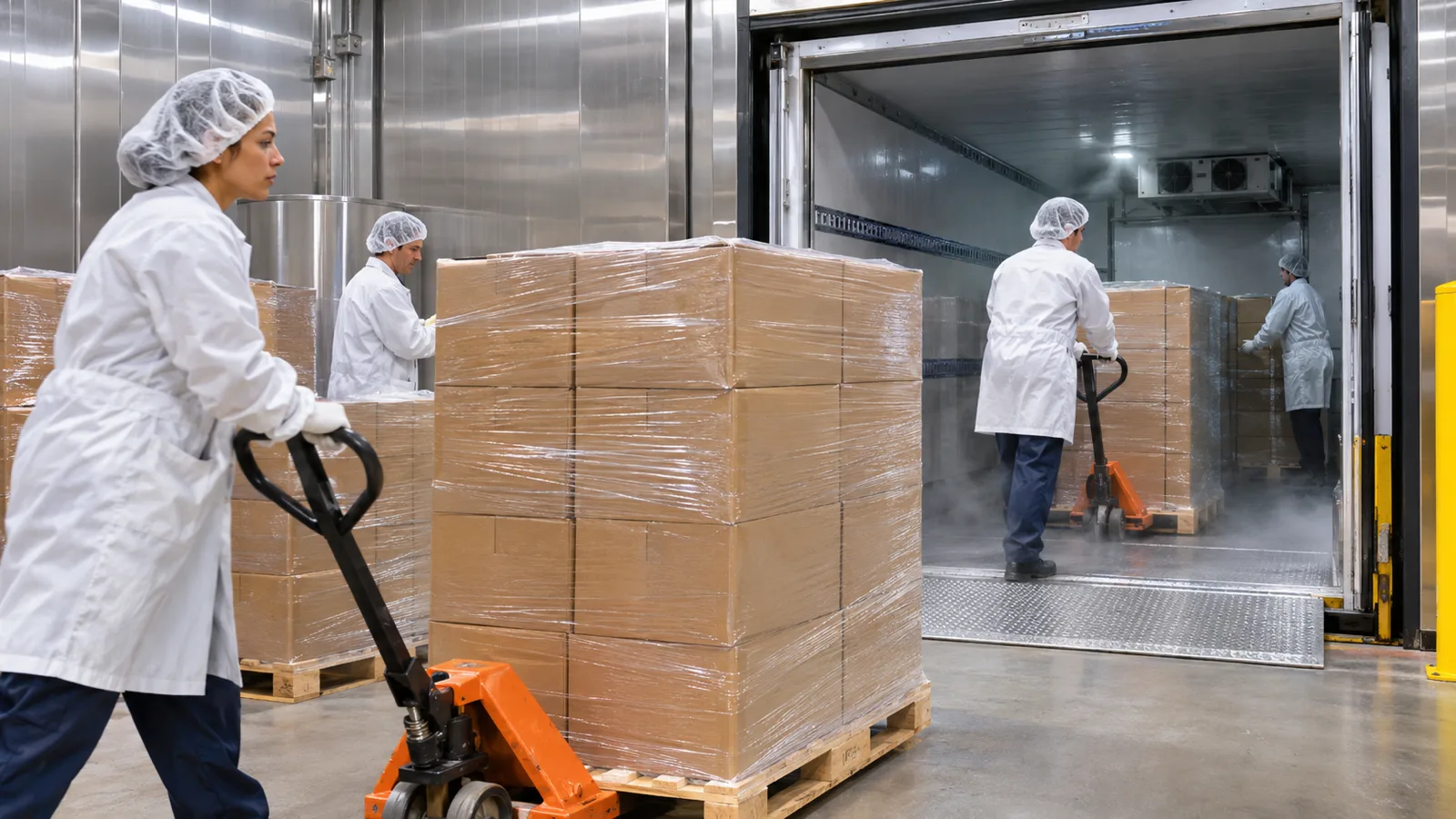
A mid-sized bakery in Guelph lands its first listing with a major grocery chain. The excitement lasts about a week, until the vendor manual arrives. It specifies pallet heights, label formats, appointment booking rules, temperature logs, lot code requirements and fines for late or short deliveries. The bakery has always delivered to independent stores in its own trucks. Now it needs to deliver full pallets to a distribution centre in the GTA on a fixed schedule, with paperwork that would survive a recall investigation.
Situations like this are common in Guelph and Wellington County, which together form one of the most concentrated food and agriculture clusters in Ontario. The University of Guelph and the Ontario Agricultural College anchor research, OMAFRA has its headquarters in the city, and processors range from meat and dairy plants to bakeries, breweries, confectioners and specialty food makers. Farms across Wellington County, from Puslinch to Mount Forest, supply milk, poultry, eggs, grains and livestock.
Food processing logistics here is less about distance, since the GTA is about an hour away, and more about control: keeping product at the right temperature, tracing every lot, and fitting into the receiving systems of large retail and foodservice customers. This article follows product through the chain, from ingredients arriving at the plant to finished goods leaving for store shelves, and highlights the decisions that matter at each stage.
Stage 1: inbound ingredients and packaging
Every processor depends on a steady flow of raw materials. In Guelph and Wellington County, that flow usually includes:
- Local farm products such as milk, eggs, poultry, pork and grains, often collected on regular routes.
- Dry ingredients like flour, sugar, spices and additives, delivered by LTL or bulk truck from mills and distributors across Ontario and the U.S.
- Imported ingredients that clear customs at the border or at a GTA sufferance warehouse before trucking west on the 401.
- Packaging materials: film, trays, corrugated cases and labels, which take up surprising amounts of space.
The common mistake at this stage is letting packaging and slow-moving dry ingredients crowd production space. Many processors keep only a few days of these materials on site and hold the rest at a nearby warehouse with scheduled replenishment. That frees floor space for production and makes it easier to rotate stock first in, first out.
Stage 2: storage at the right temperature
Food products typically fall into four storage zones, and each has its own requirements:
- Ambient: dry goods, canned products, many snacks and beverages. Needs clean, pest-controlled space protected from extreme heat and freezing.
- Cool: some produce, chocolate and certain bakery items, usually kept around 10 to 15°C.
- Refrigerated: dairy, fresh meat, prepared foods, kept at 0 to 4°C.
- Frozen: frozen meat, baked goods and prepared meals at −18°C or colder.
Ontario winters create an additional risk for ambient products: beverages, sauces and some canned goods can freeze in an unheated trailer or warehouse. Summer heat in a parked trailer can ruin chocolate and some dry goods just as easily. A 3PL offering temperature-controlled warehousing with continuous monitoring and alarms removes much of that risk, while dedicated cold storage handles chilled and frozen finished goods.
Stage 3: meeting the Safe Food for Canadians Regulations
The federal Safe Food for Canadians Regulations came into force on January 15, 2019, and they changed the paperwork for many food businesses. Some requirements have been phased in by sector and business size, but the main elements are:
- Licensing. Businesses that manufacture, process, treat, preserve, grade, package or label food for export or interprovincial trade, as well as importers, generally need a Safe Food for Canadians licence from the CFIA.
- Preventive controls. Most licence holders need a written preventive control plan describing hazards and how they are controlled, including sanitation, pest control and temperature control during storage and transport.
- Traceability. Businesses must be able to trace food one step back and one step forward: who supplied it and who received it, with lot codes and dates, and provide those records to the CFIA within 24 hours if asked.
Even processors who sell only within Ontario are subject to provincial food safety rules administered by OMAFRA and local public health units, and most large retailers require third-party food safety certification regardless. Our post on the Safe Food for Canadians licence explains the licence application in more detail.
Logistics is a big part of meeting these requirements. Your warehouse and carriers must keep product at the specified temperature, record it, and pass lot codes accurately from your system to theirs and back. If a recall happens, the speed of your response depends on how quickly you can identify which pallets went to which customers.
Stage 4: outbound to retail and foodservice
Finished goods from Guelph and Wellington County typically go to three kinds of customers:
- Grocery distribution centres in the GTA, usually by full or partial truckload with strict appointment windows.
- Foodservice distributors who supply restaurants, institutions and hospitals across Ontario.
- Independent retailers and direct-to-consumer orders, which require smaller shipments and more frequent deliveries.
Each channel needs different handling. Grocery DCs want full pallets, built to height and weight limits, with GS1-compliant case and pallet labels. Late arrival can mean a missed appointment, a rebooking several days out and a fine. Foodservice distributors are often more flexible on appointment times but expect consistent lead times. Independents and online orders need small, often mixed shipments, which is where a cold chain fulfillment service becomes more efficient than running your own vans.
Getting from Guelph to the GTA
The Hanlon Expressway (Highway 6) connects Guelph to Highway 401, and from there most GTA grocery DCs are 60 to 90 minutes away in normal traffic. Highway 7 links Guelph to Kitchener-Waterloo. Northbound, Highway 6 continues to Fergus, Arthur and Mount Forest, the route many Wellington County processors use to reach the city. Refrigerated carriers serve the corridor daily, but capacity tightens in summer and before holidays like Thanksgiving and Christmas, when every food processor is shipping more. Booking recurring loads rather than calling for trucks one at a time keeps capacity secure.
Rail options
Guelph is one of the few Ontario cities with its own short-line railway, the Guelph Junction Railway, which connects local industry to the national rail network. For processors receiving bulk commodities such as grain, sweeteners or oils, rail can be cheaper than trucking. Most finished food still moves by truck, however, because of the speed and temperature control it offers.
Common problems and how processors solve them
Short shelf life and long lead times
Retail DCs often reject products with less than a set percentage of shelf life remaining. Processors with slow inventory turnover or excess stock lose sales this way. The fix is tighter production planning and an inventory management system that tracks expiry dates and enforces first-expired, first-out picking.
Mixed temperature orders
A foodservice order might include chilled sauces, frozen desserts and dry goods. Shipping these separately is expensive, but mixing them incorrectly risks product. Multi-temperature trailers with bulkheads, or consolidating at a facility that handles all zones, solve this.
Seasonal peaks
Barbecue season, Thanksgiving, Christmas and Easter all create spikes, especially for meat, baked goods and specialty products. Processors that rely on a single warehouse and a few carriers often run out of space or trucks at the worst moment. Planning overflow storage and carrier commitments a season ahead avoids it.
Packaging that fails in transit
Food packaging is designed to look good on the shelf, not to survive a truck ride from Guelph to a distribution centre in Vaughan or Brampton. Common failures include cases that crush when pallets are stacked, shrink-wrap that loosens on cold pallets and lets cases shift, and condensation that weakens corrugated board when product moves from a freezer to a warm dock. Some practical fixes:
- Test case compression strength against the actual pallet height your customers require.
- Use corner boards and enough stretch-wrap tension to hold the load, applied after product reaches storage temperature.
- Minimise time on open docks, especially in summer, and pre-cool trailers before loading.
- Choose moisture-resistant corrugated for frozen products that will see temperature changes.
Damage claims from grocery DCs are a hidden cost for many processors. A small investment in packaging testing often pays back quickly in fewer refused pallets and chargebacks.
Audit readiness
Food safety audits and CFIA inspections look at the whole chain. Warehouses and carriers must provide temperature records, cleaning logs and pest control records on request. Choose partners who already produce these as a matter of routine.
Choosing a logistics partner for food processing
When you evaluate warehouses and carriers, ask:
- Which temperature zones do you operate, and how are they monitored?
- Can you track lots and expiry dates and pick by first-expired, first-out?
- Do you work with GS1 labelling and grocery DC appointment systems?
- What third-party food safety certifications do you hold?
- How quickly can you produce traceability reports in a recall?
- Do you have refrigerated carrier capacity on the Guelph-GTA corridor in peak season?
For an overview of how ShipCarte supports processors and brands, see our food and beverage industry page. You may also find our guide to handling perishable goods in fulfillment useful.
Build a stronger food supply chain with ShipCarte
Guelph and Wellington County have the ingredients, talent and location to supply food across Ontario and beyond. The logistics have to keep pace. ShipCarte offers temperature-controlled warehousing, cold chain fulfillment and freight management for food processors across Ontario. Schedule a consultation to review your supply chain, or request a quote for storage and distribution.