
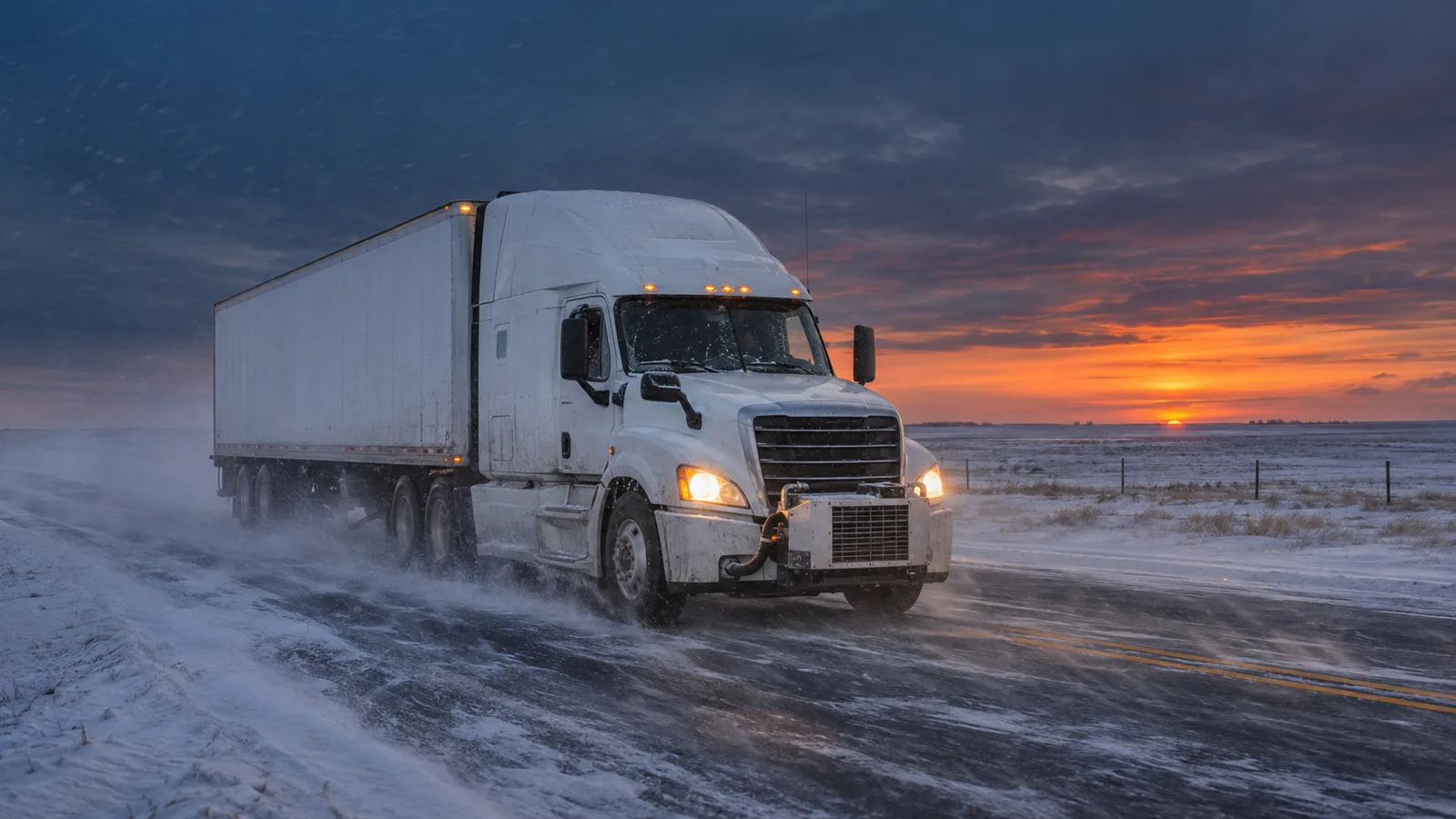
Every autumn, freight quotes in Canada start to include a new line item: "PFF," "heat," or "protect from freeze." For shippers moving beverages, paints, chemicals, food or health products, that line can be the difference between a clean delivery and a pallet of ruined stock. For shippers who have never needed it, it can look like an unexplained extra charge.
Heated trailer service is one of the most distinctly Canadian parts of the freight market. Carriers in warmer countries rarely need it on a large scale. Here, it is a seasonal routine for anyone shipping freeze-sensitive goods across the Prairies, through northern Ontario or into Quebec and the Atlantic provinces between late autumn and spring.
This article explains what protect from freeze service actually is, the different types of equipment carriers use, how a heated shipment moves through the network, what affects the cost, and the questions to ask before you book. If you want the broader picture of winter freight risk, including packaging and receiving, see our companion guide to cold-weather freight protection in Canada.
What "Protect From Freeze" Means
Protect from freeze (PFF) is a service in which the carrier commits to keeping freight above freezing while it is in their care. That usually means a heated or temperature-controlled trailer on the road and heated space at any terminals where the freight is handled. It is not the same as refrigerated or frozen service, which keeps product cold. PFF is about preventing the temperature from dropping too low.
The precise commitment varies by carrier. Some promise only "above freezing." Others will maintain a specific range if you request it and the equipment allows. Knowing which you are buying matters, especially for products with a stated minimum storage temperature well above zero.
The Equipment Behind Heated Shipping
Heated dry vans
These are standard enclosed trailers fitted with a heating unit, often mounted on the front wall of the trailer. They are a common choice for LTL carriers that need to keep a mix of freight warm during the winter months. Temperature control tends to be less precise than with a reefer, but it is effective at keeping freight above freezing.
Refrigerated trailers in heat mode
Reefer units can heat as well as cool. In winter, a reefer set to a specific temperature will run in heating mode to hold that setpoint. This is often the best option for full truckloads of sensitive products, because the temperature can be set precisely, and many units record temperatures throughout the trip.
Insulated trailers
Some carriers use insulated trailers without active heating for shorter runs in milder conditions. They slow heat loss but cannot maintain temperature indefinitely, so they suit short regional moves rather than long cross-country trips.
Heated terminals and docks
For LTL, the trailer is only part of the story. Freight is unloaded and reloaded at terminals, and if those docks are not heated, product is exposed during every transfer. Carriers offering PFF on LTL lanes need heated cross-dock space or heated holding areas at each terminal along the route.
How a Heated Shipment Moves: Step by Step
- Booking: the shipper requests PFF service when getting the quote and booking the shipment. The carrier confirms that it can provide heated equipment on that lane.
- Documentation: the bill of lading is clearly marked "Protect From Freeze" or with the required temperature. Pallets are labelled so dock workers can identify them.
- Pickup: the carrier arrives with a heated trailer, or picks up in a city unit and moves the freight promptly to a heated terminal.
- Linehaul: the freight travels in heated equipment between terminals or directly to destination. On long routes, such as the Greater Toronto Area to Calgary or Montreal to Halifax, this may involve several days on the road.
- Terminal handling: at each terminal, PFF freight is moved to heated space or kept in a heated trailer rather than left on an open dock.
- Delivery: the freight arrives in a heated unit, and the consignee receives it into a heated space.
Every step has to work. A heated linehaul trailer is not much help if the freight then spends a night on a cold dock, which is why PFF on LTL is more complex than it looks.
When Is Heated Service Needed?
There is no national start date. Carriers typically offer PFF from late autumn through early spring, and some apply it automatically to certain commodities once temperatures drop. The right time to start depends on your product's sensitivity and the coldest point on the route. A shipment from Vancouver to Kamloops may need protection when a shipment within the Lower Mainland does not. A shipment from Southern Ontario to Winnipeg will cross some very cold country even when Toronto is mild.
Shippers often set their own policy, for example applying PFF to all freeze-sensitive freight going to or through the Prairies and northern Ontario during set months, with case-by-case decisions on milder lanes.
What Affects the Cost
Heated service costs more than standard dry freight. The extra charge reflects equipment, fuel for the heating unit, heated terminal space and the reduced flexibility of a carrier's network. Pricing depends on:
- Shipment type: PFF on LTL is often charged as an accessorial fee per shipment or per hundredweight, while full truckload heated service is usually priced into the trailer rate.
- Lane and distance: longer and colder routes cost more to protect.
- Equipment availability: heated capacity is limited, and during cold snaps demand can exceed supply on some lanes.
- Temperature requirement: a precise setpoint with recording typically costs more than general above-freezing protection.
- Number of terminal transfers: direct loads avoid the handling costs of multiple heated transfers.
Because costs vary considerably between carriers and seasons, it is worth comparing quotes and confirming exactly what each carrier includes in its PFF service rather than comparing only the price.
Limitations to Keep in Mind
- Coverage gaps: not every carrier can offer heated service to every destination, particularly smaller or remote communities.
- Capacity crunch: heated equipment may need to be booked further ahead in the coldest weeks.
- Liability limits: standard carrier liability may not cover the full value of your goods even if protection fails. Cargo insurance can fill the gap; see our guide to freight insurance.
- Last-mile exposure: once freight is delivered, protection ends. Receivers need to bring it inside promptly.
- Mixed loads: heated trailers may carry other freight, and the setpoint suitable for one shipper's goods may not suit another's.
Who Typically Uses Heated Service
Almost any industry can need PFF at some point, but a few groups rely on it every winter:
- Beverage producers and distributors moving bottled and canned drinks to retailers and warehouses in other provinces.
- Building products and coatings suppliers shipping paint, adhesives and sealants to job sites and stores during the off-season.
- Food manufacturers sending shelf-stable products that still contain water, such as sauces, condiments and canned goods, to grocery distribution centres.
- Health and personal care brands distributing lotions, liquid soaps and natural health products to pharmacies and retailers.
- Chemical and cleaning product companies whose products change properties when frozen.
Preparing Your Freight for Heated Transport
Heated service works best when the freight is ready for it. Ship product that has been stored at room temperature, rather than pulling it from a cold yard trailer just before pickup, so it starts the journey warm. Wrap pallets tightly and avoid gaps that let cold air circulate between cartons if the trailer door is opened during transfers. Keep freeze-sensitive pallets together rather than splitting them across several shipments. And tell the carrier about any upper temperature limit as well; some products can be damaged by excessive heat near a heater unit, so the placement of pallets in the trailer can matter.
Questions to Ask Before Booking
- Can you provide heated equipment for the entire route, including every terminal?
- What temperature does your PFF service maintain, and can you hold a specific range?
- Will the trailer record temperatures, and can I get the record if there is a problem?
- How is the PFF charge calculated?
- What happens if heated capacity is unavailable on my pickup date?
- How do you handle freight during weekends, holidays or weather delays?
Frequently Asked Questions
Is heated shipping the same as refrigerated shipping?
Not exactly. Both use temperature-controlled equipment, and a reefer can do both jobs, but PFF focuses on keeping product above freezing, while refrigerated service keeps product cold. For chilled and frozen products, see our article on building a national cold chain in Canada.
Can I ship parcels with freeze protection?
Parcel networks generally do not offer heated service. For small freeze-sensitive shipments, insulated packaging, careful timing and short transit routes are the main tools.
Do I need to mark the bill of lading?
Yes. Without a clear "Protect From Freeze" notation on the bill of lading, the carrier may not treat the freight as heated, and a freezing claim becomes much harder.
Book Heated Freight With Confidence
ShipCarte helps shippers across Canada book LTL and full truckload freight with protect from freeze service where carriers offer it, and our carrier management team helps you find heated capacity on the lanes you need. For products that must stay warm between shipments, our temperature-controlled warehousing keeps stock within range. Request a quote for heated freight this coming season.