
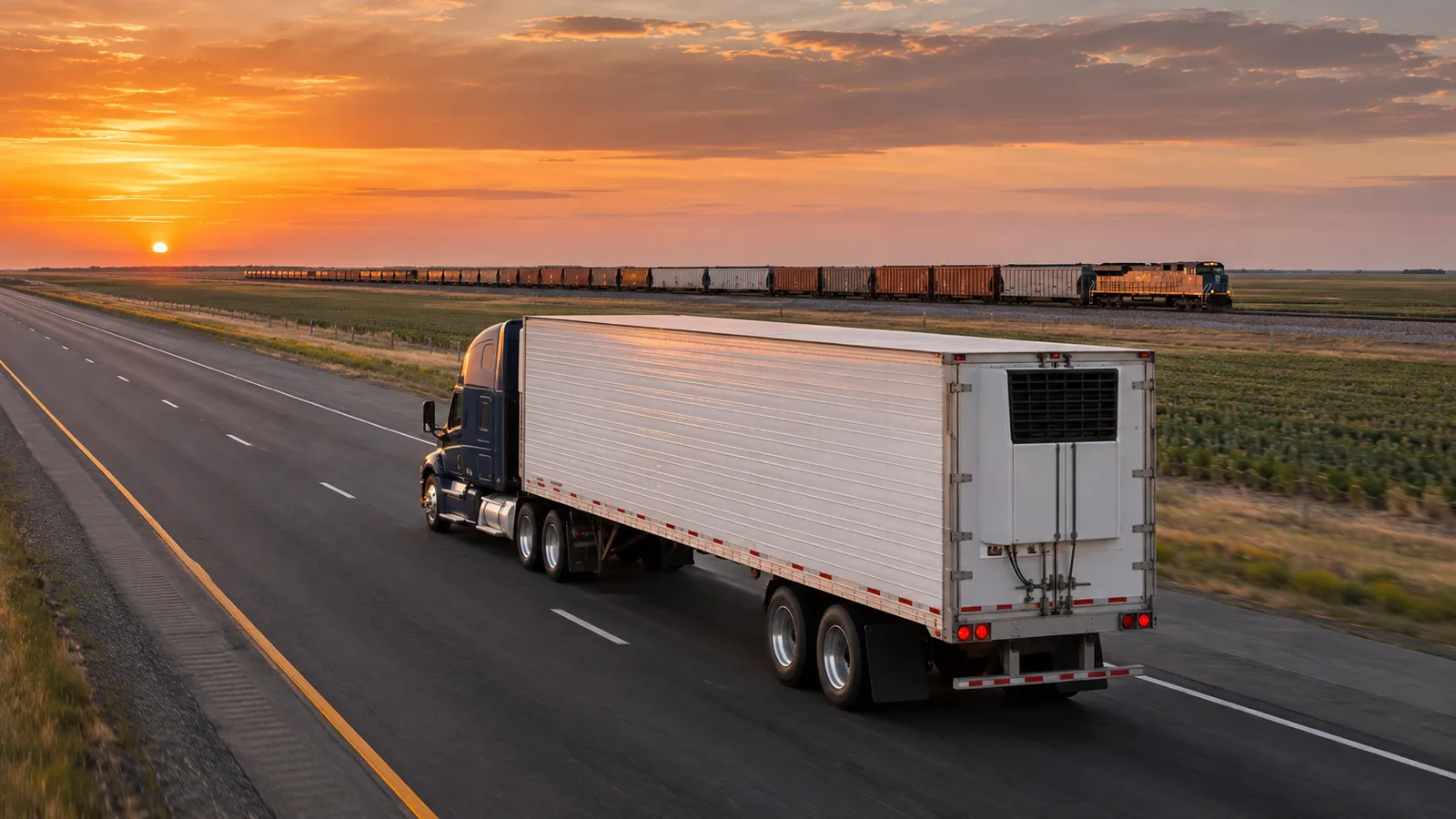
Every winter, Canadian grocery shelves fill with tomatoes, peppers, avocados and berries grown in Mexico. Every day, auto parts plants in southern Ontario receive components made in Mexican factories. Electronics, appliances, furniture, beer and building products all make the same long trip north. For Canadian buyers, Mexico is a major trading partner, close enough to reach by land and covered by the same North American trade agreement as the United States.
Yet importing from Mexico is not quite as simple as importing from the US. Goods usually cross two borders, travel through a third country, and change hands between carriers along the way. A Canadian business sourcing from Monterrey or Guadalajara for the first time can be surprised by how many parties are involved and how much paperwork follows the truck.
This guide compares the main ways to move goods from Mexico to Canada, explains how NAFTA and its expected successor affect duties, and covers the regulatory checks that apply to food and other sensitive goods.
The geography of Mexico-to-Canada freight
Mexico's manufacturing and agriculture are spread across the country, with big industrial clusters in the north (Monterrey, Saltillo, Ciudad Juárez, Tijuana), the Bajío region (Querétaro, Guanajuato, Aguascalientes), and around Mexico City and Guadalajara. Produce comes from growing regions such as Sinaloa, Sonora, Michoacán and Jalisco.
From there, most freight heads to the US border. The Laredo-Nuevo Laredo crossing in Texas is by far the busiest commercial crossing, with others at El Paso, Nogales, Otay Mesa and Pharr. Goods then travel through the United States to a Canadian crossing such as Detroit-Windsor, Buffalo-Fort Erie or Blaine-Surrey, before reaching warehouses in Ontario, Quebec, British Columbia or the Prairies. It is a long journey, often thousands of kilometres.
Option 1: Trucking
Trucking is the most common mode for Mexico-Canada trade because it is flexible and relatively fast.
How it usually works
Mexican carriers generally do not run long distances inside the United States, and US and Canadian carriers rarely run deep into Mexico. A typical move involves:
- A Mexican carrier picks up at the supplier and drives to the border.
- A short-haul "drayage" carrier moves the trailer across the border to a yard on the US side, where Mexican export and US entry or in-bond paperwork is handled.
- A US or Canadian long-haul carrier takes the trailer, or a transloaded trailer, north through the United States.
- The load crosses into Canada and is delivered to your facility.
Some carriers offer through-trailer service where the same trailer travels the whole way while the tractors change. This reduces handling and damage risk compared with transloading the freight from one trailer to another.
Travelling in bond through the US
Goods that are not being imported into the United States can travel through it in bond, meaning US Customs and Border Protection allows them to transit without paying US duties, as long as they exit to Canada within the permitted time and under the right documentation. Your carrier or broker arranges this. Errors in in-bond paperwork are a common cause of delays at the Canadian border.
Full truckload or LTL
High-volume shippers and produce importers typically use full truckloads, often refrigerated. Smaller importers can move a few pallets as LTL, though cross-border LTL from Mexico involves more handling and terminal transfers, which adds time. Domestic legs inside Canada can be handled with LTL freight or full truckload services once goods are cleared.
Option 2: Rail and intermodal
Rail is a strong option for heavy, high-volume or less time-sensitive freight. North American rail networks connect Mexico to Canada through US partners. Canadian National and Canadian Pacific both have links that allow intermodal containers and railcars to move from Mexican origins to terminals in Toronto, Montreal and elsewhere, typically via connections in the US Midwest.
Advantages of rail include lower cost per tonne for long distances, fewer driver-related constraints and good suitability for heavy goods like steel, auto parts, appliances and beverages. The trade-offs are longer and sometimes less predictable transit, and the need for drayage at each end between the rail terminal and the shipper or consignee.
Many importers use a blend: rail for steady base volume and trucks for urgent or temperature-sensitive loads.
Option 3: Ocean
Some Mexico-Canada trade moves by sea, for example from Mexican Pacific ports such as Manzanillo or Lázaro Cárdenas up the coast to Vancouver, or from Gulf ports like Veracruz to eastern Canada. Ocean can make sense for bulk commodities or for importers on the West Coast, but for most mixed manufactured goods and produce, overland routes are faster.
Comparing the options at a glance
- Speed: Truck is usually fastest; rail and ocean are slower.
- Cost for heavy freight: Rail and ocean are generally more economical over long distances.
- Temperature control: Refrigerated trucks are the default for fresh produce; refrigerated intermodal containers exist but are less common.
- Handling: Through-trailer truck and intermodal reduce handling; transloaded or LTL shipments add touch points.
- Flexibility: Truck offers the most scheduling flexibility.
Trade rules: NAFTA today, CUSMA ahead
Goods that qualify as originating under the North American Free Trade Agreement can enter Canada free of duty, or at reduced rates for certain sensitive products. To claim that preference, the importer needs proof of origin, usually a NAFTA certificate of origin completed by the exporter or producer. Without it, Most-Favoured-Nation rates apply.
The three countries have signed the Canada-United States-Mexico Agreement (CUSMA), known as T-MEC in Mexico and USMCA in the United States. Ratification is under way, and once it comes into force it will replace NAFTA. CUSMA keeps duty-free trade for qualifying goods but updates rules of origin, particularly for automotive products, and changes how origin is certified. Importers, especially those in the auto supply chain, should follow the timing and ask their broker how certificates and records will need to change.
A key point that catches people out: goods do not qualify just because they ship from Mexico. Products assembled in Mexico from components made elsewhere must meet the specific rule of origin for their tariff classification. Your supplier should be able to confirm whether a product qualifies and provide the certificate.
Customs clearance at the Canadian border
Commercial shipments entering Canada by truck require advance electronic manifest data from the carrier and a customs entry from your broker, ideally pre-filed so the truck can be released quickly. Have these ready:
- Commercial invoice with full descriptions, values, currency and origin
- NAFTA certificate of origin, if claiming preference
- Bill of lading and packing list
- Permits or certificates for regulated goods
- Your business number with import-export account
GST, and provincial HST where applicable, is payable on import even when no duty applies. For an overview of trade documentation, see our article on the purpose of a bill of lading.
Fresh produce and food imports
Mexico is a major source of fresh fruit and vegetables for Canada, particularly in winter. Food imports involve the Canadian Food Inspection Agency:
- Most food importers need a Safe Food for Canadians licence.
- Fresh produce has grade, labelling and, in some cases, phytosanitary requirements.
- Shipments may be inspected on arrival, which can delay perishable loads if documents are incomplete.
- Trading in fresh fruit and vegetables in Canada may also involve membership in the Fruit and Vegetable Dispute Resolution Corporation, depending on your business.
Temperature control is critical. Produce coming north in winter has to be protected from freezing as it crosses the northern US and into Canada, and protected from heat as it leaves Mexico. Continuous temperature monitoring and fast cross-docking into cold storage on arrival help preserve shelf life.
Security programs that speed up the border
Trusted trader programs can reduce delays for regular importers and carriers. Canada's Partners in Protection program and the FAST lane at major crossings are designed for low-risk commercial traffic, and the US has parallel programs. Participation requires security assessments and commitments, so it is mainly relevant for frequent shippers, but it is worth knowing whether your carriers are enrolled.
A scenario: auto parts from the Bajío to southern Ontario
Consider a mid-sized Ontario manufacturer buying machined components from a supplier in Querétaro. The supplier ships weekly full truckloads. The Mexican carrier delivers to a yard near Laredo, where a US carrier takes the trailer in bond through Texas, Arkansas, Missouri and Illinois and into Michigan. The broker pre-files the Canadian entry with the NAFTA certificate of origin, and the truck crosses at the Ambassador Bridge into Windsor, reaching the plant along Highway 401.
The main risks in that flow are a mismatch between the invoice and the in-bond paperwork, a missing origin certificate that turns a duty-free shipment into a dutiable one, and congestion at Laredo or Detroit-Windsor at peak times. Clean documents and a carrier experienced with the lane handle most of them.
After arrival: warehousing and distribution
Once goods arrive in Canada, they may need short-term storage, sequencing for a production line, or distribution to retailers. Distribution services can break down full trucks into smaller shipments for customers across the country. For food importers, food and beverage logistics keeps product in the right temperature range from dock to store.
Ship smarter from Mexico with ShipCarte
ShipCarte helps Canadian businesses manage cross-border shipping, warehousing and domestic distribution. If you are sourcing from Mexico and want a clearer view of your freight options, request a quote or schedule a consultation with our team.