
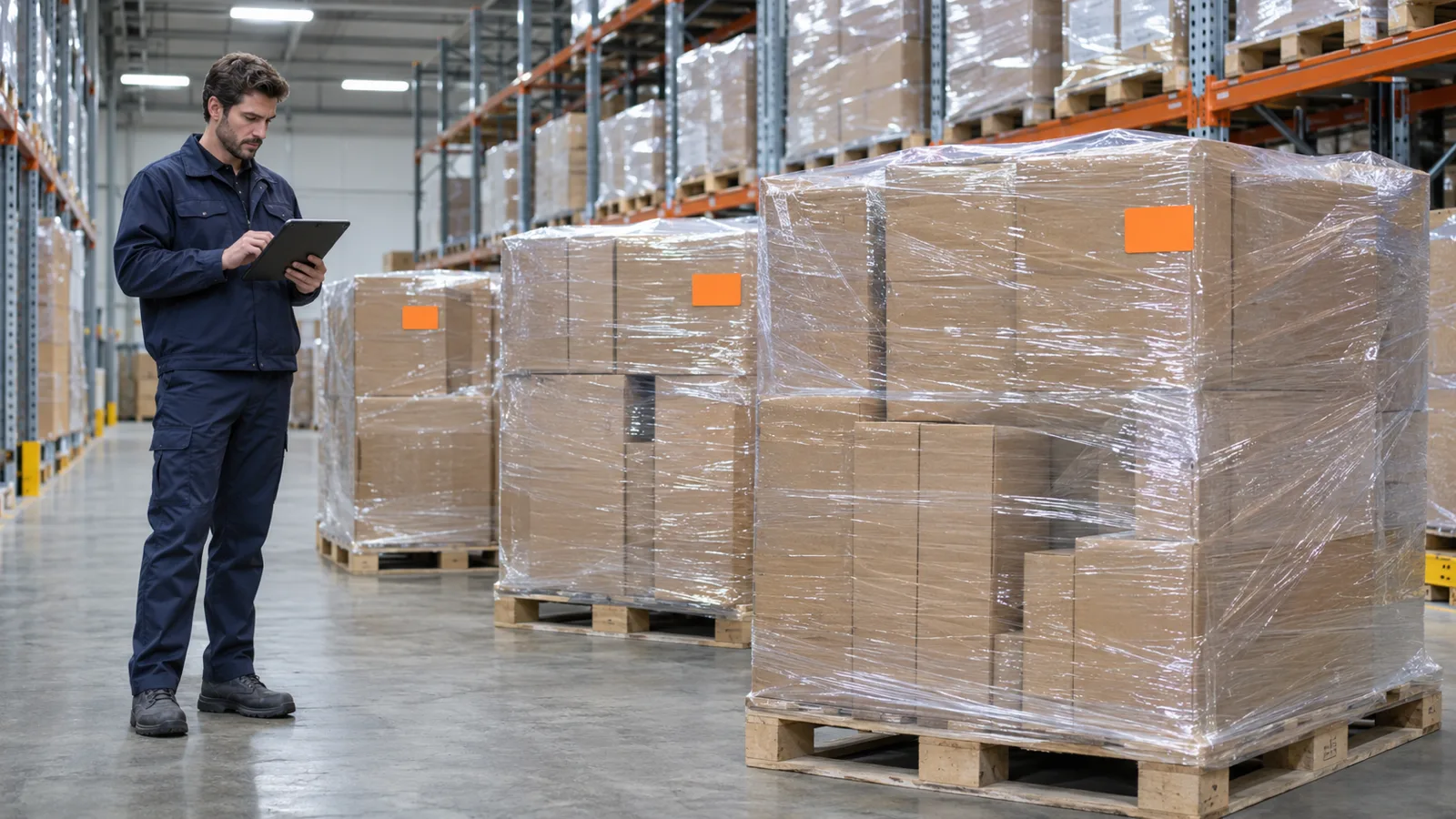
Every January, warehouses across Mississauga hold a quiet reminder of last year's forecasting. Holiday gift sets that didn't sell through. A colourway that customers ignored. Packaging that has to change because a supplier switched or a regulation did. The pallets sit in their racking, still costing storage every month, while the team debates what to do with them.
Most brands leave this decision too long. Inventory rarely becomes more valuable while it waits. Seasonal goods lose relevance, cosmetics and supplements approach their expiry dates, and electronics are overtaken by newer models. Meanwhile, the pallet positions they occupy could be holding products that actually sell.
This guide lays out the realistic options for clearing excess and discontinued stock, roughly in order from the highest likely recovery to the lowest, along with the logistics work each one involves. It is aimed at e-commerce sellers, wholesalers and consumer brands storing goods in Mississauga or elsewhere in the GTA.
First, figure out what you actually have
Liquidation decisions are only as good as your inventory data. Before choosing a channel, pull a report that shows, for each SKU:
- Quantity on hand and where it sits.
- Sales velocity over the last 90 and 365 days.
- Landed cost per unit, so you know your floor.
- Expiry dates or lot dates for anything perishable or regulated.
- Condition: new and sealed, open box, damaged packaging, or customer return.
- Monthly storage cost attributable to that SKU.
That last line is often the most persuasive. When a team sees that a slow SKU has been costing storage every month for a year, the case for clearing it at a discount becomes obvious. A good inventory management system makes this report a few clicks rather than a spreadsheet project. If you are not sure how your on-hand numbers are calculated, our explainer on quantity on hand is a useful starting point.
Option 1: Sell it through your own channels, differently
The highest recovery usually comes from selling to your existing customers in a new way, because you keep the margin a liquidator would take.
Bundles and multi-packs
A slow-moving item paired with a bestseller can move faster than either on its own discount. A candle that never sold might become the bonus in a gift set with a popular diffuser. This involves physical work: taking units out of their cases, assembling them into a new pack, and creating a new SKU. A kitting and assembly service can build the bundles in the warehouse without the stock ever leaving the building.
Gift with purchase
Instead of discounting, add the excess item free above an order threshold. It lifts average order value and clears stock, though you give up the revenue on the free unit.
Outlet sections and flash sales
A dedicated clearance page, an email to your list, or a short flash sale can move a surprising amount of stock. Be wary of training customers to wait for discounts, and keep clearance clearly separate from your core range.
Option 2: Marketplaces and secondary channels
If your own audience is saturated, other channels can reach new buyers. Marketplaces such as Amazon, Walmart Marketplace, eBay and Etsy, or deal and off-price sites, each bring their own fees, packaging rules and prep requirements. Amazon in particular has strict labelling and packaging standards for inbound stock, so units may need to be relabelled, polybagged or bundled before they can be sent to a fulfillment centre. Our Amazon FBA prep service handles that preparation.
For products sold in Canada, remember that bilingual English and French labelling rules under the Consumer Packaging and Labelling Act still apply to prepackaged consumer goods, whatever the channel. If your excess stock came from a US-only production run without French labelling, you may need to relabel before it can be sold to Canadian consumers.
Option 3: B2B sales to other retailers
Off-price retailers, discount chains and independent stores sometimes buy end-of-line goods by the pallet. The per-unit price will be lower than selling direct, but the volume clears quickly and you deal with one buyer instead of hundreds of consumers. Expect buyers to ask for product details, photos, quantities by SKU and condition, and for goods to be shipped palletised. These deals often move as LTL freight from Mississauga to the buyer's distribution centre, and many of those DCs are in the GTA, which keeps freight costs down.
Option 4: Liquidators and jobbers
Liquidation companies buy surplus inventory in bulk, often as mixed lots, and resell it through their own channels. The GTA has an active market for this. Recovery is typically a small fraction of retail value, and it varies widely by category, condition, brand strength and how much stock you are offering. The benefit is speed and simplicity: one buyer takes the lot, often within days.
Before selling to a liquidator, decide whether you need restrictions on where the goods end up. Some brands require that products not be resold on certain marketplaces or in certain regions, to avoid undercutting their main channels. Others ask for labels or tags to be removed. Put any restrictions in writing.
Option 5: Donation
Donating usable goods to registered charities can be a meaningful way to clear stock, especially for clothing, personal care products, food that is still in date, and household items. Food donations in particular need to move quickly and be handled with care for temperature and dates.
The tax treatment of inventory donations in Canada is not the same as an individual's charitable donation. The rules around fair market value, income inclusion and receipts can be technical, so speak with your accountant before assuming a particular outcome. From a logistics standpoint, charities usually need the goods delivered, a packing list, and sometimes help sorting mixed lots.
Option 6: Recycling and responsible disposal
When stock is expired, damaged beyond sale, recalled, or legally unsellable, disposal is the remaining option. That still needs planning. Electronics, batteries and certain hazardous products are covered by Ontario's producer responsibility programs and cannot simply go in a dumpster. Cosmetics, cleaning products and aerosols may be classed as hazardous waste. Branded goods sometimes need certified destruction so they don't resurface for sale. Ask for a certificate of destruction where it matters, and keep records.
Timing: when to pull the trigger
The hardest part of liquidation is often deciding when. Owners hesitate because selling below cost feels like admitting a mistake, and there is always a chance the product will pick up. A few signals suggest it's time to act rather than wait:
- The SKU has more than a year of stock on hand at current sales velocity.
- A replacement model, new packaging or a reformulation is about to arrive and will make the old version harder to sell.
- Remaining shelf life is shrinking toward the minimum that retailers or marketplaces will accept.
- Storage on the SKU has already added up to a meaningful share of its landed cost.
- Peak season is approaching and you need the pallet positions for fast movers.
Timing also affects recovery. Seasonal goods sell best to off-price buyers before the season ends, not after, because those buyers need time to get product onto their own shelves. Liquidators and B2B buyers in the GTA tend to be busiest planning for spring and for the back-to-school and holiday periods, so approaching them early in those cycles usually gets better attention than offering stock when every other brand is clearing out at once in January.
One more practical point: set a recovery floor before you start negotiating. Decide the lowest price per unit, or per pallet, you'll accept for each tier of stock, and what you'll do if no one meets it. That keeps the decision rational when an offer arrives on a Friday afternoon and someone wants an answer by Monday.
A quick decision checklist
When a SKU comes up for review, walk through these questions in order:
- Is the product still saleable, legal and within date?
- Could it sell at full or near-full price if bundled or merchandised differently?
- Does it fit a marketplace or secondary channel without hurting your brand?
- Is there a B2B buyer who would take it by the pallet?
- If not, what will a liquidator realistically offer, and does that beat another few months of storage?
- Would donating it serve a good cause and fit your tax position?
- If none of the above, how will it be disposed of responsibly and documented?
The logistics side of liquidation
Whatever channel you choose, the warehouse work is often underestimated. Typical tasks include:
- Cycle counting the affected SKUs so the quantities you sell are real.
- Inspecting and grading returns or open-box stock by condition.
- Removing price tags, relabelling, or covering branding where required.
- Re-palletising mixed SKUs into buyer-friendly lots with clear manifests.
- Arranging freight, dock appointments and bills of lading.
- Updating systems so liquidated units no longer appear as available on your store.
Brands with stock in a 3PL warehouse in Mississauga can usually have this handled on site through value-added services, which avoids moving goods twice.
Prevent the next pile-up
Liquidation recovers some value, but the bigger win is avoiding the problem. Brands that rarely need to liquidate tend to share a few habits: they order smaller quantities more often when supplier MOQs allow, review slow movers monthly rather than annually, set clear end-of-life plans for seasonal products before they arrive, and track returns closely so resaleable units go back into stock quickly. Our article on how to liquidate e-commerce inventory goes further into the marketing side of clearance, and our piece on the role of a 3PL in seasonal inventory management covers prevention.
Clear the space and get back to selling
ShipCarte helps brands in Mississauga and across Canada store, manage and move inventory, including the relabelling, kitting, palletising and freight that liquidation projects require. If excess stock is taking up space you would rather use for products that sell, schedule a consultation and we'll help you work out a plan and the logistics to carry it out.