
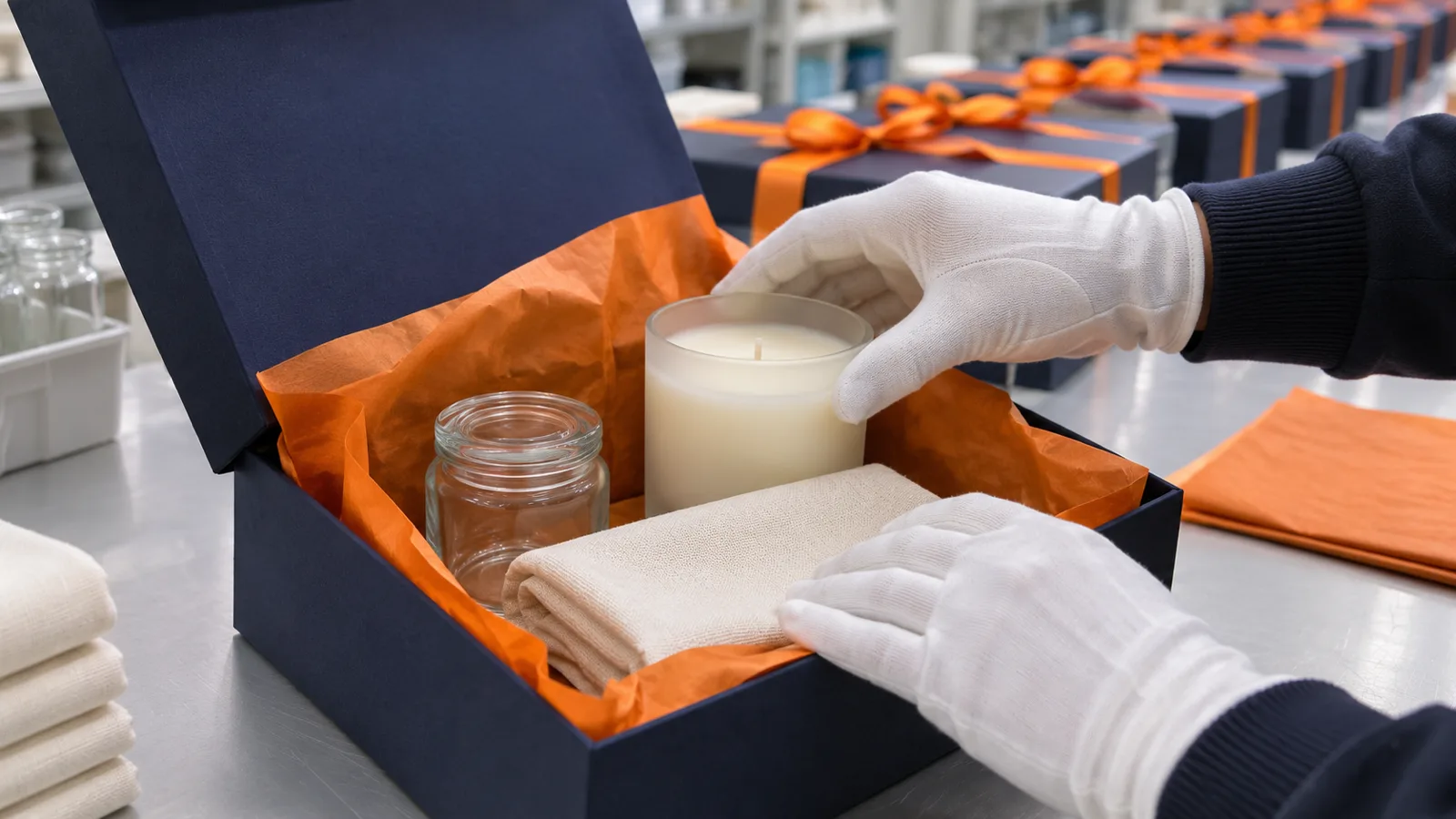
It's early July, and a skincare brand based in Port Credit is already thinking about December. The marketing team wants a three-piece holiday gift set in a rigid box with a custom insert, a mini version for stocking stuffers, and a retailer exclusive for a department store. Each needs its own SKU, barcode and packaging. Last year, staff assembled sets on folding tables in the office for three weekends straight, and a batch went out missing a cleanser. This year, they want it done properly.
That is what kitting and assembly services are for. Kitting means gathering separate items and combining them into a single sellable unit, whether that's a bundle, a gift set, a sample pack or a sales kit. Assembly can go further, putting together components, inserting literature, or applying sleeves and seals. Done in a warehouse, it happens right where the inventory already sits, with trained staff, proper quality control and a system that tracks every component.
For brands in Mississauga and the GTA, kitting is often the difference between a seasonal opportunity that runs smoothly and one that eats the team's evenings. This article walks through a realistic project from planning to delivery.
What gets kitted
Almost any product category can benefit, but a few uses come up again and again:
- Holiday and seasonal gift sets for beauty, personal care, food, home fragrance and accessories.
- Bundles that pair complementary products, such as a camera with a case and memory card.
- Subscription and sample boxes that change contents every cycle.
- Retail-ready displays and shelf-ready packs built to a retailer's specification.
- Corporate and promotional kits for onboarding, events or client gifts.
- Starter and refill kits where a main unit is packed with consumables.
Walking through a gift set project
Here is how a typical holiday kitting project unfolds, using the skincare brand above as an example. Timelines will vary by complexity and volume, but the sequence is fairly consistent.
Stage 1: Define the kit and its bill of materials (about four to five months out)
Every kit starts with a bill of materials (BOM): a list of every component and the quantity per kit. For the three-piece set, that might be one cleanser, one serum, one moisturiser, one rigid box with lid, one insert, one tissue sheet, one sticker seal and one outer shrink band. The BOM becomes the instruction set for the warehouse system. When a kit is built, the system consumes the components and creates finished kit inventory, so stock levels stay accurate.
It's at this stage that you also assign the kit its own SKU and barcode. Keep the distinction between SKUs and UPCs clear; our article on SKU versus UPC explains why that matters, particularly for retail programs.
Stage 2: Packaging design and sampling (four months out)
Custom boxes and inserts often have the longest lead time in the project, especially if they are printed overseas. Before approving production, request physical samples and test them with real product. Does everything fit snugly? Can the box be closed without crushing anything? Does it survive a drop test? Small tolerance issues on an insert can slow assembly dramatically.
For products sold to Canadian consumers, check that the outer packaging meets labelling requirements, including bilingual English and French information where the Consumer Packaging and Labelling Act applies, and any cosmetic ingredient listing rules. A gift set is a new consumer package in its own right, so it needs to comply on its own, not just rely on the labels of the items inside.
Stage 3: Inbound components (two to three months out)
Components arrive from different suppliers at different times. Each delivery is received, counted and put away, and the warehouse should flag shortages immediately. A kitting run cannot start until every component on the BOM is in the building in sufficient quantity. Lot numbers and expiry dates should be recorded at receiving for anything dated, so finished kits carry traceable information.
Stage 4: Pilot build and work instruction
Before the full run, the warehouse builds a small number of kits and documents the process with a step-by-step work instruction, often with photos. This is where problems surface: a seal that doesn't stick to the box finish, a tissue fold that takes too long, an insert that needs to go in before the serum, not after. Approve the pilot sample yourself and keep one as the reference "golden sample".
Stage 5: Production run (six to ten weeks out)
With components in stock and the process approved, the full run happens on an assembly line or at dedicated workstations. Throughput depends on how many steps the kit involves and how many people work the line. Building ahead of demand rather than on demand is usually wise for seasonal sets, since it keeps peak-season labour free for order fulfillment.
Stage 6: Quality control
Quality checks should happen during the run, not only at the end. Common methods include weighing each finished kit against a target weight to catch missing components, visual inspection of a sample from every batch, and checking that the correct barcode is applied. That missing cleanser from last year's office assembly is precisely the kind of error a check-weigh catches.
Stage 7: Distribution
Finished kits are either held for direct-to-consumer orders or shipped to retailers. Retail programs often come with routing guides, carton labelling and advance ship notice requirements. Our retail fulfillment service handles those compliance details, and direct orders flow through standard e-commerce fulfillment.
Build-to-stock versus build-to-order
There are two ways to schedule kitting, and the right one depends on your product.
- Build-to-stock means assembling a planned quantity in advance. It suits gift sets with fixed contents and predictable demand, and it frees up labour during peak.
- Build-to-order (sometimes called virtual kitting) means the kit exists as a SKU on your store, but it is only assembled when a customer orders it. It suits bundles with many variants, such as "pick any three", and avoids being stuck with pre-built kits nobody buys.
Many brands use both: pre-built hero gift sets, and on-demand bundles for everything else.
Common questions about kitting
What drives the cost of kitting?
Pricing is typically based on labour per kit, which depends on the number of components and steps, plus packaging materials if supplied by the warehouse and storage for components and finished goods. A two-item polybag bundle and a ten-step rigid box with tissue and ribbon are very different jobs. Clear BOMs and samples make quotes more accurate.
What happens to leftover kits after the season?
Plan for this upfront. Options include holding them for next year if contents won't expire, breaking them down so components return to regular stock, or clearing them through outlet channels. Breaking down kits takes labour too, so build quantities conservatively.
Can kitting work for food or temperature-sensitive products?
Yes, though it needs the right environment. Chocolate, specialty foods and some cosmetics must be assembled and stored within a temperature range, and food handling practices apply. Our food and beverage logistics page covers those considerations.
How do I keep inventory accurate when components are shared between kits?
That is exactly what a BOM in the warehouse management system handles. When the serum is used in two different gift sets as well as sold on its own, the system tracks how many units are available for each purpose and warns you when building one kit would starve another.
Writing a kitting brief your warehouse can follow
Most kitting problems trace back to an unclear brief. The warehouse assembles exactly what it's told, so the more specific your instructions, the fewer surprises. A good brief includes:
- The bill of materials with every component SKU, quantity per kit and any substitutes you'll accept if a component runs short.
- Assembly order, step by step, with photos of each stage and the finished kit from several angles.
- Orientation rules, such as labels facing forward or the hero product sitting in the centre pocket.
- Labelling requirements: where the kit barcode goes, any lot or best-before sticker, and outer carton labels for retail shipments.
- Quality standards: what counts as a defect, such as a scuffed box, a crooked seal or creased tissue, and what to do with rejects.
- Quantities and deadlines, including how many kits are needed by which date for each channel.
- Packaging for shipment: how many kits per master carton, how cartons are palletised, and any retailer pallet height limits.
Share the brief alongside the golden sample, and keep both updated if anything changes mid-season. A single changed component, such as a new supplier's jar with a slightly different diameter, can affect the insert fit and slow the line, so flag changes before the stock arrives rather than after.
Why kit in Mississauga
Kitting in the same building where inventory is stored avoids extra freight and handling. Mississauga's position near Pearson and the 400-series highways means components from overseas suppliers can arrive quickly, and finished kits can reach retailers' GTA distribution centres and consumers across Ontario and Quebec without long transit times. That matters when the holiday window is short and a late shipment means missed sales.
For more ideas on what to include in your kits and orders, see our post on package insert ideas.
Start planning your next kitting project
Gift sets and bundles reward early planning. ShipCarte's kitting and assembly service handles BOM setup, assembly, quality checks and distribution from the same operation that stores your stock. If you're planning a seasonal program or a new bundle, request a quote with your kit details, and we'll help you map out a timeline that gets finished kits ready before the rush.