
You booked a two-pallet LTL shipment to a customer in Regina, compared quotes carefully and picked the best rate. A few weeks later the invoice arrives, and it is noticeably higher than the quote. Scanning the line items, you see words like "tailgate," "residential," "notify" and "redelivery." Nobody mentioned any of those when you booked.
Those extra line items are accessorial charges: fees for services beyond standard dock-to-dock transportation. They are a normal part of freight pricing in Canada and everywhere else, but they catch out a lot of shippers, especially businesses that are new to freight or that ship to a mix of commercial, retail and residential addresses.
The good news is that most accessorials are predictable. If you know what each one means and when it applies, you can include it at booking, compare quotes fairly and avoid the surprise of a corrected invoice. This guide works through the most common ones, starting with the ones that cause the most confusion.
Why accessorials exist
A standard LTL or truckload rate assumes a simple job: the truck backs up to a dock at a commercial building during business hours, freight is loaded or unloaded with a forklift, and the driver moves on. Anything that requires extra equipment, extra time, extra labour or an unusual location costs the carrier more, so it is charged separately. That keeps base rates lower for shippers whose freight does fit the standard job.
Delivery and pickup accessorials
Liftgate service
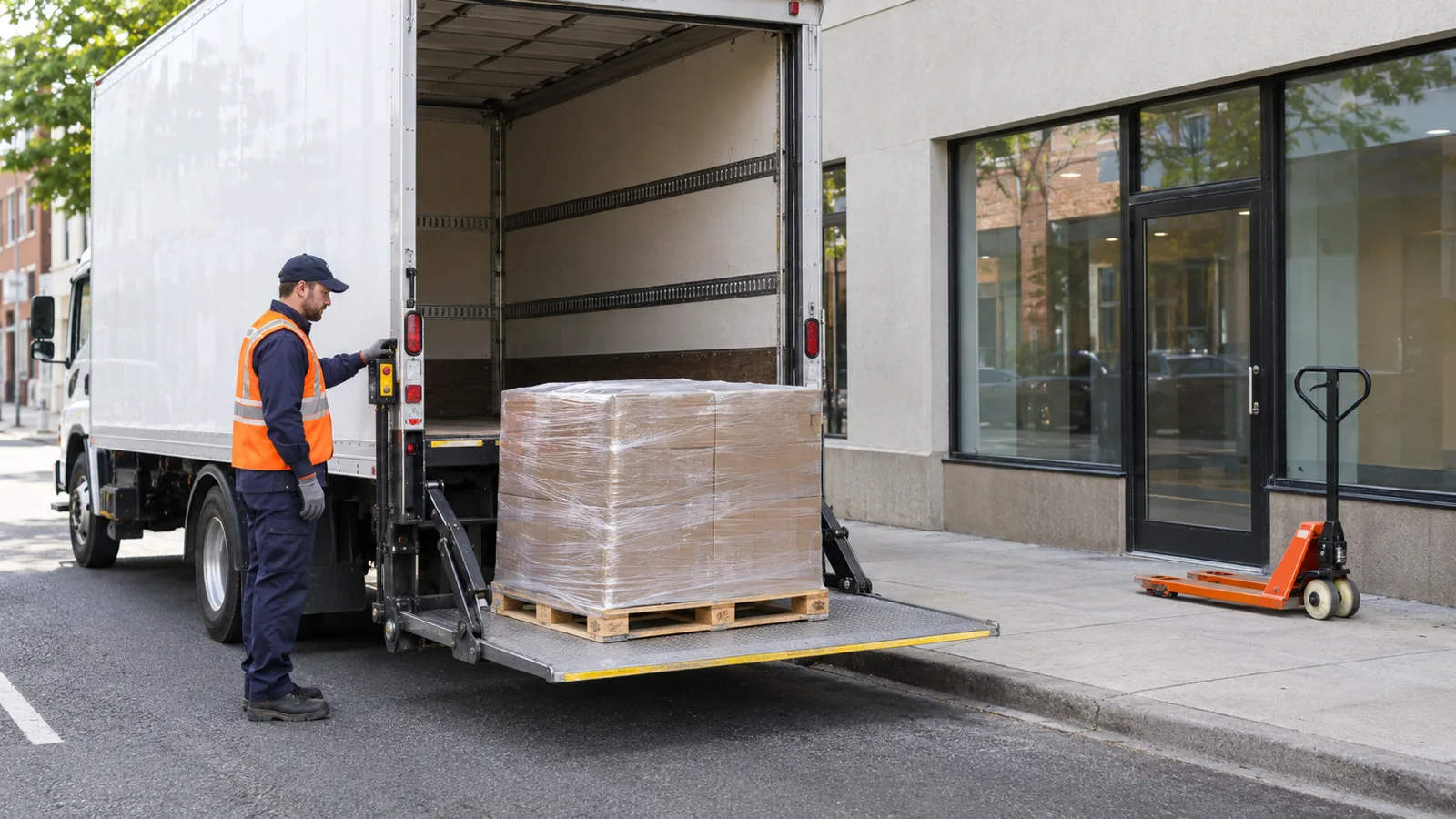
A liftgate is a hydraulic platform at the back of a truck that lowers freight from the trailer floor to ground level. You need it when the pickup or delivery location has no loading dock and no forklift. Common examples include small retail stores, restaurants, offices, many rural businesses and nearly all residences. Without a liftgate, a driver may have no safe way to get a pallet off the truck.
Not every truck has a liftgate, so carriers need to know in advance to send the right equipment. If they arrive without one, the delivery may fail and a redelivery charge can follow. Also check the weight and size limits: liftgates have a maximum capacity, and very heavy or oversized pallets may need a different solution.
Inside delivery
Standard delivery means the freight is placed at the back of the truck or at the receiver's dock. Inside delivery means the driver brings it inside the building, beyond the entrance, usually to a ground-floor room or the first suitable spot inside the door. It is common for deliveries to offices, stores and homes where the receiver cannot move a pallet themselves. Carriers generally define exactly how far "inside" goes, and anything beyond that, such as carrying items up stairs or into specific rooms, may be a separate, higher-level service.
Residential delivery
Deliveries to homes, home-based businesses and farm residences usually carry a residential charge. Residential stops take more time, often need a liftgate and an appointment, and are harder to fit into commercial delivery routes. Some carriers also apply residential charges to locations that are technically commercial but operate from a residential area.
Limited access locations
Some locations are hard for a truck to access or require extra time for security or check-in. Carriers often list schools, churches, construction sites, military bases, farms, campgrounds, prisons, storage facilities, mines and remote sites as limited access. If your consignee fits one of these categories, say so at booking.
Appointment and notify-before-delivery
Many receivers, especially retailers and distribution centres, require an appointment. A "notify" or "call ahead" service means the carrier contacts the consignee before delivering. Both take the carrier's time to arrange and may carry a fee. They are almost always worth it for residential and small-business deliveries because they prevent failed attempts. Our post on delivery appointments in freight covers this in more detail.
Redelivery
If the carrier attempts a delivery and cannot complete it, because nobody is there, the location is closed or the right equipment was not ordered, it will usually charge for a second attempt. Redelivery charges are among the most avoidable accessorials, because they are almost always caused by missing information at booking.
Time-related accessorials
Detention and waiting time
Carriers usually allow a set amount of free time for loading and unloading. If a truck is held longer, detention or waiting time charges apply. Because drivers in Canada work under strict hours of service limits, time spent waiting reduces the hours they can drive, which is why carriers charge for it.
Storage
If freight cannot be delivered and has to sit at the carrier's terminal, for example because a consignee refuses it or asks the carrier to hold it, storage charges can start after a short free period.
After-hours, weekend and holiday service
Pickups or deliveries outside normal business hours generally cost more. If you need freight to move on a weekend or a statutory holiday, confirm availability and pricing in advance.
Freight-related accessorials
Protective service (heat)
This one is very Canadian. In winter, carriers offer heated or protective service to keep freight from freezing. Beverages, paints, adhesives, liquid cleaners, some foods, cosmetics and many health products can be damaged by freezing temperatures. Protective service is typically available for a portion of the year, roughly late autumn to early spring, and costs extra because it uses heated equipment and may limit routing. If you forget to request it, the carrier is generally not responsible for freeze damage.
Over-length and over-dimensional freight
Long or oddly shaped items, such as long rolls, pipe, lumber or furniture, take up more trailer space and are harder to handle. Carriers often apply over-length charges above a set length, and very large items may need special equipment.
Dangerous goods
Shipments regulated under Transport Canada's Transportation of Dangerous Goods regulations must be classified, documented, marked and handled according to those rules. Carriers charge a dangerous goods fee to cover the extra training, documentation and handling. Never ship regulated goods without declaring them; the safety and legal consequences can be serious.
Re-weigh, re-class and re-measure
If the carrier finds that the actual weight, dimensions or freight description differ from what you entered on the bill of lading, it can adjust the charges. Accurate measurements at booking are the best defence.
Location and route accessorials
Certain destinations come with their own charges. Deliveries beyond a carrier's direct service area, to remote northern communities or across ferry routes such as those serving Vancouver Island, Newfoundland or the Gulf Islands, may carry extra fees. Cross-border shipments can include customs-related charges such as in-bond or brokerage fees. Fuel surcharges, while not technically an accessorial, appear on almost every freight invoice and vary with fuel prices. For a wider view of how these charges stack up, see our overview of types of shipping surcharges.
Who pays: shipper or receiver?
Accessorials are billed to whoever is paying for the freight under the terms of the bill of lading, usually the shipper on prepaid shipments and the consignee on collect shipments. That can create friction. If you sell to a customer on prepaid terms and their store has no dock, the liftgate charge lands on your invoice, not theirs. Many businesses in Canada handle this by asking customers at the time of order whether they have a dock and forklift, whether the address is residential and whether there are receiving hours or appointment rules. Some pass known accessorials through on the customer's invoice; others build an allowance into their pricing. Either approach works, as long as the conversation happens before the freight ships rather than after the carrier's bill arrives.
A booking checklist that prevents surprises
Run through these questions every time you book a freight shipment:
- Does the pickup location have a dock and a forklift? If not, request liftgate at pickup.
- Does the delivery location have a dock and a forklift? If not, request liftgate at delivery.
- Is the delivery address a residence, a farm or a limited access site?
- Does the receiver need an appointment or a call before delivery?
- Does the freight need to go inside the building?
- Could the freight freeze? Request protective service between autumn and spring.
- Are any items over-length or dangerous goods?
- Are your weights, dimensions and descriptions accurate?
Building these questions into your order process, and passing the answers automatically to your carrier, is where technology helps. An order management system and a shipping platform that store delivery requirements for each customer mean you do not have to remember that a particular retailer has no dock or that a regular customer works from home.
Comparing quotes fairly
When you compare carriers, make sure each quote includes the same accessorials. One carrier may look cheaper simply because the quote does not include liftgate, residential and notify charges that another carrier built in. Ask for an all-in price for the actual job, and check each carrier's accessorial schedule so you know how charges are calculated. Over time, audit invoices against quotes to catch accessorials that were added without a clear reason. Carrier management support can help with both the comparison and the audit.
Ship freight without the surprises
Accessorials are not hidden fees, but they can feel that way if no one explains them. Once you understand what liftgate, inside delivery, residential and protective service mean, and when they apply, you can quote customers accurately, compare carriers fairly and keep your freight invoices predictable.
ShipCarte helps businesses across Canada book LTL freight and truckload shipments with the right services included from the start. If accessorial charges keep catching you out, request a quote and we will help you price your next shipment properly.