
The tracking page has not changed in six days. The last scan says the parcel arrived at a sorting facility near Montreal, and then nothing. The customer in Sherbrooke has emailed twice, the second time with noticeably less patience, and your support team is not sure whether to wait, reship or open a claim. Somewhere in a national parcel network that moves enormous volumes every day, one box has slipped out of sight.
Lost parcels are a fact of life for any business that ships in volume across Canada. Labels get torn off, boxes get misrouted onto the wrong trailer, parcels end up on a shelf of "no-label" items at a depot, and occasionally something is stolen. What separates a minor annoyance from a costly, reputation-damaging mess is how quickly and methodically you respond.
This guide follows a missing parcel from the first worried email to final resolution, explains what is actually happening inside a carrier investigation, and shows the steps that move your case to the top of the pile.
Day 0: Is It Actually Lost?
Most parcels that look lost are simply late. Before opening anything formal, run through a quick triage:
- Check the service standard. Is the parcel actually past the carrier's expected delivery date for that service and lane? Ground parcels from Ontario to British Columbia, Newfoundland or the territories take considerably longer than local deliveries.
- Look for service alerts. Weather, volume backlogs and network disruptions are posted on carrier websites. This year in particular, carriers have been handling pandemic-driven volumes and many have adjusted or suspended delivery guarantees.
- Read the scan history carefully. A "delivered" scan, an "attempted delivery" scan and a "no scan for days" pattern each lead to a different process.
- Verify the address. Missing apartment or unit numbers, rural route details and transposed postal code characters cause a surprising share of problem parcels.
If the parcel is within its normal window, tell the customer so, with the expected date. If it is past due, move to the next stage.
Days 1 to 3: Open a Trace
A trace (some carriers call it a tracer, investigation or service request) asks the carrier to look for the parcel actively rather than waiting for it to surface on its own. In most cases, only the shipper, meaning the account holder who created the label, can open a trace. Customers who call the carrier themselves are often told to contact the sender, which wastes a day for everyone.
What a trace triggers inside the carrier
While each carrier has its own internal process, a trace typically sets off some combination of the following:
- A review of all scans associated with the tracking number, including scans that do not appear on the public tracking page.
- A request to the last facility that scanned the parcel to check its floors, shelves and overgoods area.
- A check of the delivery driver's route records, GPS data or delivery photo if a delivered scan exists.
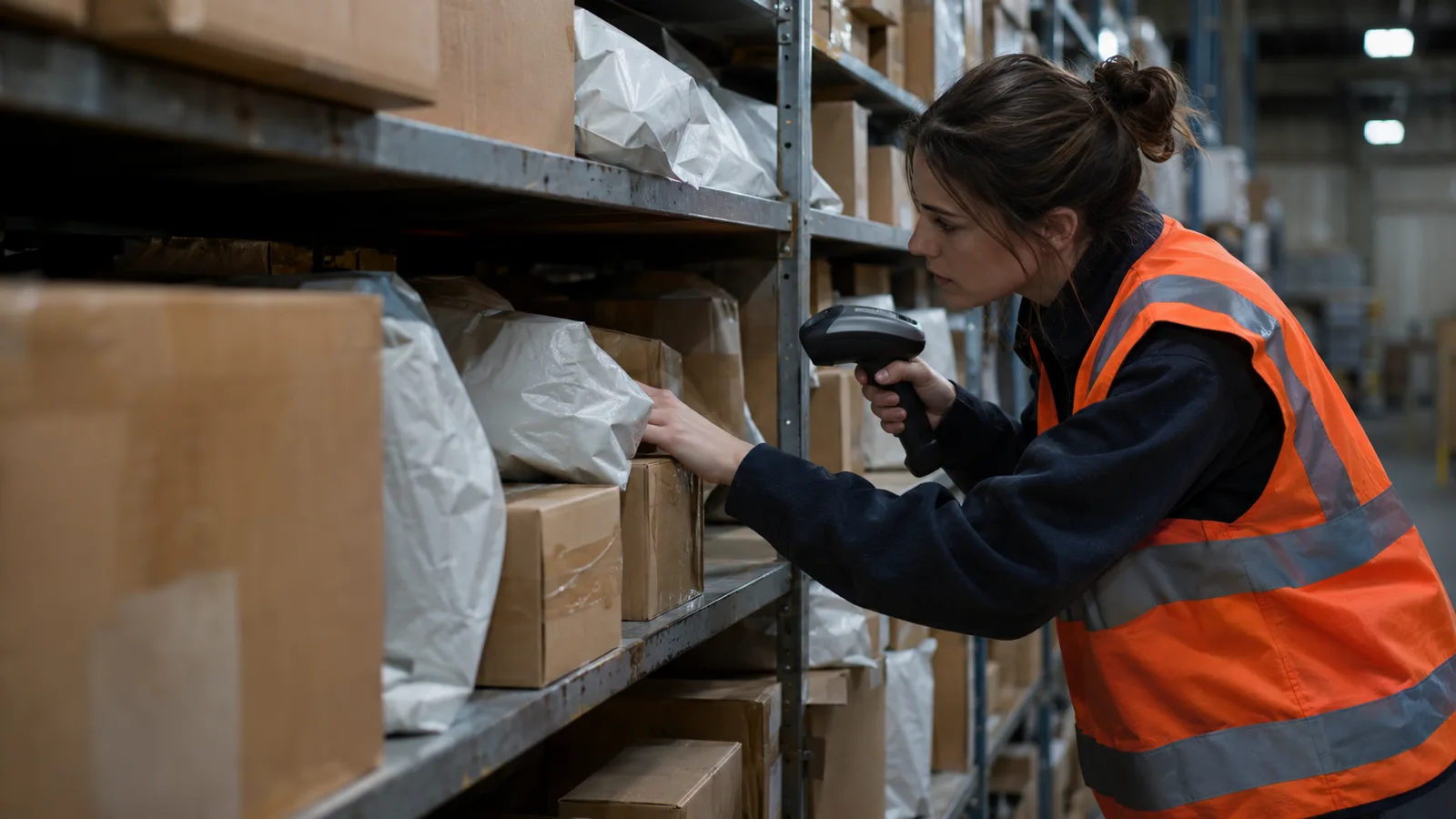
- Matching the description of the parcel and contents against unlabelled items in the overgoods or "lost and found" area, which is where a parcel that lost its label usually ends up.
- Contact with the recipient to confirm whether a neighbour, concierge or family member received it.
Information that speeds the trace up
The fourth step above is where good shipper records make the biggest difference. A box with no label can only be matched to your trace by its description. Give the carrier as much as you can:
- Exact box dimensions and weight from your label record
- Box type and colour, tape colour and any branded printing
- A precise list of contents, including colours, sizes and serial numbers where relevant
- A photo of the packed parcel if you capture one at the pack station
- The packing slip or invoice that was inside the box
That last item is a quiet best practice: always put a packing slip with the shipping and return address inside the box. If the outer label is destroyed, a carrier employee opening the parcel can identify it in seconds.
Days 3 to 10: Manage the Customer While the Carrier Searches
Carrier investigations take time, often several business days and longer during busy periods. Your customer does not care about the investigation; they care about getting the product. You have three realistic paths:
Path A: Reship immediately
Send a replacement now and let the claim run in the background. This is the best customer experience and usually the right call for loyal customers, low- to mid-value orders and anything time-sensitive, such as a birthday gift. The risk is that the original parcel turns up and the customer ends up with two. Most customers will return or pay for the extra if asked politely, and the goodwill is often worth more than the occasional loss.
Path B: Wait a defined period, then reship
Tell the customer you have opened an investigation, give them a specific date by which you will either have an answer or send a replacement, and stick to it. This suits higher-value orders and situations where the scan history suggests the parcel is just stuck.
Path C: Refund
When the item is out of stock or the customer no longer wants it, a prompt refund keeps the relationship intact. Remember to cancel or intercept the original shipment if it reappears.
Whatever you choose, be consistent. Write the policy down, give support staff the authority to apply it, and set value thresholds so they know when to escalate. Proactive updates, even "no news yet, still searching," reduce repeat contacts significantly.
When Tracking Says "Delivered" but the Customer Says "No"
This is the hardest version of a lost parcel because the carrier considers its job done. The investigation process is different:
- Ask the customer to check around. Side doors, back porches, mailrooms, parcel lockers, neighbours and other members of the household. A surprising number of "missing" parcels are found this way within a day.
- Request proof of delivery. Many carriers can provide a delivery photo, GPS coordinates of the scan or a signature record. If the GPS shows the driver was a few streets away, you have strong grounds for a misdelivery investigation.
- Open a delivery investigation. The carrier may contact the driver or visit the address.
- Consider a police report for theft. Some insurers require one before paying a porch theft claim.
Delivered-but-missing claims are where signature delivery options earn their cost. A recorded signature or name changes the conversation entirely.
Day 10 and Beyond: Converting the Trace Into a Claim
If the investigation does not find the parcel, the carrier will declare it lost and you can file a claim for compensation. A few points to keep in mind:
- Deadlines apply. Each carrier sets a window for filing claims, counted from the ship date. Missing it usually means no payment at all.
- Coverage is limited. You will be reimbursed up to the carrier's included liability or the declared value you purchased, and only for the documented value of the goods.
- Third-party insurance runs separately. If you insure through another provider, their claim process applies, though they may still want to see that a carrier trace was completed.
Our companion piece on parcel insurance in Canada explains how declared value and third-party coverage compare and why claims get denied.
Cross-Border Parcels: Another Layer
Parcels moving between Canada and the United States add a customs stage. A parcel that appears lost may actually be held by the Canada Border Services Agency or US Customs and Border Protection for inspection or because of incomplete paperwork. Before opening a lost parcel trace on a cross-border shipment, check for customs holds, missing commercial invoice data or unpaid duties. For international postal shipments, the trace often has to pass between two postal administrations, which adds time.
A strong cross-border shipping process, with complete customs data on every label, prevents many of these "lost" cases before they start.
Reducing Lost Parcels in the First Place
Every investigation is a cost: staff time, customer frustration and sometimes the product itself. A few upstream habits reduce how often you need one:
- Validate addresses at checkout. Address validation tools catch missing unit numbers and invalid postal codes before the label is printed.
- Use durable labels and placement. Thermal labels applied flat on the largest surface, not across seams, and no old labels left on reused boxes. See how to choose the right shipping label.
- Avoid odd-shaped packaging. Poly mailers stuffed with rigid items, cylinders and oversized flat boxes are more likely to be diverted to manual handling, where labels get damaged.
- Get a pickup scan. Make sure every parcel is scanned when it leaves your dock. A parcel with no carrier acceptance scan is much harder to trace, because the carrier may not accept that it ever had it.
- Track your exception rate by carrier and lane. If one carrier or region generates a disproportionate share of traces, shift volume.
Build It Into Your Systems
Lost parcel handling should not depend on someone remembering to check tracking. A modern order and shipping stack can flag shipments that have not scanned in a set number of days, alert your team before the customer notices, and keep traces, reshipments and claims attached to the original order. Our order management and tracking tools are designed for that kind of exception visibility, so issues surface while there is still time to act.
A Quick Lost Parcel Checklist
- Confirm the parcel is past its service standard and not affected by a service alert.
- Check the address and full scan history.
- Open a trace as the shipper, with full parcel and contents description.
- Tell the customer what you are doing and when they will hear from you.
- Reship, wait or refund according to your written policy.
- Request proof of delivery for delivered-but-missing cases.
- File the claim within the carrier's or insurer's deadline.
- Log the outcome and review patterns monthly.
Spend Less Time Chasing Parcels
Lost parcels will never disappear completely, but a clear process and the right data turn them into a routine task instead of a crisis. ShipCarte supports businesses across Canada with carrier management, exception monitoring and fulfillment that keeps good records on every parcel. Book a consultation to see how we would handle your next missing shipment.