
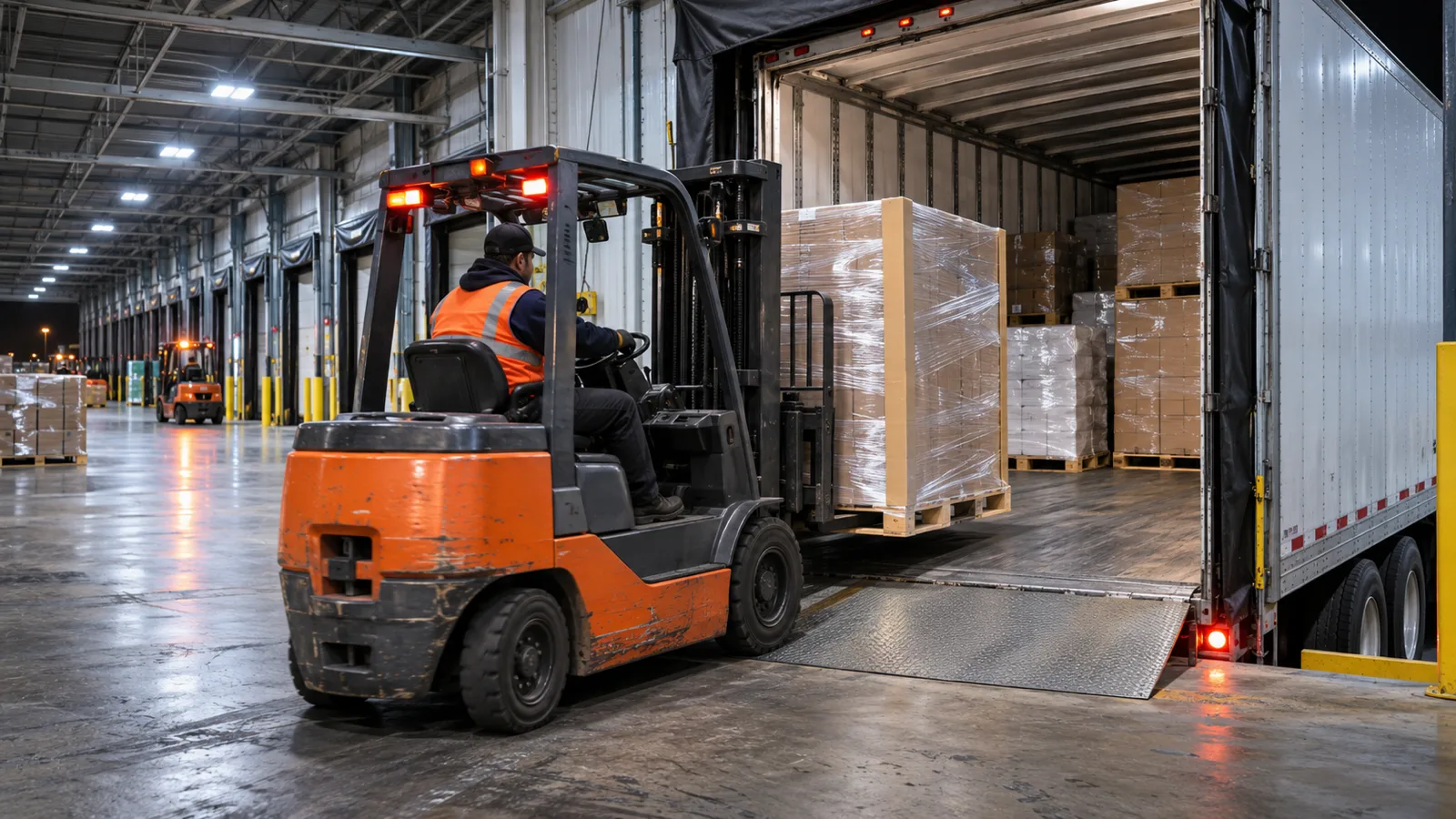
A Mississauga furniture components supplier has four pallets that need to reach a manufacturer in London, Ontario by Thursday. Too big for a courier, too small to fill a 53-foot trailer. Booking a whole truck would mean paying for 22 empty pallet spaces. Splitting the order into dozens of parcels would be slow, expensive and risky. The answer, as it is for thousands of shipments leaving the GTA every day, is LTL.
Less-than-truckload (LTL) freight lets you pay for the portion of a trailer your goods actually use. Your pallets share space with shipments from other businesses heading in the same direction, and the carrier spreads the cost of the truck across everyone on board. For small and mid-sized shippers in Mississauga, LTL is often the most cost-effective way to move palletized goods across Ontario, Canada and into the US.
This guide explains how LTL works, what drives the price, and the practical habits that keep LTL shipments cheaper and safer.
How LTL Freight Works
LTL carriers run a hub-and-spoke network. A typical shipment follows this path:
- Pickup. A local truck collects your pallets, often along with freight from other shippers in the same area.
- Origin terminal. The pallets are unloaded at the carrier's terminal, sorted by destination and loaded onto a linehaul trailer.
- Linehaul. A highway truck carries the freight to a terminal near the destination. Longer routes may pass through more than one terminal.
- Destination terminal. Freight is sorted again and loaded onto a local delivery truck.
- Delivery. The pallets are delivered to the consignee, sometimes with other stops on the same route.
Each handoff adds a little time compared with a direct truckload, and each forklift move is a chance for damage. That is the trade-off for paying only for the space you use.
Mississauga is unusually well placed for LTL. Many national and regional carriers operate terminals in Mississauga, Brampton and the surrounding area, close to Highways 401, 407, 410 and 427. Freight picked up in Meadowvale or Gateway in the afternoon can often be on a linehaul trailer that same night.
When LTL Makes Sense
LTL usually fits shipments that:
- Are between one and roughly six to ten pallets, depending on the carrier and lane.
- Weigh more than parcel carriers comfortably handle, often anything over 70 kilograms or so per piece.
- Are not extremely urgent; LTL transit is generally a day or two longer than a direct truck on the same lane.
- Are packaged and palletized to withstand multiple handlings.
Above a certain size, a volume LTL quote or a partial truckload may be cheaper. At the top end, a full truckload moves faster and with less handling. Our article on how freight differs from small package shipping explains where the lines usually fall.
What Drives LTL Pricing
LTL pricing can feel opaque, but it is built from a handful of factors.
Weight and Space
Heavier shipments cost more overall, but the rate per kilogram often drops at higher weight breaks. Space matters too: many Canadian carriers price on weight combined with the linear footage or density of the shipment, so a bulky, light pallet may be charged as if it weighed more. On US lanes, carriers commonly use the National Motor Freight Classification (NMFC) system, which assigns a freight class based on density, handling and liability.
Distance and Lane
Longer distances cost more, but lane balance also matters. A lane with lots of freight flowing in one direction and little coming back may be priced differently in each direction.
Fuel Surcharge
Most carriers add a fuel surcharge that changes with diesel prices, typically updated weekly. It can be a meaningful part of the bill.
Accessorial Charges
Extra services each carry a fee. Common ones include:
- Liftgate pickup or delivery for locations without a dock.
- Residential pickup or delivery.
- Inside delivery beyond the dock door.
- Appointment or notification before delivery.
- Limited-access locations such as construction sites, schools or some retail plazas.
- Re-delivery after a failed attempt.
- Re-weigh or re-classification if the carrier finds the declared weight or dimensions are wrong.
Our post on types of shipping surcharges covers these in more detail.
Eight Ways to Lower Your LTL Costs
1. Measure and Weigh Accurately
Carriers often re-measure and re-weigh freight at their terminals. If your declared figures are wrong, you will be billed the correction plus a fee. Weigh pallets on a certified scale and measure the actual footprint and height, including any overhang.
2. Build Square, Stackable Pallets
A neat, flat-topped pallet that fits within standard dimensions uses less trailer space and is less likely to be damaged. Pallets marked "do not stack" may cost more because they prevent the carrier from using the space above.
3. Consolidate Shipments
Several small shipments to the same region on the same day cost more than one combined shipment. Coordinate orders so pallets can travel together.
4. Avoid Unnecessary Accessorials
Confirm before booking whether the consignee has a dock, whether an appointment is truly needed, and whether the address is commercial or residential. Getting this right up front avoids added fees later.
5. Be Flexible on Timing
Guaranteed or expedited LTL costs more. If your customer can accept standard transit, use it.
6. Compare Carriers by Lane
No single carrier is cheapest everywhere. One may be strong into Northern Ontario, another into Quebec, another into the US Midwest. Use a shipping platform or partner that can compare rates across carriers lane by lane.
7. Reduce Damage
Claims take time and rarely recover the full cost of a lost sale. Good packaging is cheaper than a claim.
8. Audit Invoices
Billing errors happen. Compare each invoice with your quote and the bill of lading, and question unexpected accessorials or re-weigh charges.
Preparing Pallets for LTL
Because LTL freight is handled several times, preparation matters more than with a direct truckload. A well-built pallet should have:
- A sound pallet in good repair, usually a standard 48 x 40 inch size.
- Heavy cartons on the bottom, lighter ones on top, stacked in a column or interlocking pattern without overhang.
- Corner boards to protect edges and strengthen the load.
- Several layers of stretch wrap, tied into the pallet base.
- A clear label on at least two sides showing shipper, consignee and the PRO or bill of lading number.
Every LTL shipment also needs a bill of lading listing the shipper, consignee, number of pieces, weight, description and any special instructions. Our explainers on the bill of lading and PRO numbers walk through the paperwork.
What to Have Ready Before You Request a Quote
An LTL quote is only as accurate as the information behind it. Quotes built on guesses tend to be followed by adjusted invoices. Before asking for a rate, gather:
- Pickup and delivery postal codes, and whether each location is a business with a dock, a business without a dock, or a residence.
- Number of pallets or pieces, with the length, width and height of each, including the pallet itself.
- Actual weight of each pallet.
- A plain description of the goods, plus whether anything is fragile, non-stackable or classed as dangerous goods under TDG rules.
- Any delivery requirements: appointment, time window, liftgate, inside delivery.
- Required ready date and the latest acceptable delivery date.
- Declared value, if you want added coverage.
With these details, a carrier or logistics partner can give you a quote that holds up, and can suggest alternatives such as a different pickup day or a volume rate if your shipment is near the upper end of LTL.
A Note on Residential and Small-Business Deliveries
LTL was built for dock-to-dock freight, but more shipments now end up at homes, small storefronts and offices in mixed-use buildings. Mississauga's City Centre condos, Port Credit's main-street shops and Streetsville's older commercial strips rarely have loading docks. Deliveries to these locations usually need a liftgate truck and an appointment, and the driver may only bring the pallet to the curb or the building entrance. Make sure the receiver knows what to expect, has a way to move the goods inside, and is available during the delivery window. Missed appointments lead to re-delivery fees and delays that are easy to avoid with a quick phone call beforehand.
Common LTL Lanes From Mississauga
Freight from Mississauga commonly moves:
- Across the GTA and Golden Horseshoe, often next-day.
- To Southwestern Ontario cities such as Kitchener, London and Windsor via the 401 and 403.
- East to Kingston, Ottawa and Montreal along the 401.
- North to Barrie, Sudbury and beyond via the 400.
- To Western and Atlantic Canada through longer linehaul networks.
- Into the US through the Ambassador Bridge, Blue Water Bridge, Peace Bridge or Lewiston-Queenston Bridge, with customs paperwork and a cross-border-capable carrier.
For cross-border LTL, the carrier or a customs broker needs complete commercial documentation before the freight reaches the border. Missing paperwork can leave a trailer waiting at the crossing.
Handling Claims When Things Go Wrong
If freight arrives damaged or short, the consignee should note it on the delivery receipt before signing, ideally with photos. A clean signature makes claims much harder. File the claim promptly in writing with the carrier, including the bill of lading, delivery receipt, invoice showing value, and photos. Carrier liability is often limited by weight unless additional coverage was purchased, so consider freight insurance for valuable goods.
Ship Smarter Partial Loads
LTL gives Mississauga businesses a way to ship palletized freight without paying for a whole truck. The savings come from understanding what drives the price, preparing freight properly and choosing the right carrier for each lane. ShipCarte arranges LTL freight across Canada and into the US, backed by multi-carrier carrier management. Request a quote with your pallet details and destinations to see your options.