
A skincare brand based in Oakville sells mostly to customers in Ontario. Its founder has been shipping out of a rented unit, dropping parcels at a retail counter at 4 p.m. each day. Customers in Hamilton get their orders in a day or two, but buyers in Ottawa and Sudbury sometimes wait four or five. Reviews mention it. Competitors are advertising "next-day delivery in Ontario," and the founder wants to know whether that's a real promise or marketing gloss.
The honest answer is that next-day delivery across a large share of Ontario is very achievable, but only when inventory sits in the right place, orders are processed before carrier cut-off, and the business is clear about which postal codes fall inside the promise. Mississauga happens to be one of the best places in the province to make that work.
This article explains why, what the realistic delivery map looks like, what has to happen inside the warehouse, and how to communicate next-day shipping to customers without over-promising.
Why Mississauga Is a Natural Hub for Ontario Delivery
Most of Ontario's population lives in a band stretching from Windsor through the Greater Toronto Area to Ottawa, with a dense cluster around the Golden Horseshoe. Mississauga sits close to the centre of that band. From warehouses near Toronto Pearson or in the Meadowvale, Gateway and Heartland business areas, trucks can be on Highway 401 heading east or west within minutes, with the 403 and QEW running toward Hamilton and Niagara, the 410 north to Brampton, the 427 down to the lakeshore and Etobicoke, and the 407 as a toll option for skipping congestion across the top of the city.
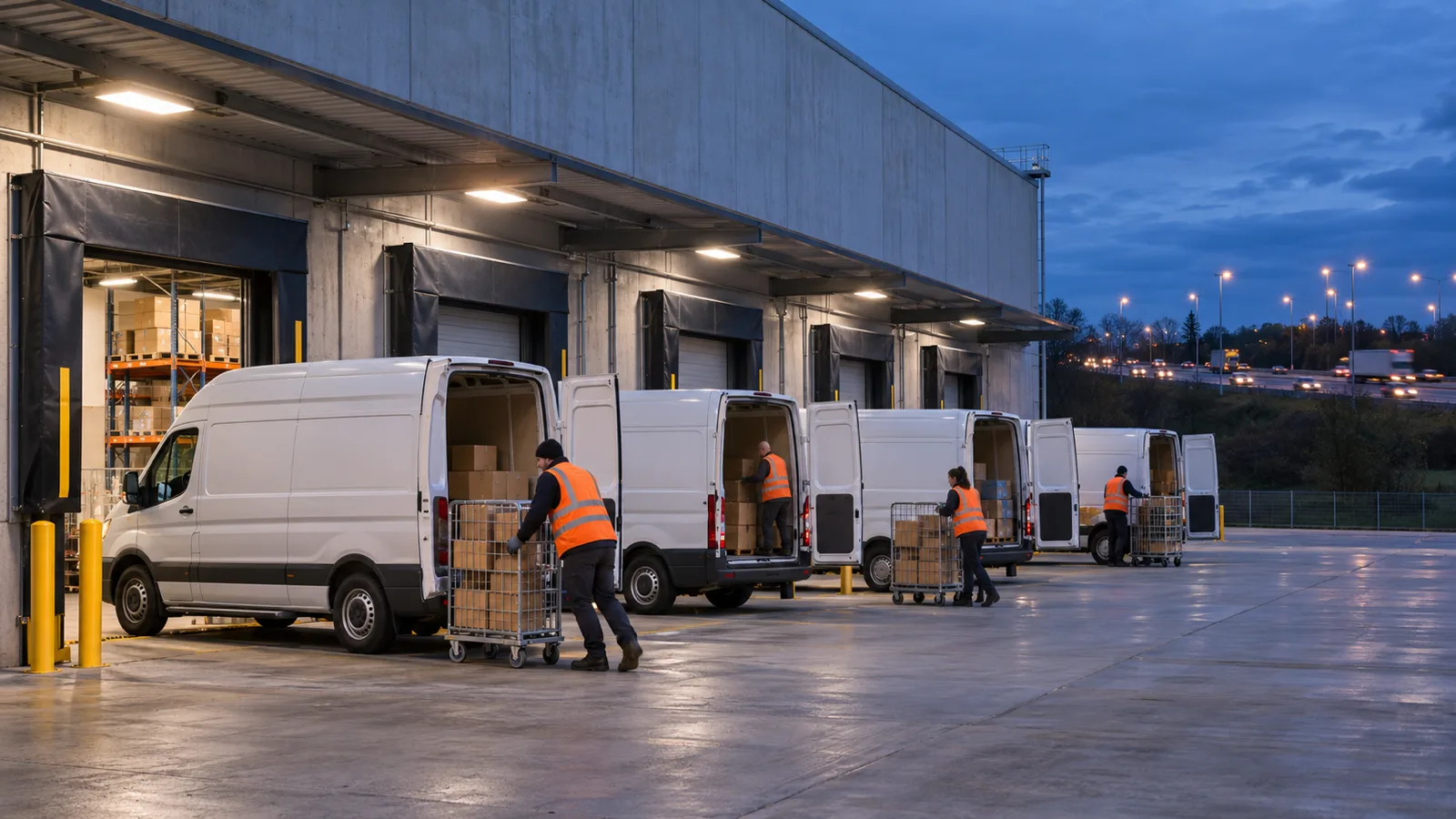
Major parcel carriers run large sortation facilities in and around Peel Region. That proximity matters. When a warehouse is a short drive from a carrier's hub, parcels picked up in the late afternoon can be sorted the same evening and loaded onto linehaul trucks heading overnight to regional depots. A warehouse two hours away from that hub loses much of its evening sort window before the truck even arrives.
Toronto Pearson adds another layer. Express air services that move time-critical parcels to northern and more distant destinations depend on the airport, and being close to it shortens the path from pick to plane.
What the Realistic Next-Day Map Looks Like
Every carrier publishes its own transit time tables, and those change, so you should always confirm specific postal codes with your carrier or 3PL. That said, a general picture for ground service from a Mississauga origin tends to look like this:
Typically next-day by ground
- The City of Toronto, Brampton, Vaughan, Markham, Richmond Hill and the rest of the GTA
- Oakville, Burlington, Hamilton and much of the Niagara Peninsula
- Kitchener, Waterloo, Cambridge and Guelph
- Barrie, Orillia and much of Simcoe County
- Durham Region, Peterborough and communities along the 401 corridor toward Kingston
- London, and frequently Windsor, depending on the carrier's network
- Ottawa, which many carriers serve overnight on the 401 and 416 corridor
Often two days or more by ground
- Northern Ontario communities such as Sudbury, North Bay, Sault Ste. Marie and Timmins
- Thunder Bay and the northwest
- Rural addresses that are served from a smaller depot with fewer delivery days
For destinations in the second group, express or air services can sometimes reach next-day, at a higher cost. Whether that makes sense depends on your margins and how much those customers value speed. Our article on the real cost of slow shipping is useful for weighing that trade-off.
The Cut-Off Time Is the Whole Game
Next-day delivery is not really about the truck. It's about whether the parcel is on the truck. Every carrier has a pickup time from the warehouse, and every warehouse sets an order cut-off that leaves enough time to pick, pack and label before that pickup. Miss the cut-off by ten minutes and a "next-day" order becomes a "day after tomorrow" order.
A few practical points matter here:
- Know your actual cut-off, not the nominal one. If your carrier picks up at 6 p.m. but the warehouse needs two hours to clear the queue on a busy day, your real cut-off may be mid-afternoon.
- Display it clearly at checkout. "Order by 2 p.m. for next-day delivery to most of southern Ontario" sets a clear expectation and nudges customers to buy sooner.
- Plan for peaks. During Black Friday, Boxing Day and the run-up to holidays, order volumes surge and carriers sometimes impose volume caps. A cut-off that works in May may not work in December. See our guide on preparing for peak season.
- Remember weekends. An order placed Friday evening generally won't arrive Saturday on standard ground service. Be specific about business days.
What Has to Happen Inside the Warehouse
A fast linehaul network can't compensate for a slow building. For next-day promises to hold, the warehouse needs to work in a particular way.
Orders flow in automatically
Orders from Shopify, Amazon, WooCommerce or a B2B portal should drop into the warehouse system within minutes of being placed, not in a batch at the end of the day. Continuous order import means the clock starts the moment the customer clicks "buy," and an order placed at 1:55 p.m. still has a fair chance of making a 2 p.m. cut-off.
Inventory is accurate
Nothing breaks a next-day promise faster than discovering, at the shelf, that the item isn't there. Real-time, scan-verified stock levels prevent overselling and short picks.
Pick paths are efficient
Fast-moving SKUs should live close to pack stations. Batch picking and wave planning help associates clear orders quickly as the cut-off approaches.
Carrier selection is automatic
A good shipping platform compares services by destination and picks the one that meets the delivery promise at the lowest cost. A customer in Hamilton might be best served by one carrier and a customer in Ottawa by another. ShipCarte's shipping platform handles this rate shopping at the label stage.
Parcels are sorted for pickup
Outbound parcels staged by carrier and service level make pickup quick and reduce the risk that a box goes out with the wrong carrier or sits forgotten in a corner.
Ground vs. Express: Choosing the Right Service
Many businesses assume next-day delivery requires paying for express service. Within the core of southern Ontario, it often doesn't. Standard ground service from a Mississauga origin frequently delivers overnight to the GTA, the Golden Horseshoe and the 401 corridor. Express services become useful for:
- Destinations outside the ground next-day footprint where speed justifies the premium
- Time-definite deliveries, such as before 10:30 a.m. or before noon
- High-value B2B orders where a stockout at the customer's end would be costly
- Replacement shipments where you're trying to recover a customer relationship
The best approach is usually a rules-based one: default to the cheapest service that meets the promised date, and only upgrade when the destination or order type calls for it. ShipCarte's small parcel shipping service is built around that kind of rate logic across multiple carriers.
Same-Day and Local Courier Options
For customers inside Mississauga, Brampton, Oakville and Toronto, same-day courier delivery is also possible when orders are placed early enough. This suits urgent B2B replenishment, medical supplies, or premium e-commerce orders where a customer is willing to pay for speed. It requires a local courier partner and tight coordination with the warehouse, and it works best for a limited radius rather than a province-wide promise.
Frequently Asked Questions
Can I promise next-day delivery to all of Ontario?
Not on ground service, and not economically. Ontario is very large, and northern communities typically need two or more business days by ground. It's better to promise next-day to a clearly defined area, such as "most of southern Ontario," and show estimated delivery dates at checkout based on postal code.
Does next-day delivery cost more than standard shipping?
Within the ground next-day footprint, often not much more, because you're using the same ground service and simply benefiting from a well-located warehouse. The costs that change are operational: you may need later cut-offs, more staff in the afternoon and faster processing. Express upgrades to more distant areas do cost more, and those rates can vary considerably by carrier and parcel size.
What about perishable or temperature-sensitive goods?
Next-day is often the maximum acceptable transit for chilled products. That makes Mississauga's position especially valuable for food, supplements and health products. Packaging still has to be validated for the expected transit time and season. ShipCarte's cold chain fulfillment service is designed for those shipments.
Will next-day delivery reduce my customer service workload?
Usually, yes. Faster deliveries mean fewer "where is my order?" messages. Proactive tracking emails help as well, and customers can use a tracking page instead of contacting you.
How do I know whether my current warehouse can support next-day delivery?
Look at three things: how close it is to carrier hubs, what its daily order cut-off is, and what percentage of orders actually ship the same day they are placed. If that last number is low, the problem is inside the building, and moving closer to the 401 won't fix it on its own.
Communicating the Promise Honestly
The best next-day programs are specific. Rather than a blanket banner, show a delivery estimate based on the customer's postal code and the time of day. Explain what happens on weekends and holidays. If a parcel is delayed by weather on Highway 11 in January or by a carrier service disruption, send a short, honest update. Customers are generally forgiving when they're kept informed and much less forgiving when a promise quietly fails.
For the Oakville skincare brand in our example, moving inventory into a Mississauga fulfillment centre with a late-afternoon cut-off and automated carrier selection would bring most of its Ontario customers into the next-day zone, while giving northern customers a clear and accurate estimate rather than a vague one.
Make Next-Day Delivery Work for Your Business
If you sell across Ontario and want faster, more reliable deliveries, ShipCarte can help you design a next-day program around your products, order volumes and customer locations. Our e-commerce fulfillment team in the GTA handles the receiving, storage, picking, packing and carrier selection. Request a quote and tell us where your customers are, and we'll show you what a realistic delivery map looks like.