
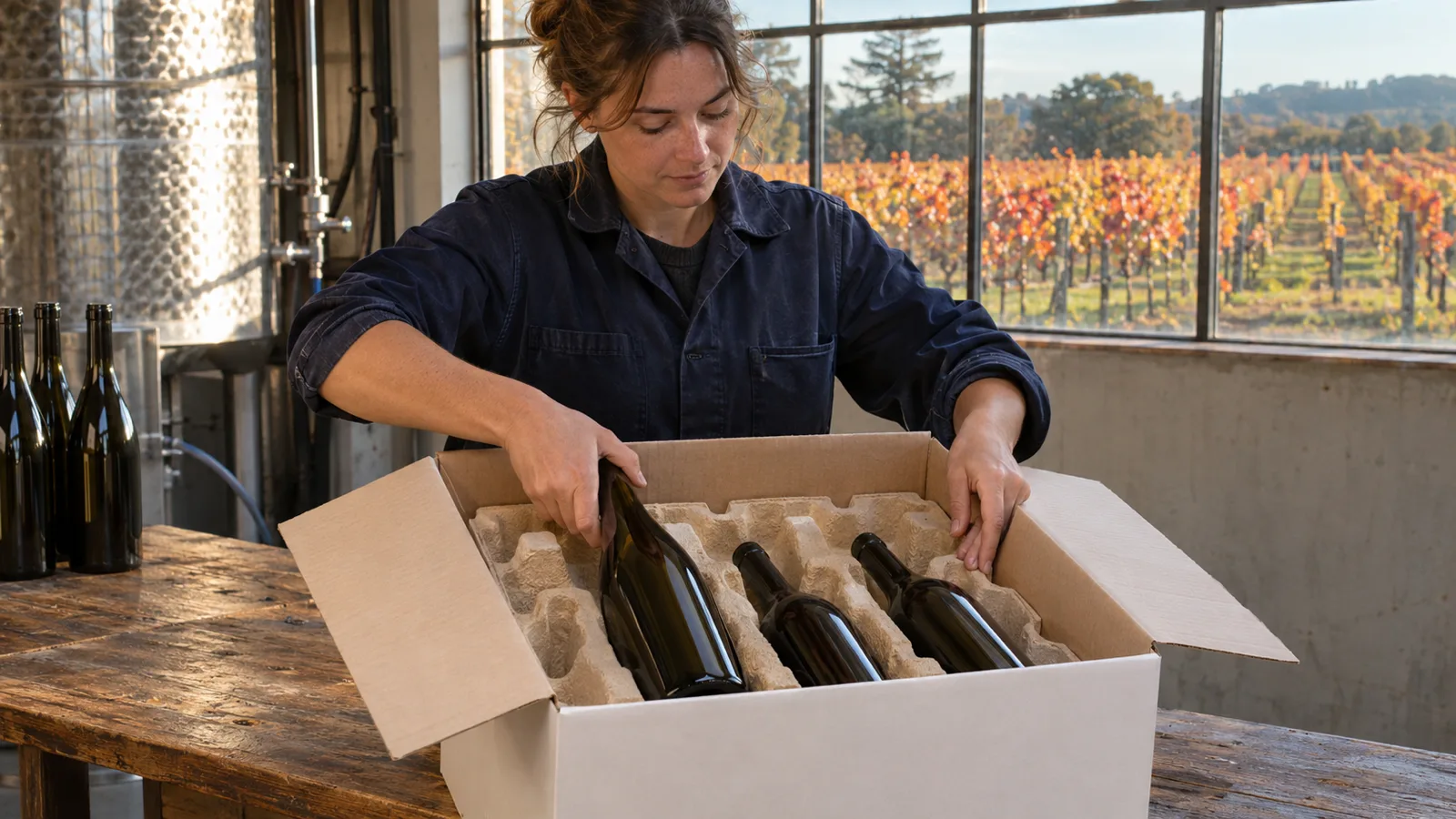
Harvest is wrapping up along the Niagara Escarpment. The last of the Riesling has come in on the Beamsville Bench, crews in Niagara-on-the-Lake are watching the forecast for the first deep freeze that will let them pick icewine grapes, and the tasting room is busier than it has been all year. Visitors leave with a few bottles, but many of them ask the same question at the till: can you ship a case to my house in Ottawa? To my sister in Winnipeg? To my office in Toronto before Christmas?
For a Niagara winery, direct shipping is one of the best ways to turn a single visit into a long-term customer. Wine club members, online orders and holiday gift boxes can all add margin that a listing at the LCBO alone does not provide. But wine is heavy, fragile, temperature-sensitive and, above all, regulated. A shipping program that works has to respect provincial liquor laws, carrier rules and the realities of Canadian weather.
This article walks through the rules Ontario wineries need to understand and the best practices that keep bottles intact and customers happy. It is general guidance, not legal advice; your licence terms and the Alcohol and Gaming Commission of Ontario (AGCO) remain the final word.
The Regulatory Picture
Shipping within Ontario
Wineries with an on-site retail store authorised under Ontario's liquor laws can generally sell wine directly to consumers, including taking orders online or by phone and delivering them to Ontario addresses. The AGCO oversees licensing and compliance, while the LCBO is the province's wholesaler and retailer. The key obligations for direct shipments in Ontario include:
- Selling only to adults of legal drinking age, which in Ontario is 19.
- Ensuring the delivery is handed to an adult who is not intoxicated, with ID checked at the door when there is any doubt.
- Using carriers that accept alcohol shipments and offer adult signature or age-verification services.
- Keeping proper records of sales and remitting the applicable taxes and fees.
Shipping to other provinces
Interprovincial wine shipping has been a long-running issue in Canada. The federal government amended the Importation of Intoxicating Liquors Act in 2012 to allow individuals to bring or receive wine across provincial borders for personal use, and the 2019 federal budget moved to remove the remaining federal restriction. Provincial rules still apply, however, and they vary widely. Some provinces, including British Columbia, Manitoba and Nova Scotia, allow out-of-province wineries to ship directly to residents in some form. Others permit only limited personal importation or require sales to go through the provincial liquor board.
Before you promise delivery to a customer in another province, check that province's current rules, any registration or licensing it requires, and how taxes and markups are collected. Our broader article on direct-to-consumer alcohol shipping in Canada covers the national picture.
Shipping to the United States and abroad
Shipping wine directly to US consumers is, for practical purposes, not available to Canadian wineries. The US requires alcohol imports to go through a licensed importer, with federal labelling approval and state-level distribution rules. Exports to markets such as China, where Ontario icewine is popular, require an importer, compliant labels and export documentation. These are wholesale arrangements rather than parcel shipments.
Carrier Rules You Need to Know
Not every carrier accepts alcohol, and those that do usually require an agreement before you ship. Expect the following conditions:
- An alcohol shipping agreement or account setting that identifies you as a licensed shipper.
- Mandatory adult signature service, with the driver checking ID and refusing delivery to minors.
- No delivery to unattended addresses, parcel lockers or most mailrooms. If no adult is home, the parcel is held for pickup or returned.
- Packaging that meets the carrier's standard for liquids and glass.
Because many recipients work during the day, consider shipping gifts and club packs to business addresses or offering pickup at a carrier depot. A multi-carrier setup lets you choose the carrier with the best adult-signature service and depot coverage for each region.
Packaging Best Practices
A standard 750 ml bottle weighs about 1.2 to 1.5 kilograms when full. A case of twelve, packed for shipping, often comes in at 16 to 18 kilograms. Parcels this heavy are handled by machines and people who cannot treat every box gently, so the packaging has to do the work.
- Use purpose-built wine shippers. Molded pulp and expanded polystyrene inserts designed for wine bottles hold each bottle separately and are built to pass drop tests. Molded pulp is recyclable through Ontario's Blue Box program in most municipalities, which customers appreciate.
- Ship bottles upright or on their sides, never loose. Inserts should prevent any bottle from touching another.
- Use a strong outer carton. A double-wall corrugated box sized exactly for the insert avoids crushing.
- Label clearly. Mark the box as containing alcohol and requiring adult signature, per your carrier's rules, and add orientation arrows.
- Test before peak season. Ship a few test boxes to staff in distant cities before the holiday rush to see how they arrive.
Temperature: Planning Around Ontario's Seasons
Wine is best kept between about 10 and 15°C. Short exposure to warmer or cooler conditions is usually fine, but extremes cause problems. Table wine can begin to freeze somewhere around -5°C, pushing out corks or cracking bottles. In summer, sustained heat above 30°C in a delivery truck can damage flavour and force wine past the cork.
- Winter (December to March): use heated ground services where possible, avoid shipping to remote areas before weekends, and consider holding shipments during cold snaps. Northern Ontario deliveries are especially exposed.
- Summer (July and August): ship early in the week so parcels do not sit in warehouses over the weekend, consider insulated liners for longer routes, and pause shipping during heat waves.
- Spring and autumn: the best shipping windows. Many wineries schedule their wine club releases for these months for this reason.
For larger volumes or premium bottles, temperature-controlled warehousing near the GTA can store inventory closer to most Ontario customers and avoid repeated trips from the winery in the worst weather.
Running a Wine Club Without Overwhelming the Tasting Room
Wine club shipments tend to arrive all at once: two to four releases a year, each requiring hundreds or thousands of boxes to be packed in a few days. That can swamp a winery team that is also running a busy retail store.
- Confirm member addresses and payment details two weeks before each release, and flag members who have moved.
- Offer pickup at the winery for local members, which reduces shipping and invites another visit.
- Send tracking information automatically so members know when to expect a signature-required delivery.
- Consider outsourcing the packing to a subscription fulfillment partner that can pre-build boxes and ship them in a controlled window.
Holiday Season Timing
November and December bring the biggest volume of wine gift orders. Carrier networks are at their busiest, days are short and weather can turn quickly. Practical guidelines for an Ontario winery:
- Set an order cut-off for Ontario delivery in mid-December and an earlier one for other provinces.
- Encourage corporate gift buyers to order by late November.
- Communicate clearly that adult signature is required, so gift recipients are not surprised.
- Have a plan for failed deliveries, as many will be held at depots and need to be picked up.
Handling Breakage, Refusals and Returned Parcels
Even with good packaging, a small percentage of wine shipments will arrive damaged or come back undelivered. Having a plan for both keeps the cost contained.
For breakage, ask customers to photograph the box and the damaged bottles before discarding anything, and to report the problem within a set period, such as 48 hours. Most carriers require the packaging to be kept for inspection when a claim is filed. Replace the wine promptly; the goodwill is worth more than the bottle. Track breakage by carrier and by destination region, because a cluster of claims on one lane usually points to a handling problem you can fix by switching service.
Refused or undeliverable parcels are more common with wine than with most products, because an adult must be present to sign. When a parcel comes back, inspect it before restocking. Bottles that have travelled through a cold snap or a heat wave may not be fit for resale, and a returned case should never go back into general inventory without a check of corks and fill levels. Charging a reasonable redelivery fee, disclosed at checkout, helps offset repeated failed attempts.
Selling Online From Niagara
Many Niagara wineries now run online stores alongside their tasting rooms. To make this work smoothly:
- Require date-of-birth confirmation at checkout and remind customers that ID will be checked at delivery.
- Restrict shipping destinations to the provinces you can legally serve.
- Show realistic delivery times, since Niagara to Toronto is typically next day, Ottawa one to two days and Northern Ontario longer.
- Integrate your store with your shipping system so labels and tracking are generated automatically. Most ecommerce platform integrations make this straightforward.
For a more general view of winery logistics across the country, see our guide to wine shipping from Canadian wineries.
Bring More of Niagara to Your Customers
Direct shipping lets a Niagara winery stay in touch with visitors long after they drive home along the QEW. Done well, it builds loyal club members and steady online sales. Done poorly, it leads to broken bottles, refused deliveries and compliance headaches. The difference lies in knowing the rules for each destination, choosing carriers that handle alcohol properly, protecting every bottle and timing shipments around Ontario's weather.
ShipCarte helps Ontario wineries and beverage producers with carrier selection, adult-signature shipping, temperature-aware warehousing and wine club fulfillment. Request a quote or schedule a consultation to plan your next release.