
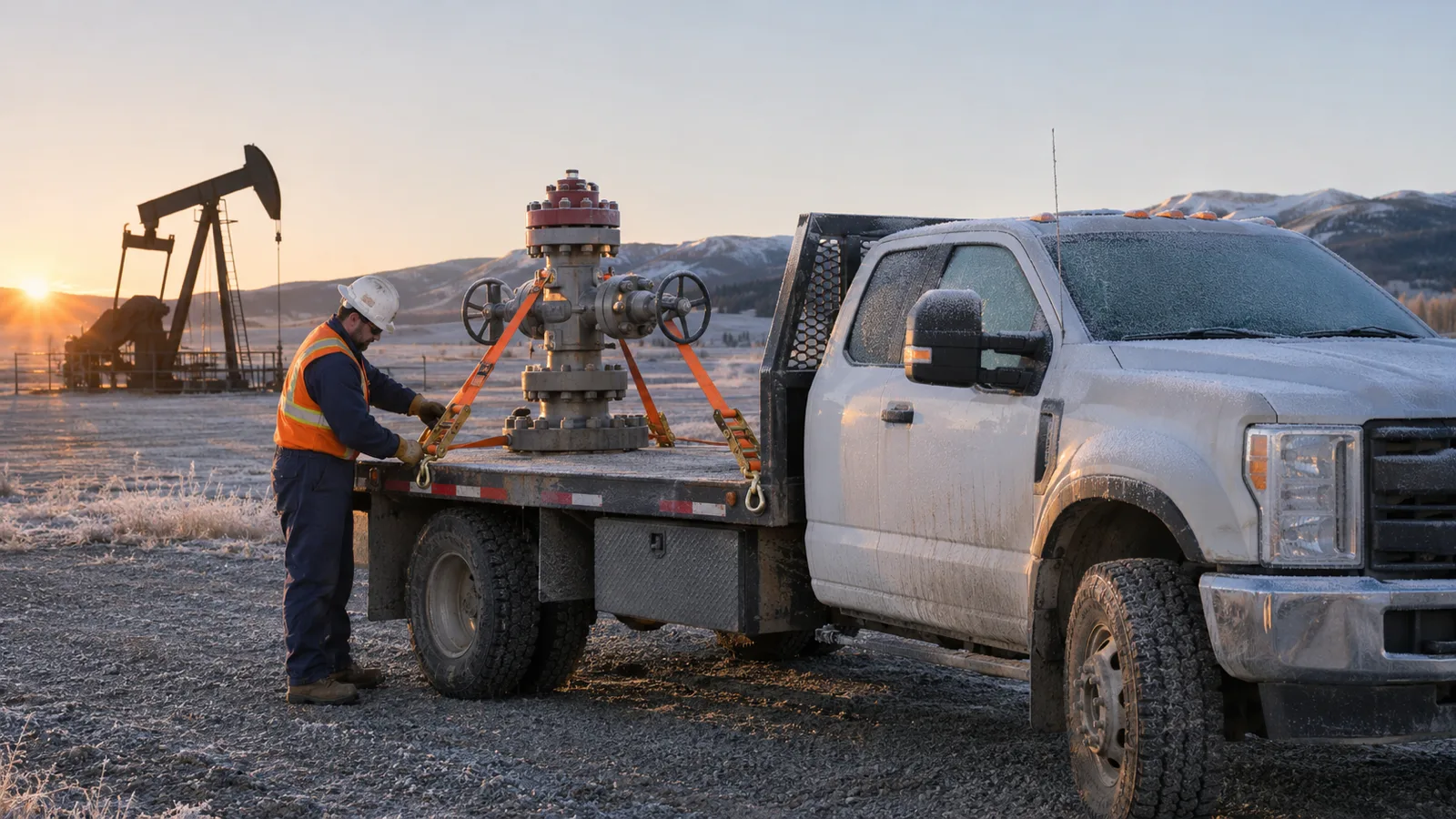
Oilfield logistics in Western Canada has always had a particular rhythm. A pump jack goes down outside Estevan, a drilling contractor near Grande Prairie needs a replacement component before the next shift, or a maintenance crew in the oil sands north of Fort McMurray discovers that a critical valve has to be swapped during a planned turnaround. In each case, someone in a supply yard in Nisku, Edmonton, Calgary or Red Deer has to get the right part on the right truck, fast.
This year has been hard on the sector. Lower commodity prices and reduced activity have pushed operators and service companies to cut costs everywhere, and logistics budgets have not been spared. Yet the basic expectation has not changed: when equipment is down, every hour costs money. Suppliers that can deliver reliably while keeping shipping spend under control have an advantage in a tight market.
This article looks at the main types of oilfield shipments, the Canadian rules and conditions that shape them, and practical ways to make supply logistics more efficient.
The Geography of Western Canadian Oil and Gas
Most of Canada's oil and gas activity sits in the Western Canadian Sedimentary Basin, which stretches across Alberta and into northeastern British Columbia, Saskatchewan and southwestern Manitoba. Key operating areas include:
- The oil sands around Fort McMurray and Cold Lake in northern Alberta
- The Montney and Deep Basin plays around Grande Prairie, Dawson Creek and Fort St. John
- Heavy oil around Lloydminster on the Alberta–Saskatchewan border
- Light oil in southeastern Saskatchewan around Estevan and Weyburn
- Conventional fields spread across central and southern Alberta
Supply typically flows from industrial hubs. The Nisku and Leduc area south of Edmonton is a major concentration of oilfield service, manufacturing and equipment companies, close to the Edmonton International Airport and Highway 2. Calgary hosts many head offices and supply companies, while regional centres such as Grande Prairie, Red Deer, Lloydminster and Estevan act as forward bases.
Five Common Shipment Scenarios
Oilfield shipments are not one-size-fits-all. Here are five situations suppliers handle regularly, and how each is usually solved.
1. The urgent breakdown part
A single component, anything from a seal kit to a small motor, is needed at a remote lease today. The usual answer is a hot-shot: a pickup truck or one-ton with a flat deck, dispatched directly from the supplier to the site. Hot-shots are fast and flexible, but they are expensive per kilogram. Suppliers can reduce how often they need them by stocking critical spares in regional centres instead of only in Edmonton or Calgary.
2. The routine replenishment order
Consumables, filters, fittings, safety supplies and spare parts that are reordered regularly do not need dedicated vehicles. Consolidating them into scheduled LTL freight runs to regional yards on set days of the week is far cheaper. Smaller items can travel by small parcel shipping to field offices with reliable addresses.
3. Pipe, tubulars and long materials
Drill pipe, casing, tubing and line pipe move on flatbeds, typically as full loads. Securement is critical, and loads must comply with provincial cargo securement standards. When projects are large, rail can be used to bring pipe to a regional yard before trucks complete the last leg.
4. Heavy and oversize equipment
Pumps, compressors, separators, tanks and skid-mounted packages often exceed legal dimensions or weights. Moving them requires specialized trailers, provincial overweight or over-dimensional permits, and sometimes pilot vehicles. Route planning must account for bridges, overhead clearances and seasonal road bans. For dedicated loads within legal limits, full truckload service is the standard option.
5. Backhaul of rentals, cores and returns
Rental tools, used equipment going for repair and surplus inventory all need to come back. Planning backhauls so trucks returning from the field carry these items, instead of travelling empty, cuts costs significantly. A clear process for returns management ensures returned items are inspected, recorded and returned to stock or sent for repair promptly.
Seasonal Conditions That Shape Delivery
Western Canada's climate has a direct effect on oilfield logistics.
- Spring break-up. As the ground thaws, provinces and municipalities place weight restrictions on many secondary roads, and lease roads can become impassable. Activity often slows during this period, and heavy deliveries must be planned around restrictions.
- Winter access. Some areas, particularly muskeg-heavy regions in northern Alberta and northeastern BC, are more accessible once the ground freezes. Winter can be the busiest season for certain types of work.
- Extreme cold. Temperatures well below minus thirty affect vehicles, hydraulic equipment and some materials. Fluids, chemicals and electronics may need protection from freezing during transport.
- Wildfire season. Summer wildfires can close highways and evacuate regions, as Fort McMurray experienced in 2016. Contingency routes and communication plans matter.
Dangerous Goods in Oilfield Supply
Many oilfield products are regulated as dangerous goods: fuels, lubricants, solvents, compressed gases, corrosive chemicals, some production chemicals and certain samples. In Canada, the Transportation of Dangerous Goods Regulations from Transport Canada govern how these materials are classified, packaged, documented and marked, and who is trained to handle them. Provinces adopt and enforce these rules on their highways.
Suppliers should confirm that each carrier is qualified for the dangerous goods classes being shipped, that shipping documents are accurate, and that everyone involved has valid TDG training. Mixing regulated and unregulated freight on the same load requires care, especially for incompatible classes.
Site Requirements and Safety Expectations
Oilfield sites and plants usually set strict rules for anyone arriving on location. Drivers may need specific safety tickets, site orientations, appropriate personal protective equipment and journey management check-ins for travel to remote leases. Many operators require check-in and check-out calls, especially for travel in areas without reliable cell coverage. Suppliers that understand these requirements, and pass them on to their carriers, avoid delays at the gate.
Inventory Strategy for Suppliers
Since hot-shots are expensive, the best way to control logistics costs is often to reduce the number of urgent shipments in the first place. That comes down to stocking:
- Analyze emergency orders. Which parts trigger hot-shots most often, and where are they going?
- Forward-stock critical spares. Keep those parts in regional yards or a third-party warehouse closer to field activity.
- Use consignment where possible. Some operators accept consignment stock at their own facilities for critical items.
- Track inventory across all locations. Real-time inventory management software lets sales and dispatch staff see where every unit is.
- Review quarterly. Activity shifts between plays, so stocking plans should shift with them.
A third-party dedicated warehousing arrangement can let suppliers place inventory in a new region without committing to a long-term lease, which is attractive when activity levels are uncertain.
Inbound Supply: Getting Equipment Into Western Canada
Much of the equipment used in Canadian oilfields is manufactured elsewhere: in Ontario and Quebec, in Texas and other US states, or overseas. Getting it into Western supply yards is a logistics chain of its own.
- From Central Canada. Equipment and components from Ontario and Quebec manufacturers typically travel west by truck along the Trans-Canada Highway or by rail intermodal service to Edmonton and Calgary terminals.
- From the United States. Many shipments cross into Alberta at Coutts, into Saskatchewan at North Portal, or come through other Prairie crossings. With CUSMA replacing NAFTA on July 1, importers should make sure their certification of origin practices are up to date for qualifying goods.
- From overseas. Containers typically arrive through the Port of Vancouver or Prince Rupert and move inland by rail to Edmonton or Calgary, where they are unloaded and distributed.
Customs paperwork, commercial invoices and accurate product descriptions are essential to avoid delays at the border. ShipCarte's cross-border shipping team can help coordinate these moves, and a staging warehouse near Edmonton or Calgary allows inbound equipment to be received, inspected and held until it is needed in the field.
Documentation and Proof of Delivery
Oilfield customers often need more paperwork than a typical commercial shipment. Material test reports for pipe and pressure components, inspection certificates, packing lists tied to purchase orders and signed proof of delivery are all common. Lost paperwork can hold up invoicing or prevent equipment from being installed. Keeping digital copies attached to each shipment record, and sending documents ahead of the freight, saves time for everyone. A clear bill of lading is the foundation of that paper trail.
Managing Freight Spend in a Lean Market
With budgets under pressure, many suppliers are taking a closer look at their freight costs. Useful steps include:
- Comparing rates across several carriers instead of defaulting to one, using tools such as ShipCarte's shipping platform
- Auditing freight invoices for incorrect accessorial charges and weights
- Consolidating multiple orders headed to the same region
- Planning backhauls to reduce empty miles
- Agreeing on clear rules for when a hot-shot is justified
Our article on common shipping surcharges highlights charges that frequently creep into freight invoices, and carrier management services can help keep them under control.
Final Word
Oilfield supply in Western Canada demands speed, careful planning and respect for safety rules, often all at once. Suppliers that match each shipment to the right mode, stock strategically, plan around seasonal conditions and handle dangerous goods correctly will be better placed to serve their customers efficiently, whatever the market brings next.
Work With ShipCarte on Industrial Freight
ShipCarte provides freight shipping, warehousing and carrier management for suppliers serving industrial and energy operations across Canada. To discuss your shipping lanes and how to cut urgent freight costs, request a quote today.