
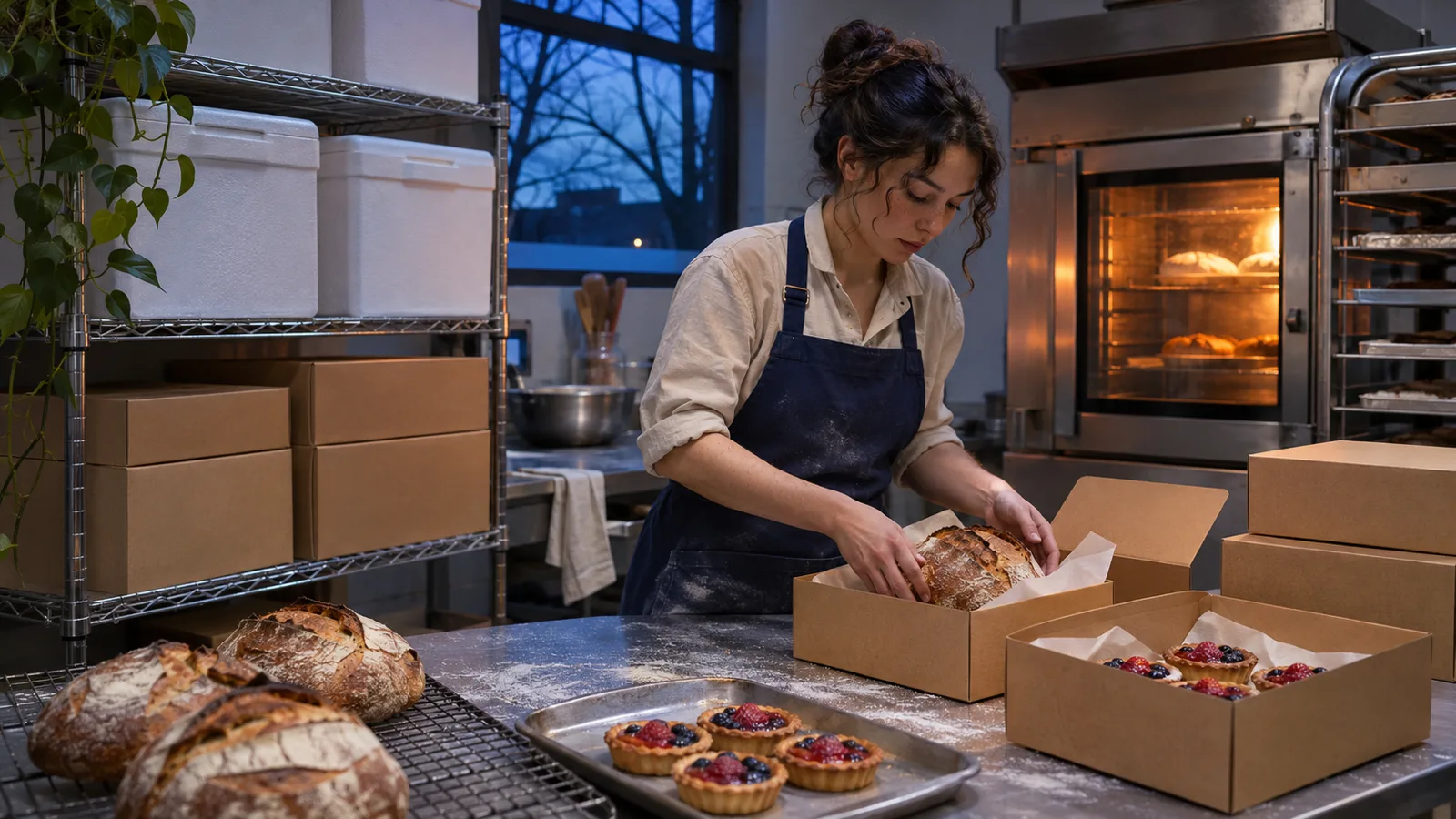
A small bakery in the Kawarthas sells out of butter tarts every summer Saturday. Cottagers drive in from Toronto for them, and by Labour Day half the regulars are asking whether the bakery can ship a dozen to their homes in Mississauga, London or Ottawa in October. A Hamilton bakery gets a different request: a café chain wants daily bread deliveries to six locations across the Golden Horseshoe. Both opportunities are real, and both raise the same question. Can baked goods travel and still taste like they came out of the oven that morning?
The honest answer is: some can, some cannot, and many can with the right planning. Bread, cookies, pies, cakes and pastries all age differently. The difference between a happy customer and a stale, crushed parcel usually comes down to choosing the right products to ship, packaging them properly, and matching the delivery method to the product's shelf life.
This guide is for Ontario bakeries thinking about mail-order sales, wholesale delivery or both. It is organised by the decisions you will face, along with the mistakes that most often go wrong.
Sort Your Products by How Well They Travel
Start by being ruthless about which products belong in a parcel. A practical way to group them:
Travels well (several days or more)
- Shortbread, biscotti, crisp cookies and crackers.
- Dense loaf cakes, fruitcakes and some pound cakes.
- Granola, brittle and other low-moisture treats.
- Butter tarts and many pies, if packed so they do not shift, and kept cool in warm weather.
Travels with care (one to two days)
- Soft cookies and brownies, if individually wrapped.
- Muffins and quick breads.
- Sourdough and dense rye breads, which stale more slowly than white bread.
Best kept local or frozen
- Baguettes and crusty white breads, which go stale within hours.
- Cream-filled pastries, custard tarts and cheesecakes, which need refrigeration.
- Decorated cakes with buttercream or fondant, which are fragile and heat-sensitive.
- Croissants and laminated pastries, unless shipped frozen for the customer to bake.
Your online menu does not need to match your shop menu. Many bakeries succeed by offering a short shipping range of products that travel well, while keeping delicate items as in-store treats.
Consider Freezing as a Strategy
Freezing is the most powerful tool a bakery has for shipping. Many baked goods freeze very well when wrapped tightly soon after cooling, and they thaw back to near-fresh quality. Some bakeries ship frozen unbaked products, such as cookie dough, croissants or pies, so customers bake them at home and get the full fresh-from-the-oven experience.
Freezing also changes your production schedule. Instead of baking to order, you can bake in efficient batches, freeze, and draw down inventory as orders arrive. That is especially valuable ahead of the December holidays, when demand for shipped gifts surges.
Shipping frozen goods requires insulated packaging and refrigerants. Our guide to shipping frozen foods for e-commerce explains the options, from gel packs to dry ice.
Packaging That Protects Texture and Shape
Baked goods fail in transit in two ways: they go stale or they get crushed. Packaging must address both.
- Seal for freshness: wrap items individually or in airtight bags once fully cooled. Wrapping warm bread traps moisture and makes crusts soggy.
- Use a rigid inner box: a sturdy bakery box or tin keeps cookies and tarts from being crushed. Then place that inside a shipping carton with cushioning.
- Fill empty space: movement breaks cookies and smears tops. Crinkle paper, air pillows or moulded inserts keep everything still.
- Separate layers: parchment or cardboard between layers stops items sticking together.
- Insulate in warm weather: chocolate, butter-rich pastry and icing soften quickly in an Ontario July. An insulated liner and a cold pack help on hot days.
Packaging is also part of the gift. A clean presentation box, a handwritten-style note and clear storage instructions make the parcel feel special. See our ideas on the unboxing experience.
Match Delivery Speed to Shelf Life
Within southern Ontario, most parcel carriers can reach the majority of addresses in one business day from the GTA or Golden Horseshoe. Northern and rural areas, including much of the region beyond Sudbury, take longer. That shapes what you can promise.
- Ship early in the week, Monday to Wednesday, so parcels do not sit in a depot over a weekend.
- Use next-day service for items with short shelf lives, and restrict those products to the areas you can reach in one day.
- For gifts, let customers choose a ship date so the parcel arrives when they want it to, not a week early.
- Pause shipping of heat-sensitive items during heat waves, or switch to insulated packaging.
- In winter, cold is less of a problem for most baked goods, though cream fillings can separate if frozen and thawed.
For local orders within a city, same-day courier delivery is often the best option. ShipCarte's small parcel shipping service lets you compare carrier options and rates for each delivery area.
Plan the Holiday Season Like a Production Run
For bakeries that ship, November and December can bring more mail-order revenue than the rest of the year combined. Shortbread tins, Christmas cakes, butter tart gift boxes and cookie assortments sent to family and clients across Ontario are a big opportunity, and an easy one to fumble.
- Set order cut-off dates for each delivery area and publish them clearly. Customers sending gifts to Thunder Bay or out of province need an earlier deadline than those shipping within the GTA.
- Bake and freeze ahead where the product allows, so December is about packing rather than baking everything from scratch.
- Order packaging in October. Gift tins, boxes and insulated liners run short across the industry close to the holidays.
- Book carrier pickups in advance, and expect parcel networks to be slower and busier than usual.
- Offer corporate gifting with an early deadline. Businesses ordering 50 or 100 gift boxes to clients across Ontario bring large, predictable orders if you get them in before December.
Treat December like a production run with a fixed schedule rather than a series of busy days, and both your team and your customers will notice the difference.
Wholesale Delivery to Cafés and Grocers
Wholesale is a different game from mail order. Instead of parcels to individuals, you are delivering trays and cases to businesses, often daily and very early in the morning.
- Timing is everything: cafés want bread before opening. That means deliveries between 5 and 7 a.m., which in turn means baking through the night.
- Routes: a well-planned route with a dozen stops in one city is efficient. Adding accounts in a second city, say Burlington on top of Hamilton, may need a second vehicle or a different schedule.
- Returnable trays: bakery trays and dollies need to come back. Track them like any other asset.
- Grocery listings: supplying grocery chains brings barcodes, labelling and distribution centre requirements. Our guide to becoming a grocery supplier in Ontario covers what to expect.
If your wholesale volume is growing beyond your own delivery capacity, a distribution services partner can take pallets or racks to central points or directly to customers.
Rules and Labelling for Shipped Baked Goods
Ontario bakeries are inspected by local public health units under the province's food premises regulation, which was updated in July 2018. Once products leave your counter and travel to customers, labelling becomes more important.
- Packaged products generally need a common name, ingredients, allergen information, net quantity and your name and address.
- Bilingual labelling and nutrition facts tables are required for many prepackaged products, though there are exemptions for some foods packaged at the retail location where they are sold. Shipping to customers may change whether those exemptions apply, so check before you scale up.
- Allergen labelling deserves extra care. Wheat, eggs, milk, nuts, peanuts, soy and sesame are all common in bakery products, and cross-contact is a real risk.
- If you sell outside Ontario, the federal Safe Food for Canadians Regulations may require a CFIA licence.
Common Mistakes Ontario Bakeries Make When They Start Shipping
- Shipping everything on the shop menu. Start with three to five products that travel well.
- Underpricing shipping. Insulated packaging, cold packs and next-day service add up. Include them in your price or charge separately.
- Shipping on Thursdays and Fridays. Weekend depot delays ruin fresh items.
- Skipping test shipments. Send boxes to friends in Windsor, Ottawa and Thunder Bay before launching, and ask for honest feedback.
- Ignoring the December crunch. Holiday orders can triple volume. Plan baking, packing and pickup capacity in September.
- Not explaining storage. A card telling customers how to store, freeze or refresh items prevents complaints.
- Doing it all in-house too long. When packing takes over the shop, staff and service suffer.
When Fulfillment Help Makes Sense
Bakeries that ship shelf-stable or frozen products in volume, such as cookie tins, gift boxes or frozen pies, can store finished stock with a fulfillment partner and let it handle picking, packing and shipping. Fresh daily products usually stay in-house, but the gift and holiday business is a natural fit. If you need temperature control for frozen items, look for cold chain fulfillment rather than a standard ambient warehouse.
Share Your Baking With More of Ontario
ShipCarte helps Ontario bakeries and specialty food makers ship parcels, store frozen and shelf-stable stock and handle holiday rushes. To find the right setup for your products, request a quote and tell us what you bake and where your customers are.