
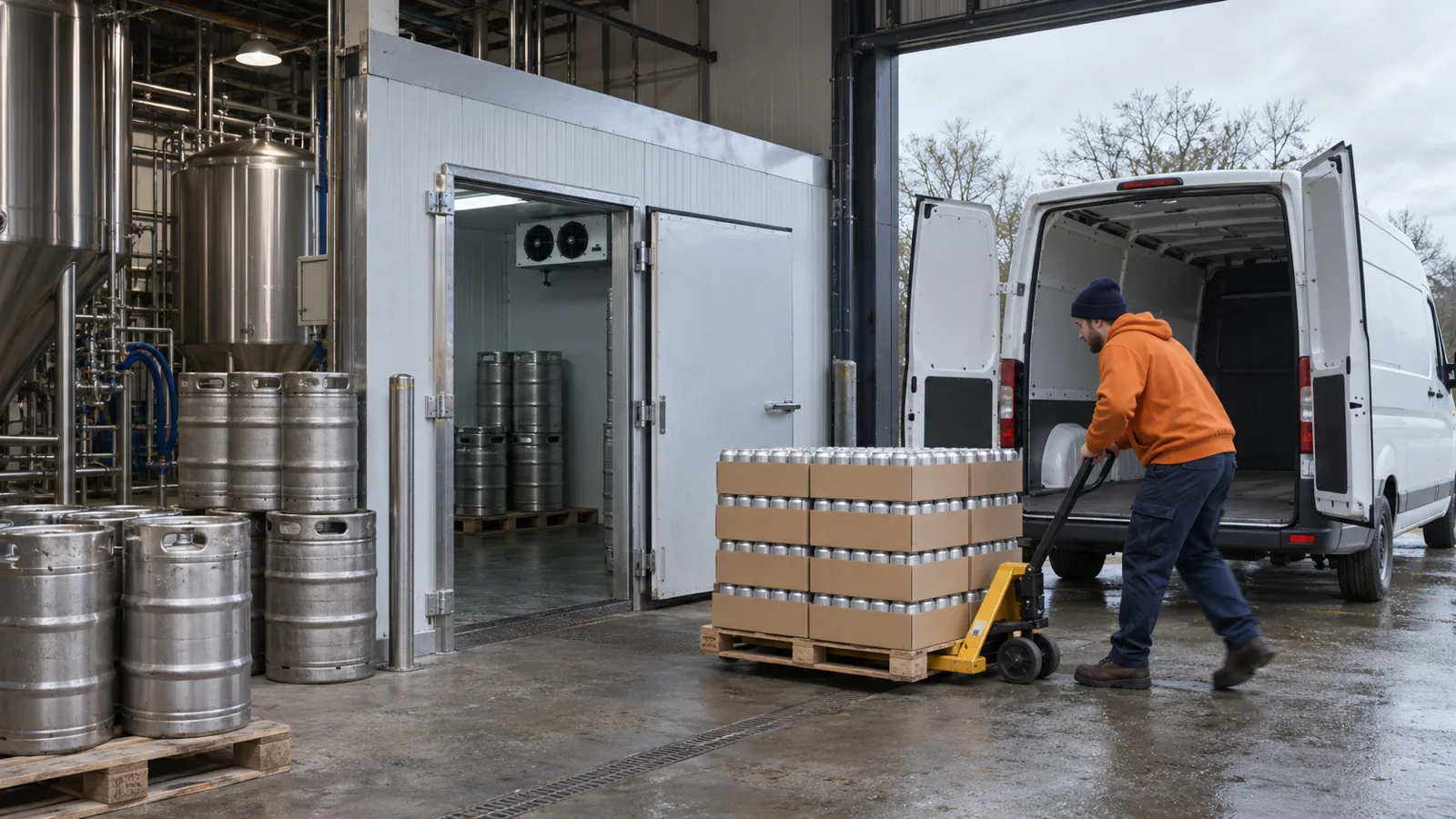
It is a Friday in July, and a craft brewery in Kitchener has three problems at once. Its hazy IPA is selling out at the bottle shop by noon. Two grocery stores in Guelph want more cans before the long weekend. And a bar in Toronto's west end has called twice asking where its kegs are. The brewery owns one refrigerated van, the brewer is the delivery driver on Fridays, and the cold room is so full that the new batch of lager has nowhere to go.
That picture is familiar to brewery owners across Ontario. The province has hundreds of craft breweries now, from tiny brewpubs in Muskoka and Prince Edward County to production breweries in Toronto, Ottawa and the Niagara region. Brewing great beer is the hard part. Getting it to every channel fresh, on time and without exhausting the team is the second hard part, and it is where growing breweries often stall.
This guide walks through the retail routes available to Ontario craft beer, what each asks of your logistics, and the warehousing and delivery options that help a brewery scale. Beer retail in Ontario has been changing quickly, so confirm current rules with the AGCO and the relevant retailer before committing to any plan.
The Retail Routes for Ontario Craft Beer
Ontario beer reaches drinkers through more channels than most people realise. Each one has a different delivery model.
Your own brewery retail store
The brewery's own store remains the highest-margin channel and needs nothing more than moving stock from the cold room to the fridge. For many small breweries, this is still the majority of revenue.
The LCBO
LCBO listings bring craft beer into stores across the province. Depending on the program and the product, beer may be delivered to LCBO distribution centres or delivered directly to individual stores. Central delivery means fewer, larger drops with strict appointment and labelling requirements. Direct-to-store delivery means many smaller drops across a wide area. Our article on LCBO supplier logistics explains what the LCBO expects on the dock.
The Beer Store
The Beer Store sells products from many Ontario craft brewers alongside the large brewers. Listings come with specific delivery and pricing arrangements. The Beer Store also runs the province's main container return system, which matters for brewers using returnable bottles and kegs.
Grocery stores
Since beer sales began in selected grocery stores in 2015, a growing number of Ontario supermarkets carry craft beer, often with a commitment to local and small brewers. Deliveries frequently go directly to individual stores, which means more stops and tighter receiving windows. The provincial government has also announced plans to expand beer sales to more grocery and convenience stores, though the details and timing are not settled.
Bars, restaurants and other licensees
Breweries can sell and deliver directly to licensed establishments. Keg accounts are often where a brand gets discovered, but they are also the most delivery-intensive: small orders, frequent visits, and empty kegs to pick up on every stop.
Freshness: The Logistics Constraint Unique to Craft Beer
Most craft beer is unpasteurised and many styles, especially hop-forward ales, lose character quickly when warm. A pallet of IPA that spends a summer afternoon in an unrefrigerated warehouse will not taste the way the brewer intended a month later.
- Keep it cold: refrigerated storage from packaging until it reaches the retailer is the single biggest lever on freshness.
- Date everything: canned-on or best-before dates on every can and case let retailers rotate stock and let you pull old product.
- Ship oldest first: first-expired, first-out picking from the warehouse, not whatever pallet is closest to the door.
- Avoid sun-struck beer: clear and green glass is vulnerable to light. Keep cases closed and out of sunlight on docks.
Not every channel stores beer cold once it arrives. You cannot control that, but you can make sure the beer arrives as fresh as possible.
A Scenario: Scaling From One Van to a Real Network
Consider a brewery producing a few thousand hectolitres a year, located in a mid-size Ontario city. Here is how its logistics might evolve.
Stage 1: Everything from the brewery
Beer is packaged, stored in the brewery's cold room and delivered by the brewery's own van to bars, grocery stores and LCBO stores within a couple of hours' drive. This works until the cold room fills and deliveries take up two staff members three days a week.
Stage 2: Outsourced storage near the market
The brewery moves finished, packaged beer to a third-party temperature-controlled warehouse near the GTA, where most of its accounts are. The brewery's cold room is freed up for conditioning and fresh releases. Delivery runs start from the warehouse, cutting drive time to Toronto, Mississauga and Hamilton accounts.
Stage 3: Outsourced delivery for some channels
Full pallets for LCBO distribution centres and larger grocery orders move by refrigerated LTL or dedicated truck from the warehouse. The brewery's own van and staff focus on keg accounts and key bars, where the relationship matters most. Accounts in Ottawa, London or Windsor are reached through pooled routes or distribution partners rather than a full day's drive for a dozen cases.
Each stage changes the cost structure. Warehousing and freight become visible line items, but staff time, fuel and the cost of stockouts fall. Most breweries find the trade worthwhile once they serve more than one region of the province.
Know What Each Delivery Really Costs
Many breweries never calculate the true cost of their own deliveries because the van is paid for and the driver is on staff anyway. Do the math once and it often changes decisions.
Add up a typical delivery day: driver wages including benefits and WSIB premiums, fuel, the 407 tolls if you use it, insurance, maintenance, parking tickets in downtown Toronto, and the cost of the van itself spread over its life. Divide by the number of cases and kegs delivered. A route that drops 20 cases across eight small accounts in a day may cost more per case than the margin those cases earn.
Then compare it with alternatives:
- Raising minimum order sizes for distant accounts.
- Delivering to some regions every second week instead of weekly.
- Shipping pallets by freight to a warehouse closer to a cluster of accounts.
- Sharing routes with another brewery or a cidery serving the same bars.
None of these is right for every account. The point is to choose deliberately, rather than letting the delivery schedule grow one favour at a time.
Keg Logistics Deserve Their Own Plan
Kegs are expensive assets and they go missing. A brewery can easily have tens of thousands of dollars of stainless steel sitting in bar basements, other breweries' cold rooms or scrap yards.
- Track kegs by serial number or barcode, and record which account has which keg.
- Collect empties on every delivery, and count them against what the account holds.
- Charge keg deposits that reflect real replacement cost.
- Inspect and clean returned kegs before refilling.
If you outsource some deliveries, make sure the partner handles empties and reports keg counts back to you. Uncollected empties are a slow leak of capital.
Packaging Choices and Their Logistics Effects
The move from bottles to cans in Ontario craft beer has changed logistics for the better. Cans are lighter, do not break, block light completely and stack efficiently. A pallet of cans carries more beer for less weight than a pallet of bottles.
Tall-can four-packs and mixed packs add retail appeal but also more SKUs. Every new SKU needs barcodes, case configurations and a place in the warehouse. Seasonal and one-off releases, which drive a lot of craft beer excitement, are best planned with the warehouse in advance so space and picking locations are ready. Mixed packs and gift boxes for the holidays can be built through kitting and assembly instead of on the brewery floor.
Choosing a Warehousing and Delivery Partner
When you evaluate partners, ask specific questions:
- Is the beer stored refrigerated, and at what temperature? Is it monitored around the clock?
- Can the warehouse pick by date code and report inventory by lot and age?
- Are they comfortable with alcohol, including the security and record-keeping that comes with it?
- Can they build pallets to LCBO and grocery chain specifications?
- Do their carriers deliver to downtown accounts with limited loading access?
- Can you see stock and orders online, in real time, through their inventory management system?
- How do they handle seasonal surges around the May long weekend, Canada Day and the holidays?
Summer Peaks and Long Weekends
Ontario beer sales spike from Victoria Day through Labour Day, with long weekends producing the biggest single-week jumps. Retailers order heavily in the days before, and running out on a long weekend is lost revenue that does not come back. Build stock in the warehouse a week or two ahead of each long weekend, and confirm delivery schedules with your carriers early, because everyone else in the beverage business is doing the same.
The quieter winter months are the time to clean up processes: fix pallet patterns, update barcodes, review keg counts and renegotiate freight. For broader thoughts on seasonal planning, see our post on the role of a 3PL in seasonal inventory management.
Keep Your Beer Fresh and Moving With ShipCarte
ShipCarte offers refrigerated storage, pallet freight and distribution services for beverage producers across Ontario. If your brewery has outgrown its cold room or its delivery van, request a quote and tell us which channels you serve.