
A dental office in Barrie opens at 8 a.m. with a full schedule. At 7:40 the office manager realises the practice is down to its last box of a particular composite shade and the autoclave pouches are almost gone. She places an online order with the supplier, who promises next-day delivery. The parcel arrives at 4:50 p.m. the following day, ten minutes before the office closes, after the hygienist has already borrowed pouches from the practice down the street. The supplier technically delivered "next day". The customer still feels let down.
Dental offices, physiotherapy clinics, chiropractors, optometrists, medical walk-in clinics and veterinary practices make up a huge and fragmented customer base across Ontario. There are thousands of them, from multi-chair practices in downtown Toronto to solo clinics in Elliot Lake and Kenora. They order frequently, in small quantities, and they expect supplies to arrive in time to keep appointments running. For suppliers, that means mastering small parcel and courier logistics rather than freight.
Here is how dental and clinic supply companies can build shipping that clinics trust, along with the mistakes that most often frustrate customers.
Understand the clinic customer
Clinics are not warehouses. Most have a small storage cupboard, limited staff time for receiving, and a schedule that does not stop for deliveries. A few characteristics shape how they buy:
- Small, frequent orders. A typical dental office might order weekly or even several times a week, often online, with a basket of 10 to 30 lines.
- Urgency. Running out of a consumable can mean cancelling an appointment, which costs the practice far more than the product.
- Office hours. Many clinics are closed evenings, some weekends, and some have early closing days. Delivery outside opening hours is a failed delivery.
- Brand loyalty to products. Clinicians are particular about materials and instruments. Substitutions are rarely welcome.
- Regulatory sensitivity. Some items, such as local anaesthetic cartridges and certain prescription products, are regulated drugs that require appropriate licensing to distribute and should only be sold to authorised practitioners.
Choosing the right shipping service
Different clinic orders need different services. A smart supplier offers a mix and routes each order to the most appropriate option.
Standard ground parcel
For routine restocking ordered in advance, ground parcel service is the economical choice. From a GTA warehouse, ground parcel reaches most of the Golden Horseshoe overnight and much of southern Ontario in one to two business days. Eastern Ontario, the Ottawa Valley and the north take longer. This works well when clinics order on a predictable schedule and keep a little buffer stock. Our small parcel shipping service lets suppliers compare carriers by lane and cost.
Express and time-definite
When a clinic needs product by a specific time, time-definite services (by 10:30 a.m. or by noon) are worth the premium. They are particularly useful for orders placed late in the day for the next morning's schedule. Offering a paid "before noon" option at checkout lets clinics choose.
Same-day courier
In dense markets like Toronto, Ottawa, Hamilton, London and Kitchener-Waterloo, same-day courier from a local stock location can rescue a clinic that has run out of something critical. Same-day is expensive per order, but for an urgent item it is far cheaper than a cancelled appointment.
Scheduled route delivery
Suppliers with enough clinic density in a region can run their own scheduled routes, visiting the same clinics on the same day each week. This model builds strong relationships and allows inside delivery to the storeroom, but it only works at scale.
Handling temperature-sensitive dental materials
Many dental materials, including certain composites, bonding agents, impression materials and some anaesthetics, have recommended storage temperature ranges, and some must be refrigerated. Ontario summers regularly push the inside of a delivery truck well above 30 degrees, while winter can freeze water-based products left in a vehicle overnight.
Practical measures include:
- Identify which SKUs have temperature requirements and flag them in your order management system.
- Use insulated packaging with gel packs for heat-sensitive products during summer months, and avoid shipping them on Fridays when parcels could sit in a depot over the weekend.
- Store refrigerated products in a monitored cold storage area in the warehouse and pick them last.
- Consider seasonal rules: for example, adding insulation from June to September for designated products, and holding freezable liquids from ground service during deep cold.
For suppliers with significant volumes of refrigerated product, temperature-sensitive product handling with validated packaging is a sound investment.
Common mistakes that frustrate clinics
Most clinic complaints come back to a short list of avoidable issues.
1. Deliveries after closing time
A parcel delivered at 5:30 p.m. to an office that closes at 5 p.m. is a missed delivery, and the clinic ends up collecting it from a depot. Capture clinic hours in the customer profile and choose services that deliver during those hours.
2. Split shipments without warning
If an order ships in two boxes or from two locations, tell the clinic. Otherwise the office manager assumes items are missing and calls customer service.
3. Picking errors on similar items
Dental and clinic catalogues have many near-identical SKUs: glove sizes, composite shades, file lengths, needle gauges. A warehouse management system with barcode scanning at pick and pack dramatically reduces errors. Visual similarity is the enemy of accuracy.
4. Crushed or wet packages
Sterilization pouches, paper products and boxed instruments damage easily. Right-sized cartons, adequate void fill and water-resistant packaging in rainy seasons all help. Cartonization tools that select the right box automatically can reduce both damage and dimensional weight charges.
5. Backorders discovered on arrival
Clinics hate opening a box to find a backorder notice. Notify customers at order time and offer an alternative or an expected ship date.
Clinic-to-lab and return flows
Clinic logistics are not one-way. Dental offices send impressions and cases to dental labs and receive crowns, bridges and appliances back. Handpieces and other instruments go out for repair. Some products come back as returns or warranty claims. Many labs and repair services across Ontario run their own pickup routes, but suppliers who handle repairs or returns need a simple, prepaid process: a return label, clear packaging instructions and a turnaround commitment.
For larger suppliers, a structured returns management program helps track repairs and credits so that clinics are not left chasing their instruments.
Reaching clinics outside the big cities
Ontario's geography means that many clinics are a long way from any warehouse. A dental office in Thunder Bay, Kapuskasing or Dryden cannot get the same next-morning service as one in Mississauga. Suppliers can manage expectations by publishing transit times by region, encouraging remote clinics to keep slightly higher stock, and offering a scheduled ordering day that matches the carrier's routing.
Some suppliers hold a small forward stock in a second location, such as Ottawa or Sudbury, to shorten delivery to Eastern and Northern Ontario. Whether that makes sense depends on volume, and a good reporting and analytics setup can show where your orders actually come from and how long they take to arrive.
E-commerce expectations are rising
Clinic buyers increasingly order through supplier websites and expect the same experience they get as consumers: real-time stock visibility, order confirmation, tracking links and easy reordering. Connecting your online store to your warehouse through reliable integrations means orders flow straight to picking without manual entry, and tracking numbers flow back to the customer automatically. For a broader view, our guide on B2B e-commerce solutions covers why this matters.
Packing clinic orders the right way
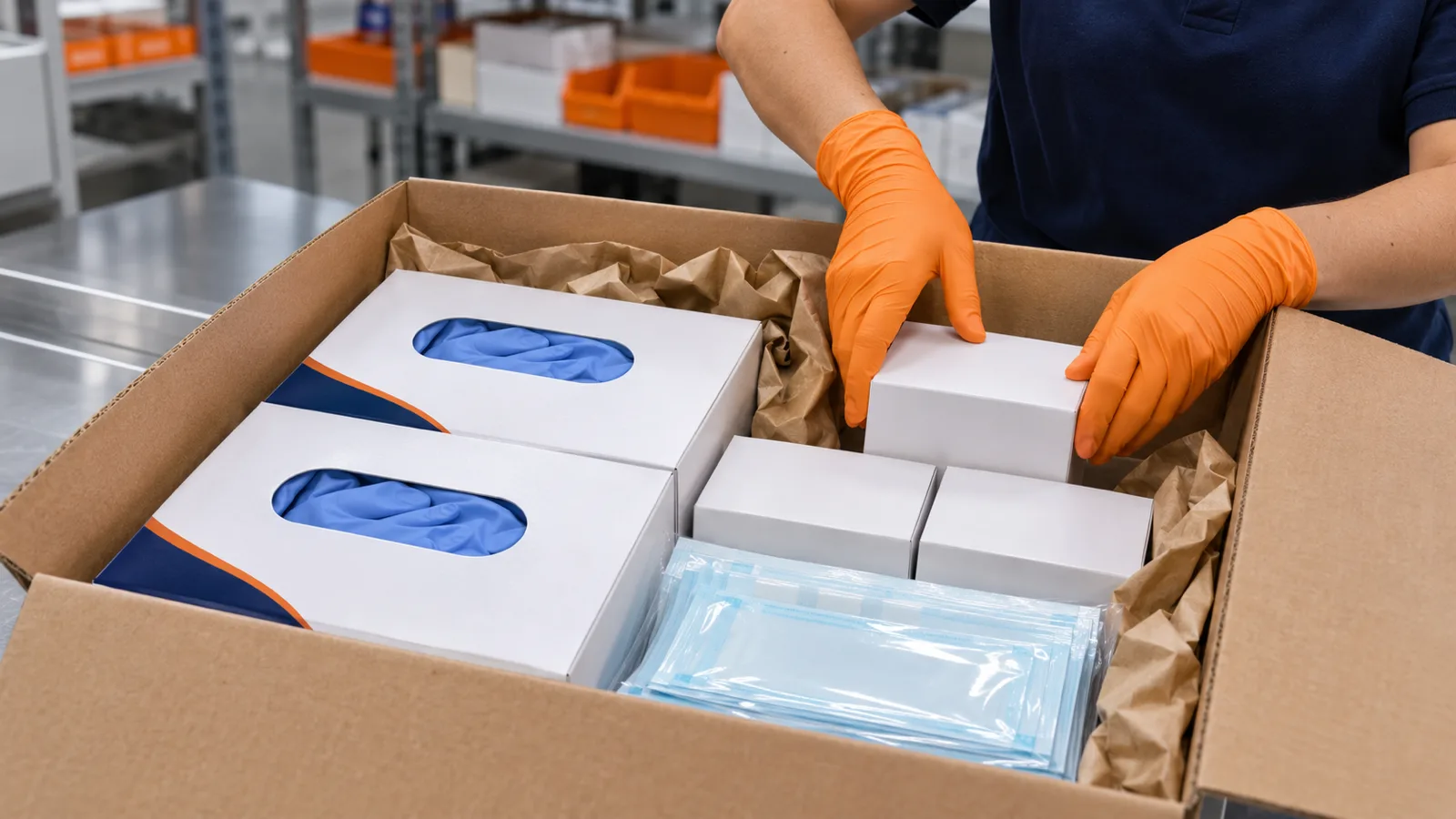
A clinic order is usually a mixed basket: a case of gloves, a few boxes of cotton rolls, a tube of prophy paste, sterilization pouches, a couple of instruments and perhaps a refrigerated material. Packing all of that into one oversized box with a handful of air pillows invites crushed boxes and a high dimensional weight charge. A better approach looks like this:
- Pick heavy, robust items first and place them at the bottom of the carton.
- Separate liquids and gels in sealed bags so a leaking bottle cannot ruin paper products.
- Pack sharp instruments in their original sleeves or protective tubes.
- Use a separate insulated shipper for anything temperature-sensitive rather than squeezing it into the main box.
- Choose the smallest carton that fits safely. Cartonization logic in a warehouse system does this automatically based on item dimensions.
- Include a packing slip on top listing every line and any backordered items, so the office manager can check the delivery in a minute.
Clinics notice these details. A neatly packed box with a clear packing slip saves front-desk staff time and makes the supplier look organised, which is exactly the impression you want when a clinic is deciding whether to consolidate more of its purchasing with you.
Seasonal peaks in clinic demand
Clinic ordering is not flat across the year. Dental and medical offices often stock up before the December holidays, when many close for a week or more, and again in late summer before the busy autumn appointment season. Year-end ordering also rises as practices use up annual budgets or take advantage of supplier promotions. Flu season drives higher demand for gloves, masks and disinfectants at medical clinics from October onward. Planning warehouse staffing and carrier capacity around these patterns avoids the slow shipping that frustrates clinics at the very moment they need supplies most.
Price, tax and paperwork basics
Clinic customers watch costs closely. Clear shipping charges, free-shipping thresholds that reward consolidated orders and accurate invoicing build trust. In Ontario, most clinic supplies are subject to 13% HST, though some medical devices and supplies are zero-rated under federal rules. Getting product tax codes right in your system avoids awkward credits and corrections later.
Help clinics keep their chairs full
ShipCarte works with dental, medical and clinic supply companies to ship orders accurately and quickly across Ontario, from same-day courier in major cities to reliable ground delivery in the north. If your customers are calling about late or incorrect deliveries, request a quote or schedule a consultation to see how we can improve your clinic shipping program.