
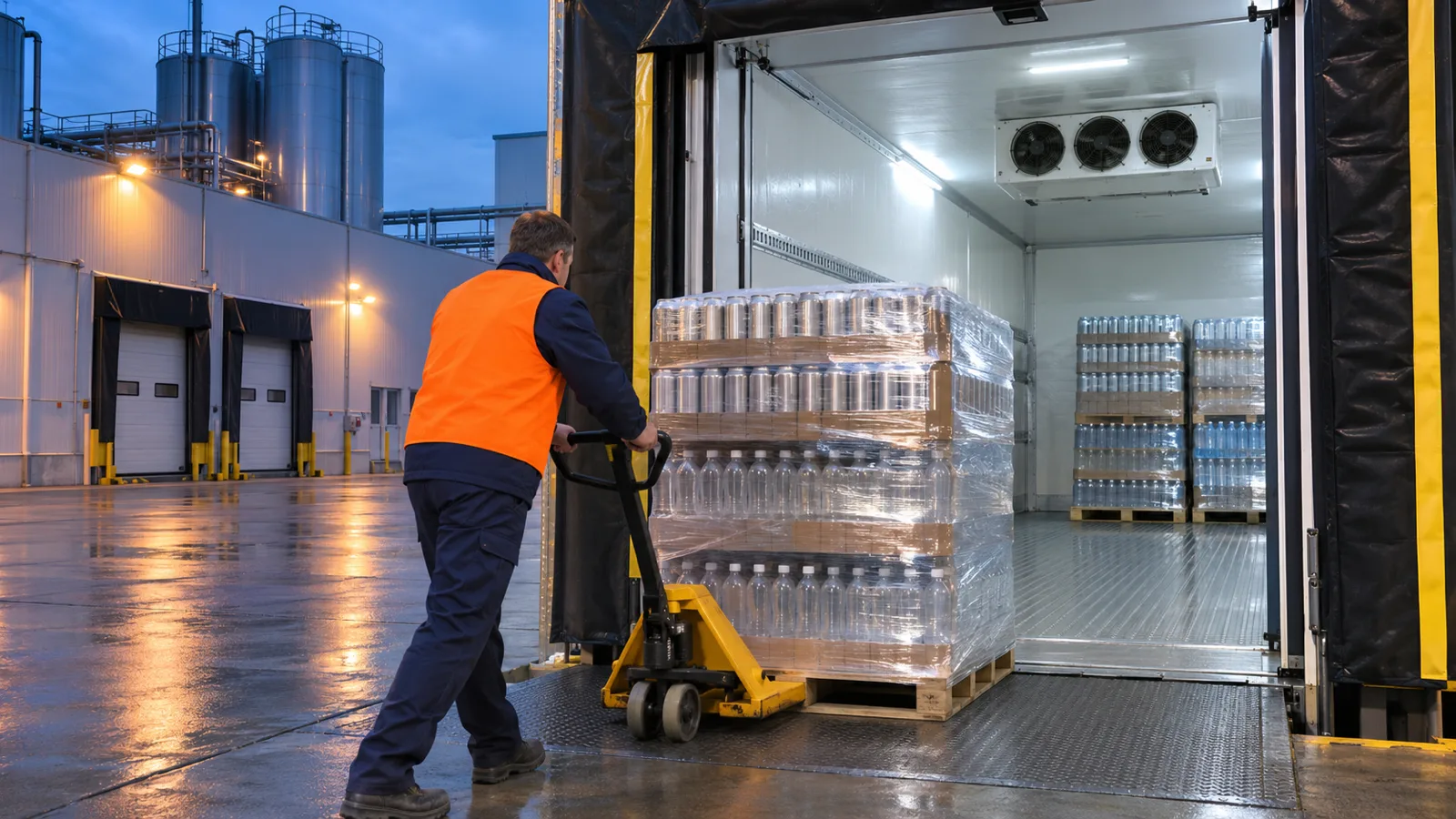
A craft sauce maker in Hamilton lands its first listing with a major grocery chain. The buyer's onboarding package runs to dozens of pages: pallet specifications, label formats, delivery appointment rules, minimum remaining shelf life on arrival, and a schedule of fines for late, short or damaged deliveries. Until now, the company has been delivering cases in its own van to independent stores and farmers' markets. Overnight, it needs a distribution operation that meets the standards of one of the most demanding customers in the country.
Ontario is the largest food and beverage processing province in Canada, with thousands of manufacturers ranging from multinational plants to family-run bakeries, dairies, meat processors, breweries, wineries, snack makers and beverage start-ups. They are spread across the GTA, Hamilton and Niagara, Kitchener-Waterloo and Guelph, the London region, Windsor-Essex and Leamington, Ottawa and eastern Ontario. Many of them reach the point where the way they used to get product to market no longer works, because a new channel or a new regulation demands something better.
This article compares the main distribution channels for Ontario food and beverage manufacturers, explains the regulatory changes that took effect this year, and offers practical answers to the questions that come up most often.
Comparing the channels
Each channel has its own expectations, and a manufacturer selling through several of them needs a distribution operation that can handle all of them at once.
Grocery retail distribution centres
Ontario's major grocery chains run large distribution centres, mostly in the GTA, that receive full pallets from suppliers and redistribute to stores across the province.
- Order pattern: Regular purchase orders, often weekly, for full pallets or layers.
- Requirements: Booked delivery appointments, specific pallet types and heights, GS1 barcodes on cases and pallets, advance ship notices for some retailers, and minimum shelf life on arrival.
- Penalties: Fines or chargebacks for missed appointments, late or short deliveries, mislabelled pallets and short-dated product.
- Logistics fit: A warehouse that can build compliant pallets and book appointments, plus LTL or consolidated truckload delivery.
Foodservice distributors
Broadline and specialty foodservice distributors supply restaurants, hotels, hospitals, schools and institutions.
- Order pattern: Frequent, moderate orders, with demand shaped by menus and seasons.
- Requirements: Case-level product data, consistent pack sizes, and cold chain integrity for chilled and frozen products.
- Logistics fit: Temperature-controlled storage and reliable scheduled deliveries.
Direct store delivery and independents
Some manufacturers, especially bakeries, beverage makers and snack companies, deliver directly to stores, bypassing retailer DCs.
- Order pattern: Small, frequent drops to many locations.
- Requirements: Merchandising, rotation and returns of stale product.
- Logistics fit: Route planning and a fleet or route partners; often combined with a central warehouse.
E-commerce and direct to consumer
Online sales of specialty foods, coffee, tea, sauces, snacks and supplements are growing quickly in Ontario.
- Order pattern: Individual orders of one to a few items.
- Requirements: Protective packaging, fast shipping, and for perishables, insulated packaging and careful transit time planning.
- Logistics fit: E-commerce fulfillment with parcel carriers, ideally from the same inventory used for wholesale.
Exports
Many Ontario manufacturers ship to the United States, and a growing number export further afield.
- Requirements: FDA facility registration and prior notice for US shipments, labelling to the destination's rules, and export certificates where needed.
- Logistics fit: Cross-border shipping with carriers experienced in food.
The Safe Food for Canadians Regulations
The biggest regulatory change for food businesses in years came into force on January 15, 2019. The Safe Food for Canadians Regulations (SFCR), administered by the CFIA, consolidated a patchwork of older rules and introduced requirements that affect distribution directly.
- Licensing. Businesses that manufacture, process, treat, preserve, grade, package or label food for export or for sale across provincial borders generally need a Safe Food for Canadians licence, as do importers. Some requirements are being phased in over the next year or two depending on the food commodity and business size.
- Preventive controls. Licence holders need a written preventive control plan describing how they identify and control hazards, including in storage and transport.
- Traceability. Businesses must be able to trace food one step back (who supplied it) and one step forward (who it was sold to), keep records for two years, and provide them to the CFIA within 24 hours on request.
For distribution, traceability is the big change. Every shipment must be recorded with product, lot code and customer. A warehouse partner should capture lot codes at receiving and at shipping so you can produce those records quickly. Our article on the Safe Food for Canadians licence explains who needs one and how to apply.
Manufacturers selling only within Ontario may fall under provincial rules rather than federal licensing for some activities, such as provincially licensed meat plants and dairies. Expanding sales into Quebec or other provinces typically triggers federal licensing requirements, so plan for it before signing a new out-of-province customer.
Keeping product in condition
Food and beverage products fall into several storage categories, and many manufacturers deal with more than one:
- Ambient products such as dry goods, canned foods and many beverages still need protection from freezing in an Ontario winter and from heat in summer. Bottled beverages and sauces can freeze and burst in an unheated trailer in January.
- Chilled products such as dairy, fresh meat, prepared foods and some beverages require refrigeration, typically 0–4°C.
- Frozen products need storage and transport at -18°C or colder.
A partner offering temperature-controlled warehousing and food and beverage logistics under one roof makes it much easier to consolidate a mixed order for one customer.
Questions manufacturers ask most often
When should we move from self-distribution to a 3PL?
Common triggers include landing a major retail listing, running out of space at the plant, adding a temperature range you cannot store yourself, expanding beyond Ontario, or spending more on delivery vans and drivers than you would on shared distribution. If your production team is loading trucks instead of making product, it is probably time.
How do we avoid retailer fines?
Know the retailer's vendor guide thoroughly, build pallets to spec every time, book appointments early, and ship with enough remaining shelf life. Track every chargeback and dispute the ones you can document. Most fines come from a handful of recurring causes that can be fixed.
How do we manage best-before dates?
Use first-expiry, first-out rotation, record lot and date at receiving, and set rules in your inventory system that block shipping product with less than the customer's minimum shelf life. Review aging stock weekly so you can move short-dated product through other channels before it becomes a write-off. Our explainer on FIFO covers the basics.
Can we use the same inventory for retail and online orders?
Yes, and you should. Splitting inventory between two warehouses for two channels doubles your safety stock and complicates traceability. An omnichannel warehouse can ship full pallets to a grocery DC in the morning and parcel orders to consumers in the afternoon from the same stock.
What about alcohol?
Beverage alcohol in Ontario is regulated by the AGCO and sold largely through the LCBO, The Beer Store and authorized grocery and winery or brewery retail stores. Distribution must follow those channels' rules, and producers need the appropriate licences. Warehousing alcohol for distribution generally involves specific approvals, so speak to your regulator and logistics partner before moving stock.
How do seasons affect planning?
Beverage sales peak through summer, barbecue and cottage-country products surge from the Victoria Day long weekend onward, and holiday baking and gift items climb in the fall. Ontario's harvest season from late summer through fall drives processing volumes for fruit and vegetables. Build inventory and book trucking capacity ahead of each peak.
Where should our warehouse be?
For most Ontario manufacturers selling into grocery, the answer is close to the retailers' distribution centres, which are concentrated in the GTA along the Highway 401, 407 and 410 corridors. A warehouse there cuts the distance for the many short deliveries that grocery DCs require and makes it easier to hit tight appointment times. Producers in Niagara, Leamington or eastern Ontario often ship one consolidated truckload a week into a GTA warehouse and let the warehouse handle individual retailer and foodservice deliveries. If a large share of your sales is in Ottawa and eastern Ontario, or across the border in Quebec, a second stocking location may pay for itself once volumes justify it.
Building a retailer-ready pallet
Many chargebacks come down to the pallet itself. Before your first delivery to a grocery distribution centre, confirm each of these points against the retailer's vendor guide:
- Pallet type. Some retailers require pooled rental pallets, others accept good-quality white wood pallets. Broken or wrong pallets are refused or charged.
- Height and weight. Maximum pallet heights are set so pallets fit the DC's racking. Overheight pallets are reworked at your cost.
- Single SKU or mixed. Many DCs want one SKU per pallet or per layer. Mixed pallets need clear separation and labelling.
- Labels. GS1 pallet labels with serial shipping container codes, placed on the correct faces at the correct height.
- Lot and date. One lot and one best-before date per pallet where possible, clearly marked.
- Wrap and protection. Stable stretch wrap, corner boards for heavy beverages, and no overhang.
Getting these right once, and documenting them as a standard work instruction for your warehouse, removes a whole category of disputes. ShipCarte's retail fulfillment team builds pallets to each retailer's specifications as standard practice.
Signs your distribution needs an upgrade
- Retailer chargebacks appear on every remittance.
- You cannot produce a lot trace within a few hours.
- Product freezes or overheats in transit at least once a season.
- Finished goods are stored in production areas or outside.
- Online orders are packed by office staff at the end of the day.
Grow your distribution with ShipCarte
ShipCarte helps food and beverage manufacturers across Ontario store product at the right temperature, meet retailer and CFIA expectations, and ship to grocery, foodservice and online customers from one inventory. If you have just landed a new listing or are outgrowing your current setup, request a quote and we will map out a distribution plan with you.