
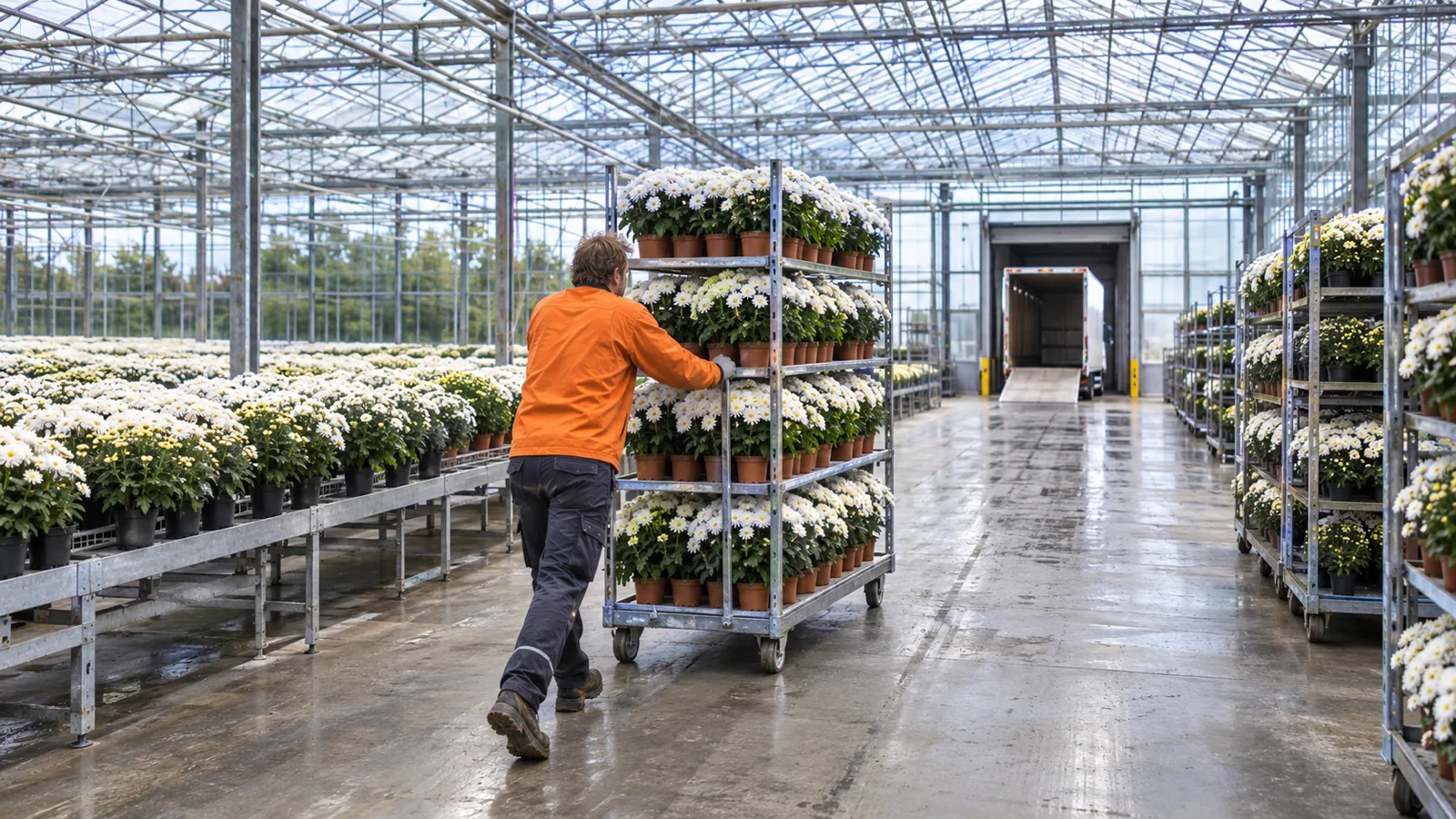
Mother's Day is a few weeks away, and the spring rush is in full swing in the greenhouses along the Niagara Peninsula. For weeks, trucks will leave Grimsby, Lincoln, Vineland and St. Catharines loaded with hanging baskets, bedding plants, potted hydrangeas and cut tulips bound for garden centres and grocery stores across Ontario, Quebec and the northeastern United States. Growers know from past seasons what can go wrong: the load of geraniums that arrived chilled and spotted, the trolleys that never came back, the US shipment held at the Peace Bridge for paperwork.
Ontario is Canada's largest floriculture producer, and Niagara is the heart of it, with other significant growers around the GTA, Hamilton, Waterloo Region and Southwestern Ontario. Flowers and plants are among the most perishable products in any supply chain. A potted plant is alive. A cut flower is dying slowly from the moment it is cut. Every hour of poor handling shows up as shorter vase life, yellowing leaves or dropped blooms, and retail buyers notice.
Spring peak is when shipping processes are tested hardest, and the lessons carry straight into the next big peaks: fall mums, poinsettias and the following spring. This guide covers temperature, handling equipment, transport options, peak planning and cross-border shipping for Ontario greenhouse operations.
Know the Temperature Needs of Your Product
Floriculture products are not one temperature category, and treating them as one causes many of the quality problems growers see.
Cut flowers
Most temperate cut flowers, such as tulips, roses, alstroemeria, gerbera and lilies, last longest when held close to 1°C to 4°C with high humidity. Cold slows respiration and water loss, which preserves vase life. Tulips from Ontario greenhouses ship well when kept cold and upright.
Tropical cut flowers and foliage
Some flowers and foliage of tropical origin suffer chilling injury below about 10°C to 13°C. Mixing them with temperate flowers at 2°C damages them.
Potted flowering plants and bedding plants
Potted plants are usually shipped cooler than growing temperature but well above freezing, often in a range of roughly 10°C to 15°C depending on species and transit time. Poinsettias are especially sensitive to chilling and to cold drafts during loading, which can cause leaf and bract damage that appears days later.
The practical takeaway: write down the target transport temperature for each product group, share it with your carriers, and avoid mixing incompatible products in one trailer unless the trailer has separate zones.
Watch Out for Ethylene
Ethylene is a natural plant hormone that speeds ageing. Many flowers, including carnations, snapdragons and some lilies, are highly sensitive to it, dropping petals or failing to open. Sources include ripening fruit, decaying plant material and exhaust from engines, including propane forklifts used in an enclosed space.
- Never ship flowers in the same trailer as ripening fruit such as apples or bananas.
- Remove damaged or decaying plant material before loading.
- Use electric forklifts and keep truck engines off inside loading areas.
- Consider ethylene-inhibiting treatments for sensitive varieties.
Handling Equipment: Trolleys, Sleeves and Boxes
The Danish trolley, also called a CC trolley, is standard equipment in Ontario's potted plant trade. These tall metal carts with adjustable shelves move plants from the greenhouse floor to the truck to the store without repotting or repacking. They are efficient, but they create their own logistics problems.
- Trolley loss: trolleys and shelves are valuable, and many never return from customers. A clear deposit or exchange system and good records of which customer has how many trolleys protect your assets.
- Load securement: loaded trolleys are top-heavy. Trailers need proper straps or load bars to keep them from tipping when the truck brakes.
- Trailer fit: trolleys must fit the trailer layout. Confirm counts per trailer with each carrier, especially when using a new one.
Cut flowers usually travel in buckets with water or dry in boxes, depending on the product and distance. Sleeves protect bouquets and potted plants from physical damage and help retail presentation. Boxes should be vented to manage heat build-up, and packed so flowers cannot move.
Transport Options Compared
Dedicated refrigerated truckload
For large deliveries to retail distribution centres or big-box garden centres, a dedicated reefer with your trolleys is the standard. You control temperature, timing and handling. During spring peak, many growers run several loads a day to GTA destinations, using the QEW and Highway 403, or the 407 to avoid Toronto congestion. Full truckload service works best when you can fill most of a trailer for one or two drops.
Multi-stop routes
Independent garden centres and florists across Ontario often take smaller orders. Multi-stop routes serve several customers on one trip, for example a run from Niagara through Hamilton, Brantford, Kitchener-Waterloo and Guelph. Route order matters: plants for the last stop spend the longest time on the truck, and every door opening lets warm or cold air in.
LTL for boxed product
Boxed cut flowers and smaller potted plants can travel on refrigerated LTL freight to more distant customers, such as florists in Sudbury or Thunder Bay. Choose a carrier that handles perishables and offers temperature settings that suit your product, not just whatever the produce on board needs.
Parcel for direct-to-consumer
Online flower and plant sales are growing. Shipping bouquets or small potted plants by parcel needs sturdy boxes, inserts that hold the product upright, hydration for stems, and next-day delivery. Avoid shipping before weekends, and pause shipping to areas where winter cold would freeze plants in transit. Learn more about small parcel shipping options.
Planning for Peak Season
Ontario floriculture has several sharp demand peaks, each with its own product mix:
- Valentine's Day: cut roses and potted flowering plants, shipped in the coldest part of the winter.
- Easter: lilies, tulips, hyacinths and potted bulbs.
- Mother's Day and the May long weekend: the biggest period of the year for bedding plants, hanging baskets and potted flowers.
- Fall: garden mums and asters.
- November and December: poinsettias and holiday plants. Ontario growers produce a large share of Canada's poinsettias.
Each peak needs the same preparation: carrier capacity confirmed weeks ahead, trolley inventory counted and recovered, loading schedules planned around greenhouse picking capacity, and contingency plans for weather. In winter, trucks must protect plants from cold as well as heat. Loading docks with sealed doors and pre-warmed trailers make a big difference for poinsettias in an Ontario December.
Shipping to the United States
The United States is a major market for Ontario flowers and plants, and Niagara growers are within an hour of the Peace Bridge and the Lewiston-Queenston Bridge. Most cut flowers and potted plants move duty-free under NAFTA, but plant health rules are strict.
- Plant health certification: live plants generally need to meet US Department of Agriculture plant health requirements. The CFIA's Canadian Greenhouse Certification Program allows certified greenhouses to ship eligible plants to the US under an approved system, rather than needing an individual phytosanitary certificate for every shipment.
- Growing media and soil: restrictions apply to plants in soil and certain growing media. Make sure your media meets requirements.
- Pest-free product: inspectors at the border can and do reject shipments with insects or disease.
- Customs paperwork: commercial invoices, NAFTA certificates of origin where used, and accurate tariff classification.
- Border timing: plan crossings to avoid peak commuter and holiday traffic, and use carriers with experience in perishable cross-border loads.
For help with brokers, documents and carriers, see ShipCarte's cross-border shipping service.
Practical Tips From the Loading Dock
- Pre-cool trailers to the right set point before loading.
- Water potted plants adequately before shipping, but not so much that they sit waterlogged in a cold trailer.
- Load trolleys tightly and secure them with straps or load bars.
- Keep docking times short, and close trailer doors between loads.
- Record trailer temperature at loading and request temperature downloads after delivery.
- Count trolleys and shelves out and in on every delivery.
- Track quality complaints by load, carrier and lane to spot patterns.
Measure Quality at the Receiving End
Most growers know what their plants look like when they leave the greenhouse. Fewer know what they look like when they reach the garden centre or the grocery floor. A simple feedback loop closes that gap.
Ask key customers to photograph a sample of each delivery on arrival, or send a staff member along on a delivery route once or twice per season. Note the condition of foliage, blooms and pots, and record the trailer temperature log for that load. Over a few weeks, patterns appear: one lane where plants consistently arrive chilled, a carrier whose trailers run warm, a customer whose receiving staff leave trolleys outside in the wind.
That information turns vague complaints into fixable problems, and it gives you facts when discussing claims with carriers. It also helps you show retail buyers that you take quality seriously beyond the greenhouse door.
Frequently Asked Questions
Should we use our own trucks or hire carriers?
Many large Niagara growers run their own fleets for core routes and hire carriers for peak overflow and long-distance lanes. Smaller growers often rely entirely on carriers. The right answer depends on how many weeks of the year your trucks would be fully used.
Can we store finished plants off-site during peaks?
Some cut flowers and boxed products can be held in a temperature-controlled warehouse closer to customers. Potted plants need light and care, so long holds away from the greenhouse are rarely practical.
For a broader look at temperature-sensitive shipping, read how to ship temperature-sensitive products.
Keep Your Flowers Fresh With ShipCarte
ShipCarte helps Ontario growers move flowers and plants with refrigerated freight, cross-border coordination and parcel shipping for online orders. Before your next peak season, request a quote and let us help you protect every load.