
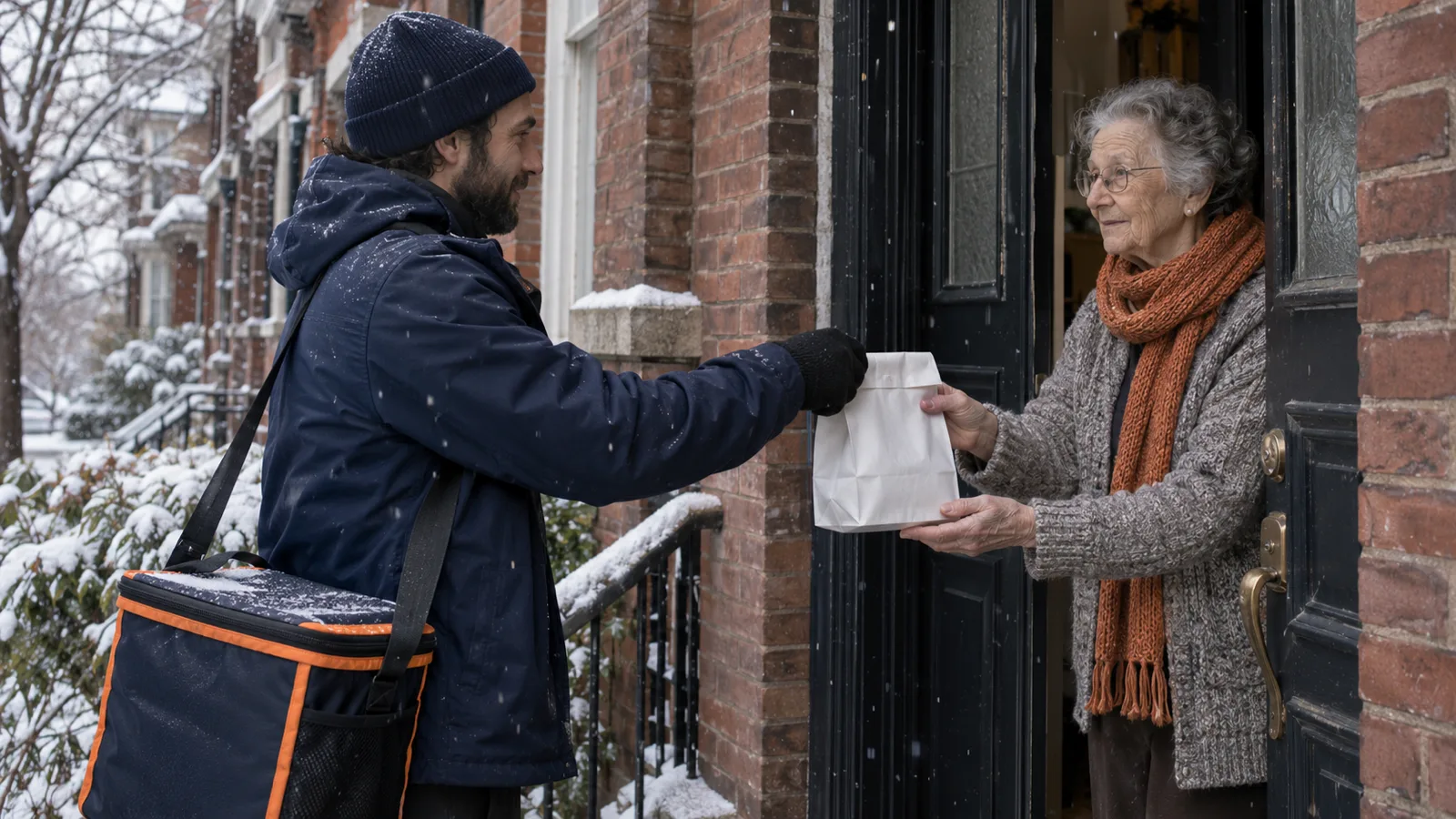
An independent pharmacy in Sudbury fills about 40 delivery orders a day. Most go to seniors living at home, a few to group homes, and some to patients recovering from surgery who cannot drive. The pharmacist's nephew used to do the deliveries in his own car after school. Then one January afternoon an insulin order spent three hours in a cold trunk, a blister pack was left inside a storm door of the wrong house, and a patient called to ask why a stranger knew what medications she was taking. The pharmacy realised that delivery was not a favour it offered on the side. It was part of dispensing.
Prescription delivery has become an expected service for many Ontario pharmacies. Seniors, people with mobility challenges, rural residents and busy families all value it, and it helps pharmacies compete with large chains and mail-order options. But medication delivery carries responsibilities that ordinary parcel delivery does not: patient privacy, product integrity, controlled substance security and accurate hand-off to the right person.
This guide covers the main logistics decisions for pharmacies and pharmacy groups building or improving a delivery program in Ontario.
Why pharmacy delivery is different
When a pharmacy hands a prescription to a driver, its professional obligations travel with the package. Pharmacists in Ontario are regulated by the Ontario College of Pharmacists, and personal health information is protected under the Personal Health Information Protection Act (PHIPA). Controlled drugs and narcotics are regulated federally under the Controlled Drugs and Substances Act and its regulations. Practically, that means a pharmacy delivery program must:
- Protect patient information on labels, manifests and devices.
- Keep medications within appropriate temperature ranges.
- Secure controlled substances and account for them at every step.
- Deliver to the right person, or an authorised agent, and record it.
- Give patients a way to reach a pharmacist with questions.
Delivery itself does not replace the pharmacist's counselling obligation. Many pharmacies handle this by calling patients before or after delivery, or including clear contact information for a pharmacist with every order.
Decision 1: In-house drivers or a courier partner?
Pharmacies typically choose between employing their own drivers, contracting a local courier, or a mix of both.
In-house drivers give the pharmacy full control and a familiar face for patients. They make sense for high-volume pharmacies with dense local delivery areas. The pharmacy must handle vehicle insurance, scheduling, training, payroll and compliance with the Employment Standards Act, including Ontario's $14 per hour minimum wage and rules on hours and overtime. Drivers using their personal vehicles for business also need appropriate insurance coverage.
A courier partner converts delivery into a variable cost and handles drivers, vehicles and routing. The key is choosing a courier that understands pharmacy requirements, signs a confidentiality agreement, trains drivers on handling medications and provides electronic proof of delivery. Our post on the top qualities to look for in a courier company offers a useful checklist.
A hybrid approach is common: in-house drivers for local daily routes and a courier for overflow, out-of-area deliveries and same-day urgent requests.
Decision 2: How to route deliveries
Pharmacy delivery is a classic multi-stop routing problem. Good routing reduces cost per delivery and improves reliability. A few principles apply across Ontario:
- Set delivery windows. Most pharmacies run one or two delivery waves per day, such as late morning and late afternoon. Patients get a predictable window, and the dispensary can batch its work.
- Cluster by area. In Toronto or Ottawa, a route might cover a few neighbourhoods; in rural Ontario, a single route could stretch across a township. Group stops geographically and assign them to waves.
- Prioritise time-critical orders. Discharge prescriptions, antibiotics, palliative care medications and cold-chain items go first.
- Plan for apartment buildings and seniors' residences. Concierge desks, buzzer systems and resident schedules add time to each stop. Some residences accept deliveries for residents at a central desk; confirm the policy.
- Use routing software. Even simple route optimisation tools cut kilometres significantly compared with manual planning.
Decision 3: Packaging and labelling
Pharmacy delivery packaging has three jobs: protect the medication, protect privacy and make the hand-off easy.
- Use opaque, sealed bags or boxes so that medication names and quantities are not visible. Tamper-evident seals show whether a package has been opened.
- Keep outer labels minimal: patient name, address and a delivery reference. Do not print drug names on the outside.
- Pack liquids upright and protect glass bottles.
- Include the receipt, patient information leaflets and pharmacist contact details inside the package.
- For compliance or blister packs used by seniors and group homes, keep weekly packs flat and protected from crushing.
Decision 4: Managing the cold chain
Insulin, some biologics, certain eye drops, vaccines, fertility medications and a range of other products require refrigeration, typically between 2 and 8 degrees Celsius. Ontario's climate makes this genuinely difficult. In July, a car interior can rise above 50 degrees; in January, a delivery left on a porch in Thunder Bay can freeze in minutes.
A sound cold-chain approach for pharmacy delivery includes:
- Validated insulated containers or coolers with conditioned gel packs, appropriate for the season and route length.
- Avoiding direct contact between frozen gel packs and medications, which can freeze insulin and render it unusable.
- Limiting the time cold-chain items spend in transit by placing them early on routes.
- Never leaving refrigerated medications unattended. If nobody answers, the item comes back to the pharmacy.
- Using temperature indicators or data loggers for high-value or long-distance shipments.
For pharmacies or specialty pharmacies shipping refrigerated products further afield, a partner with temperature-sensitive logistics experience can handle validated packaging and monitored transport.
Decision 5: Controlled substances
Delivering narcotics, controlled drugs and targeted substances needs extra care. Pharmacies remain accountable for these products until they reach the patient. Good practice includes:
- Requiring a signature from the patient or an authorised agent, never leaving the package unattended.
- Keeping controlled substance deliveries discreet and secured in the vehicle.
- Recording the hand-off with time, location and recipient name.
- Having a clear procedure for undeliverable orders, which return to the pharmacy the same day and are reconciled.
- Reporting any loss or theft as required under federal rules and the pharmacy's own policies.
Some pharmacies choose to deliver controlled substances only with in-house staff, even if a courier handles other deliveries. That is a reasonable risk decision.
Decision 6: Proof of delivery and communication
Paper delivery logs are hard to search, easy to lose and offer limited proof. Electronic proof of delivery, captured on a phone or handheld device with signature, timestamp and GPS location, provides a reliable record if questions arise. Make sure any app or device storing patient data meets privacy expectations, with password protection and limited data kept on the device.
Patients also appreciate a heads-up. A text or call when the driver is on the way reduces failed deliveries, especially with seniors who may need time to get to the door. Real-time shipment tracking for longer-distance shipments reassures patients and reduces calls to the dispensary.
Decision 7: What to do when nobody is home
Failed deliveries are the hidden cost of any pharmacy delivery program. A driver arrives, nobody answers, and the medication goes back to the pharmacy, adding a second trip and possibly leaving a patient without a dose. A written policy, shared with every driver and patient, takes the guesswork out of these moments.
A sensible policy usually covers:
- Which items may be left unattended. Many pharmacies allow certain non-refrigerated, non-controlled items to be left in a secure spot if the patient has given written consent in advance. Controlled substances and cold-chain medications are never left.
- Authorised recipients. A family member, caregiver or residence staff member named on the patient's profile.
- Driver contact steps. Calling the patient from the doorstep, waiting a set number of minutes, then leaving a card with the pharmacy's number.
- Return and follow-up. Returned packages are logged back in the same day, and a pharmacy team member calls the patient to rebook.
Tracking failed deliveries by route and by patient also reveals patterns. If the same patients are regularly out during the afternoon wave, moving them to the morning wave is an easy win.
Measuring the cost of delivery
Many pharmacies offer free delivery without knowing what each drop actually costs. Driver time, vehicle costs, fuel, packaging and failed attempts add up quickly, particularly on rural routes. Calculating a cost per delivery, and comparing it with the dispensing and front-store revenue those patients generate, helps decide where free delivery makes sense, where a small fee is reasonable and when a courier partner would be cheaper than an in-house driver.
Serving rural and northern Ontario
Delivery matters most where pharmacies are far apart. Patients in parts of Northern Ontario, the Bruce Peninsula, Haliburton or the Ottawa Valley may live an hour or more from the nearest pharmacy. Some pharmacies run weekly rural routes; others ship by courier or parcel to patients far away, which requires careful packaging and planning for longer transit times. Winter conditions on Highway 11, Highway 17 and rural concession roads can add significant delays, so cold-chain packaging needs to be specified for the longest likely transit time, not the average.
Supporting pharmacy groups and specialty pharmacies
Larger pharmacy groups, specialty pharmacies and companies serving long-term care and retirement homes often need more than local delivery. They may require central fill operations, inventory held in a licensed facility, and scheduled deliveries to dozens of locations. In those cases a healthcare distribution partner that understands pharmacy requirements can provide warehousing, scheduled routes and courier coverage across the province. For more on adjacent health logistics, see our healthcare industry overview.
Set up a delivery program you can stand behind
ShipCarte helps Ontario pharmacies, pharmacy groups and specialty pharmacies run delivery programs that protect patients, privacy and products, from local multi-stop routes to temperature-controlled shipments across the province. Schedule a consultation to talk through your current delivery setup, or request a quote for courier support.