
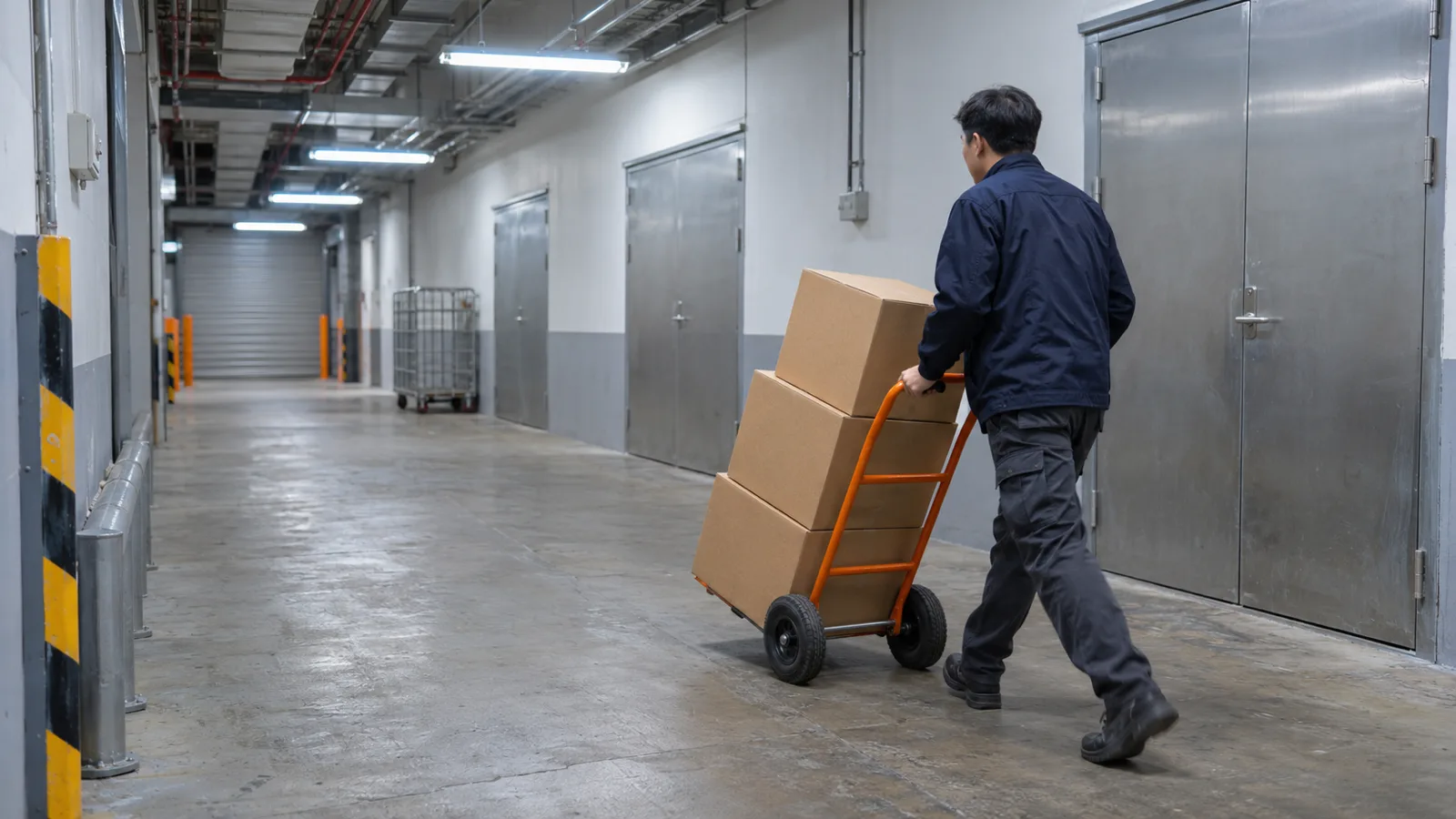
A courier driver pulls into a large regional mall in Ottawa at 11:15 a.m. with eight cartons for a clothing boutique. The mall has been open for over an hour. Security directs the driver to the receiving dock, where the dock supervisor explains that carton deliveries through the service corridors are restricted while shoppers are in the building, that the store's dock booking was for 8:30, and that the boutique's only employee cannot leave the sales floor. The cartons go back on the truck. The store opens the weekend with half its new arrivals missing.
Shopping centres are a world of their own when it comes to receiving freight. Each one sets its own rules about when deliveries can happen, how freight moves through the building and who can sign for it. Those rules exist for good reasons: safety, security and keeping carts and pallets out of the way of shoppers. But they are rarely written with the shipper in mind, and suppliers who treat a mall store like any other commercial address end up paying for missed deliveries.
This guide is for brands, wholesalers and distributors shipping to tenants in Ontario malls, and for retailers who want their suppliers to get it right. It covers the rules you are most likely to meet, how timing works, and what to put in place so the stock reaches the shelf.
Why mall receiving is different
In a street-front store, the courier parks, walks in and hands over the cartons. In an enclosed mall, the store usually has no exterior door. Freight comes through a shared receiving area at the back of the building, travels through service corridors, sometimes up a freight elevator, and arrives at the store's back door. The landlord controls every step of that path.
Large Ontario centres such as Yorkdale and the Eaton Centre in Toronto, Square One in Mississauga, the Rideau Centre in Ottawa, Masonville Place in London, Conestoga in Waterloo and Limeridge in Hamilton all have dedicated receiving operations. Smaller community malls in towns like Orillia or Belleville may be more relaxed, but even they usually have rules on delivery hours and where trucks can park.
The rules you are most likely to meet
Delivery hours
Most malls open to shoppers at 10 a.m. and prefer freight to be delivered before then. Typical receiving windows run from about 7 a.m. to 10 a.m., though some allow smaller deliveries later in the day and some large centres accept freight overnight with advance arrangement. Carton deliveries during shopping hours may be allowed only through service corridors and only with small hand trucks; pallets moving through the public concourse during opening hours are almost always prohibited.
Dock booking
Busier centres require larger deliveries, especially anything on a pallet or arriving in a trailer, to be booked in advance with the mall's operations or security office. Bookings may be made by the tenant, not the carrier. An unbooked truck can be turned away or made to wait until a slot opens.
Sign-in and identification
Drivers usually sign in with security, sometimes leaving identification at the desk in exchange for a pass. Some malls require carriers to provide proof of liability insurance before they are allowed to use the dock regularly.
Equipment and corridor rules
Service corridors are narrow and shared by every tenant. Malls generally prohibit leaving freight in the corridor, require hand trucks and pallet jacks to have non-marking wheels, and may limit pallet sizes for freight elevators. Some require the tenant to collect freight from the dock themselves.
Seasonal restrictions
From mid-November through the end of December, many malls tighten receiving hours, restrict construction and fixture deliveries, and may ask tenants to receive stock before the peak weeks. Boxing Day and the week after bring another rush of returns and replenishment. Plan your holiday shipping calendar around these rules, not around your own warehouse schedule.
Getting the timing right
Because the window is narrow, timing is the single biggest factor in successful mall delivery. Standard courier services typically deliver throughout the day based on the driver's route, which may put your shipment at the mall in the early afternoon. That works for some centres and not others.
Practical options:
- Early or time-definite courier services guarantee delivery by a certain time, such as 9 or 10:30 a.m., in many Ontario cities. They cost more, but they match mall receiving hours.
- LTL with an appointment works for pallet deliveries if the carrier books a slot that matches the mall dock booking.
- Dedicated or consolidated delivery runs make sense when you supply several stores in the same mall or in a cluster of malls. One truck that visits Sherway Gardens, Square One and Yorkdale before 10 a.m. is more reliable than several separate courier pickups.
Distance matters too. Across Ontario, freight leaving the GTA in the evening can usually reach malls in Hamilton, Kitchener-Waterloo or Barrie for a morning delivery; malls in Sudbury, Thunder Bay or Windsor often need an extra day or a carrier with a morning delivery service in those markets. Our small parcel shipping platform shows delivery commitments by service, so you can choose the one that fits each mall.
Preparing freight for mall stores
Freight that is easy to receive gets received. Freight that is not gets left at the dock. A few packing practices make a big difference:
- Ship in cartons a single person can lift. Heavy master cartons are hard to move through a corridor on a hand truck.
- If shipping on a pallet, keep it small and low enough to fit a freight elevator, and confirm the mall accepts pallets at all.
- Label every carton with the store name, store number, mall name and unit number. In a large centre, "Store 214" is meaningless without the mall name.
- Include a packing slip in the first carton and a copy in a pouch on the outside.
- Avoid excessive outer packaging. Mall stores have very limited space for cardboard, and some landlords charge tenants for excess waste.
Working with the store
The mall rules apply to the tenant, and the tenant has to make them work. Before shipping to a new mall location, ask the store for:
- The mall's tenant handbook or receiving instructions.
- Receiving hours and whether a dock booking is required.
- A named contact and phone number for delivery day.
- Whether someone will be available to sign before the store opens.
- Any blackout periods coming up, such as holiday restrictions or mall events.
Store this information by location in your order management system, so every shipment to that store carries the right instructions automatically. With order management tools that store delivery notes by ship-to address, the warehouse team does not have to remember which mall wants what.
Proof of delivery when the dock signs
At some malls, the receiving dock signs for freight on behalf of tenants and holds it until store staff collect it. That is convenient, but it means the signature on your proof of delivery belongs to a dock employee, not the store. If a carton later goes missing between the dock and the stockroom, it can be difficult to establish where it disappeared. Ask stores to count cartons when they collect them and report shortages the same day, and keep carton counts on every packing slip so the comparison is easy.
Downtown Toronto and connected buildings
Stores in downtown Toronto, particularly those connected to the PATH network or located in office towers with retail concourses, face additional challenges. Loading docks are shared with office tenants and building services, are often accessed from narrow laneways and can be extremely busy in the early morning. Street parking for couriers is limited and ticketing is strict. Building management usually requires deliveries to be booked and carriers to use the dock rather than the street. Allow extra time and choose carriers with experience delivering in the core.
Frequently asked questions
What happens if a delivery is refused at the mall?
The carrier will usually return it to the terminal and attempt delivery the next business day, sometimes with a redelivery fee. Repeated failures can see the shipment returned to sender. Check tracking daily for mall shipments so you can act quickly.
Can I ship mall stock to a different address and have staff bring it in?
Some retailers do, especially for small top-up orders. It works, but it shifts the cost to store staff time and can create gaps in your inventory records if not done carefully.
Do outlet malls have the same rules?
Outlet centres, such as those near Niagara-on-the-Lake or Halton Hills, usually have exterior store entrances or rear doors, which makes deliveries simpler. They still tend to set delivery hours and restrict trucks in customer parking areas, especially on weekends.
How do I handle returns from mall stores?
Returns and transfers face the same receiving rules in reverse. Book pickups early in the day, have cartons packed and labelled before the store opens, and use a consistent returns management process so stock coming back is checked and restocked quickly.
Get mall deliveries right the first time
A delivery that arrives during the receiving window, at the right dock, labelled for the right unit, is quietly accepted and forgotten. That is the goal. ShipCarte helps brands and wholesalers ship to retail tenants across Ontario with time-definite courier options, consolidated delivery runs and order tools that remember each store's rules. For broader context on supplying retail locations, see our guide to retail store replenishment in Canada. Ready to fix your mall deliveries? Request a quote today.