
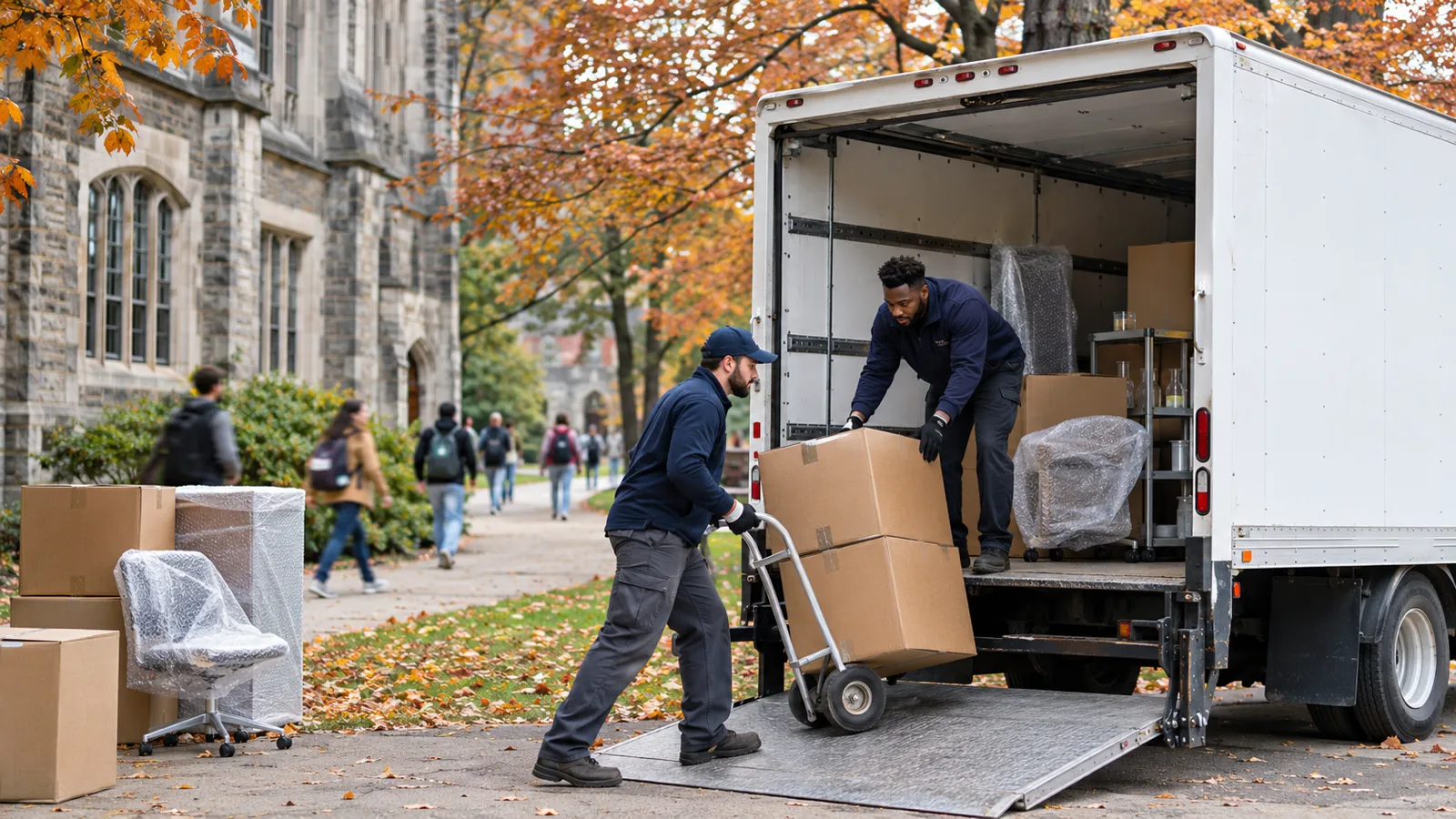
A courier pulls up to a large Ontario university's central receiving building with a box of temperature-sensitive antibodies addressed to "Dr. S., Biology". There are three biology buildings, two researchers with that initial, and no room number. The receiving clerk spends twenty minutes phoning departments while the dry ice in the box keeps subliming. By the time the right lab is found, the package has been sitting for most of the afternoon. Multiply that by hundreds of deliveries a day and it becomes clear why campus logistics deserves real attention.
Ontario's universities and colleges are like small cities. A large campus such as those in Toronto, Waterloo, Hamilton, Kingston, London or Ottawa may have tens of thousands of students and staff, dozens of buildings, research labs, residences, food services, athletic facilities and a constant stream of construction. Smaller institutions in Sudbury, Thunder Bay, Sault Ste. Marie, Peterborough and Oshawa face the same challenges at a smaller scale, often with fewer staff to manage them.
This article walks through a typical academic year to show where campus logistics gets complicated, and how institutions and the suppliers who serve them can make it run more smoothly.
The underlying problem: decentralised buying, centralised docks
Most Ontario universities and many colleges have a decentralised purchasing culture. Researchers, departments, residences, athletics and facilities often order independently, using purchasing cards, online marketplaces and departmental accounts. Meanwhile, the physical campus usually has a limited number of loading docks and, ideally, a central receiving function.
That mismatch creates the familiar problems: poor addresses, packages left at the wrong building, deliveries bypassing receiving entirely, and nobody knowing where a shipment ended up. The fix usually combines clear addressing standards, a central receiving process with internal delivery, and good communication with suppliers.
May and June: research season and construction
When classes end, campuses shift into research mode and construction gets going. Labs order heavily ahead of summer projects, and summer is when residences, classrooms and labs are renovated.
Research supplies
Research deliveries include chemicals, reagents, biological materials, lab consumables and scientific equipment. Many are regulated. Chemicals and some biological samples are dangerous goods under the Transportation of Dangerous Goods Regulations, and dry ice used for shipping frozen samples is itself a Class 9 dangerous good. Receiving staff need TDG awareness and a safe place to hold these items until lab staff collect them.
Speed matters too. Temperature-sensitive reagents should go straight from the dock to a monitored fridge or freezer, not sit in a hallway. Some institutions set up dedicated cold storage in central receiving so that perishable research materials are protected even if the lab cannot collect immediately.
Imported equipment
Research equipment often comes from the US, Europe or Asia. Instruments cross at Windsor, Sarnia, Fort Erie or through Pearson, and need customs clearance with the CBSA. Some scientific equipment imported by educational and research institutions may qualify for duty relief under specific tariff provisions, but claiming it requires correct documentation. A cross-border shipping partner familiar with institutional imports can save time and money here.
Construction and renovation
Summer construction brings contractors, materials and furniture onto campus. Deliveries must fit around road closures, limited laydown space and summer camps or conferences using the residences. A staging warehouse off campus, where furniture and fixtures are received, inspected and held until rooms are ready, prevents chaos on site.
July and August: preparing for move-in
Late summer is peak season for campus logistics. Residences need new mattresses, furniture, linens and appliances. Bookstores receive textbooks, course kits and merchandise. Food services restock completely. IT departments roll out new equipment to labs and classrooms.
Institutions and their suppliers can reduce stress by:
- Booking delivery windows weeks in advance, especially for full truckloads of residence furniture.
- Using an off-campus distribution warehouse to receive and hold large orders, then delivering to each residence building on a schedule.
- Having suppliers label and sort orders by building and floor so they can go straight to the right place.
- Planning removal of packaging waste. A residence furniture refresh can generate mountains of cardboard, and Ontario institutions have recycling obligations and sustainability commitments to meet.
Late August and September: move-in week
Move-in is one of the most intense logistics events of the year. Thousands of students arrive in a few days, many with cars full of belongings, and more and more with online orders shipped directly to their residence: mini-fridges, bedding, desk lamps, textbooks. Residence mailrooms can be overwhelmed.
Some campuses now hold student parcels at a central location, use pickup notifications and set up temporary parcel rooms during the first weeks of term. Retailers and e-commerce brands that target students can help by encouraging delivery before or after the peak, using accurate residence addressing formats and offering pickup point options.
October to April: the steady academic flow
During term, campus logistics settles into a steady rhythm: daily courier deliveries to departments, lab consumables, office supplies, food service deliveries, mail and inter-campus transfers between satellite locations. A few areas deserve attention.
Internal mail and delivery
Central receiving is only half the job. Packages still need to reach the right person. Many institutions run internal delivery routes on a schedule, often with a small van or electric carts. Scanning each package at receiving and again on delivery creates a chain of custody, so when someone asks "where is my parcel?" there is an answer.
Food services
Campus food services, whether self-operated or contracted, receive frequent deliveries of fresh, frozen and dry goods. These need dock time in the early morning, cold storage and careful scheduling around class changes, when pedestrian traffic peaks. Suppliers delivering to campus kitchens benefit from food and beverage logistics experience, particularly for multi-site institutions.
Winter operations
Ontario winters complicate everything. Snow clearing takes priority on campus roads and docks, and storms can shut down deliveries for a day. Institutions in Thunder Bay, Sudbury and North Bay often schedule larger winter replenishment to reduce exposure. Freeze-sensitive items such as lab reagents, inks and certain food products need protection in transit and at the dock.
Year-round: assets, surplus and storage
Universities and colleges accumulate equipment, furniture and records. Old lab equipment, surplus furniture from renovations and decommissioned IT hardware need to be stored, redeployed, sold or disposed of responsibly. Archival records, event equipment and seasonal items such as convocation staging also need a home.
On-campus space is precious and usually better used for teaching and research. Off-campus storage with proper inventory management, so that items can be found and retrieved when needed, frees up valuable space. A searchable record of surplus assets also helps departments reuse equipment instead of buying new.
Outbound shipping from campus
Campus logistics is not only about what comes in. Universities and colleges ship a surprising amount outbound: research samples to collaborators in other provinces and countries, equipment returned to manufacturers for repair, exam papers and materials to satellite campuses, athletics gear to away games and conference materials to events. Each has its own requirements.
- Research samples may be dangerous goods or require dry ice, and international shipments need customs documentation and sometimes import permits at the destination.
- Equipment repairs need proper packaging, often the original crate, plus paperwork so the item can come back into Canada without paying duty twice.
- Inter-campus shipments between, for example, a main campus and a regional site in Barrie, Brantford or Orillia work best on a scheduled shuttle rather than ad hoc couriers.
- Bookstore and merchandise orders from alumni and parents increasingly ship as e-commerce parcels, which calls for an online store connected to a warehouse rather than staff packing boxes in a back room.
Giving departments one simple way to book outbound shipments, with negotiated rates and built-in dangerous goods checks, protects the institution from both overspending and compliance mistakes. Campus bookstores that sell online can benefit from e-commerce fulfillment support during peaks such as convocation and the start of term.
Tips for suppliers serving Ontario campuses
If your business sells to universities and colleges, a few habits make you easier to work with:
- Insist on full delivery addresses, including building, room number and a contact name and phone number. Push this back to customers at order time.
- Learn each campus's receiving rules. Some require all deliveries to central receiving; others allow direct delivery to certain buildings.
- Respect dock hours and avoid class-change times when campus roads fill with pedestrians.
- Ship dangerous goods correctly and send safety data sheets in advance when required.
- Provide tracking information to the end user, not just the purchasing department.
- Coordinate large deliveries for move-in and summer construction weeks ahead.
Ontario institutions are broader public sector organisations, so they generally follow competitive procurement rules. Reliable delivery performance and clear reporting often count in supplier evaluations. For general background on choosing a logistics partner, see our article on modernising warehousing and distribution services.
Bringing it together with technology
Campus logistics improves dramatically when every package and asset is tracked. Barcode scanning at receiving, electronic proof of delivery inside campus, and a shared system that lets departments see the status of their orders cut down on lost packages and wasted calls. Combining that with a shipping platform for outbound shipments (research samples, returns and inter-campus transfers) gives facilities and purchasing teams the visibility they need.
Work with ShipCarte on campus logistics
ShipCarte supports Ontario universities, colleges and the suppliers who serve them with off-campus warehousing, staging for move-in and construction, cross-border inbound shipments and scheduled delivery. To discuss how your campus or your campus customers could benefit, schedule a consultation or request a quote.