
A growing skincare brand that started on Shopify a few years ago now ships orders to customers in every province. One morning the founder receives a letter from a stewardship organization asking the company to register, report the weight of packaging it supplies to residents of that province, and pay fees. The founder's first reaction is confusion: the brand does not run a recycling program, so why is it being billed for one?
The answer is extended producer responsibility, usually shortened to EPR. Across Canada, provinces have been shifting the cost of recycling packaging and printed paper away from municipal taxpayers and onto the businesses that put that material into the market. For many brands, especially those that sell online across provincial lines, the obligations arrive before they even know the rules exist.
This guide explains how packaging EPR works in Canada as of today, where the main provincial programs stand, and what practical steps brands can take to prepare. It is general information, not legal advice, and the details of each program should always be confirmed with the relevant stewardship organization.
What Is Extended Producer Responsibility?
EPR is a policy approach that makes producers responsible for the end-of-life management of the products and packaging they sell. Instead of municipalities funding curbside recycling entirely through property taxes, the businesses that supply the packaging pay some or all of the cost, usually through fees based on the weight and type of material they supply.
The idea is that if producers pay for what happens to their packaging, they will have an incentive to use less of it and to choose materials that are easier to recycle. In 2009 the Canadian Council of Ministers of the Environment (CCME) adopted a Canada-wide Action Plan for EPR that encouraged provinces to develop programs for packaging and printed paper, among other product categories. More recently, the CCME's strategy and action plan on zero plastic waste have reinforced EPR as a key tool for reducing plastic pollution.
Because waste management is largely a provincial responsibility in Canada, there is no single national program. Each province sets its own rules, and they differ significantly.
How Packaging Programs Differ Across Canada
Here is a high-level look at where the main provinces stand. Programs change, so treat this as a starting point rather than a definitive summary.
British Columbia
British Columbia has the most established full producer responsibility model for residential packaging and paper. Since 2014, producers have been fully responsible for the residential recycling system through the stewardship agency Recycle BC, which contracts with municipalities and private collectors. Businesses that supply packaging and paper to BC residents may be obligated to join and report, with exemptions available for some small businesses.
Ontario
Ontario's Blue Box program has historically been funded jointly by municipalities and industry, with producers paying their share through Stewardship Ontario. The province has announced that the program will transition to full producer responsibility, with municipalities moving over in phases starting in 2023 and finishing by the end of 2025, under the framework of the Resource Recovery and Circular Economy Act. Regulations setting out the detailed requirements are still being developed, so brands selling into Ontario should follow the consultation process closely.
Quebec
Quebec operates a compensation regime in which companies that market containers, packaging and printed matter pay fees, administered through Éco Entreprises Québec, to fund municipal curbside collection. Earlier this year, the Quebec government announced plans to modernize curbside recycling and move toward a model in which producers take on greater responsibility, alongside an expanded deposit system for beverage containers.
Manitoba and Saskatchewan
Both provinces run shared-responsibility programs for packaging and printed paper, in which producers fund a portion of municipal recycling costs through stewardship organizations: Multi-Material Stewardship Manitoba and the Multi-Material Recycling Program in Saskatchewan.
Alberta and Atlantic Canada
Alberta does not currently have a packaging and paper EPR program, although it does have stewardship programs for items such as beverage containers, electronics, tires and paint. In Atlantic Canada, provinces have well-established beverage container deposit systems and have been examining packaging EPR. Brands should expect continued change in these regions.
Federal action on plastics
Separately from provincial EPR, the federal government announced in 2019 its intention to ban certain harmful single-use plastics as early as 2021 and to work with provinces and territories on making producers responsible for plastic waste. Details have not yet been finalized, but brands that rely on plastic packaging should keep an eye on developments.
Who Counts as the "Producer"?
This is the question that catches many brands off guard. Rules differ by province, but programs generally follow a hierarchy that looks something like this:
- The brand owner, if it has a presence in the province
- If not, the first importer or distributor that brings the product into the province
- If neither applies, the retailer or seller that supplies it to the consumer
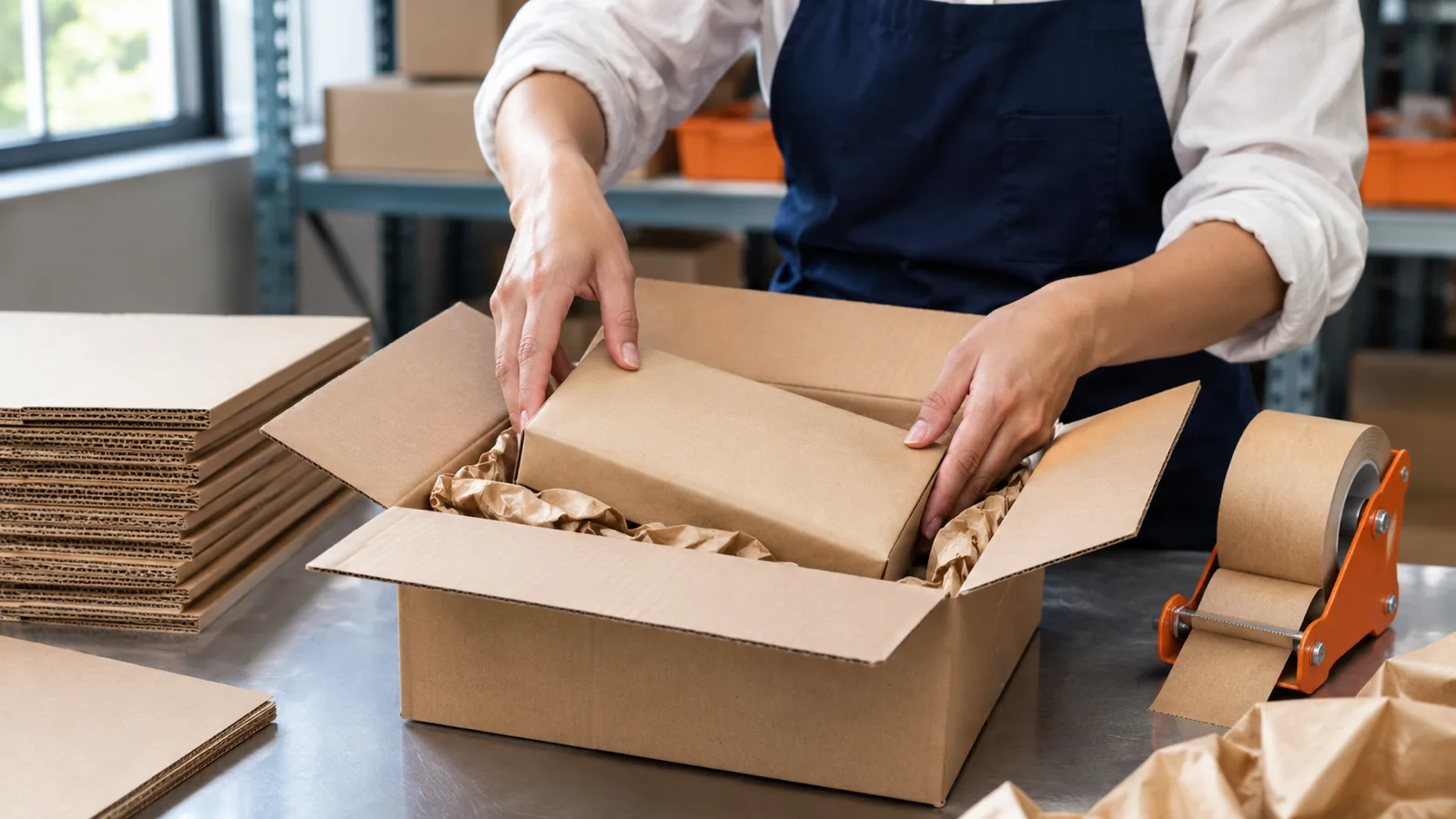
For ecommerce brands, this can mean that the business is the obligated producer for both the product packaging and the shipping packaging, including the corrugated box, mailer, void fill and tape, when it ships directly to residents of a province with an EPR program. Some programs also treat paper items like packing slips and inserts as printed paper. Check the definitions in each program that applies to you.
How Fees Are Calculated
Most programs charge fees per kilogram of material supplied, with different rates for different material categories. Materials that are expensive to collect and recycle, or that have weak end markets, generally carry higher rates than materials like corrugated cardboard that are easy to recycle and have stable markets. Fee rates are set by each stewardship organization and change periodically.
This structure has a practical consequence: packaging choices directly affect fees. Switching from a multi-material laminate to a single recyclable material, removing unnecessary layers or right-sizing boxes can lower both shipping costs and stewardship fees.
Preparing Your Business: A Step-by-Step Approach
Step 1: Identify where you supply packaging
Look at sales by province. If you ship to residential customers across Canada, you may have obligations in several provinces. Your order management or ecommerce platform should be able to break down sales by province and order count.
Step 2: Check thresholds and exemptions
Many programs exempt small businesses below certain revenue or tonnage thresholds, or offer simplified reporting and flat fees. Confirm the current thresholds with each stewardship organization before assuming you are or are not obligated.
Step 3: Build a packaging inventory
List every packaging component you use for each product: primary packaging (bottle, cap, label), secondary packaging (carton, sleeve), shipping packaging (box, mailer, void fill, tape) and printed materials (inserts, packing slips). Record the material type and weight of each.
Step 4: Connect packaging to units shipped
Multiply each component's weight by the number of units supplied in each province. This is where good data matters. A fulfillment partner that tracks which box and which packing materials were used on each order can make this much easier. Reporting and analytics tools help pull this information together.
Step 5: Register and report
Register with the relevant stewardship organizations, submit reports by the deadlines they set and keep documentation of how your figures were calculated.
Step 6: Review and reduce
Use the data to identify where packaging can be reduced or simplified. Once you know what each component costs in fees and freight, the business case for change becomes clearer.
How Fulfillment Choices Affect EPR Costs
For ecommerce brands, the shipping packaging is often a large share of the total weight supplied to customers. Several fulfillment practices can reduce it:
- Right-sized cartons. Choosing the smallest suitable box for each order reduces corrugated weight and void fill. Cartonization software selects box sizes automatically based on the items in the order.
- Paper-based void fill. Replacing plastic air pillows with recyclable paper may lower fees in programs where plastic film carries higher rates, while also simplifying recycling for customers.
- Fewer inserts. Printed marketing inserts add weight and may count as printed paper. Digital alternatives can reduce that.
- Consolidated shipments. Shipping multi-item orders together rather than in separate boxes reduces packaging overall.
- Mono-material packaging. Working with suppliers to move toward single-material, recyclable options can reduce fees and improve recyclability.
A fulfillment partner offering ecommerce fulfillment and value-added services can help implement these changes consistently. Our article on how package dimensions affect shipping costs also shows how smaller packaging saves money on freight.
Related Labelling Requirements
EPR sits alongside other packaging rules in Canada. Prepackaged consumer products generally need to meet federal labelling requirements, including bilingual information under the Consumer Packaging and Labelling Act, and environmental claims on packaging, such as "recyclable" or "compostable," should be accurate and supportable to avoid misleading the public. The Competition Bureau has published guidance on environmental claims. Brands redesigning packaging to reduce EPR fees should check that new labels still meet these requirements.
Frequently Asked Questions
Does EPR apply to businesses based outside Canada?
It can. If a foreign brand ships directly to residents of a province with an EPR program and there is no Canadian brand owner or importer to take responsibility, the obligation may fall on the seller. Check the rules for each province.
Do business-to-business shipments count?
Most current Canadian packaging programs focus on residential packaging and printed paper. Packaging supplied only to industrial, commercial or institutional customers is often treated differently, but definitions vary, so confirm with each program.
Is this going to get more complex?
Most likely. Ontario's transition, Quebec's planned modernization and federal plastics initiatives all point toward broader producer responsibility in the years ahead. Brands that build good packaging data now will find future requirements much easier to meet.
Get Help Streamlining Your Packaging
ShipCarte works with ecommerce and retail brands across Canada on fulfillment, packaging optimization and reporting. If you want help right-sizing your shipping packaging or capturing the data you need for stewardship reporting, schedule a consultation with our team.