
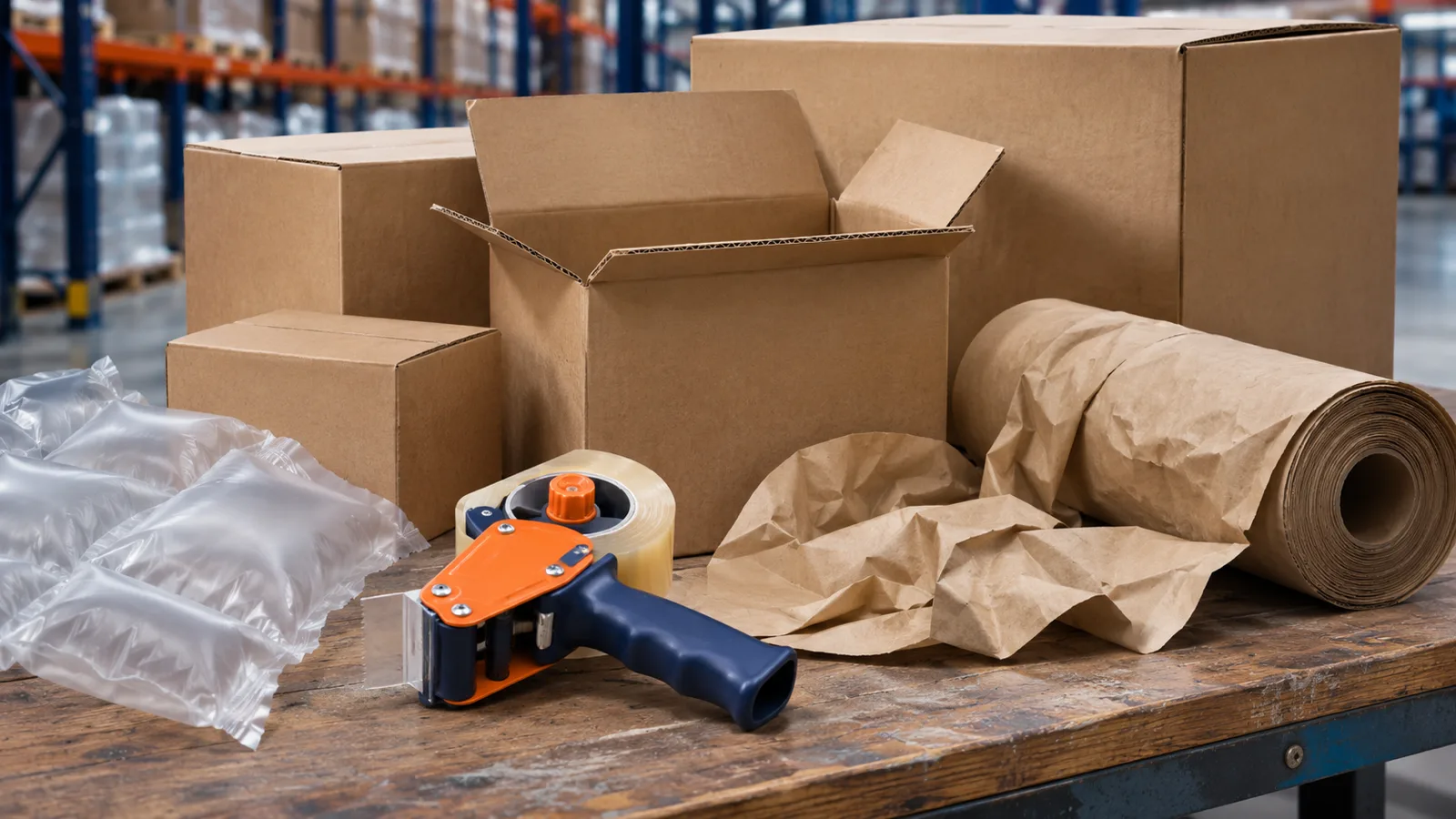
A kitchenware seller in Churchill Meadows switched to a cheaper box supplier to save on costs. The new boxes looked identical on the shelf. Within a month, customers were posting photos of crushed corners and split seams, and the owner was reshipping cast-iron pans at her own expense. The old boxes had been rated for heavier loads; the new ones were not. Nobody had checked the certificate printed on the bottom flap.
Packaging is one of those costs that is easy to treat as a commodity. A box is a box, tape is tape. In reality, the materials you choose decide whether products arrive intact, how much you pay in dimensional weight and how fast your team can pack. For Mississauga shippers sending parcels across Canada, through winter freeze-thaw cycles and carrier sortation systems, the difference between packaging that performs and packaging that merely exists shows up quickly in damage claims and customer reviews.
This guide works through each category of supply, what to look for, and how to test your choices before committing to a large order.
Corrugated boxes: understand the ratings
Most shipping boxes are made from corrugated fibreboard, a fluted sheet sandwiched between two liners. Strength depends on the flute size, the number of walls and the quality of the board.
Single, double and triple wall
- Single wall boxes handle most e-commerce parcels: apparel, cosmetics, books, small electronics and general merchandise.
- Double wall boxes are better for heavy items, fragile goods, products that will be stacked in freight shipments and anything that needs to survive several touches.
- Triple wall boxes are used for very heavy industrial goods and are rarely needed for parcels.
ECT versus burst strength
Look at the box maker's certificate, usually a round stamp on the bottom flap. It will show either an Edge Crush Test (ECT) rating or a burst strength (Mullen) rating. ECT measures how well the board resists crushing when boxes are stacked; burst strength measures how well it resists puncture and rupture. For parcels that are mostly handled individually, either can work. For boxes that will be stacked on pallets or in trailers, ECT is often the more relevant measure. The certificate also lists a maximum gross weight. Respect it.
Sizes
Rather than stocking dozens of sizes, look at your order data and find the handful of box sizes that fit most of your orders snugly. Too few sizes and you ship air; too many and your packers waste time choosing and your storage fills up. Software can help here: cartonization tools recommend the best box for each order based on product dimensions.
Mailers and envelopes
For soft, unbreakable goods such as clothing, textiles and some accessories, a poly mailer or paper mailer is lighter and smaller than a box, which usually lowers postage. Options include:
- Poly mailers: light, water-resistant and cheap. Choose a thickness that resists tearing in sortation equipment.
- Padded or bubble mailers: add light cushioning for small items like jewellery or phone accessories.
- Paper mailers: a curbside-recyclable alternative many customers prefer. Check that they hold up in wet weather; Mississauga winters bring slush that can soak a parcel left on a porch.
- Rigid mailers: stiff paperboard envelopes for prints, documents and flat items that must not bend.
Void fill and cushioning
Void fill stops movement inside the box; cushioning absorbs shock. They are not always the same thing, and the right choice depends on what you ship. If you want a deeper look at internal protection terminology, see our post on what dunnage means.
- Kraft paper: versatile, recyclable and good for filling voids and wrapping items. Crumpled paper also offers modest cushioning.
- Air pillows: very light, fast to use with an on-site machine, and good for filling voids. They offer limited protection against sharp impacts.
- Bubble wrap: good cushioning for fragile items. Wrap items individually rather than throwing sheets loosely into the box.
- Foam inserts and moulded pulp: custom-fit protection for high-value or very fragile items like glassware, electronics or ceramics.
- Loose fill (packing peanuts): fills irregular spaces, but customers often dislike the mess. Products can also migrate through loose fill and end up touching the box wall.
A simple rule: if you shake a sealed box and hear or feel movement, it needs more fill. Our guide on how to properly pack fragile items goes into more detail on cushioning methods.
Tape: more important than it looks
Cheap tape is one of the most common causes of boxes opening in transit. Things to consider:
- Hot melt tape grips quickly and is a common choice for general shipping.
- Acrylic tape tends to perform better in cold and over long storage periods, which matters if your boxes sit in an unheated trailer or warehouse over a Canadian winter.
- Water-activated paper tape forms a strong bond with the corrugated board, offers tamper evidence and is curbside recyclable. It requires a dispenser.
- Width and thickness: heavier boxes need wider, thicker tape. Use the H-taping method, sealing the centre seam and both edge seams on top and bottom.
Tape performance can drop in cold conditions. If your receiving or shipping dock gets cold in winter, keep tape stock inside a heated area and test how well it bonds to cold boxes.
Labels, pouches and printers
Direct thermal labels in the standard 4 by 6 inch format work with most carrier systems and thermal printers. Buy labels that match your printer's core size and roll diameter. Packing list pouches keep invoices and customs forms attached to the outside of the box. For a deeper look at printers, see our roundup of shipping label printers for e-commerce.
Pallet supplies for freight
If you ship LTL or truckload, packaging extends beyond the box:
- Pallets: use sound pallets in good condition. Broken boards or missing blocks cause load failures. Shipments to the US and overseas may require heat-treated wood pallets stamped to the ISPM 15 international standard.
- Stretch wrap: wrap tightly and anchor the wrap to the pallet itself, not just the cartons.
- Corner boards and top sheets: protect edges and spread strap pressure.
- Strapping: secures heavy or unstable loads.
Sustainability without losing protection
Many customers prefer recyclable or reduced packaging, and some retail partners have packaging requirements of their own. Good options include paper-based void fill, water-activated tape, right-sized boxes and paper mailers. But sustainability that leads to breakage is not sustainable; a broken product means a replacement shipment and twice the packaging. Test eco-friendly options as rigorously as any other material.
How to test packaging before a big order
You do not need a lab to catch most problems. A simple in-house test routine can reveal weak spots:
- Pack a few sample orders using the new materials, exactly as your team would.
- Drop each sealed parcel from waist height onto a hard floor several times, landing on a face, an edge and a corner.
- Stack weight on top of a sealed box for several hours to imitate a trailer load.
- Leave a box in a cold space, such as an unheated garage or loading dock in winter, then repeat the tests.
- Open each box and inspect the product and packaging.
- Send a few real test shipments to friends or staff in distant provinces and ask for photos on arrival.
For higher-value products, formal transit testing standards exist, and some packaging suppliers can arrange testing. That is worth considering if you are launching a new fragile product line.
Buying supplies in Mississauga
Mississauga and the surrounding Peel Region have many packaging distributors and manufacturers in industrial areas around Malton, Gateway and Meadowvale, as well as national suppliers who deliver locally. Buying from nearby suppliers can shorten lead times and make it easier to get samples. Things to discuss with a supplier include minimum order quantities, storage space (boxes take up a lot of room), delivery frequency and whether they can hold stock for you.
If storage space is your constraint, that is often a sign that packing is outgrowing your premises. A fulfillment partner buys packaging at volume, stores it and selects the right materials for each order. ShipCarte's pick and pack services include packing to agreed standards, and our value-added services cover custom packaging work such as inserts and branded presentation. For more on where to source supplies, see our guide on where to buy shipping supplies for an e-commerce store.
A quick packaging supply checklist
- Box sizes matched to your top-selling products
- Box strength and maximum weight confirmed on the certificate
- Mailers for soft goods, chosen for tear and water resistance
- Void fill and cushioning suited to your products
- Tape rated for your box weights and for cold conditions
- Labels compatible with your printer
- Pallets, wrap and corner boards for freight
- Test results recorded before switching suppliers
Packaging that pays for itself
The right supplies protect products, keep dimensional weight in check and let your team pack quickly. The wrong ones cost you in damage, reshipments and unhappy customers. Take the time to understand ratings, test new materials and match supplies to what you actually ship. If you would rather hand packaging and shipping to a team that does it every day in Mississauga, request a quote from ShipCarte or schedule a consultation.