
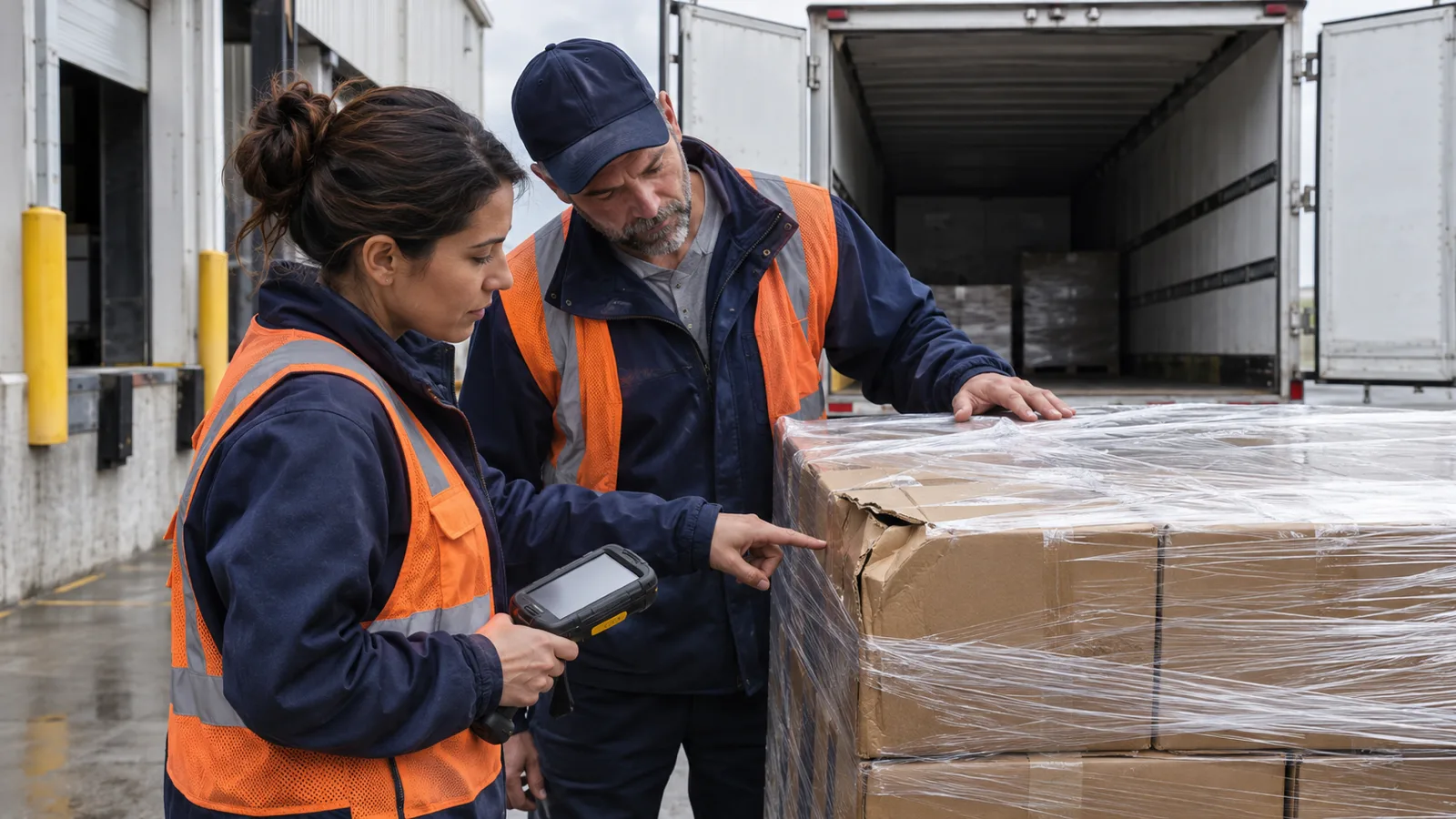
The tracking page says "Delivered." Your customer says nothing arrived. Or a pallet of glassware reaches a store in Halifax with three crushed cases, the receiver signs for it without a note, and the carrier now says the freight was delivered in good order. Either way, you are stuck in the middle of a proof of delivery dispute, and the clock on your claim is already running.
Disputes like these are a routine part of shipping in Canada, whether you send small parcels to consumers or LTL freight to retail and industrial customers. Most of them are not about dishonesty. They come from rushed signatures, packages left at the wrong door, missing photos, and paperwork that does not say what everyone thinks it says. The businesses that resolve them well are the ones that collect the right evidence before anything goes wrong.
Below we walk through what proof of delivery actually is, the most common dispute scenarios, how carrier liability generally works in Canada, and a step-by-step process for building a claim that a carrier will take seriously.
What counts as proof of delivery
Proof of delivery, or POD, is the record a carrier keeps to show that a shipment reached the consignee. What that record looks like depends on the type of shipment:
- Parcel and courier shipments: usually an electronic scan with a timestamp, often a GPS location, sometimes a photo of the package at the door, and a signature or signer name if a signature was required.
- LTL and truckload freight: a signed delivery receipt or a signed copy of the bill of lading, showing the consignee's name, the date and time, the piece count, and any exceptions noted at delivery.
- White glove or appointment deliveries: often a more detailed delivery sheet, sometimes with photos of the item in place.
The single most important detail on a freight POD is whether it is clean or exception-noted. A clean POD means the receiver signed without recording any shortage or damage. In the eyes of most carriers, a clean signature is strong evidence that the freight arrived complete and in good condition. That does not make a later claim impossible, but it makes it much harder.
Five dispute scenarios Canadian shippers run into
Scenario 1: Parcel marked delivered, customer says it never came
A customer in a Calgary condo building reports that a parcel shown as delivered is nowhere to be found. Common explanations include delivery to a concierge or mailroom, delivery to the wrong unit, delivery to a neighbour, a scan made before the package was actually dropped, or porch theft. Your first step is to request the carrier's full delivery details: GPS coordinates, the photo if one was taken, and the signer name. Ask the customer to check with building staff and neighbours. If the GPS shows the scan happened kilometres away, you have strong grounds for a carrier trace.
Scenario 2: Pallet signed clean, damage discovered later
A retailer's distribution centre in Montreal receives a pallet, signs for the piece count, and breaks it down the next day to find crushed cartons inside the wrap. This is known as concealed damage. Carriers treat it sceptically because it could have happened after delivery. The keys are speed and evidence: report it to the carrier as soon as possible, keep all packaging, take photos before moving anything further, and request an inspection.
Scenario 3: Shortage on a multi-piece shipment
Your bill of lading lists 12 pieces. The consignee in Winnipeg signs for 12 but later counts only 11 cartons. If the receiver signed for 12 without noting a shortage, the carrier will point to that signature. If the receiver wrote "11 pieces received, 1 short" on the delivery receipt, the carrier will typically open a trace and the claim is far more straightforward.
Scenario 4: Wrong address or misdelivery
Freight bound for one location in an industrial park ends up at a neighbouring unit, and someone there signs for it. The POD shows a signature, but the name or business does not match your consignee. Ask the carrier for the signed document and the delivery address the driver recorded. A mismatch with your consignee details is usually enough to make the carrier responsible for recovering the freight.
Scenario 5: Customer refuses delivery, then disputes charges
A business customer refuses a shipment because it arrived outside their receiving hours, and the carrier returns it and bills you for redelivery or return freight. This is less about lost goods and more about accessorial charges. The evidence that matters is your original booking: did it specify an appointment, a delivery window or receiving hours? Our guide to shipping surcharges explains how these charges usually arise.
How carrier liability generally works in Canada
Freight carriage in Canada is largely regulated at the provincial level, and most provinces set out standard conditions of carriage that apply when the bill of lading does not say otherwise. These conditions generally make the carrier responsible for loss or damage while freight is in its care, with certain exceptions, but they also limit how much the carrier has to pay. Unless you declare a higher value on the bill of lading, the carrier's liability is typically capped at a fixed amount per pound or kilogram of the shipment's weight, which is often well below the value of lightweight or high-value goods.
Parcel carriers and couriers set their own terms in their service guides and tariffs. Most include a modest default liability amount per package, with the option to buy declared value coverage or third-party insurance. Read the terms for each carrier you use, because the definitions of what is covered, how long you have to file, and what documentation is required differ.
Two practical points follow from this:
- If your goods are worth much more per kilogram than the standard limit, consider declaring a higher value or buying insurance. Our article on freight insurance explains the difference between carrier liability and cargo insurance.
- Every carrier and set of conditions includes time limits for giving notice of loss or damage and for filing a full claim. Missing those deadlines can end a claim before it starts, so log the dates the day a problem is reported.
Cross-border shipments to the United States can fall under different rules depending on the carrier and the bill of lading used, so do not assume the same limits apply.
Building a claim that holds up: a step-by-step process
- Get the POD in writing. Request the signed delivery receipt or the electronic POD with all details: signer name, timestamp, GPS location and photo.
- Compare it against your shipping records. Check the bill of lading, piece count, weights, dimensions and declared value. Confirm the consignee address you provided was correct.
- Collect evidence from the consignee. Ask for photos of damaged packaging and products, the pallet as received if possible, and any notes the receiver made.
- Notify the carrier promptly in writing. Do this even if you do not yet know the full value of the loss. Note the date and keep a copy.
- Keep the freight and packaging. Carriers may want to inspect damaged goods. Disposing of them too early can weaken or void the claim.
- Document the value. Commercial invoices, purchase orders or cost records show what the goods were worth. Carriers generally pay based on the value of the goods rather than the retail price you might have earned.
- File the formal claim with all supporting documents within the carrier's deadline, and track it until a decision is made.
- Escalate if needed. If a carrier denies a claim you believe is valid, ask for the reason in writing and provide any additional evidence that addresses it.
Preventing disputes before they happen
The cheapest dispute is the one that never starts. Most POD problems can be reduced with a few habits in your shipping process.
At origin
- Photograph every pallet before it leaves your dock, showing the wrap, labels and condition. Photos with a timestamp are hard to argue with.
- Make sure the piece count on the bill of lading matches what is physically loaded, and have the driver sign for that count.
- Use corner boards, proper stretch wrap and stable stacking so freight arrives in the same shape it left. Our guide on choosing a courier for fragile items includes packing advice that applies to freight as well.
- For parcels, require a signature on high-value orders and consider adult signature or photo-on-delivery options where carriers offer them.
At destination
- Train your own receiving staff, and ask your B2B customers to train theirs, to count pieces and inspect wrapping before signing.
- Note any shortage or visible damage directly on the delivery receipt with a specific description, for example "2 cartons crushed on top layer", rather than vague phrases.
- Avoid signing "subject to inspection" as a substitute for actual inspection. Many carriers do not treat it as a valid exception.
In your systems
Disputes are much easier to resolve when tracking, PODs and shipment records live in one place. A shipping platform that pulls in tracking events and delivery documents from multiple carriers lets your customer service team answer "where is my order?" without logging into five different carrier portals. Customers can also check status themselves using a tracking page such as ShipCarte's shipment tracking.
Frequently asked questions
Can I still claim if the receiver signed clean?
Sometimes. Concealed damage claims are possible, but you must act quickly and show that the damage most likely happened in transit, for example because the outer packaging was damaged in a way consistent with handling or because damage was found inside unopened cartons. The longer the gap between delivery and the report, the harder it becomes.
Who should file the claim, the shipper or the consignee?
Either can, depending on who owns the goods while they are in transit, which is determined by your terms of sale. Agree on this with your customers in advance so claims are not delayed while both sides wait for the other.
Does a GPS scan prove delivery?
It is evidence, not proof. A GPS location close to the address supports the carrier's position, while one that is far away supports yours. Combined with a photo and signer name, it gives a much clearer picture.
How long do claims take?
It varies widely between carriers and depends on how complete your documentation is. Claims with clear exception notes and photos are generally resolved faster than concealed damage claims or disputed deliveries.
Let us handle the paperwork
Proof of delivery disputes are frustrating, but they are manageable when you have the right documentation and a consistent process. ShipCarte works with carriers across Canada for small parcel shipping and LTL freight, and our carrier management team helps clients track deliveries, collect PODs and pursue claims when something goes wrong. If disputes are costing you time and money, request a quote and see how a single point of contact can simplify your shipping.