
A household goods distributor in southern Ontario restocks a warehouse in Calgary every week. For years the freight has gone by truck: a dry van leaves the GTA on Monday, crosses northern Ontario on Highway 17 or dips through the US, and arrives in Alberta later in the week. It works, but the truckload rates have been climbing, and in the winter the trip across the Shield can be unpredictable. Somebody on the team asks a simple question: why not put it on the train?
Canada was, in many ways, built around its railways, and they remain the backbone of long-haul freight. Two Class I railways operate transcontinental networks that link the Port of Vancouver and Prince Rupert in the west with the Prairies, Ontario, Quebec and the Maritimes. Alongside bulk commodities such as grain, potash and lumber, they move enormous volumes of containers and trailers in what is called intermodal service.
Rail intermodal is not right for every shipment. But for the right freight on the right lanes it can be cheaper, more stable in price and lower in emissions than trucking. This article explains how it works and how to decide whether your freight should ride the train.
What rail intermodal actually means
"Intermodal" refers to freight that moves in a container or trailer across more than one mode of transport without the goods themselves being handled. A typical domestic intermodal move in Canada looks like this:
- A truck delivers an empty container to your dock, or you load a container at a warehouse.
- A local carrier drays the loaded container to the nearest rail intermodal terminal. This first truck leg is called drayage.
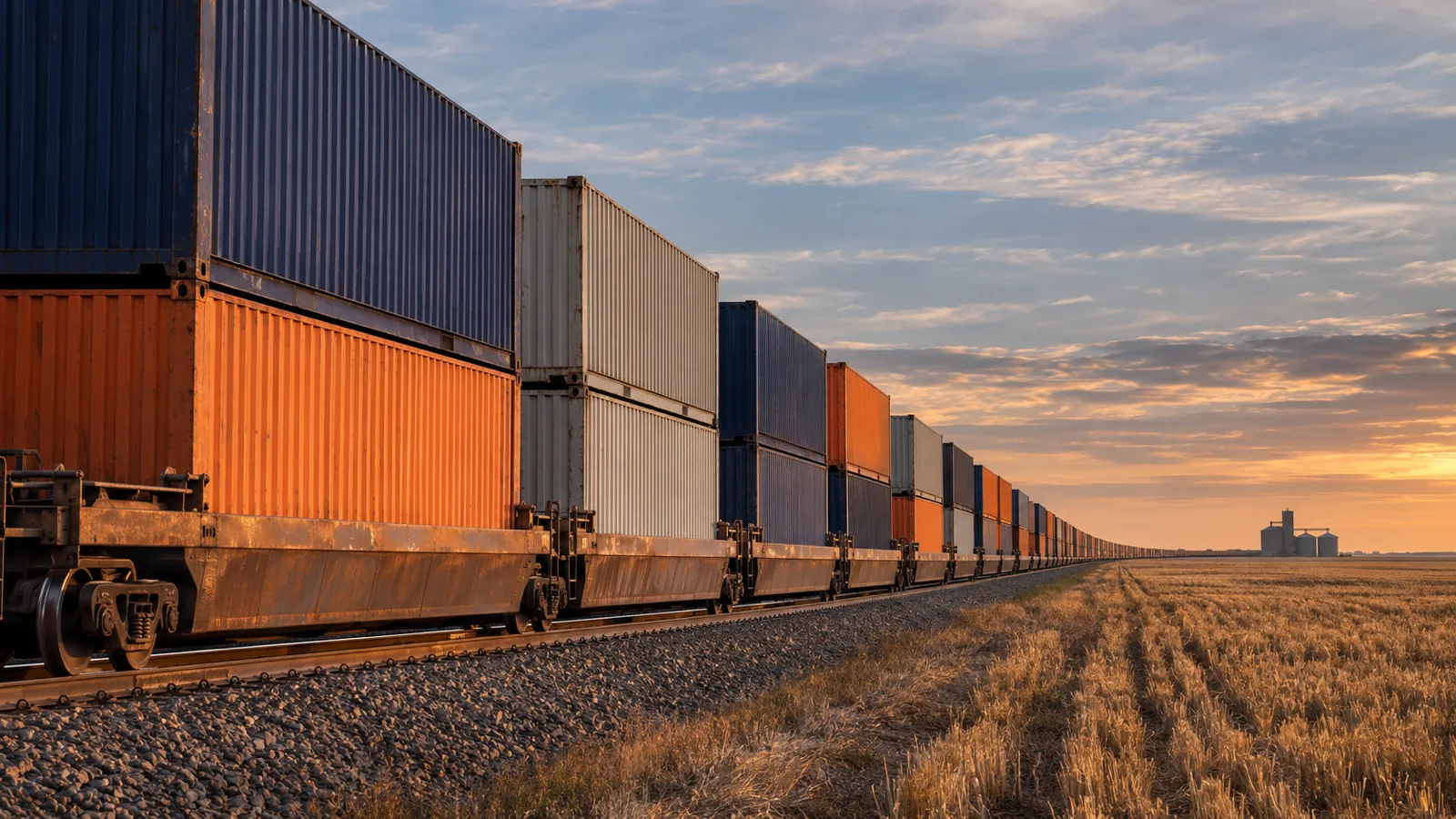
- The container is lifted onto a railcar, often stacked two high, and travels on a scheduled intermodal train.
- At the destination terminal, the container is lifted off and drayed to the consignee.
- The empty is returned to the terminal or repositioned for its next load.
There are two broad flavours. International intermodal moves ocean containers (usually 20-foot and 40-foot) between seaports and inland points, for example from Vancouver to Toronto or from Halifax to Montreal. Domestic intermodal uses larger containers, typically 53-foot, that are sized to match a highway trailer, and moves freight between Canadian cities.
Rail intermodal compared with truckload
The decision almost always comes down to comparing intermodal with a full truckload move on the same lane. Here is how they stack up.
Cost
Rail is efficient over long distances because a single locomotive crew moves hundreds of containers at once. On long-haul lanes, intermodal is often less expensive than an over-the-road truck, although the gap varies with fuel prices, truck capacity and the cost of drayage at each end. On shorter lanes, the fixed costs of two drays and two terminal lifts usually wipe out the savings. As a rough rule of thumb, intermodal tends to become worth investigating once a lane stretches to well over a day's drive. Within the Quebec City–Windsor corridor, trucks usually win; between Ontario and the Prairies or British Columbia, rail is often competitive.
Transit time
Trucks are generally faster door to door, particularly with team drivers. Intermodal transit includes terminal cut-off times, train schedules, unloading and availability at destination, and the dray. Build that into your planning: rail suits replenishment with a predictable cadence, not emergency orders.
Reliability and seasonality
Both modes face winter. Highways through the Rockies and northern Ontario can close in storms, and extreme cold forces railways to run shorter trains, which can slow the network. Rail can also be disrupted by washouts, slides, wildfires and, occasionally, labour or protest actions that block lines. Trucking is more flexible when a disruption hits, because a truck can take another road. Neither mode is immune, so for critical freight a plan B matters.
Price stability
Truckload spot rates can swing sharply with seasonal demand and driver availability, as we discuss in our guide to truckload capacity in Canada. Intermodal pricing has tended to be steadier, which makes it attractive for budgeting regular freight.
Emissions
Moving freight by rail generally produces fewer greenhouse gas emissions per tonne-kilometre than moving it by truck. If your customers or retail partners are asking about the carbon footprint of your supply chain, shifting suitable long-haul lanes to rail is one of the more practical steps available.
Lanes where rail makes sense in Canada
Canada's geography helps intermodal. Population and industry are concentrated in a handful of hubs separated by long distances, which is exactly the pattern rail handles well. Lanes where shippers commonly look at intermodal include:
- Greater Toronto Area and Montreal to Winnipeg, Calgary, Edmonton and Vancouver. Long, high-volume corridors with established intermodal service.
- Vancouver and Prince Rupert to central Canada. Imported ocean containers often travel inland by rail before being unloaded near their final market.
- Halifax and Saint John to Montreal and Toronto. Rail links Atlantic ports to the central Canadian market.
- Central Canada to Atlantic Canada. For distributors restocking Moncton or Halifax from Ontario or Quebec.
- Canada to the US Midwest. Canadian railways also connect to US networks for cross-border intermodal.
Freight going to smaller centres far from an intermodal terminal is a weaker fit. The longer the drays at either end, the more the economics shift back toward trucking.
Freight that suits the train
Ask these questions about each product line you ship:
- Is it a full load? Intermodal is a container-load service. Smaller shipments typically move through LTL freight networks, some of which use rail on long linehauls behind the scenes.
- Is it dense or heavy? Containers have weight limits that depend on the equipment and on road weight rules at each end, which vary by province. Very heavy freight may need special handling.
- Can it tolerate a little more handling and time? Rail cars experience coupling forces and vibration. Good load securement with blocking, bracing and airbags is essential.
- Is it temperature-sensitive? Refrigerated and heated intermodal equipment exists, but availability is more limited than for dry containers. In a Prairie winter, products that can freeze, such as beverages, paints and some foods, need protection.
- Is demand predictable? Regular, forecastable flows such as warehouse replenishment, retail distribution and manufacturing inputs are ideal.
A scenario: moving replenishment from Ontario to Alberta
Consider the distributor from the introduction. It ships around one trailer a week of packaged household goods from a warehouse in the GTA to a distribution warehouse in Calgary. Here is how a shift to intermodal might be evaluated:
- Compare all-in costs. Get an intermodal quote that includes both drays, fuel surcharges and accessorials, and compare it with recent truckload invoices on the same lane, not just a contract rate.
- Map the timeline. Work out the terminal cut-off in Ontario, the scheduled train, the expected availability in Calgary, and delivery to the warehouse. Add a buffer.
- Adjust safety stock. If intermodal adds a day or two to transit, the Calgary warehouse may need slightly higher safety stock. Your inventory management data will show how much buffer the extra time requires.
- Review packaging and securement. Make sure pallets are stretch-wrapped well, loads are braced, and nothing will shift under rail forces.
- Pilot and measure. Run a handful of loads, track transit time, damage and total cost, then decide whether to shift the lane permanently or split volume between rail and road.
Many shippers end up with a blend: steady weekly replenishment on rail, with trucks reserved for urgent top-ups and peak-season surges.
Costs to watch beyond the line haul
An intermodal quote can look attractive until accessorial charges arrive. Ask about these before you commit:
- Drayage at each end, including fuel surcharges.
- Free time and storage. Terminals allow a limited window to pick up a container before storage charges apply.
- Detention or per diem. Charges for keeping a container or chassis beyond the allowed time at your dock.
- Waiting time for drivers if loading or unloading runs long.
- Overweight and special handling fees.
- Winter protection for freeze-sensitive goods, where available.
Our article on types of shipping surcharges explains many of these charges in more detail.
Imports: using rail from the port
For importers, rail intermodal is often part of the journey whether they think about it or not. Ocean containers arriving at Vancouver, Prince Rupert, Halifax or Montreal frequently move inland by rail to terminals near major markets. The choice of port affects transit time, cost and congestion risk; our guide to choosing a Canadian port for imports compares the options.
Some importers move ocean containers by rail to a central Canadian terminal and then transload the goods into 53-foot domestic trailers or containers for onward distribution. Transloading can reduce the number of containers needed for the final leg and gives a chance to sort freight by destination.
Getting started with intermodal
You can book intermodal directly with a railway if you have the volume and the in-house capability, but many shippers work through intermodal marketing companies, freight brokers or logistics providers who package the rail move, the drays and the tracking into a single service. That approach is usually easier for shippers moving a few containers a week or month.
Whichever route you take, consistent data helps. Use a shipping platform that lets you compare modes, track containers and see total landed cost per lane, so decisions are based on real numbers rather than impressions.
Let us help you weigh rail and road
Rail intermodal is one of the most useful tools available to shippers moving freight across Canada's long distances. It will not replace trucking, but on the right lanes it can bring cost stability, lower emissions and capacity when highways are tight.
ShipCarte helps businesses across Canada compare freight options and build a mode mix that fits their network. Request a quote with your lanes and volumes, and we will help you see where the train might fit.