
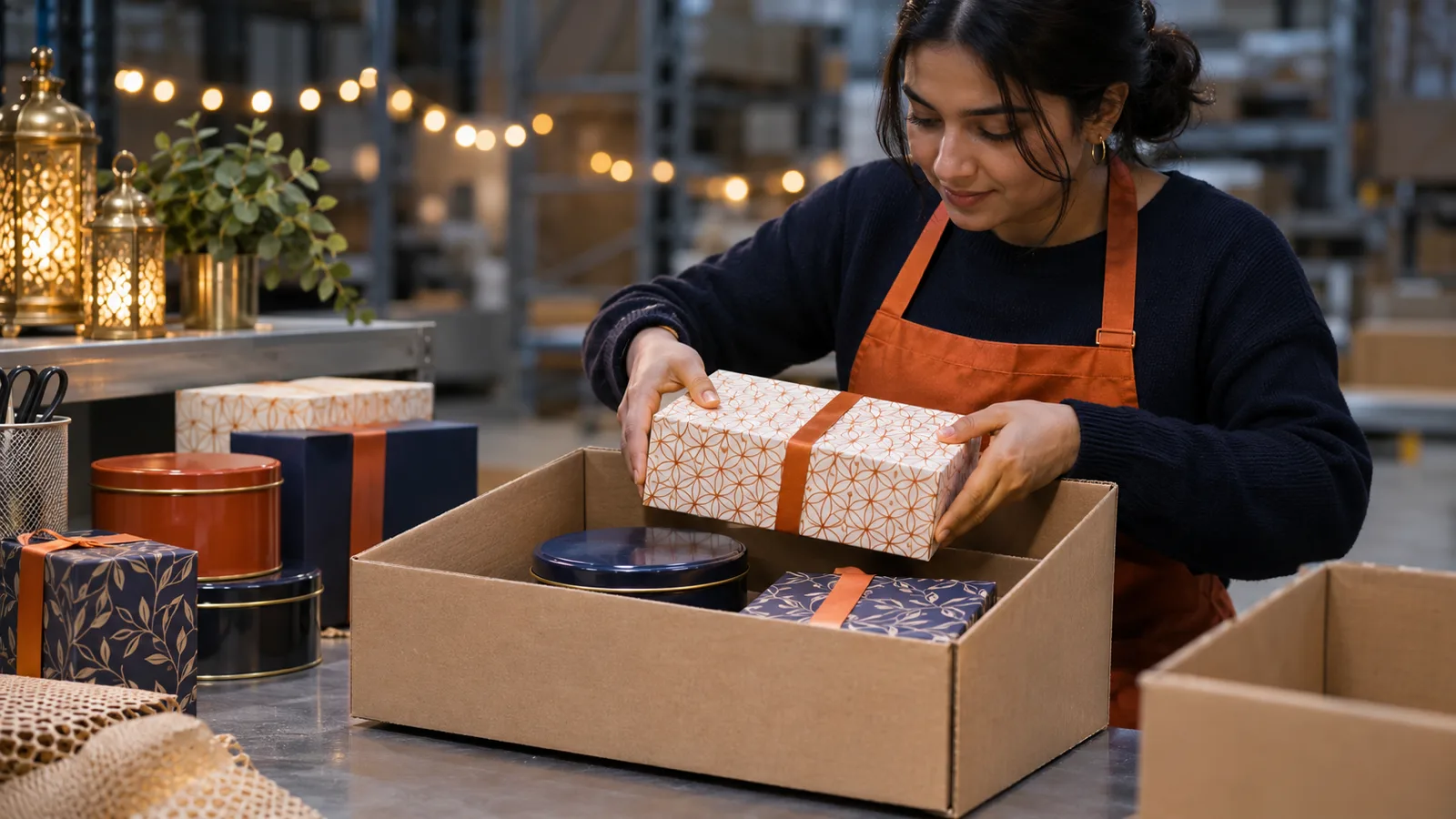
A sweets and dry-fruit gift box seller working out of a unit near Dixie and Eglinton knows the feeling well. Three weeks before Diwali the orders start to climb, then they surge, and by the final weekend the team is packing boxes until midnight while customers message to ask whether a gift will reach a grandmother in Calgary in time. A month or so later, the same business may be gearing up for corporate gifting, and by late winter the Lunar New Year rush arrives for sellers serving Chinese, Vietnamese and Korean customers.
Mississauga is one of the most culturally diverse cities in Canada, and that shows up in the way local online sellers plan their year. Many brands here do not have one peak season. They have several, and the dates move. Diwali, Eid al-Fitr, Eid al-Adha and Lunar New Year all follow lunar or lunisolar calendars, so they land on different Gregorian dates each year. A retailer that copies last year's shipping calendar can end up launching a campaign a week too early or, worse, two weeks too late.
This guide is laid out as the questions we hear most from sellers planning festival-season shipping, with practical answers for each.
How far ahead should I plan for each festival?
Start by putting the actual dates for the next twelve to eighteen months into a shared calendar as soon as they are published. Then work backwards. A reasonable planning rhythm looks like this:
- Twelve to sixteen weeks out: finalise products and packaging, and place purchase orders with suppliers, especially for imported goods such as decorative boxes, brassware, clothing or specialty foods. Overseas production and ocean transit can take many weeks, and customs clearance adds more.
- Eight weeks out: confirm inbound arrival dates and book receiving at your warehouse. Plan your packaging supply order so you are not hunting for boxes in the final week.
- Four to six weeks out: launch pre-orders or early-bird offers, publish shipping cut-off dates on your site and brief your customer service team.
- Two weeks out: monitor carrier service alerts, top up fast-moving stock and decide whether to switch remaining orders to faster services.
- Final days: push local delivery or in-store pick-up for customers in Mississauga, Brampton and Toronto who order late.
Eid deserves a special note. Because the Islamic calendar is roughly eleven days shorter than the Gregorian year, Eid al-Fitr and Eid al-Adha move noticeably earlier every year, and the exact date can depend on moon sighting. Build a buffer of a day or two into your Eid cut-offs and communicate them clearly. Ramadan itself is often a strong gifting and food-ordering period, so the run-up to Eid al-Fitr can last the whole month, not just the final week.
What happens when festivals overlap with the regular holiday peak?
In some years Diwali falls in late October, in others it lands in mid-November, right up against Black Friday and the start of the December rush. When that happens, Mississauga sellers are competing for carrier capacity with every national retailer in the country. Carriers may introduce peak surcharges, tighten pick-up volumes or extend transit times during that stretch.
A few ways to handle the overlap:
- Encourage earlier ordering with a clear "order by" date and an early-bird incentive rather than a late discount.
- Split stock between direct-to-consumer and wholesale orders early, so a big retail order does not drain the stock you need for online gifts.
- Use more than one carrier. A carrier management approach lets you route parcels by service level and destination instead of putting every order on one account that may be capacity-constrained.
- Review our guide on preparing for peak season as an e-commerce store; most of it applies to festival peaks as well.
How do I ship mithai, baklava, mooncakes and other festive foods?
Food gifts are central to many festivals, and they are also the trickiest items to ship. Some practical points:
- Know the shelf life. Fresh milk-based sweets have a much shorter life than dry fruits, nuts, cookies or packaged sweets. If a product only lasts a few days, local delivery inside the GTA may be the only sensible option. Longer-life items can ship nationally.
- Protect against heat and cold. Ottawa in February and Vancouver in October are very different environments. For chocolate and some sweets, insulated liners and gel packs may be needed. Our food and beverage logistics team can advise on whether temperature control is warranted for a particular product.
- Follow food labelling rules. Packaged food sold in Canada generally needs bilingual English and French labelling, an ingredient list, allergen declarations and a best-before date where applicable. Businesses that make or import food may also need to meet requirements under the Safe Food for Canadians Regulations. If you are unsure, check with the Canadian Food Inspection Agency before you launch a new product.
- Pack for crushing, not just dropping. Sweet boxes are often thin rigid gift boxes that look beautiful but crush easily. Ship them inside a properly sized corrugated outer carton with enough cushioning to stop movement.
How do I keep fragile festive items intact?
Diyas, glass lanterns, ceramic serving sets, brass items and decorative boxes are common festival products, and they arrive broken surprisingly often. Treat each item as fragile from the start:
- Wrap each piece individually rather than relying on the gift box to protect it.
- Use an outer carton that leaves room for cushioning on every side.
- Fill voids so nothing shifts when the box is turned upside down.
- Seal with good tape using an H pattern across the seams.
- Test new packaging with a few deliberate drop tests before your peak starts, not during it.
If your gift boxes contain several items, consider pre-assembling them before the rush. Kitting and assembly lets you build hundreds of identical sets ahead of time so the packing team only has to pick a finished kit and ship it.
What should I tell customers about delivery dates?
Festival gifts are emotional purchases. A late delivery is not just an inconvenience; it can mean a gift arrives after the celebration is over. Clear communication prevents most complaints:
- Publish a cut-off table by region and service level (for example, Ontario, Western Canada, Atlantic Canada, United States) and update it if carriers change their guidance.
- Show the cut-off on product pages and in the cart, not just in an FAQ.
- Send tracking information promptly. A link to a tracking page answers most "where is my order?" questions before they are asked.
- Offer gift notes and the option to hide prices on the packing slip. Many festival orders are shipped directly to the recipient.
- After the cut-off, promote local pick-up or same-day options within Mississauga rather than taking orders you cannot deliver on time.
Can I ship festival gifts to the US or overseas?
Many Mississauga families send gifts to relatives in the United States, and sellers often get asked about it. Shipping to the US is very doable, but it is a commercial export. You will need accurate product descriptions, values, country of origin and harmonized codes on the customs documents. Food items can face extra rules in the US, and some products may be restricted. Our cross-border shipping team can help you work out which products are practical to send south and how to price duties and taxes so the recipient is not hit with an unexpected bill.
Shipping overseas, for example to India, Pakistan, the Gulf or East Asia, is more complex. Transit times are longer, customs rules vary widely and food is often restricted. For most sellers it makes more sense to focus festival campaigns on Canada and the US and treat international orders case by case.
Should I bring in a fulfillment partner just for festival peaks?
Many sellers in Mississauga run fulfillment from a garage, basement or small industrial unit for most of the year. That works until the peaks arrive, and then the business runs out of hands, space and packaging all at once. A few signs that it may be time for help:
- Orders during your festival peaks are several times your normal daily volume.
- You are turning away wholesale or corporate orders because you cannot pack them in time.
- Your family or staff are working overnight to keep up.
- Damage and wrong-item complaints spike every peak.
An e-commerce fulfillment partner can receive your stock ahead of each festival, pre-build gift kits, pick and pack as orders come in and hand parcels to carriers every day. Because Mississauga sits on the 401, 403 and 410 and next to Toronto Pearson, parcels picked up here can reach much of Ontario quickly by ground, with air options available for more distant provinces.
How do I handle returns after the festival?
Gift returns tend to arrive a week or two after each festival. Decide your policy before the peak starts. Perishable food is usually non-returnable, but clothing, jewellery and decor often come back for size or style reasons. Make it clear on your site, include a return slip in the box and plan for someone to inspect, restock or write off returned goods. If volume is significant, a structured returns management process keeps resaleable stock moving back to your shelves rather than piling up in a corner.
A simple year-round festival calendar
Here is a rough sequence many Mississauga gift sellers work through. Always confirm the actual dates for the year in question.
- Late January to February: Lunar New Year. Red packaging, sweets, tea and gift sets.
- Spring (moves earlier each year): Ramadan and Eid al-Fitr. Dates, sweets, clothing, decor and charitable gift boxes.
- Spring: Vaisakhi, Easter and Mother's Day, depending on your audience.
- Summer (moves earlier each year): Eid al-Adha.
- Late summer to early autumn: Raksha Bandhan and the Mid-Autumn Festival (mooncake season).
- October to November: Navratri, Dussehra and Diwali, often running into Black Friday.
- December: Christmas, Hanukkah and corporate year-end gifting.
Make every festival peak a calmer one
Festival season can be the best few weeks of the year for a Mississauga gift business, as long as stock, packaging and carriers are lined up in advance. Plan from the real dates, publish honest cut-offs, pack for the worst-case trip and get help before the rush, not in the middle of it. If you would like to talk through your festival calendar and see how fulfillment support could fit, schedule a consultation with ShipCarte or request a quote.