
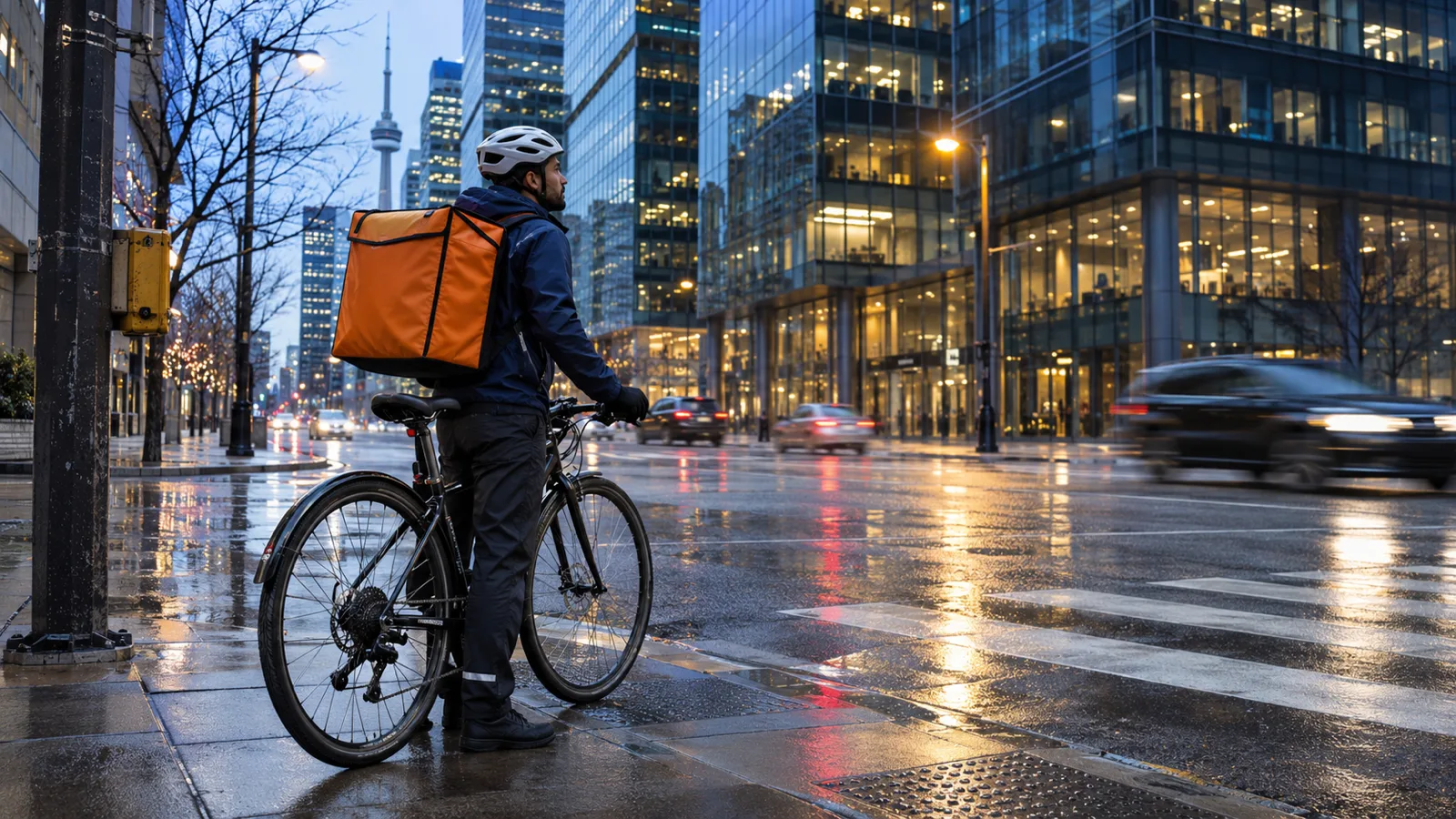
Same-day delivery sounds like the ultimate customer promise. Order before lunch, receive it before dinner. Large retailers and marketplaces have trained shoppers in Canada's biggest cities to expect it for some products, and as online shopping keeps growing, interest in fast local delivery is rising further. It is natural for a growing brand to ask whether it should offer the same thing.
The honest answer is that same-day delivery works very well in some places and for some products, and very badly in others. Canada's geography makes this especially clear. A brand with stock in the Greater Toronto Area can reach millions of people within a few hours. The same brand cannot do the same for a customer in Thunder Bay, Kamloops or Corner Brook without flying the parcel or holding inventory there.
This article looks at where same-day delivery is realistic in Canada, what makes it work financially, and where you are better off offering fast, reliable next-day or two-day shipping instead.
What same-day delivery actually requires
Before looking at specific markets, it helps to be clear about the ingredients. Same-day delivery only works when all of these are in place:
- Inventory in the same metropolitan area as the customer. There is no practical same-day option for parcels that start hundreds of kilometres away, apart from expensive air or dedicated vehicles.
- Fast order processing. The order must be picked, packed and ready for pickup within a short window, often an hour or two after it is placed.
- A courier with capacity in that city, able to collect from your location and deliver within the promised window.
- Enough order density. Same-day routes are expensive when each driver delivers only a handful of parcels. They become efficient when many orders go to the same neighbourhoods.
- A clear cut-off time, displayed at checkout, after which orders roll to the next day.
Density is the factor that decides most of the economics. That is why same-day delivery thrives in some Canadian markets and struggles in others.
Where same-day delivery works well
The Greater Toronto and Hamilton Area
The GTA is Canada's strongest same-day market. It has the largest population, a dense urban core with many condo towers, and a ring of suburbs connected by the 400-series highways. Many warehouses and fulfillment centres sit within the region, so stock is already close to customers. Local couriers and app-based drivers operate across the region. Traffic on Highway 401 and the Don Valley Parkway is a real constraint, which is why many same-day offers are limited to specific postal code zones rather than the whole region.
Greater Montreal
Montreal combines a dense island core with large suburbs on Laval, the South Shore and the West Island. Same-day delivery works well within the core and inner suburbs. Bridge traffic between the island and the surrounding areas can make some zones harder to serve within tight windows. French-language customer communications are essential.
Metro Vancouver
The Lower Mainland has high density in Vancouver, Burnaby and Richmond, and growing density in Surrey and the Tri-Cities. Same-day service is common within this area. Water crossings and bridges create bottlenecks, and the North Shore can be slow to reach at rush hour. Vancouver Island, despite its proximity, generally requires a ferry crossing and is not realistic for same-day service from the mainland.
Calgary, Edmonton and Ottawa
These cities have populations large enough to support same-day delivery, especially in central neighbourhoods and established suburbs. They are more spread out than Toronto or Montreal, so order density per route is lower and same-day pricing may need to reflect that. Brands with meaningful sales in these cities and stock held locally can offer it successfully.
Where it can work, with conditions
Winnipeg, Quebec City, Halifax, Saskatoon, Regina, Victoria, Kitchener-Waterloo and London are among the mid-sized Canadian cities where same-day delivery is possible but more selective. Local couriers operate in all of them, but the economics depend heavily on how many orders you have in that city each day. Some approaches that make it viable:
- Offering same-day only for orders above a minimum value.
- Charging a premium shipping fee that covers the courier cost.
- Limiting same-day to the city core, with next-day for the surrounding area.
- Using a retail store or a small stock holding in the city as the dispatch point.
Stores as dispatch points
Retailers with physical locations have an advantage here. A store already holds inventory in the city, has staff on site and sits close to its customers. A growing number of Canadian retailers are turning stores into small dispatch points, picking online orders from store shelves and handing them to local couriers or offering in-store pickup. The catch is inventory accuracy: if the store's stock records are not reliable, same-day orders get cancelled when the item cannot be found. Ship-from-store works best with frequent counts and a clear process for reserving online orders before shoppers in the aisle buy the last unit.
Where same-day delivery generally does not work
Same-day delivery is rarely practical for:
- Rural areas, even those close to major cities, where distances between stops are long.
- Smaller cities and towns without enough daily orders to fill a route.
- Northern and remote communities, including the territories, where even standard delivery depends on air service or seasonal transport.
- Island communities such as those on Vancouver Island, Prince Edward Island and Newfoundland when the stock is held on the mainland.
- Any destination far from your inventory. Same-day from Toronto to Calgary is not realistic without air freight.
For these customers, a fast, dependable next-day or two-day service is a better promise. Customers are generally more forgiving of a reasonable delivery estimate that is met than an ambitious one that is missed. Our guide to fast, affordable two-day shipping explains how to make that promise reliably.
Which products suit same-day delivery?
Same-day is most valuable when the customer genuinely needs the item quickly or when speed is a key selling point. Good candidates include:
- Groceries, prepared food and beverages, where freshness matters. These usually need temperature control, so look at food and beverage logistics requirements.
- Pharmacy, health and personal care items.
- Replacement parts and supplies for businesses that cannot afford downtime.
- Gifts, flowers and last-minute purchases around holidays.
- Electronics accessories and consumables that customers want immediately.
Products that are bulky, low in value or bought on a planned schedule usually do not justify the cost of same-day delivery. A customer restocking supplies they order every month would rather have free next-day shipping than pay a premium for same-day.
The cost question
Same-day courier pricing typically depends on distance, delivery window, parcel size and volume. It is almost always more expensive per parcel than next-day ground service. Rather than absorbing that cost, many businesses:
- Charge a separate same-day fee and present it as a premium option.
- Offer free same-day delivery only above a high order threshold.
- Restrict same-day to certain postal codes where they have enough order density.
- Batch same-day orders into two or three dispatch waves per day rather than sending each order individually.
Track the actual cost per same-day order and the revenue it brings in, separately from your other shipping. Many businesses discover that a small number of postal codes generate most of their same-day orders and profit, while others lose money on every delivery.
Operational readiness checklist
If you plan to launch same-day delivery in a Canadian city, check that you can answer "yes" to each of these:
- Stock for the same-day assortment is held within that metropolitan area.
- Orders flow automatically from your store to the warehouse, with no manual re-keying.
- The warehouse can pick and pack same-day orders within the time needed to meet the courier pickup.
- Your checkout shows same-day only to eligible postal codes, with a clear cut-off time.
- You have a backup courier option for days when your main provider is at capacity.
- Customers receive tracking and delivery notifications in the right language.
- You have a plan for winter storms that make same-day impossible on certain days.
An order management system that routes orders to the right location and flags same-day orders for priority picking makes most of this possible. A fulfillment partner with e-commerce fulfillment operations in a major metropolitan area can provide the inventory location, picking speed and courier connections without you needing your own facility.
A layered delivery promise
The most effective approach for most Canadian brands is a layered one: same-day in the one or two cities where you have stock and enough order density, next-day across the surrounding region, and reliable two- to five-day service elsewhere in the country. This gives your most concentrated customer base the fastest possible experience while keeping costs under control everywhere else. As your sales grow in other regions, you can add stock and extend same-day to new cities. For more on the options available for the final leg, see our comparison of last-mile delivery options in Canadian cities, and if you are considering adding inventory in a second region, distribution warehousing can give you a foothold without a long lease.
Plan delivery speed around your customers
Same-day delivery is a powerful tool when it is used where it makes sense, and an expensive distraction when it is not. ShipCarte helps businesses across Canada design delivery strategies that combine fulfillment location, carrier choice and local courier options. Schedule a consultation to talk through where same-day could work for you, or request a quote for fulfillment and shipping.