
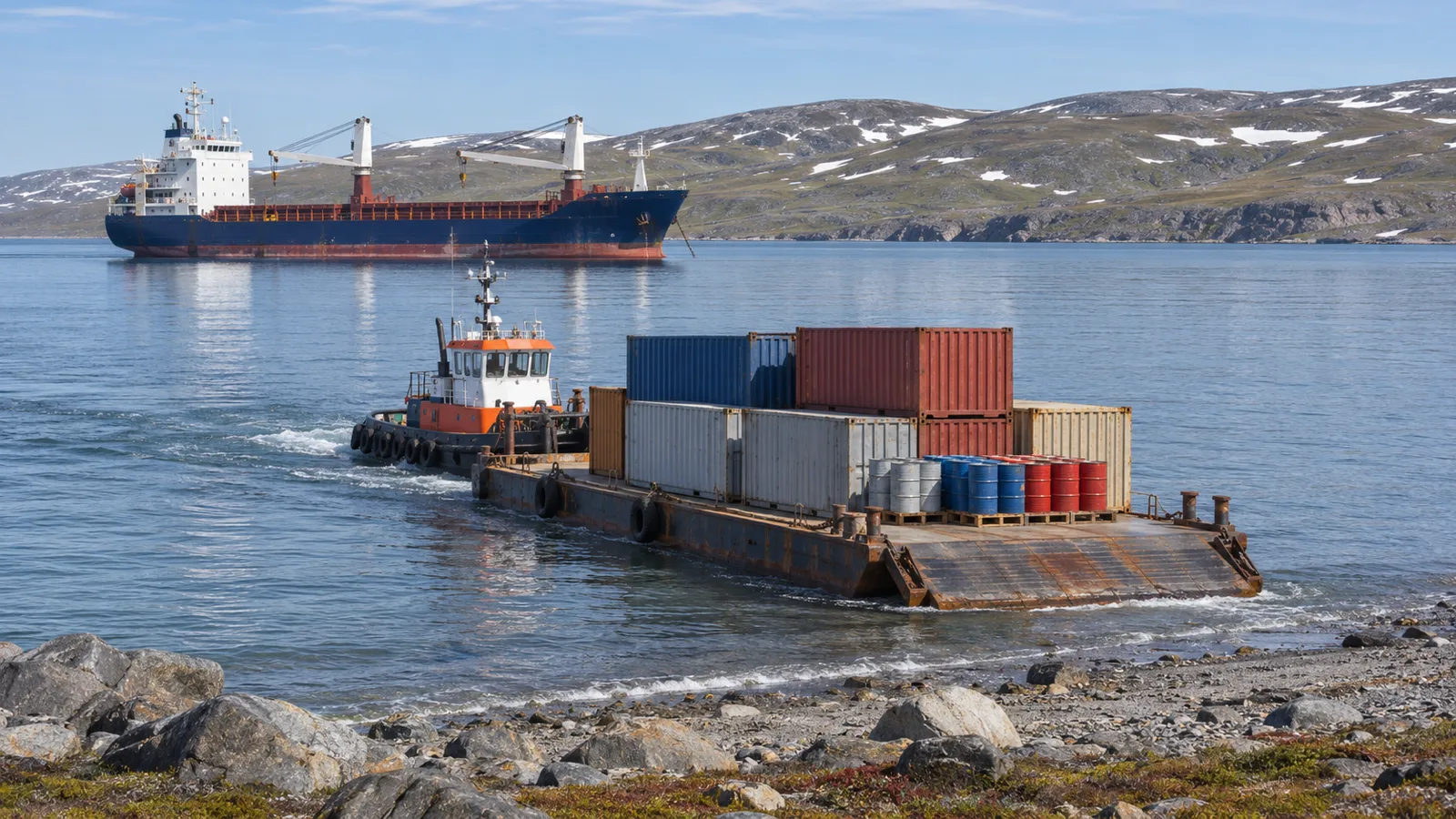
Imagine running a hardware store, a construction company or a school in a community on the shores of Hudson Bay or Baffin Island. There are no roads to the south. Air cargo runs year-round but costs far too much for lumber, vehicles or a year's supply of canned goods. For almost everything heavy, you get one chance a year: the summer sealift, when ships make the long voyage north through waters that are only open for a few months.
Sealift is the lifeline of Canada's Arctic. Communities across Nunavut, Nunavik in northern Quebec, the coast of Labrador and parts of the Northwest Territories receive the bulk of their dry goods, building materials, vehicles and fuel this way. For southern suppliers selling to these communities, and for businesses and agencies operating in the North, understanding the sealift calendar is the difference between goods arriving this year and waiting until next summer.
It may seem odd to write about Arctic shipping just before Christmas, but this is exactly when planning for next summer's sealift should begin. Orders, budgets and bookings for the coming season come together over the winter and spring.
How sealift works
Each summer, cargo ships and tankers depart from southern ports and sail north once sea ice has cleared enough for safe passage. Dry cargo, meaning everything except bulk fuel, is loaded into shipping containers or carried as break-bulk cargo on deck. Fuel is carried separately by tankers.
The ships sail to a series of communities, often calling at several on each voyage. Many Arctic communities have no deep-water port. Instead, ships anchor offshore and transfer cargo to barges, which are pushed by tugs to the beach. There, the cargo is unloaded with forklifts and loaders and moved to a marshalling area for collection. It is a slow, weather-dependent process that requires specialised equipment and crews.
Departure points for eastern and central Arctic sealift are generally ports in southern Quebec along the St. Lawrence, while some western Arctic communities are supplied by barge along the Mackenzie River system and the coast from staging points in the Northwest Territories. Different operators serve different regions under various arrangements, including contracts with territorial and provincial governments.
The sealift calendar
The exact timing varies each year depending on ice conditions, the operator and the region, but the overall rhythm looks like this:
- Winter: plan and budget. Communities, businesses, governments and individuals work out what they need for the following year and secure funding.
- Spring: book space. Operators open bookings and publish schedules showing sailing dates for each community. Booking deadlines are typically weeks or months before sailing.
- Late spring and early summer: deliver cargo to the marshalling yard. Goods must arrive at the operator's southern terminal by a cut-off date that is earlier than the sailing date, often by a few weeks, so cargo can be checked, consolidated and loaded.
- Summer: ships sail. The first voyages usually leave in early summer, with ships reaching the most southerly Arctic communities first.
- Late summer and fall: final voyages. The last ships reach northern communities before freeze-up, often in September or October.
Missing a booking or cargo cut-off usually means waiting for a later voyage if there is one, or until the next year if not. For high Arctic communities with only one or two calls a season, the margin for error is very small.
What travels by sealift
- Building materials such as lumber, plywood, insulation, steel and prefabricated components
- Vehicles, including trucks, snowmobiles, ATVs and boats
- Heavy equipment for construction, municipal services and mining
- Non-perishable food and household goods bought in bulk for the year
- Furniture, appliances and electronics
- Retail inventory for northern stores
- Supplies for schools, health centres and government facilities
Fresh and frozen foods and urgent items travel by air. Our article on air cargo to remote communities in Canada covers that side.
Packing cargo for the Arctic
Sealift cargo is handled many times and exposed to conditions few other shipments face: long periods in a container, salt spray, transfer by barge, beach landings and sometimes outdoor storage before it is collected. Pack accordingly.
- Use strong pallets and crates. Cargo is lifted by forklifts and loaders on uneven ground. Weak pallets break.
- Protect from moisture. Wrap goods well, use waterproof covers for anything stored outdoors, and protect electronics with moisture barriers or desiccants.
- Secure contents inside containers. Block and brace cargo so it cannot shift during the voyage, which can include rough seas.
- Label clearly and repeatedly. Include the consignee name, community and booking or reference number on several sides. Cargo for many people may be unloaded on the same beach.
- Follow operator rules for vehicles. Operators often require vehicles to be clean, with limited fuel and disconnected batteries, and may not allow personal goods to be packed inside them.
- Declare dangerous goods. Fuel, propane, batteries, paints, aerosols and many chemicals are regulated for marine transport. Operators require proper classification, packaging and documentation, and some products may be restricted.
Getting cargo to the southern terminal
For suppliers across southern Canada, the first leg of a sealift shipment is ordinary domestic freight: getting goods from your warehouse to the marshalling yard before the cut-off. This is where many delays begin. Orders placed late, suppliers in different provinces shipping on different schedules, and incomplete paperwork can all cause cargo to miss the yard deadline.
Consolidating goods before they go to the terminal helps. Instead of five suppliers each shipping LTL to the terminal at different times, goods can be gathered at a single warehouse, inspected, packed to sealift standards, palletised or containerised, and delivered together. That reduces handling, makes it easier to check that everything on the order is present, and gives a single point of accountability.
ShipCarte can handle this southern leg. We receive goods from suppliers into our distribution warehousing, perform value-added services such as re-palletising, wrapping and labelling, and deliver consolidated freight to the terminal through full truckload or LTL freight. Our inventory management tools let you see what has arrived and what is still outstanding.
Containers versus loose cargo
One of the first booking decisions is whether to ship in a dedicated container or as loose, palletised cargo. Each has trade-offs:
- A full container keeps your goods together and protected from the weather from the moment it is loaded in the south until it is opened in the community. It works well for a business restocking a store, a contractor supplying a building project, or an organisation moving a large volume. The container itself may also be valued in the community as storage, depending on the operator's terms about whether it is returned or purchased.
- Palletised or loose cargo suits smaller shipments. It is consolidated with other shippers' freight and handled more often, so packaging needs to be stronger and labelling clearer.
- Break-bulk and deck cargo covers vehicles, boats, large equipment and building components that do not fit into containers. These items are exposed to the elements during the voyage and must be prepared accordingly.
Ask the operator which options are available for your destination, since not every community can handle every type of cargo. Some beach landing sites have limits on the size and weight of what can be brought ashore.
Working with suppliers in southern Canada
Most sealift orders draw on several suppliers: a lumber yard in Quebec, an appliance distributor in Ontario, a food wholesaler in Montreal, a vehicle dealer somewhere else. Each one needs to know the cargo cut-off date, the terminal address, the booking reference and any packaging requirements. A short written brief sent to every supplier at the time of ordering prevents many problems. It should cover the consignee's name and community, the sealift booking number, the latest date goods must arrive at the terminal, any operator-specific labelling rules, and a contact for questions. Suppliers who rarely ship north may not realise that a delivery one week late can mean a year's delay.
Frequently asked questions
Who can use sealift?
Businesses, governments, organisations and individuals can all book cargo, subject to each operator's terms. Many northern residents order personal goods for the sealift each year.
How is sealift priced?
Operators typically price by volume or weight, by container, or by unit for vehicles, with rates varying by destination. Additional charges can apply for dangerous goods, oversized items, handling and insurance. Get a written quote and read the terms carefully.
Is my cargo insured?
Operators' liability is usually limited. Many shippers buy separate cargo insurance. Our post on freight insurance explains how coverage works.
Can I ship perishable food by sealift?
Some operators offer refrigerated or frozen container service to certain destinations, but most perishable food travels by air. Check with the operator well in advance if you need temperature control.
What happens if the ship cannot reach a community?
Ice, weather or operational issues occasionally delay or prevent deliveries. Operators have procedures for these situations, which may include delivering on a later voyage. Build buffer into your plans for anything time-critical.
Do I need customs paperwork?
No, sealift between southern Canada and Canadian Arctic communities is domestic shipping. However, goods sourced from abroad must clear customs before they are delivered to the terminal.
Tips from the planning side
- Create a master list of everything needed for the year, then work backwards from the cargo cut-off date to set order deadlines for each supplier.
- Ask suppliers to confirm ship dates in writing and follow up a few weeks before the cut-off.
- Photograph goods as they are packed and loaded, which helps with any claims later.
- Keep copies of all bookings, packing lists and dangerous goods declarations together.
- Coordinate with the receiving party in the community so someone is ready to collect cargo when it lands.
Get your cargo to the terminal on time
Sealift leaves no room for late freight. If you supply communities in Nunavut, Nunavik, Labrador or the western Arctic, a reliable southern partner can take a major source of stress off your shoulders. Schedule a consultation with ShipCarte and we will help you plan consolidation and delivery to the sealift terminal well ahead of next summer's deadlines. For more on northern freight, see our guide to winter roads and ice roads in Canada.