
Two very different businesses in Mississauga might both ask the same question this week. One is an ecommerce brand in Malton selling natural skincare, with a growing number of customers in Bengaluru and Pune asking for delivery. The other is an industrial supplier in Sheridan Park that has just won an order for several pallets of replacement parts for a plant near Chennai. Both need to ship to India. They should almost certainly not ship the same way.
Mississauga has strong ties to India, through family connections, trade and a large South Asian business community, so shipments to India leave the city every day. Yet the options can be confusing: express couriers, postal services, air cargo and ocean freight all serve the route, each with different costs, transit times, paperwork and limits. Choosing well depends on what you are shipping, how much of it, how quickly it needs to arrive and who will handle customs at the other end.
This guide compares the main options side by side, explains the documents involved on both the Canadian and Indian sides, and finishes with answers to common questions. Regulations change, so always confirm current requirements with your carrier, customs broker or the relevant authorities before you ship.
Option 1: Express courier
International express services from the major global couriers collect from your door in Mississauga, fly the parcel to India and handle customs clearance through their own brokerage teams before delivering to the recipient.
- Best for: documents, samples, small ecommerce orders, urgent spare parts and high-value, low-weight goods.
- Typical transit: often a matter of days to major cities like Delhi, Mumbai, Bengaluru, Chennai and Hyderabad, longer for smaller towns.
- Cost profile: the highest cost per kilogram, but simple and fast. Pricing is based on the greater of actual and dimensional weight, so packaging size matters. See our post on how package dimensions affect shipping prices.
- Watch out for: fuel and remote-area surcharges, and duties and taxes that the recipient may have to pay before delivery unless you ship on a duties-paid basis.
Option 2: Economy courier or postal service
Deferred or economy international services from couriers, and Canada Post's international products, offer lower prices in exchange for longer and sometimes less predictable transit times. Postal shipments are handed to India Post for final delivery and clearance.
- Best for: lower-value personal items and non-urgent ecommerce orders where cost matters more than speed.
- Typical transit: considerably longer than express, with tracking that may be less detailed once the parcel leaves Canada.
- Cost profile: lower per parcel, with size and weight limits.
- Watch out for: customs delays and limited options for resolving problems after handover to the destination postal service.
Option 3: Air cargo (air freight)
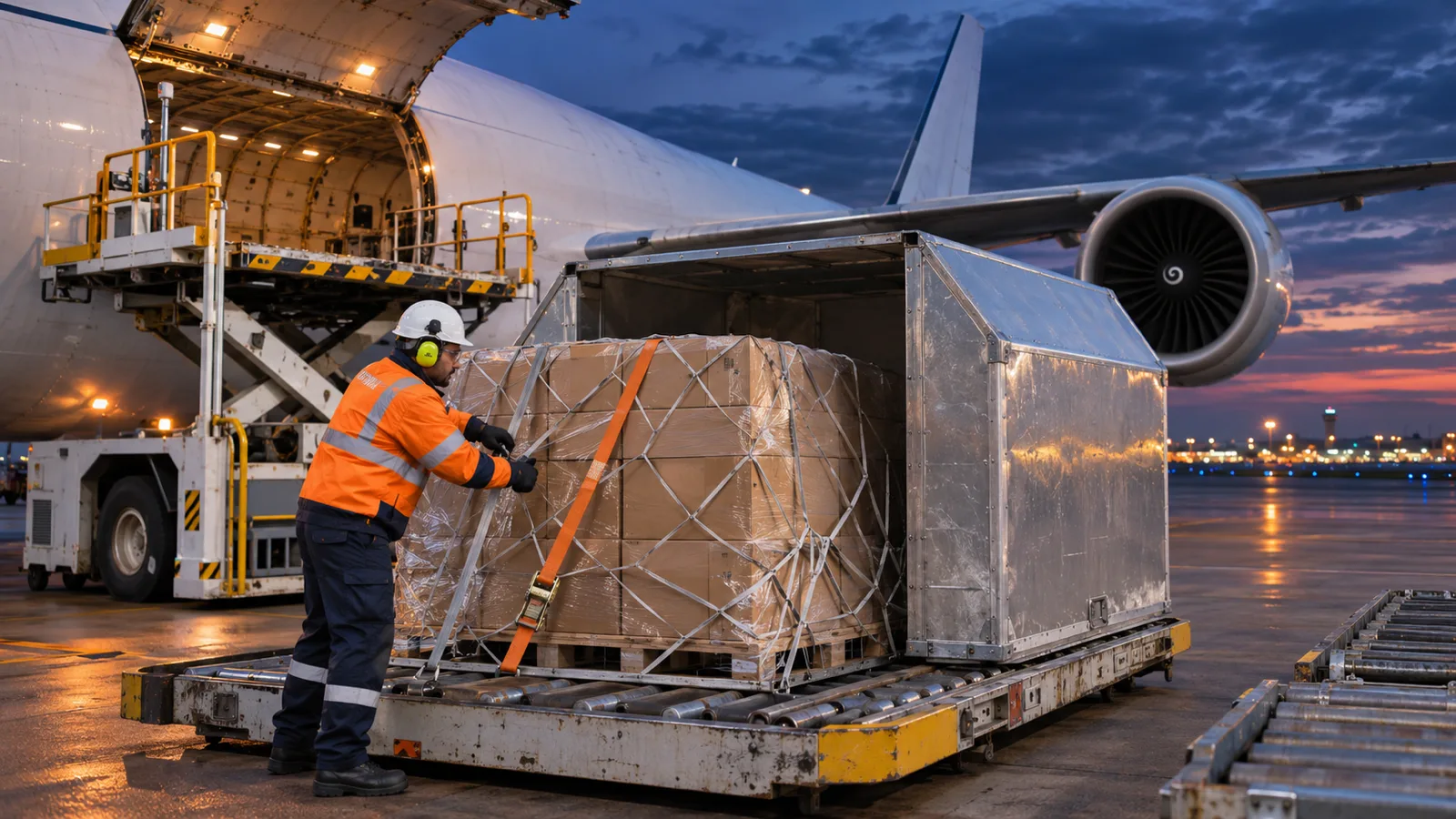
For heavier shipments, typically palletized goods or multiple cartons going to one consignee, air cargo is usually far cheaper per kilogram than courier. A freight forwarder books space with an airline, often consolidating your goods with other shippers' freight. Shipments leave from Toronto Pearson, right on Mississauga's doorstep, either on direct flights or via hubs in Europe or the Middle East, and arrive at Indian gateways such as Delhi, Mumbai, Chennai, Bengaluru or Hyderabad.
- Best for: commercial shipments that are too heavy for courier but too urgent for ocean, such as industrial parts, pharmaceuticals (with appropriate temperature control), electronics and fashion stock.
- Typical transit: a few days to about a week or so airport to airport, plus time for customs clearance and delivery.
- Cost profile: charged by chargeable weight, with minimum charges, plus fees for screening, handling, documentation, and destination clearance and delivery.
- Watch out for: the recipient or their customs broker will usually need to clear the goods at the Indian airport, which means the importer must be properly registered to import commercially.
Option 4: Ocean freight
For large volumes, ocean freight is the most economical choice. Goods can travel as LCL (less than container load), sharing a container with other shippers, or FCL (full container load). From the Mississauga area, containers usually move by truck or rail to an East Coast port or are routed via other gateways, then sail, often with a transshipment, to Indian ports such as Nhava Sheva (Jawaharlal Nehru Port near Mumbai), Mundra or Chennai.
- Best for: heavy machinery, building materials, bulk consumer goods, and any non-urgent commercial cargo.
- Typical transit: several weeks door to door, depending on routing and port congestion.
- Cost profile: lowest per unit for large shipments, but with many components: origin trucking (see our post on drayage), terminal handling, ocean freight, documentation, destination charges and customs clearance.
- Watch out for: container detention and demurrage fees if goods are not cleared and collected promptly. Our guide to types of shipping containers helps if you are choosing equipment.
Quick comparison
- Fastest: express courier, then air cargo.
- Cheapest for small parcels: postal or economy courier.
- Cheapest for heavy commercial loads: ocean freight, then air cargo.
- Simplest customs process for the sender: express courier, where the courier handles clearance.
- Most control over large shipments: air cargo or ocean freight with a freight forwarder and customs brokers at both ends.
Paperwork on the Canadian side
Exports from Canada require accurate documentation even when the receiving country does most of the checking:
- Commercial invoice (or a pro forma invoice for non-sale shipments) showing the shipper, consignee, a clear description of the goods, quantity, value, currency, country of origin and Harmonized System codes.
- Export declaration: commercial goods exported from Canada to countries other than the US generally need to be reported to the Canada Border Services Agency when their value reaches a set threshold, and certain controlled goods always need reporting. Your carrier or forwarder can file this through the Canadian Export Reporting System.
- Export permits for controlled items, which can include some technology, dual-use goods and certain chemicals.
- Packing list, air waybill or bill of lading, depending on the mode.
What India's customs process looks for
On arrival, goods are cleared by Indian customs. A few points tend to trip up first-time shippers:
- Importer registration: commercial importers in India generally need an Importer Exporter Code (IEC). Make sure your buyer has one before you ship.
- Recipient identification: for courier shipments, Indian customs and couriers commonly ask recipients for identity documents such as a PAN card or Aadhaar details to complete clearance. Let your recipient know so they can respond quickly when contacted.
- Accurate descriptions and values: vague descriptions or undervaluation lead to holds, reassessment and penalties.
- Duties and taxes: imports generally attract basic customs duty and integrated GST, which vary by product classification.
- Restricted and regulated goods: food, cosmetics, medical devices, drugs, electronics with wireless functions and certain other categories may need additional approvals or labelling under Indian rules. Some items are prohibited outright. Check before you quote a customer.
Agree who is responsible for duties and clearance before shipping. Incoterms such as DAP and DDP define this; our explainers on DAP and DDP walk through the differences.
Selling online to customers in India
For ecommerce brands like the skincare seller in our opening example, the challenge is less about a single shipment and more about offering a smooth checkout experience to Indian customers. A few practices help:
- Show estimated delivery times and shipping costs for India clearly at checkout, rather than surprising customers after they order.
- Tell customers upfront whether duties and taxes are included or will be collected on delivery.
- Collect a phone number with every order, since couriers and customs often contact recipients by phone or text.
- Check whether your product category, such as cosmetics, needs registration or specific labelling before you start selling in volume.
- Track delivery performance by city and carrier, and adjust your service choices as you learn.
Packing for the journey
Shipments to India may face long transit, several handling points, heat and humidity, especially in the summer and monsoon months. Use strong double-wall cartons, moisture protection such as poly bags or desiccants for sensitive goods, and solid palletization for cargo. Wood packaging for international freight should meet the ISPM 15 standard for treated wood. If you ship fragile goods, our guide to packing fragile items applies in full.
Frequently asked questions
Can I send gifts to family in India from Mississauga?
Yes, but gifts are still subject to Indian customs rules, and duty may apply depending on the contents and value. Some items, including certain foods, are restricted. Declare contents honestly and keep values accurate.
Is it cheaper to send one big shipment or many small ones?
For commercial goods going to one consignee, consolidating into a single air cargo or ocean shipment is usually far cheaper per kilogram than many separate courier parcels. For ecommerce orders to different customers, individual courier parcels are normally necessary.
How do I avoid my shipment getting stuck in customs?
Complete and accurate documentation is the biggest factor. Make sure descriptions, HS codes, values and recipient details are correct, confirm that the recipient can provide any required ID or registration, and check whether your product needs special approvals before you ship.
Ship to India with confidence
Shipping to India from Mississauga is routine when the mode, documents and responsibilities are sorted out up front. ShipCarte helps businesses compare courier and freight options and manage international shipments through its carrier management and shipping platform. Tell us what you are sending and where it is going, and request a quote to find the right option for your shipment.