
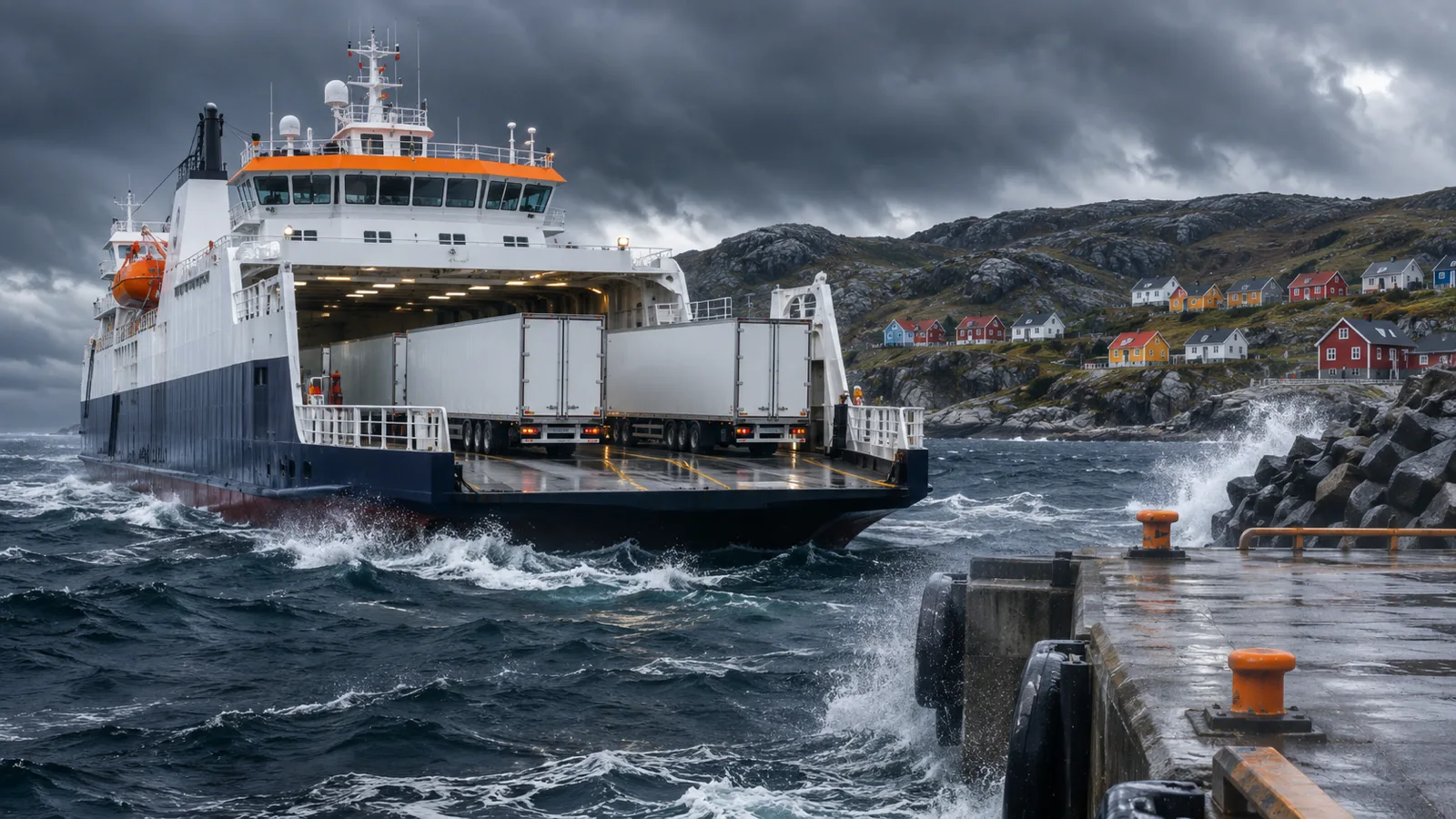
An order leaves a warehouse in Ontario on a Monday. The tracking shows it moving steadily through Quebec and New Brunswick, then into Nova Scotia. Then it stops. For two days nothing changes, and the customer in St. John's emails to ask what has happened. The answer, as anyone who ships regularly to the province knows, is probably the weather on the Cabot Strait. High winds have delayed the ferry, and every trailer bound for the island is waiting in North Sydney for a sailing.
Shipping to Newfoundland and Labrador is different from shipping anywhere else in Canada. The island of Newfoundland has no road connection to the mainland, so almost everything arrives by sea or by air. Labrador is connected by road to Quebec, but its highway network is long, sparsely served and, in some coastal communities, absent altogether. Add North Atlantic weather, and transit times can swing from predictable to unpredictable within a day.
None of this means you should avoid the market. The province has loyal customers, active businesses and real demand for goods from the rest of the country. It simply means you need to understand how freight and parcels actually get there and set expectations accordingly. This guide explains the routes, the factors that affect timing and cost, and practical ways to ship to Newfoundland and Labrador with fewer surprises.
How goods reach the island of Newfoundland
The Marine Atlantic ferries
Most road freight and many parcel shipments reach the island on the Marine Atlantic ferry service, a federal Crown corporation operating between North Sydney, Nova Scotia, and Newfoundland. There are two routes:
- North Sydney to Port aux Basques, on Newfoundland's southwest coast. This is the year-round route and the main gateway for transport trucks and trailers. From Port aux Basques, freight travels across the island on the Trans-Canada Highway to Corner Brook, Grand Falls-Windsor, Gander and St. John's.
- North Sydney to Argentia, on the Avalon Peninsula, much closer to St. John's. This route runs seasonally, typically in the summer months, and involves a longer crossing.
Trailers can travel on the ferry with a driver, or as unaccompanied "drop trailers" that are carried across and collected on the other side. Ferry capacity is a real constraint during busy periods, and sailings can be delayed or cancelled by high winds, heavy seas or ice in the Cabot Strait.
Container shipping
Container shipping services also link St. John's with ports such as Halifax and Montreal. For large, regular volumes of freight, such as retail replenishment or building materials, containerized shipping by sea can be an efficient alternative to trucking through Nova Scotia and taking the ferry.
Air
Express parcels and urgent shipments can travel by air to St. John's, Gander, Deer Lake and other airports. Air is faster but much more expensive and subject to size, weight and dangerous goods restrictions. Winter storms can also ground flights.
How goods reach Labrador
Labrador presents a different set of challenges. Western Labrador, including Labrador City and Wabush, is connected to Quebec by highway via Route 389 from Baie-Comeau, and the Trans-Labrador Highway continues east to Happy Valley-Goose Bay and beyond toward the southern coast. These are long, remote roads with limited services, and winter driving conditions can be severe.
Southern Labrador can also be reached by a seasonal ferry across the Strait of Belle Isle between St. Barbe on Newfoundland's Northern Peninsula and Blanc-Sablon on the Quebec–Labrador border. Ice conditions affect that route in winter and spring.
Many communities on Labrador's north coast are not connected by road at all. They rely on air service year-round and on seasonal marine freight during the ice-free months. Businesses supplying those communities often need to plan around the shipping season, sending heavier and bulkier goods while sea freight is available.
What affects transit times
Several factors combine to make transit times to the province longer and more variable than to other parts of Atlantic Canada:
- Distance. From the Greater Toronto Area or Montreal, freight travels through Quebec, New Brunswick and Nova Scotia before it even reaches the ferry terminal.
- Ferry schedules and capacity. Trailers wait for available space on the next sailing. During peak periods or after weather delays, backlogs can build.
- Marine weather. Strong winds and rough seas in the Cabot Strait regularly delay crossings, especially in late autumn and winter.
- Road weather on the island. The Trans-Canada Highway across Newfoundland is long, and stretches can be affected by snow, freezing rain and high winds. The area near Port aux Basques is known for very strong winds that can force high-sided vehicles to wait.
- Final delivery distances. Outside St. John's and the larger centres, many communities are small and spread out along the coast, which can add a day or more to delivery.
For parcels, the practical effect is that ground transit to Newfoundland from central Canada is usually longer than to the Maritime provinces, and delays of a day or two after storms are common. Labrador's remote communities can take considerably longer.
What affects cost
Shipping to Newfoundland and Labrador typically costs more than shipping to most mainland destinations a similar distance away. Common drivers include:
- Ferry charges for trailers and vehicles, which carriers build into their rates.
- Remote area or extended area surcharges for many postal codes outside the main centres.
- Fuel surcharges on long linehaul distances.
- Lower backhaul volumes, since less freight leaves the province than arrives, which affects the economics of trucking.
- Air freight premiums for expedited shipments.
For businesses shipping regularly, consolidating small shipments into pallets and sending them as LTL freight, or a full trailer as full truckload when volume allows, is often far cheaper per unit than sending many individual parcels.
Practical tips for shippers
Set realistic delivery estimates
Do not use the same delivery estimate for St. John's that you use for Halifax or Moncton. Add time for the ferry crossing and weather, and say so at checkout. Customers in the province are well aware of these realities and appreciate honesty far more than missed promises.
Ship early before peak periods
For holiday orders and seasonal inventory, move goods into the province well ahead of time. Late-November and December weather, combined with heavy holiday volume on the ferries, can create backlogs just when your customers need their orders.
Protect freight for rough handling and cold
Freight going to the island may be handled several times, sit in a trailer at a terminal and cross open water in rough conditions. Use well-built pallets, stretch wrap and edge protection, and secure loads so they cannot shift. If your goods can be damaged by freezing, consider heated service in winter. For valuable shipments, review coverage; our article on freight insurance explains the options.
Plan for temperature-sensitive goods carefully
Perishable food, pharmaceuticals and other temperature-sensitive products need special attention because a ferry delay can extend transit time unexpectedly. Use packaging rated for longer than the expected transit, and avoid shipping perishables late in the week if a delay could leave them sitting over a weekend. Cold chain fulfillment and refrigerated freight options can help.
Use delivery appointments for business customers
Retailers and distributors in the province often require delivery appointments. Communicate appointment requirements to your carrier when booking. Our explainer on delivery appointments in freight covers how they work.
Communicate proactively during delays
When a ferry is delayed, tell affected customers before they ask. A short message explaining that their order is waiting for a crossing and should arrive within a few days prevents frustration and support tickets.
Frequently asked questions
Is there a time zone difference to consider?
Yes. The island of Newfoundland and southeastern Labrador use Newfoundland Time, which is half an hour ahead of Atlantic Time, while most of Labrador uses Atlantic Time. It sounds minor, but it matters for pickup and delivery appointment times and for customer service hours.
What sales tax applies to orders shipped to Newfoundland and Labrador?
Newfoundland and Labrador is a harmonized sales tax (HST) province. Orders shipped there by registered businesses generally carry HST at the provincial rate rather than GST alone. Confirm the current rate and your obligations with your accountant.
Should I keep inventory in the province?
For most brands, shipping from a central or Maritime location is sufficient. Holding stock locally may make sense for businesses with large, regular volumes, wholesale customers who need frequent deliveries, or products where speed is critical. It is worth analysing order volumes before committing.
Can I ship dangerous goods to the province?
Some dangerous goods can be shipped under the Transportation of Dangerous Goods Regulations, but marine and air legs bring additional restrictions, and some products may not be accepted on certain services. Check with your carrier before shipping anything classified as dangerous goods.
Ship to Newfoundland and Labrador with confidence
Newfoundland and Labrador is a rewarding market for businesses that plan ahead and respect the realities of geography and weather. With realistic delivery estimates, sensible consolidation and good packaging, you can serve customers in the province reliably. ShipCarte helps businesses across Canada ship parcels and freight to every province, including small parcel shipping and LTL to Atlantic Canada. Request a quote for your next shipment, or schedule a consultation to plan regular freight to the province.