
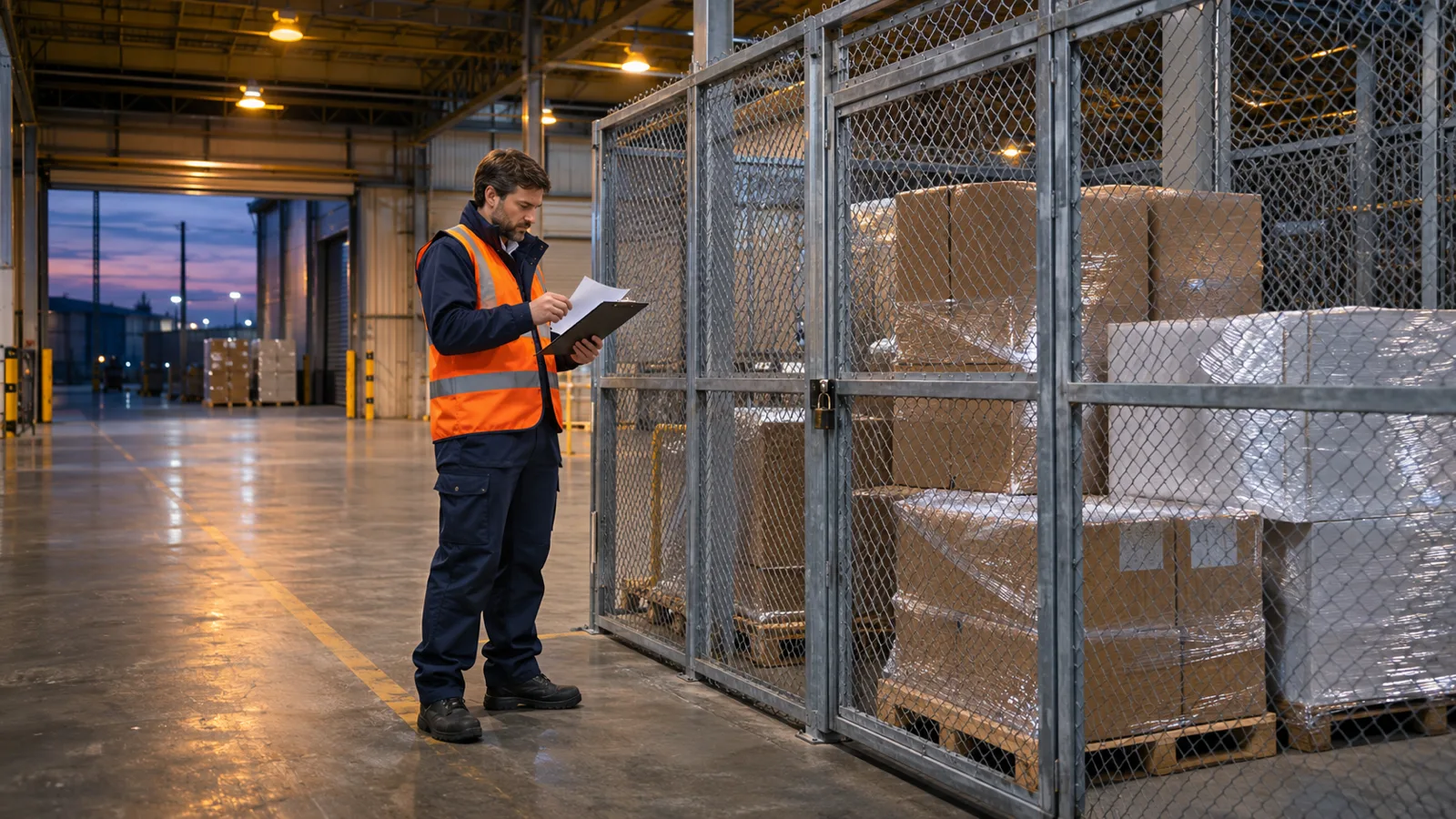
Your container cleared the vessel at the Port of Vancouver a week ago. The carrier's tracking says "arrived," your customer in Calgary is asking when the pallets will show up, and your customs broker tells you the freight is sitting at a sufferance warehouse waiting for release. To many importers, that phrase sounds like a black box: the goods are in Canada, but they are not yet yours to move.
Sufferance warehouses are one of the least understood links in the Canadian import chain, yet almost every commercial shipment passes through one at some point. Understanding what they are, why goods land there and what makes them leave quickly (or slowly) can save importers real money in storage charges and a great deal of frustration with customers who were promised a delivery date.
This guide walks through how sufferance warehouses work in Canada, how they differ from bonded warehouses, and what you can do on your side of the paperwork to keep freight moving.
What a sufferance warehouse actually is
A sufferance warehouse is a privately operated facility licensed by the Canada Border Services Agency (CBSA) to hold imported goods that have arrived in Canada but have not yet been released by customs. The word "sufferance" is old customs language: the goods are in the country on the tolerance, or sufferance, of the Crown until duties, taxes and admissibility are sorted out.
The operator is usually a carrier, a freight forwarder, a terminal operator or a logistics company. It does not own the goods and cannot release them on its own authority. Its job is to receive freight that is still "in bond," keep it secure and accounted for, and hand it over only once the CBSA has authorized release. Because the operator takes on that responsibility, it must post security with the CBSA, maintain proper records and accept CBSA examinations on site.
Sufferance warehouses exist at major entry points across the country: near the Port of Vancouver and the Port of Montreal, around Pearson airport and throughout the Greater Toronto Area, near the Halifax and Saint John ports, at highway crossings in southern Ontario and Quebec, and at inland hubs such as Winnipeg, Calgary and Edmonton where freight moves in bond by rail or truck before clearing.
How imports end up in one
Goods typically arrive at a sufferance warehouse in one of three ways:
- Directly from the port or airport. Ocean containers are often devanned at a nearby facility, and air cargo is moved from the airline to a ground handler's sufferance warehouse before release.
- In bond from the border. A truck crossing at Windsor, Sarnia, Fort Erie or Lacolle can report the cargo at the border and carry it, still uncleared, to an inland sufferance warehouse closer to the consignee. Rail freight from the coasts often moves inland the same way.
- Because release was not ready. If the paperwork was not in place when the goods reported, or if another government department needs to look at the shipment, the freight waits at a sufferance warehouse instead of moving on.
Carriers and brokers like in-bond movements because they let freight travel toward its destination while customs paperwork catches up. A shipment destined for a distributor in Winnipeg, for example, may physically cross into Canada in Ontario but clear customs only once it reaches a Manitoba sufferance facility.
A typical journey through a sufferance warehouse
Here is how a straightforward commercial import usually plays out, step by step.
- The carrier transmits cargo data. Before or at arrival, the carrier sends cargo and conveyance information to the CBSA, identifying where the goods will be held.
- The freight is unloaded and tallied. The warehouse counts the pieces against the cargo control document and notes any shortages, overages or visible damage. This tally matters later if something is missing.
- Your broker requests release. The customs broker submits a release request, often using Release on Minimum Documentation (RMD), with the commercial invoice, the cargo control number and any permits or certificates the goods require.
- The CBSA decides. The shipment is either released, referred for examination, or held for another department such as the Canadian Food Inspection Agency (CFIA) or Health Canada.
- The goods are picked up. Once release is confirmed, the operator lets the trucker or your logistics provider collect the freight, usually after storage and handling charges are paid.
- Final accounting follows. The importer or broker files the final accounting document and pays duties and taxes within the deadlines set by the CBSA.
When the paperwork is clean, steps three to five can happen in hours. When something is missing, the same steps can drag on for days.
How long goods can stay
Sufferance warehouses are designed for short stays. Under CBSA rules, goods can generally remain in a sufferance warehouse for only a limited period, commonly cited as up to 40 days. If they are not released or otherwise dealt with by then, the CBSA can move them to a Queen's Warehouse, where they may eventually be treated as abandoned and disposed of. Importers who let goods sit for weeks because a buyer backed out or a payment dispute arose sometimes discover this the hard way.
In practice, the clock that hurts most is not the CBSA limit but the operator's free time. Many facilities allow a short free storage period after arrival and then charge daily storage, often per pallet, per kilogram or per cubic metre, with minimums and handling fees added on. Rates and free time vary widely by operator and location, so ask your carrier or forwarder what applies before the freight lands, not after.
Sufferance, bonded and Queen's warehouses compared
These three terms come up constantly in Canadian customs conversations, and they are easy to confuse.
Sufferance warehouse
A short-term holding point for goods that have not yet been released. The goal is to clear the freight and move it out quickly. Duties and taxes are paid at or shortly after release.
Customs bonded warehouse
A facility where goods can be stored for much longer periods with duties and taxes deferred until the goods are removed for sale in Canada. Bonded warehouses suit importers who want to hold stock, re-export part of it, or wait for a buyer without paying duty up front. You can read more in our explainer on what a bonded warehouse is.
Queen's Warehouse
A CBSA-controlled location for goods that have been seized, abandoned, detained, or left too long in a sufferance warehouse. Getting goods out of a Queen's Warehouse involves more paperwork and charges, and some goods never come back out.
The simple rule: a sufferance warehouse is a waiting room, a bonded warehouse is a storage strategy, and a Queen's Warehouse is where you do not want your goods to end up.
The most common reasons freight gets stuck
Most delays at sufferance warehouses trace back to a handful of avoidable problems.
- Weak commercial invoices. Vague descriptions such as "parts" or "samples," missing country of origin, or values that do not match the purchase order invite questions.
- Missing import permits or certificates. Food, plants, animal products, health products, certain chemicals and controlled goods may need documentation from the CFIA, Health Canada or other departments before the CBSA will release them.
- No business number or import account. Importers need a CRA business number with an import-export program account. First-time importers sometimes discover this only after the goods arrive.
- Cargo control number mismatches. If the carrier's cargo data and the broker's release request do not line up, release can stall until someone corrects the record.
- Examinations. The CBSA may select any shipment for examination. Exams themselves add time, and the importer usually pays for the labour to unload and reload the freight.
- Wood packaging and labelling problems. Non-compliant pallets or crates, or goods that do not meet Canadian labelling rules, can trigger holds or orders to re-export.
Since early 2020, many importers have also seen longer dwell times at ports and warehouses as pandemic-related demand swings and staffing constraints rippled through supply chains. That makes clean documentation even more valuable, because there is less slack in the system to absorb mistakes.
Practical ways to keep goods moving
A few habits make a noticeable difference to how long your imports sit waiting.
Send documents before the freight arrives
Get the commercial invoice, packing list and any permits to your customs broker as soon as the goods ship from origin. Pre-arrival review lets the broker transmit release data so the CBSA can make a decision as the freight reports, rather than after it has been sitting for two days.
Know which warehouse your freight is going to
Ask the carrier or forwarder where the goods will be held, the free time, the daily rate and the facility's pickup hours. Some sufferance warehouses in busy hubs need pickup appointments, which can add a day if nobody books one.
Line up the onward move in advance
Release is only half the job. Have a carrier booked to collect the freight as soon as it clears, whether that is a less-than-truckload pickup for a few pallets or a dedicated truck for a full container. Freight that clears on a Thursday afternoon and is not collected until Monday is paying storage for the weekend.
Use a single receiving point
Importers who bring goods into several regions sometimes find it simpler to move everything in bond to one inland location and clear it there. Once released, the goods can be received into a distribution warehouse and shipped to customers across Canada from stock.
Watch the tally
Review the warehouse's piece count against your packing list. If cartons are short or damaged on arrival at the sufferance warehouse, that is the moment to note it, because claims are much harder once the freight has moved on.
What changes are coming
The CBSA is modernising how it collects duties and manages importer accounts through the CBSA Assessment and Revenue Management (CARM) project. Details and timelines are still being worked out, so the safest approach is to stay in touch with your customs broker as new requirements are announced. The basic role of sufferance warehouses as holding points before release is not expected to disappear.
Where a 3PL fits in
A logistics partner cannot release goods from a sufferance warehouse; only the CBSA can do that, usually through your customs broker. What a 3PL can do is coordinate the pieces around it: book pickup as soon as release is confirmed, receive and check the freight against your purchase order, put it away into tracked inventory, and start shipping orders the same day.
For importers who sell across provinces, that coordination is often where the most time is lost. Freight that waits a day for release and then three more days for someone to book a truck and a receiving appointment is effectively a four-day delay. Treating the sufferance warehouse as the first step of your cross-border shipping process, rather than a separate customs problem, shortens that gap. If a shipment does get detained, our guide on what happens when customs seizes merchandise explains the next steps.
Get your imports moving faster
ShipCarte works with importers across Canada to connect customs release, freight pickup, warehousing and order fulfillment into one flow, so goods spend less time waiting and more time selling. If your freight keeps getting stuck between the port and your shelves, book a consultation and we will look at where the delays are coming from.