
Picture a home goods importer bringing in a steady flow of 40-foot containers from Asia through the Port of Vancouver. Some of that inventory is for stores in BC and Alberta, some for a distribution centre in Ontario, and some for ecommerce customers across the country. Traditionally, each container would be railed inland intact, delivered to one warehouse, unloaded, sorted and re-shipped, sometimes back in the direction it came from. Every day the ocean container spends travelling inland is a day it is not being returned to the shipping line.
Transloading offers a different approach. Instead of sending the international container all the way to its final warehouse, the cargo is unloaded at a facility near the port or rail ramp and reloaded into domestic equipment, usually 53-foot trailers or domestic containers, then sent on to wherever it is needed. The ocean container goes back to the carrier quickly, and the goods move inland in larger, more flexible units.
Transloading is well established in North America and increasingly used by Canadian importers of all sizes. This article explains how it works, when it makes sense and what to look for in a transload provider.
Why Transloading Works
Domestic equipment holds more
A 53-foot domestic trailer has significantly more cubic capacity than a 40-foot ocean container. As a rough rule, the contents of three 40-foot ocean containers can often be reloaded into two 53-foot trailers, depending on the cargo and how it stacks. Fewer units moving inland means lower linehaul costs per unit of freight.
The ocean container is returned faster
Ocean carriers allow a limited period of free time before detention charges begin. Unloading close to the terminal lets the empty be returned within that window, rather than after a long inland trip and a wait at the final warehouse. Our guide to detention and demurrage in Canada explains why that matters.
Inventory decisions can wait
When goods are unloaded at a transload facility, you can decide at that point where each pallet should go, based on current demand rather than a forecast made weeks earlier when the container was booked. Inventory originally intended for Toronto can be redirected to Calgary if sales there have picked up.
Value-added work fits in naturally
While goods are being unloaded, they can be palletised, labelled, counted, inspected, sorted by purchase order or store, and checked against the packing list. That work would otherwise happen at the final warehouse.
When Transloading Makes Sense, and When It Doesn't
It suits importers who:
- Bring in multiple containers regularly and distribute to several regions of Canada.
- Need to split shipments between stores, distribution centres and ecommerce fulfillment.
- Face recurring detention because their own warehouse cannot unload quickly.
- Import floor-loaded cartons that need palletising before they go into a modern racked warehouse.
- Want flexibility to delay allocation until goods arrive.
It is less suitable when:
- All the goods in a container are going to a single warehouse that can receive them quickly.
- The cargo is very heavy, so a 53-foot trailer would hit weight limits before it is full, removing the cube advantage.
- The goods are fragile or high value and the extra handling increases risk.
- The ocean carrier's through rate to an inland point is significantly cheaper than port delivery plus domestic linehaul.
That last point deserves attention. Ocean carriers often quote a through rate to an inland rail ramp, such as a terminal near Toronto, Montreal or Calgary, that includes the rail leg. Switching to port delivery for transloading may change the ocean rate. The decision should compare total landed cost, not just one leg.
Walking Through a Transload
Here is a typical sequence for an importer using a transload facility near a Canadian port.
- Booking and pre-advice. The importer or forwarder notifies the transload provider of incoming containers with packing lists, purchase order details and routing instructions.
- Customs release. The customs broker obtains CBSA release. In some cases, goods can move to a CBSA-licensed sufferance warehouse before release, but most transloading happens after goods are released.
- Drayage. A drayage carrier collects the container from the terminal and delivers it to the transload facility.
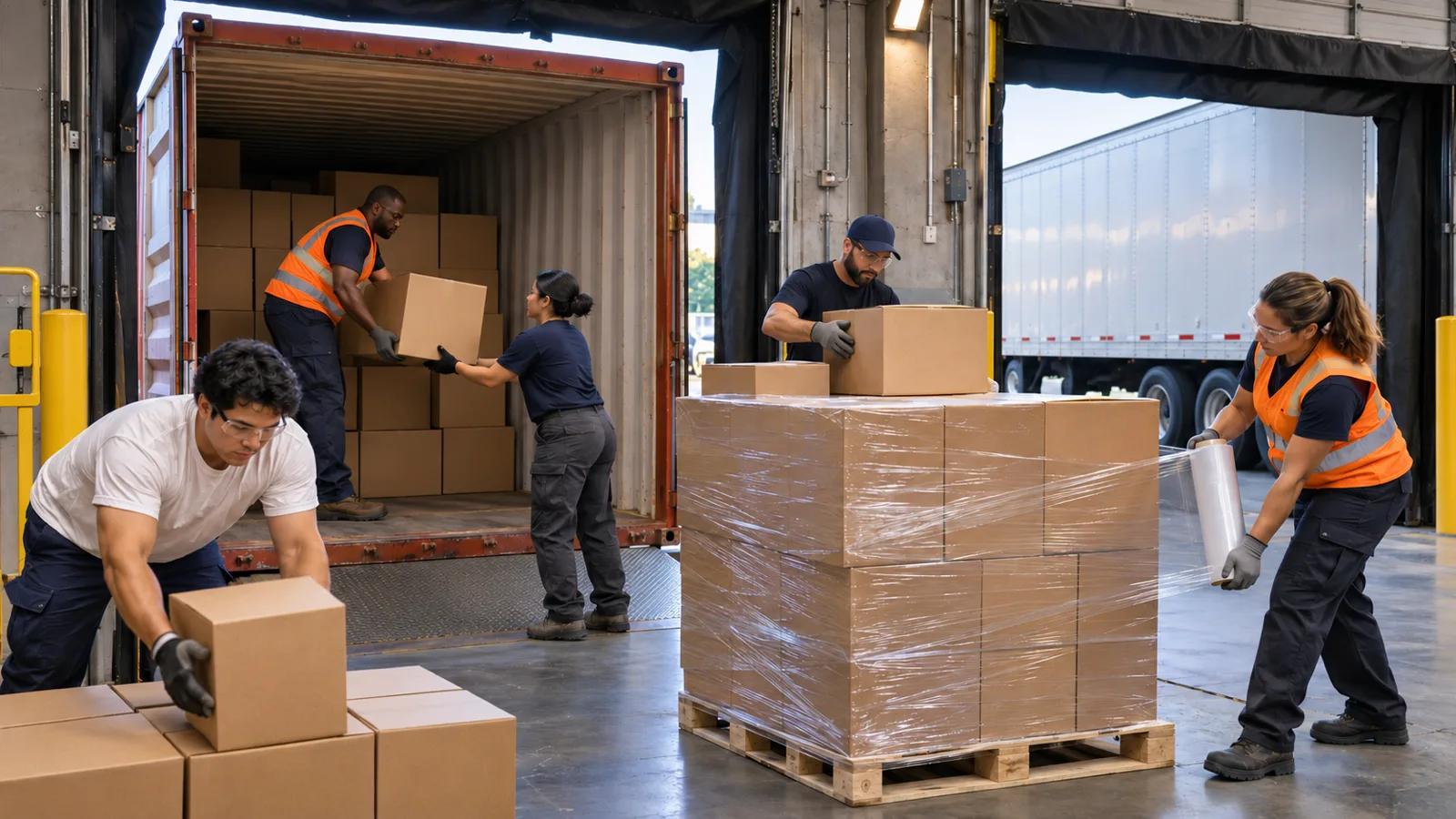
- Unloading and verification. The facility unloads the container, counts cartons, checks for visible damage and records any discrepancies against the packing list, with photos where needed.
- Sorting and preparation. Cartons are sorted by destination, purchase order or store, palletised, stretch-wrapped and labelled. Some goods may be held in temporary storage until allocation is confirmed.
- Empty return. The empty ocean container goes back to the carrier's designated return location, ideally within free time.
- Reloading and dispatch. Pallets are loaded into 53-foot trailers or domestic intermodal containers for truckload or rail movement to their destinations across Canada, or onto LTL carriers for smaller shipments.
- Reporting. The importer receives receiving reports, discrepancy notes and shipment details for each outbound load.
Where Transloading Happens in Canada
Lower Mainland, BC
Given the volume of Asian imports through the Port of Vancouver, the Lower Mainland has a concentration of transload facilities in areas such as Delta, Richmond, Surrey and along the Fraser River. Many importers transload there and send domestic trailers or containers east on the Trans-Canada Highway or by rail to the Prairies and Ontario.
Greater Toronto Area and Montreal
Containers railed inland to ramps in and around the GTA and Montreal can also be transloaded close to the ramp. This is useful for importers who want to distribute from central Canada to Quebec, the Maritimes and the US Northeast.
Prairies
Intermodal terminals near Calgary, Edmonton, Regina, Saskatoon and Winnipeg support transloading both of imports destined for western distribution and of export commodities, particularly agricultural products being loaded into containers for shipment to Asia.
Atlantic Canada
The Ports of Halifax and Saint John handle containers for Atlantic Canada and for rail movement to central Canada. Transloading near those ports can help importers serving the Maritimes split freight efficiently.
Understanding the Cost Picture
Transloading adds some costs and removes others, so it should be evaluated as a whole. On the added side, you pay for drayage from the terminal to the transload facility, for labour to unload and reload, for pallets, wrap and labels, and for any short-term storage. On the savings side, you may reduce the number of inland moves, avoid detention on the ocean container, cut receiving labour at the final warehouse, and lower inland freight per unit because domestic trailers carry more.
The balance depends heavily on the cargo. Light, bulky goods that "cube out" before they "weigh out" benefit most from the extra space in a 53-foot trailer. Heavy goods, such as tiles, beverages or machinery parts, may hit provincial weight limits long before a trailer is full, so the cube advantage disappears. Floor-loaded cartons cost more to handle than palletised freight, but they often need to be palletised somewhere anyway, so doing it at the transload point can be cost neutral.
Ask any transload provider to price a realistic sample of your containers, with your actual carton counts and destinations, and compare that against your current through-to-inland routing. A real comparison is far more useful than a general rule.
Mistakes to Avoid
- Sending containers without routing instructions. If the facility does not know where goods should go, they wait, and you lose the speed advantage.
- Ignoring discrepancies. Shortages and damage recorded at the transload point are your best evidence for supplier or carrier claims. Review the reports.
- Overlooking labelling rules. Goods bound for retail distribution centres must meet the retailer's label and pallet specifications before they leave.
- Treating transload as storage. Short holds are fine, but a transload facility that becomes a long-term warehouse usually costs more than one designed for storage.
What to Look for in a Transload Provider
- Location close to your port or rail ramp, with good highway access.
- Dock capacity and labour to unload containers quickly, including floor-loaded cartons.
- Accuracy in counting, recording discrepancies and labelling outbound freight.
- Systems that give you real-time visibility of receipts, inventory and outbound loads. A warehouse management system and integration with your order or ERP data make a big difference.
- Short-term storage for goods waiting for allocation or for outbound capacity.
- Carrier relationships for drayage, truckload, LTL and rail.
- Value-added services such as relabelling, kitting, or preparing shipments for retailer compliance or Amazon FBA prep.
Transloading as Part of a Wider Network
Transloading is one tool in a larger distribution strategy. Some goods might be transloaded at the port and sent straight to retail distribution centres. Others might go to a distribution warehouse for storage and ecommerce fulfillment. Still others might move through a cross-dock network to stores without being stored at all. A provider that offers distribution services across those options can help you route each shipment the most efficient way.
When import volumes, container availability and inland capacity swing unpredictably, as they do around peak season and labour disruptions, the flexibility to make routing decisions after the goods arrive is particularly valuable. Importers who can redirect inventory to where demand is strongest are better placed than those who commit every container weeks in advance. For more on the role of warehousing in international trade generally, see our article on warehousing services and international trade.
Explore Transloading With ShipCarte
ShipCarte supports importers across Canada with warehousing, distribution and freight coordination. If you want to reduce detention, gain more flexibility over where your inventory goes, or simply get containers unloaded and moving faster, request a quote or schedule a consultation with our team.