
A Mississauga athleisure brand runs a strong US promotion, and American orders take off. Six weeks later, the returns start arriving. A customer in Ohio sends back leggings in the wrong size using a prepaid label the brand emailed her. The parcel crosses the border, gets held while the carrier asks who is importing it, and the brand receives a bill for brokerage on goods it made and exported in the first place. By the time the leggings are back on a shelf near Heartland Town Centre, the size has sold out on the website twice.
Selling into the US is one of the most natural growth steps for an online brand based in Mississauga. The market is large, shipping lanes through the Peace Bridge, Lewiston-Queenston and the Ambassador Bridge are well established, and many US shoppers are happy to buy from Canadian brands. But returns are where cross-border ecommerce gets complicated. A return is effectively an import back into Canada, and if you do not plan for it, you pay in fees, paperwork and lost inventory time.
This article compares the main ways to handle US returns, explains what happens at the border, and gives practical steps to keep the process affordable.
Why US Returns Are Different From Domestic Returns
When a customer in Brampton returns an item, it travels back through the domestic parcel network and lands at your warehouse. When a customer in Chicago returns an item, it has to:
- Travel through the US carrier network to the border.
- Be cleared by the Canada Border Services Agency (CBSA) as goods entering Canada.
- Possibly attract brokerage fees, duties or taxes unless the right documentation shows the goods are Canadian goods returning.
- Travel through the Canadian network to your warehouse.
Each step adds cost and time. Individual returns are small and low value, so the overhead per parcel can be large relative to what is being returned.
Four Ways to Handle US Returns, Compared
There is no single right model. Most brands choose based on return volume, product value and how quickly they need returned inventory back in stock.
Option 1: Ship each return directly back to Mississauga
The customer uses a cross-border return label and the parcel comes straight back to your Canadian warehouse.
- Works best for: low return volumes and higher-value items worth the effort.
- Advantages: simple to set up; items come back to the same inventory pool.
- Drawbacks: per-parcel international return postage and potential brokerage charges; longer transit; more customs exposure per parcel.
Option 2: Consolidate returns at a US address
Customers ship returns to a US returns address using domestic US postage. The returns are collected there and periodically shipped back to Canada in bulk, as a single consolidated shipment cleared through customs once.
- Works best for: moderate to high return volumes.
- Advantages: cheaper domestic return labels for customers, faster refunds, one customs entry per batch.
- Drawbacks: inventory sits in the US until the next consolidation; requires a US partner.
Option 3: Process and resell from the US
Returns go to a US location where they are inspected and either restocked to fulfill future US orders, sold through a secondary channel, or liquidated. Only items that need to come back to Canada do so.
- Works best for: brands that already hold some inventory in the US or have significant US volume.
- Advantages: avoids the cross-border return trip for most items.
- Drawbacks: requires inventory systems that handle multiple locations and possibly US tax registration considerations; talk to an advisor.
Option 4: Returnless refunds
For low-value items, the customer keeps or donates the product and receives a refund or replacement.
- Works best for: inexpensive items where return shipping and handling would exceed the product's recoverable value.
- Advantages: fast, customer-friendly, no logistics cost.
- Drawbacks: open to abuse if not controlled; product is lost. Our article on returns fraud and how to avoid it covers safeguards.
Many brands combine these: returnless refunds below a value threshold, consolidated returns for most items, and direct returns for high-value goods.
What Happens at the Canadian Border
When returned goods come back into Canada, the question CBSA asks is whether they are new imports or Canadian goods returning. Canadian customs rules include provisions that can allow goods exported from Canada and returned to be brought back without duty, and in some cases without tax, provided conditions are met, such as the goods not having been improved or altered abroad. The exact treatment depends on the goods, their origin and the documentation.
Practically, that means:
- Keep export records. Being able to link a returned item to its original export shipment helps support relief claims.
- Describe the goods accurately on return documentation, including that they are returned goods, the reason for return and the original order reference.
- Know the origin of your products. Goods manufactured outside Canada and sold to the US may be treated differently on return than goods made in Canada.
- Work with a customs broker. A broker can advise on how to claim the right treatment and keep entries consistent.
Since CBSA's Assessment and Revenue Management system (CARM) became the system for accounting and payment, importers have needed to manage their accounts and obligations through the CARM Client Portal. If you are bringing returns back in volume, make sure your business is set up properly and your broker is linked. Our guide to duties and taxes in cross-border ecommerce provides more background.
Don't Forget the Outbound Side
How you ship to the US affects how returns work. If you ship duty-paid (DDP), you have already handled US import costs on the outbound order. If the customer paid duties on delivery, they may expect those refunded too, which is often difficult. US de minimis rules for low-value shipments have also changed significantly this year, so duty-free entry for small parcels can no longer be assumed, which affects the economics of both outbound orders and returns. Make sure your DDP or DAP choice, your pricing and your returns policy all fit together, and review them whenever US import rules change.
Writing a Returns Policy US Customers Understand
A clear policy reduces confusion and support tickets. For US customers, spell out:
- Where returns go (a US address, if you consolidate, makes customers more comfortable).
- Who pays return shipping and how labels are provided.
- How long refunds take, given cross-border or consolidation transit.
- Whether duties or taxes paid on the original order are refundable.
- Which items cannot be returned (final sale, hygiene items, personalized goods).
Self-service return portals help by generating labels and capturing the reason for return upfront. See our article on self-service returns for how they work.
Processing Returns Once They Arrive in Mississauga
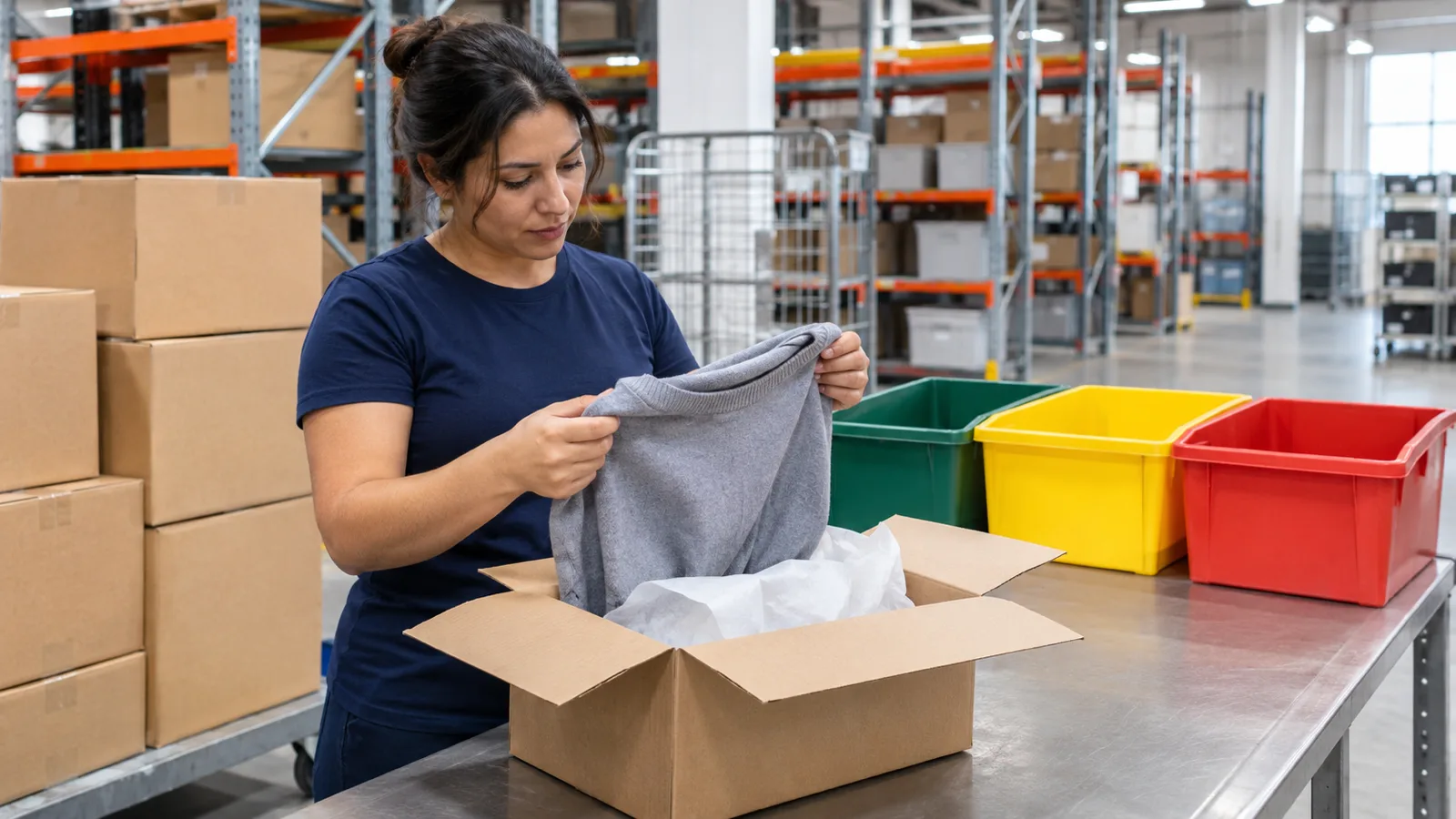
Whether returns arrive individually or in consolidated batches, the receiving process should be consistent:
- Match the return to the original order using the return authorization or tracking number.
- Inspect the item against your grading rules: new and resellable, needs repackaging, damaged, or unsellable.
- Disposition: restock, refurbish, send to an outlet or liquidation channel, donate, or dispose.
- Update inventory immediately so restocked items are available to sell.
- Trigger the refund or exchange according to your policy.
- Record the reason for return so you can spot product or sizing issues.
ShipCarte's returns management service follows your grading rules and updates inventory in real time, so returned stock in Mississauga can be resold quickly.
Ways to Reduce US Return Costs
- Reduce returns at the source: better size guides, accurate product photos and clear descriptions prevent many returns before they happen.
- Offer exchanges first: an exchange keeps revenue and can sometimes be shipped from available stock before the original is received.
- Set a returnless threshold: for low-value items, compare the full cost of a return with the item's recoverable value.
- Consolidate: batching returns reduces customs entries and per-parcel costs.
- Analyze return reasons: if one SKU has a high return rate due to sizing, fix the listing.
Questions Sellers Often Ask
Will I pay GST/HST again on returned goods?
Not necessarily. Depending on the goods and documentation, returned Canadian goods may qualify for relief. A customs broker can confirm how your products are treated.
How long do US returns take to reach Mississauga?
Direct returns can take noticeably longer than domestic returns because of customs and cross-border transit. Consolidated returns depend on how often you batch them. Build this into refund timelines.
Can I use the same carrier for returns as outbound?
Often yes, and it simplifies tracking. But the cheapest outbound carrier is not always the cheapest return option. Compare both.
How often should consolidated returns come back to Canada?
It is a balance between freight cost and how long you can afford to have stock sitting in the US. Fast-moving or seasonal products, such as winter outerwear returned in January, lose value quickly, so more frequent batches make sense. Slow, evergreen products can wait for larger, cheaper shipments. Many sellers start with a regular schedule, then adjust once they see how quickly returns build up and which SKUs are worth rushing back.
What about returns of damaged or defective items?
Items that cannot be resold rarely justify a cross-border trip. Ask customers for photos, record the defect for your supplier, and consider local disposal or donation in the US. Bring back only what you need for quality investigations.
Make US Returns Part of the Plan
Returns are part of selling to US customers, and handling them well is part of earning repeat business. ShipCarte helps Mississauga online sellers ship across the border and bring returns home efficiently through our cross-border shipping and returns services. Schedule a consultation to design your US returns flow, or request a quote today.