
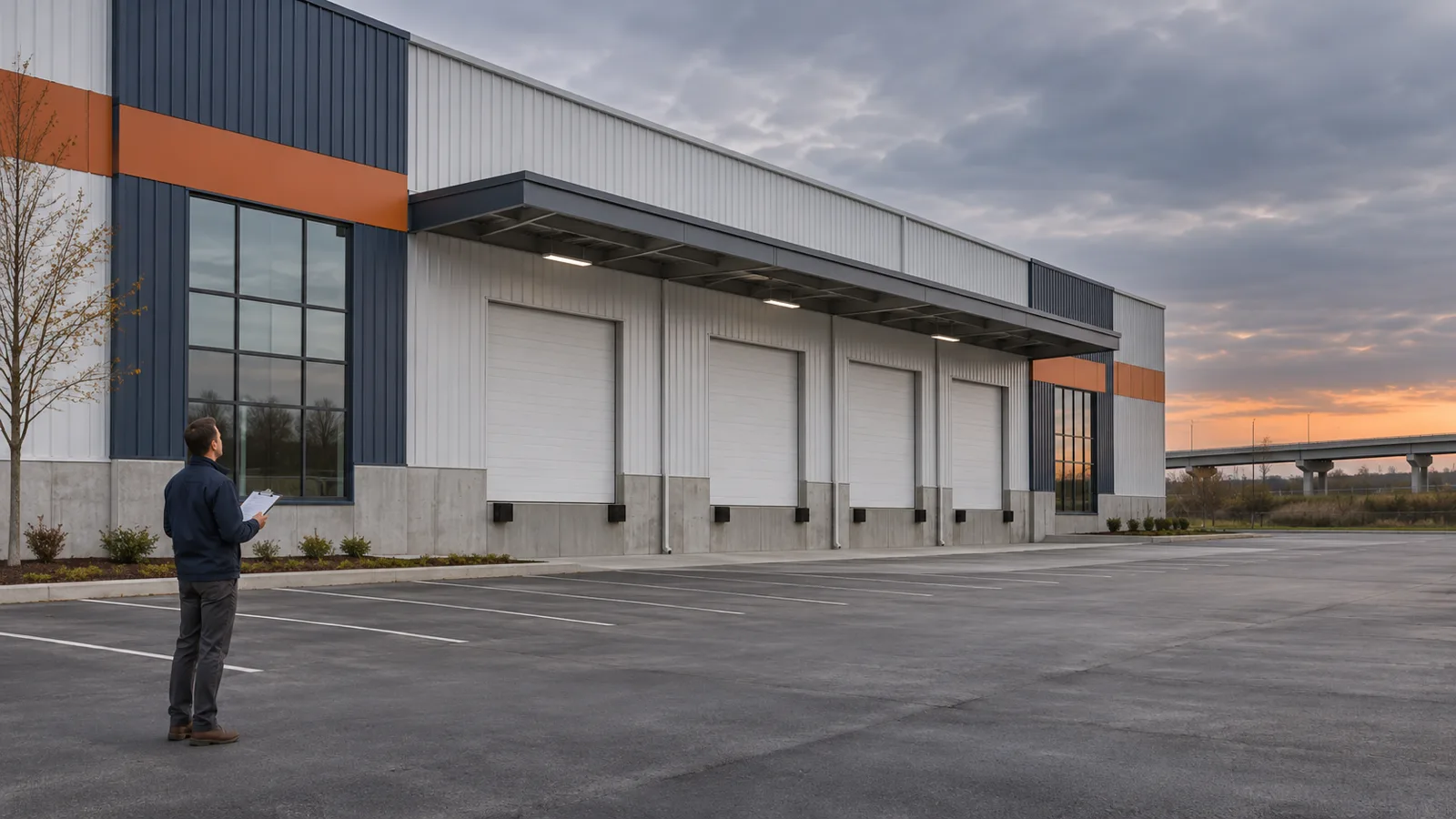
The owner of a home goods brand has been storing inventory in a cramped unit and a self-storage locker for two years. Sales are growing, and a broker has shown him an industrial unit near Derry Road with two dock doors and a nice office up front. The asking rent seems manageable. He is tempted to sign. Then his accountant asks a simple question: "What does it actually cost to run a warehouse, not just to rent one?" He does not have an answer.
That question is the heart of the lease-versus-3PL decision. Rent is the most visible cost of having your own warehouse, but it is rarely the biggest. Staff, equipment, software, insurance, utilities, maintenance and management time all sit on top of it. And the lease itself is a long commitment in a market where industrial space is tightly held. A third-party logistics provider bundles many of those costs into per-activity fees, but you give up some control and pay a margin for the service.
This article lays out the full cost picture of leasing and running your own warehouse in Mississauga, compares it with outsourcing to a 3PL, and highlights the non-financial factors that often tip the decision. We will not quote rents or rates, because those move with the market and vary widely by building, size and term. Instead, use this as a worksheet: plug in your own quotes to see which option comes out ahead.
Why Mississauga makes this question harder
Mississauga and the wider Peel Region are among the most sought-after industrial markets in Canada. Proximity to Toronto Pearson, the 401, 403, 407, 410 and 427, and a huge consumer base within a day's drive make it attractive to retailers, distributors, manufacturers and e-commerce brands alike. That demand tends to push rents up and keep availability low, particularly for small and mid-sized units with good loading. Landlords often prefer longer terms and established tenants.
On the other hand, the same advantages make Mississauga a strong place for 3PLs to operate, so there is a healthy range of fulfillment and warehousing providers to choose from. In other words, both options are available, but the costs of each need careful comparison.
The full cost of leasing and running a warehouse
1. Rent and additional rent
Industrial leases in Ontario are commonly quoted on a net basis. You pay base rent per square foot, plus additional rent, often called TMI (taxes, maintenance and insurance), which covers your share of property taxes, building insurance and common area costs. Additional rent can be a substantial portion of the total and can change year to year. Ask for both figures and for the history of additional rent over recent years.
2. Lease commitment and deposits
Industrial leases often run for several years, with five-year terms being common and longer terms possible. You may need to provide a deposit of several months' rent, and landlords may ask for a personal guarantee from owners of smaller businesses. Read the clauses on renewal, assignment and subletting carefully. If you outgrow the space or volume drops, getting out of a lease early can be expensive.
3. Fit-out and leasehold improvements
Empty warehouse units usually need work before they are usable: lighting upgrades, electrical for packing stations and chargers, office improvements, washrooms, dock equipment repairs and possibly heating. Some landlords contribute an allowance; often the tenant pays for much of it. These costs are often underestimated.
4. Racking and equipment
Pallet racking, shelving, packing benches, a forklift or reach truck, pallet jacks, label printers, scales and dock plates all need to be bought or leased. Racking installation may require permits and engineering in some cases, and forklifts need maintenance, charging and operators trained to Ontario workplace safety standards.
5. Labour
Labour is usually the largest ongoing cost of running a warehouse. Beyond wages, budget for employer contributions to CPP and EI, WSIB premiums, vacation pay, statutory holidays, benefits, training and overtime during busy periods. You also need to cover absences and turnover. A warehouse with two staff has no backup when one is sick. The GTA labour market for warehouse workers is competitive, especially before the holiday peak.
6. Technology
Running a warehouse without a warehouse management system works when you have a few SKUs and a few orders. Beyond that, you need software for inventory, picking, shipping labels and integrations with your store and marketplaces. That means subscription fees, setup time and someone who knows how to run it.
7. Utilities, insurance, security and maintenance
Electricity, heating, water and internet; tenant insurance for contents and liability; an alarm system and monitoring; cleaning, waste removal, snow clearing if not covered by the landlord; repairs to dock doors and equipment. Individually small, together significant.
8. Shipping rates
Your parcel and freight rates depend on your volume. A single brand shipping from its own warehouse may have less negotiating power with carriers than a 3PL shipping for many clients. That difference can be large enough to outweigh savings elsewhere. See our guide to reducing shipping costs for the factors involved.
9. Management time
Someone has to manage the warehouse: schedule staff, deal with the landlord, handle carrier issues, chase stock discrepancies and plan for peak. If that person is you, the cost is the strategic work you are not doing.
The cost of using a 3PL
A 3PL turns most of the above into variable charges. Typical fees include receiving, storage, pick and pack, packaging materials, shipping and any value-added services, plus possible setup fees and monthly minimums. Our breakdown of 3PL pricing in Mississauga explains each line.
The main advantages on cost are:
- No long-term lease or large deposit, though 3PL contracts do have terms.
- No capital spending on racking, equipment or fit-out.
- Costs that scale with activity, falling in slow months and rising in busy ones.
- Shared carrier volume that may unlock better shipping rates.
- Existing technology and integrations included in the service.
The trade-offs are less direct control, a margin built into the fees, and dependence on the 3PL's performance.
A comparison worksheet
To compare properly, build two annual cost estimates side by side using real quotes:
| Cost line | Own warehouse | 3PL |
|---|---|---|
| Space | Base rent plus additional rent | Storage fees |
| Setup | Fit-out, racking, equipment (spread over lease term) | Onboarding fee, if any |
| Labour | Wages, payroll costs, benefits, overtime, temp staff | Receiving and pick and pack fees |
| Technology | WMS and shipping software subscriptions | Usually included or a small fee |
| Operating costs | Utilities, insurance, security, maintenance | Included in fees |
| Packaging | Bought directly | Charged per order or passed through |
| Shipping | Your negotiated carrier rates | 3PL's rates |
| Management | Your or a manager's time | Account management, oversight time |
Run the comparison at your current volume, at the volume you expect in two years and at a lower volume in case growth stalls. The lease option often looks better at high, stable volume and worse at low or uncertain volume, because its costs are mostly fixed.
Non-cost factors that matter
Control and customization
Your own building means your own processes, your own team and the freedom to change things overnight. For businesses with unusual products or very specific customer requirements, that control can be worth paying for. A middle path is dedicated warehousing run by a 3PL, discussed in our article on dedicated vs shared warehousing.
Flexibility
A lease locks you into a size and location for years. If you grow faster than expected, you may be stuck in a building that is too small. If you shrink, you may be paying for space you do not need. A 3PL can usually absorb growth or contraction more easily.
Risk
Owning the operation means owning every problem: a broken forklift, a staff shortage in December, a roof leak, a workplace injury. A 3PL carries much of that operational risk, though not all of it.
Focus
Ask honestly whether running a warehouse is part of what makes your business special. For some manufacturers and distributors, it is. For most brands, the competitive edge lies in product, marketing and customer relationships, and the warehouse is a cost centre to run well rather than a strength to build.
When leasing tends to make sense
- High, stable volume that keeps space and staff well used year round
- Products or processes that 3PLs struggle to handle
- Manufacturing or assembly that needs to be on the same site as storage
- An experienced operations team already in place
- Confidence in your volume and location needs for the full lease term
When a 3PL tends to make sense
- Growing or seasonal volume that is hard to predict
- A desire to avoid capital spending and long commitments
- Small team without warehouse management experience
- Shipping costs that would benefit from shared carrier volume
- A need to expand quickly into new channels such as Amazon, retail or cross-border
For more background, see our articles on what a 3PL does and why brands switch to fulfillment centres.
Compare with real numbers
Before you sign a lease in Mississauga, get a 3PL quote based on your actual order and inventory data, and set it beside the full cost of running your own building. ShipCarte offers fulfillment, distribution warehousing and shipping from the Mississauga area. Request a quote and we will help you build a fair comparison.