
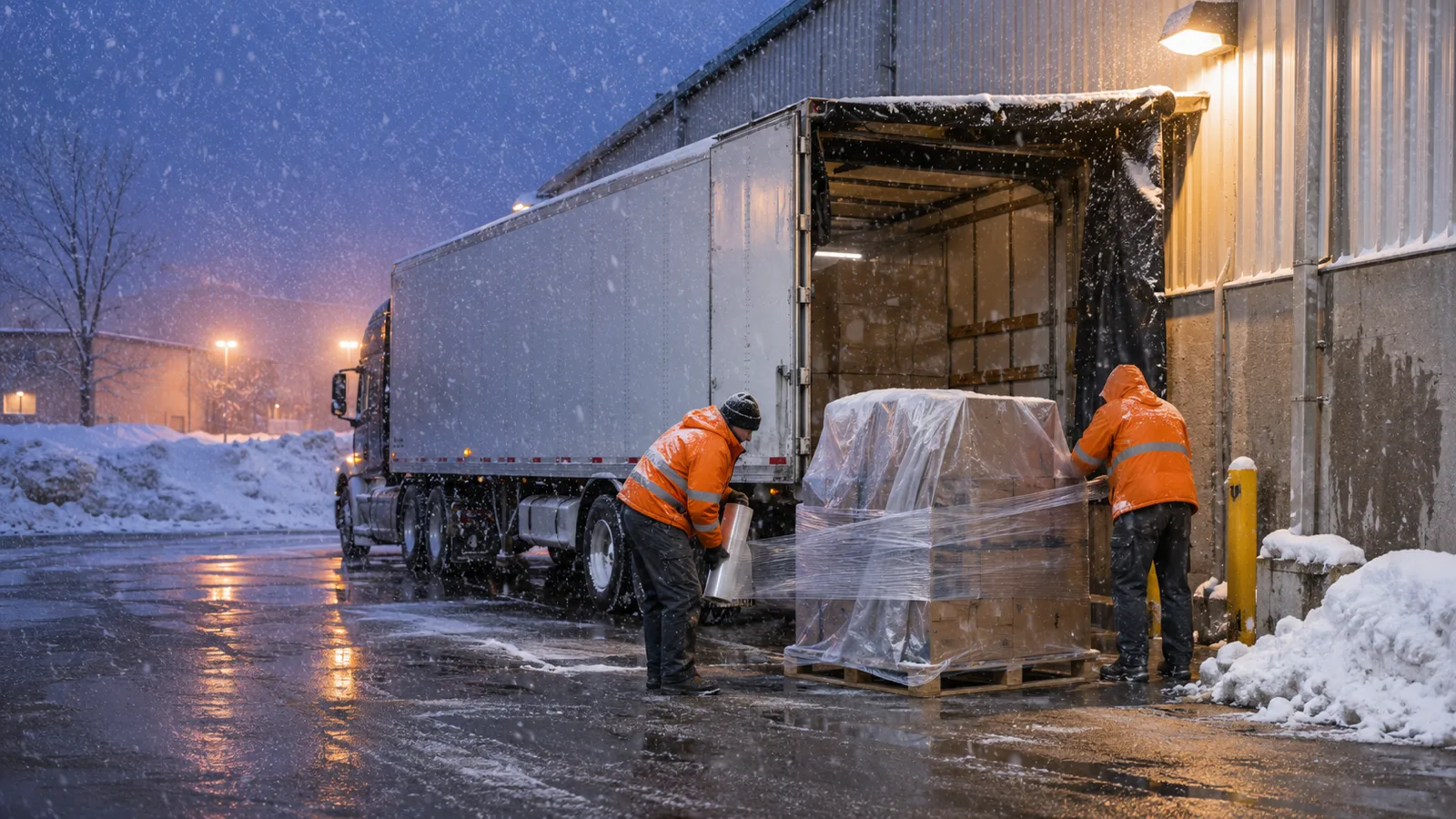
Picture a beverage distributor in the Gateway industrial area on a January morning. A full truckload of sparkling water is staged for a run to Sudbury, the driver is already twenty minutes late because the 401 collector lanes were crawling past Dixie, and the dock plate is coated in a thin glaze of ice. By the time the trailer is loaded, the outdoor temperature has dropped to minus fifteen. Nobody on the dock asked whether the trailer was heated. Two days later, the receiver sends photos of split cases and frozen bottles.
Winter in Mississauga is not exotic. Everyone who ships out of Peel Region knows it arrives every year, usually with a few surprise storms in November and a long, grey grind through March. Yet winter is the season when otherwise well-run shippers lose the most freight to temperature damage, missed appointments and dock accidents. The problem is rarely the snow itself. It is the assumption that the summer playbook will keep working when the weather turns.
This guide walks through what actually goes wrong with freight between December and March, how to decide which products need protection, and the practical steps that keep pallets, people and delivery promises intact when you are shipping from Mississauga through an Ontario winter.
Why Winter Hits Mississauga Shippers Differently
Mississauga sits at the centre of one of the busiest freight corridors in Canada. Highways 401, 403, 407, 410 and 427 all converge within a few kilometres, and Toronto Pearson draws a steady stream of air cargo trucks through Malton and the Airport Corporate Centre. That density is an advantage most of the year. In winter it becomes a vulnerability, because a single collision on the 401 near Hurontario or a lane closure on the 427 ripples through every pickup window in the area.
The weather itself is also more variable than many people expect. Being close to Lake Ontario means Port Credit and the southern parts of the city can see freezing rain while Meadowvale gets snow, and the temperature can swing above and below zero several times in a week. Those freeze-thaw cycles are hard on packaging. Corrugated boxes absorb moisture during a thaw, then lose compression strength, and a pallet that looked solid on Monday can lean by Wednesday.
Finally, much of Mississauga's freight is heading somewhere colder. A load leaving Streetsville for Thunder Bay, Timmins or Winnipeg will spend long hours on highways where overnight temperatures are far below what the shipper experiences locally. Planning for the conditions at your dock is not enough. You have to plan for the coldest point on the route.
Which Products Are at Risk When Temperatures Drop
Not every product needs special treatment in winter, and over-protecting freight wastes money. The first job is to sort your catalogue into honest categories.
Freeze-sensitive goods
Anything water-based can freeze, expand and burst its container. That includes beverages, liquid soaps and detergents, water-based paints and coatings, adhesives, some cosmetics, liquid fertilizers and many cleaning products. Some products freeze without visible damage but become unusable afterward because their emulsion separates. If the manufacturer's label or safety data sheet says "protect from freezing", treat it as a firm requirement, not a suggestion.
Temperature-sensitive but not freezable
Food, supplements, pharmaceuticals and certain medical supplies often have a defined storage range, for example 15 to 25 degrees. These products may not freeze solid in a short trip, but exposure outside the labelled range can still compromise quality or create a compliance problem. Products regulated by Health Canada often require documented temperature control, which means you need records, not just good intentions. Our team handles this through temperature-controlled warehousing and protected transport.
Cold-brittle materials
Some plastics, vinyl and rubber components become brittle in deep cold and crack under impact that they would shrug off in summer. Electronics with LCD screens or batteries can also be affected, and condensation forms when a cold product is brought into a warm building. Consumer electronics shippers should let cartons acclimatize before opening them for inspection or repacking.
Weather-tolerant freight
Steel, lumber, most dry packaged goods, tools and many manufactured components can travel in a standard dry van all winter. The risks for these loads are moisture, road salt and handling accidents rather than temperature. Shrink-wrap, top sheets and pallet covers handle most of that exposure.
Choosing the Right Equipment for Winter Loads
Once you know which products are vulnerable, you can match them to equipment. The main options are a standard dry van, a heated trailer, a refrigerated trailer set to a "keep from freezing" temperature, or insulated packaging inside a standard trailer.
A heated or "protect from freeze" service is the usual choice for beverage and chemical loads. Many carriers run reefer units in heat mode during winter, holding the trailer at a set point such as a few degrees above zero. For full truckload shipments, booking a reefer with a heat setting is usually straightforward. The challenge comes with less-than-truckload freight, where your pallets share a trailer with other customers' goods and may sit overnight on a terminal floor.
Not every LTL freight carrier offers heated service, and those that do may limit it to certain lanes or charge a seasonal accessorial. If you ship freeze-sensitive LTL from Mississauga to northern or western destinations, confirm the protection covers terminal dwell time and cross-docks, not just linehaul. Ask directly: "Will this pallet ever sit in an unheated area, and for how long?"
Insulated pallet covers and thermal blankets can buy time for short trips, such as a same-day run from Meadowvale to a customer in Etobicoke. They do not generate heat, though, so they only slow the rate at which the product cools. They are a buffer, not a substitute for heated equipment on a multi-day journey.
A Winter Packaging Checklist for Pallets
Good winter packaging deals with three enemies at once: cold, moisture and rough handling on slippery docks. Before each shipment leaves your building, run through this list.
- Use moisture-resistant pallets and cartons. Wet wooden pallets can freeze to trailer floors. Plastic or heat-treated, dry wooden pallets reduce that risk. Consider wax-coated or higher burst-strength cartons for products that will see repeated freeze-thaw cycles.
- Add a top sheet and full shrink-wrap. A cardboard or plastic top sheet keeps meltwater from soaking the top layer. Wrap from the pallet base up, overlapping each pass, and finish with a few bands around the top.
- Cap with a pallet cover or hood. Plastic hoods keep road salt spray off loads that travel in open or poorly sealed equipment.
- Strengthen corners. Corner boards stop strapping from crushing cartons that have lost stiffness in damp conditions.
- Label clearly for temperature. "Protect from freezing" labels on all four sides and on the bill of lading make the requirement visible to every handler. A label alone does not guarantee protection, but missing labels make claims much harder.
- Consider data loggers. A small temperature logger in a high-value or regulated load gives you evidence if something goes wrong and helps you learn which lanes run coldest.
For parcel shipments, the same principles apply on a smaller scale. Liquids should be double-bagged, boxes should be filled to prevent crushing, and insulated liners with phase-change packs can protect sensitive items over short transit times. Our earlier guide on how to ship temperature-sensitive products goes deeper into packaging choices.
Keeping Docks and People Safe
Freight damage gets the most attention, but the most serious winter incidents tend to happen on the dock. Ice on dock plates, snow packed into the gap between trailer and building, and frozen landing gear can all lead to injuries or forklift accidents.
A few routine practices help a great deal. Clear and salt the apron in front of every dock door before the first appointment of the day. Inspect dock levellers and plates for ice buildup, and keep a bin of traction grit at each door. Make sure dock seals and shelters are intact, because a torn seal lets snow blow straight into the trailer during loading. Confirm that trailers are properly chocked or restrained, since tractors can slide on icy yards when drivers pull forward.
Forklift operators should slow down when moving between the warm warehouse and a cold trailer, as frost can form on trailer floors and tires lose grip. If your operation uses propane forklifts, keep cylinders stored according to local fire code and remember that very cold propane delivers less pressure.
Building Realistic Transit Times for Winter
Every Mississauga shipper should expect winter transit to be slower than summer transit, especially on northern lanes and cross-border routes. Highway 11 and Highway 17 can close during storms, which can strand freight heading toward North Bay, Sault Ste. Marie and beyond. Crossings at the Peace Bridge, Lewiston-Queenston and the Ambassador Bridge all face weather-related slowdowns on both sides of the border.
Rather than hoping for the best, build a buffer into your promises. Practical ways to do that include:
- Adding a day of padding to customer delivery estimates for northern Ontario and Prairie destinations between December and March.
- Scheduling outbound freight earlier in the week, so a storm on Thursday does not leave freight sitting on a terminal over the weekend.
- Avoiding Friday pickups for freeze-sensitive LTL, because weekend terminal dwell is when temperature exposure is most likely.
- Booking delivery appointments with receivers early, and communicating quickly when weather forces a reschedule.
- Keeping a little extra safety stock at destination warehouses or with key retail customers to absorb a delayed replenishment.
Visibility matters here too. When storms hit, the shippers who stay calm are the ones who can see where every load is. A shipping platform that pulls tracking from multiple carriers into one view lets your customer service team answer "where is my order?" without chasing drivers by phone.
Insurance, Claims and Carrier Liability
Freeze damage claims are often harder to win than shippers expect. Carrier liability is usually limited by weight or by the terms in the bill of lading, and carriers may deny a claim if the shipper did not request heated service in writing or if the packaging was judged inadequate. If you are shipping freeze-sensitive product, make sure "protect from freezing" or "heat required" appears on the bill of lading and in your booking confirmation.
For valuable winter loads, consider whether separate freight insurance makes sense. It typically costs more than relying on carrier liability but covers a broader range of losses. Our guide to freight insurance in shipping explains the difference between carrier liability and cargo coverage. Whatever you choose, document the condition of freight at pickup with photos, and inspect it on delivery before the receiver signs a clean delivery receipt.
Preparing Your Operation Before the First Storm
The best time to plan for winter is late summer or early autumn, not the week of the first snowfall. A short pre-season review can save a lot of stress:
- Identify every SKU that is freeze-sensitive or has a storage temperature range, and flag it in your order and warehouse systems.
- Confirm which of your carriers offer heated service on which lanes, and get seasonal rates in writing.
- Check that dock heaters, seals, door motors and lighting are in working order.
- Arrange snow clearing for yards and docks, with a clear standard for how early the lot must be cleared.
- Talk to key customers about receiving hours, alternate contacts and how weather delays will be communicated.
- Stock up on pallet covers, top sheets, corner boards and insulated blankets so you are not scrambling in January.
If your inventory is stored with a third-party logistics provider, ask how they handle winter. A good provider should already be holding freeze-sensitive stock in heated space, steering it toward suitable carriers and flagging any orders that should not ship before a storm. These questions are part of choosing the right carrier management approach for your business.
Winter Shipping Is a Planning Problem
Snow, ice and cold are predictable. What separates a smooth winter from a costly one is whether the shipper treats the season as a set of known risks with known answers: the right equipment for sensitive goods, packaging built for moisture, safe docks, padded transit times and clear paperwork. Shippers based in Mississauga have the advantage of being close to major highways, Pearson and the border, so with a bit of planning, winter freight can move almost as reliably as it does in July.
If you would like help sorting your products into winter categories, finding heated LTL options or reviewing how your freight is packaged, ShipCarte can walk through it with you. Request a quote for your winter lanes, or schedule a consultation to plan the season before the first storm arrives.